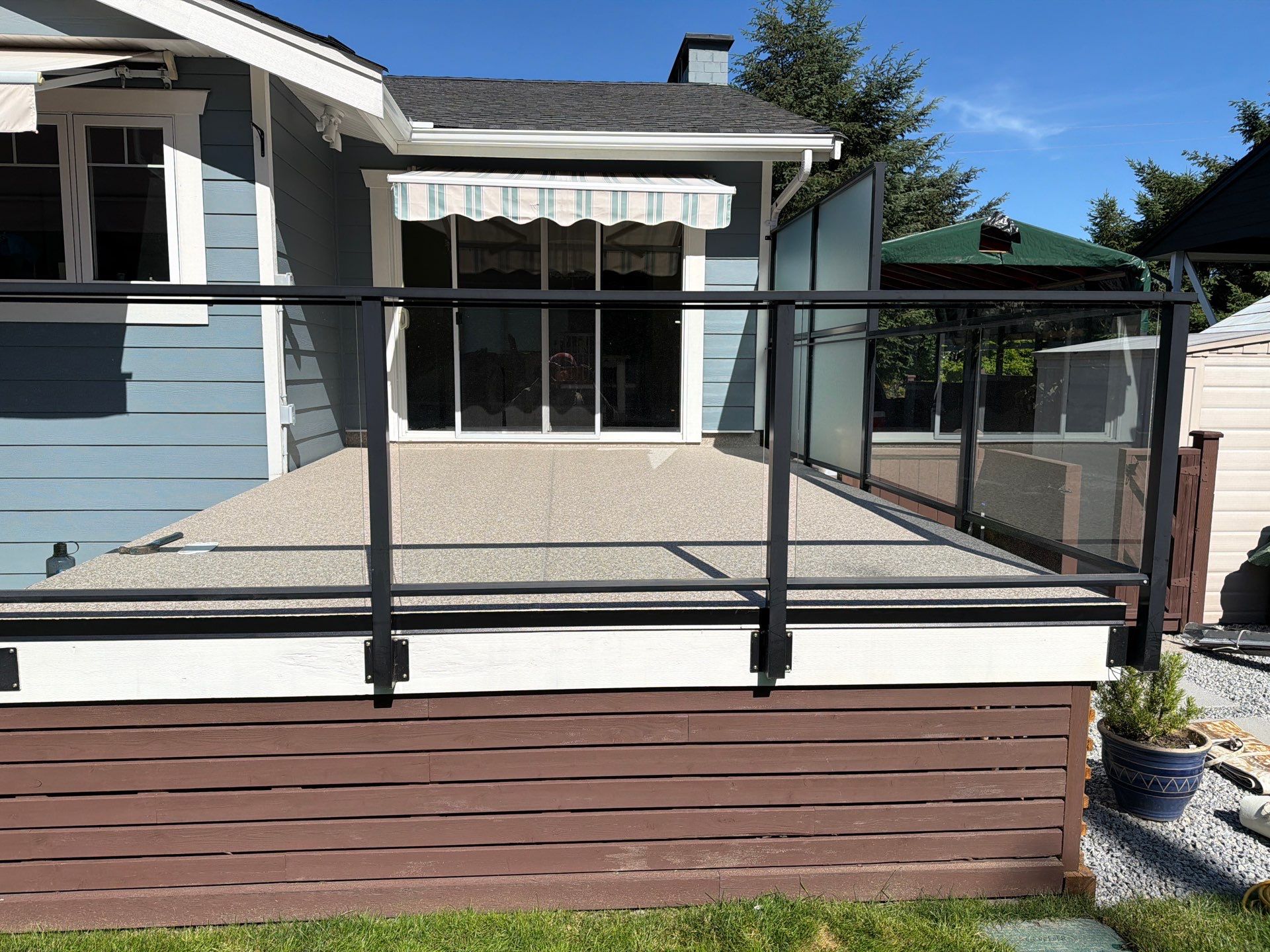
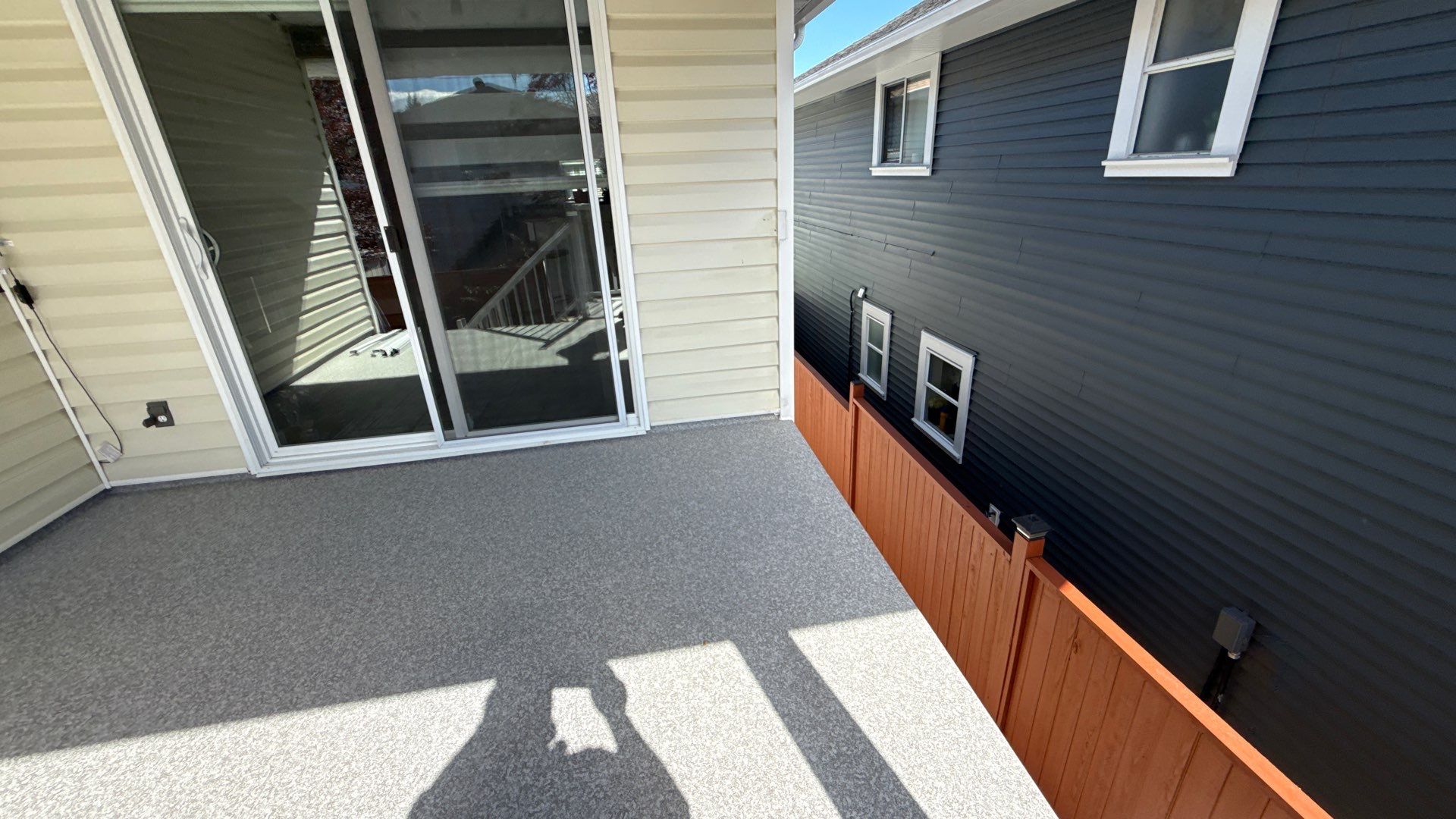
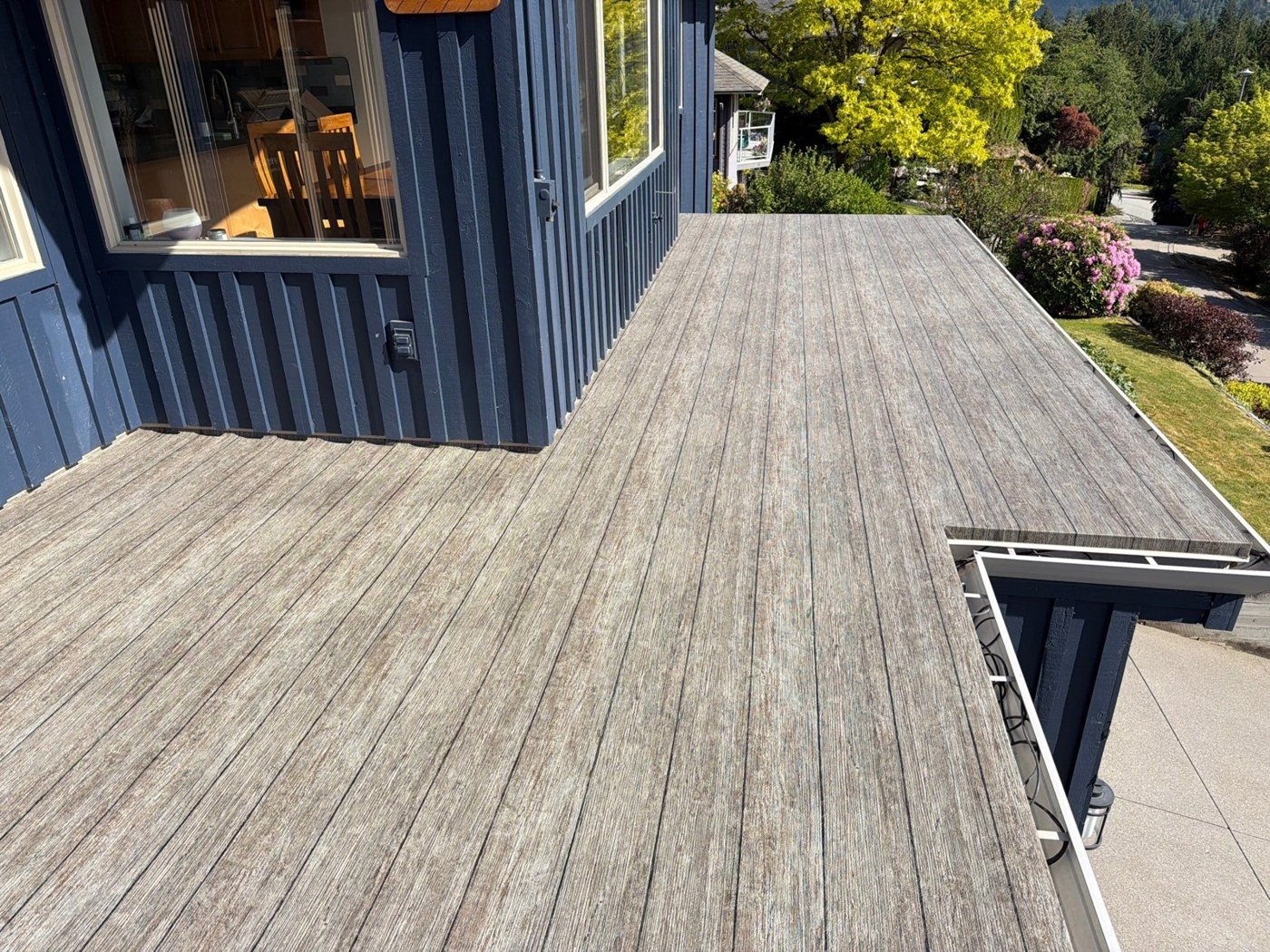
Waterproof balcony flooring is a surface that is itself the waterproofing, not a finish laid over it. Of the common options, only liquid coatings and vinyl membranes waterproof at the surface; interlocking tiles, rugs, turf and tile all rely on a layer underneath. Valordek vinyl membranes do both jobs, starting at $3.74 per square foot (CAD).
That distinction decides what you are actually buying. On a balcony over a bedroom, a garage or a neighbour's unit, the surface you walk on either keeps water out or depends on something beneath it that does. Snap-together tiles and outdoor rugs change how a balcony looks and feels, and they can be exactly the right choice, but they add no waterproofing at all. This guide compares the options by which layer does the work, what each costs you in upkeep, and what you are allowed to change on a condo or strata balcony. For how a membrane system is built, see our vinyl decking overview and our guide to balcony waterproofing.
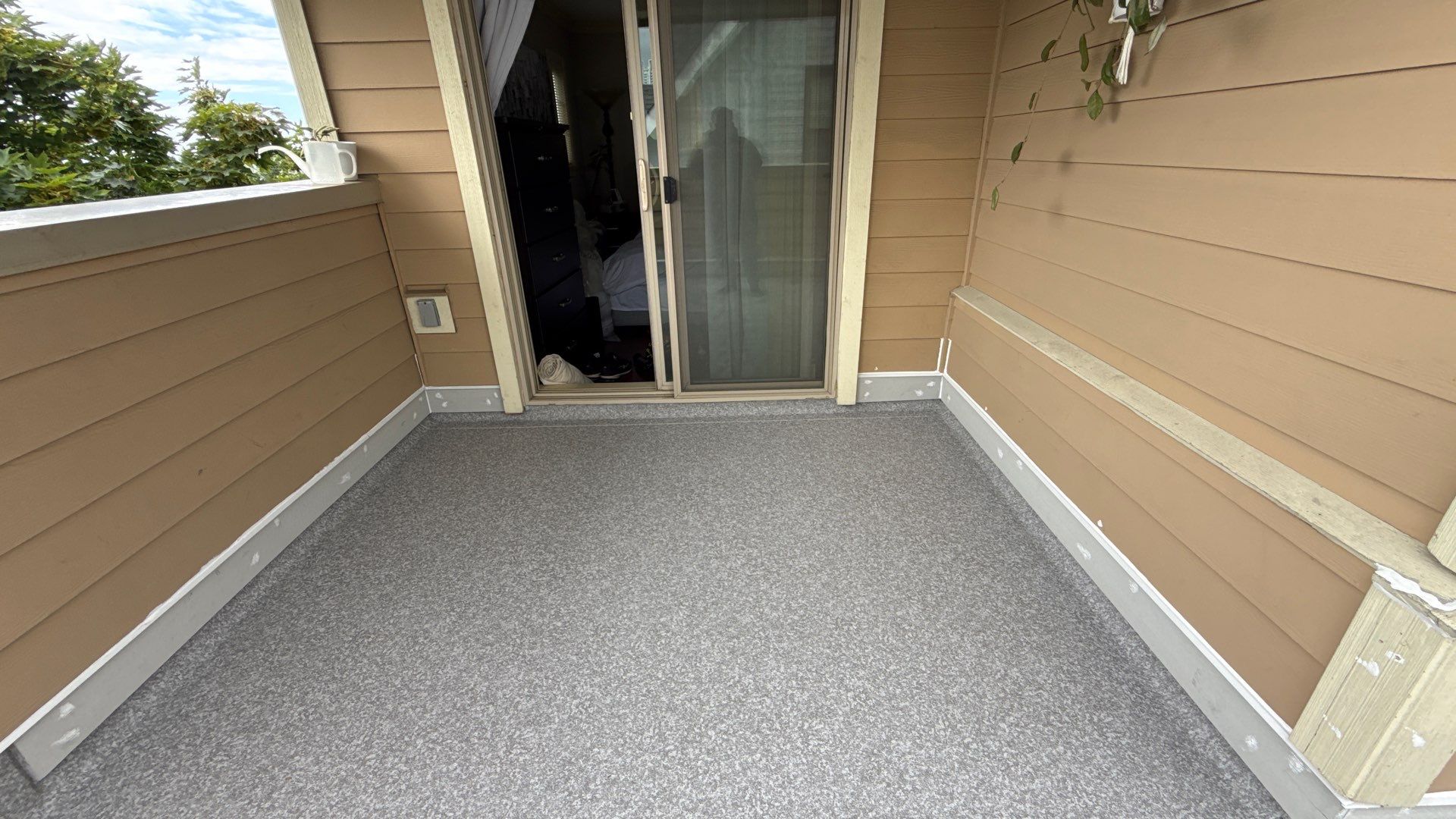
What is the best flooring for a balcony?
The best flooring for a balcony depends on two questions: is there living space below it, and who is responsible for the waterproofing? Answer those first and the choice narrows quickly.
- Living space below, and you control the surface (a house, a townhouse you own outright, a building owner): choose flooring that is also the waterproofing, because a leak costs far more than the floor.
- Living space below, but the waterproofing belongs to the strata (most condo balconies): you are usually choosing a removable finish over the strata's membrane, and the membrane itself is the council's decision.
- Nothing sensitive below (a ground-level patio): waterproofing matters less, and the decision is mostly about look, feel and budget.
Most searches for balcony flooring lead to snap-together tiles, because they are the easiest thing to buy. They are a good answer to the second situation and a poor answer to the first.
Waterproof balcony flooring options compared
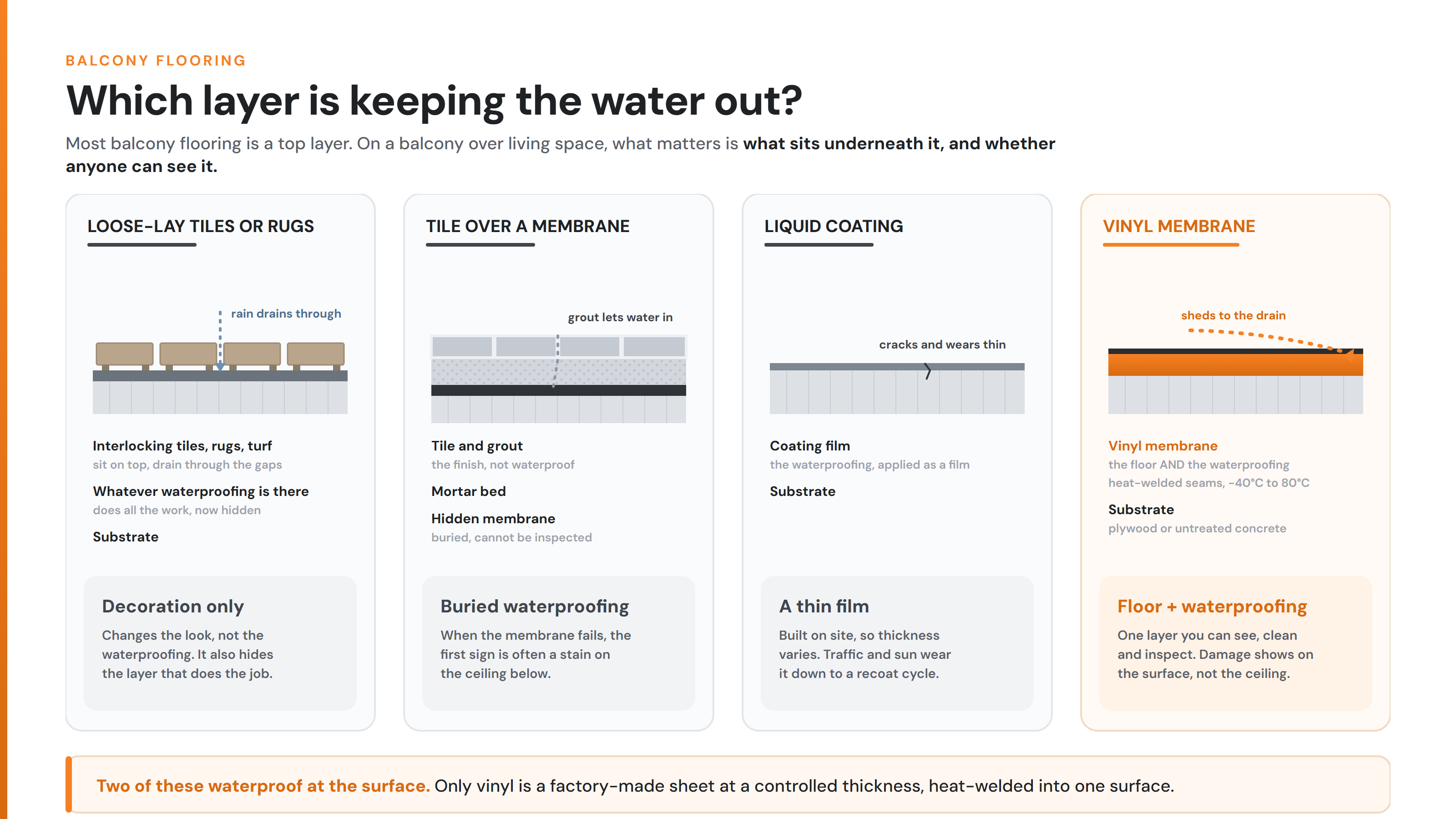
Only two common balcony floors waterproof at the surface: a liquid coating and a vinyl membrane. Everything else is a finish that depends on a membrane you may never see.
| Option | Waterproofing | Can you inspect the waterproofing? | Maintenance | Temperature range and warranty | Condo-friendly |
|---|---|---|---|---|---|
| Interlocking deck tiles (wood, composite, rubber) | None. Water drains through the gaps to the layer below. | Only by lifting the tiles | Lift and clean underneath periodically; debris collects below | Varies by product; covers the tiles, not your balcony | Usually, being removable and subject to bylaws |
| Outdoor rugs and artificial turf | None | Only by lifting them | Lift to dry; they hold moisture against the surface | Varies by product | Usually |
| Tile over a membrane | Yes, from a separate membrane under the tile bed | No. It is buried under mortar and tile. | Grout and sealant upkeep | Varies by system | Strata decision |
| Liquid coating | Yes, as a film built on site | Yes | Recoating at the manufacturer's interval | Varies by product | Strata decision |
| Valordek vinyl membrane | Yes. The walking surface is the waterproofing, with heat-welded seams. | Yes. It is the surface. | Cleaning plus an annual check of sealant joints and seams | -40°C to 80°C; 15 years waterproofing, 5 years appearance | Strata decision |
The pattern across the table is simple. The easier an option is to add on your own, the less it has to do with keeping water out. That is not a criticism of tiles and rugs. It is just important to know which job each product is doing.
Interlocking tiles, rugs and turf: a finish, not waterproofing
Interlocking deck tiles, outdoor rugs and turf sit on top of a balcony and let rain drain through them onto whatever is underneath. They are a fast way to change the look of a balcony, and on a condo balcony with a sound membrane they are often the only change an owner is allowed to make.
Three things are worth knowing before you buy:
- They hide the layer that matters. Once a balcony is covered edge to edge, nobody sees the membrane until it is lifted. Plan to lift a section every season to clean underneath and look at the surface.
- Debris and moisture collect underneath. Leaves, grit and standing water gather in the gap and hold dampness against the surface. That is harmless on bare concrete for a while and unkind to anything that needs to dry.
- Rubber and latex backings react with vinyl. If the balcony already has a vinyl membrane, avoid rubber-backed tiles, rubber mats and turf laid directly on it. The plasticizers in the PVC react with the rubber and leave a permanent yellow outline. Our summer deck care guide explains the reaction and what to use instead.
Tile over a membrane: waterproof, but buried
A tiled balcony is waterproofed by a separate membrane under the mortar bed, not by the tile. Water passes through grout lines, so the tile is the finish and the hidden membrane is doing all the work.
That works for as long as the membrane and its edges hold. The difficulty is that a failure happens out of sight. When the buried layer cracks or a perimeter detail lets go, the surface looks the same, and the first sign is often a stain on the ceiling below. We compare the two approaches side by side in vinyl decking vs tile for a balcony.
Liquid coatings: waterproof at the surface, built on site
A waterproof deck coating is a liquid applied over the deck that cures into a film, and that film is both the walking surface and the waterproofing. Coatings can be a sound choice, and they share one real advantage with vinyl: the waterproofing is visible.
The differences come from how the film is made. It is built on site, so its thickness depends on the applicator and the conditions on the day. Foot traffic and sun then wear it from the top down, which is why coating manufacturers publish recoat intervals. Our guide to waterproof deck coatings vs vinyl membrane covers the trade-offs in detail.
Vinyl membrane: the floor and the waterproofing in one layer
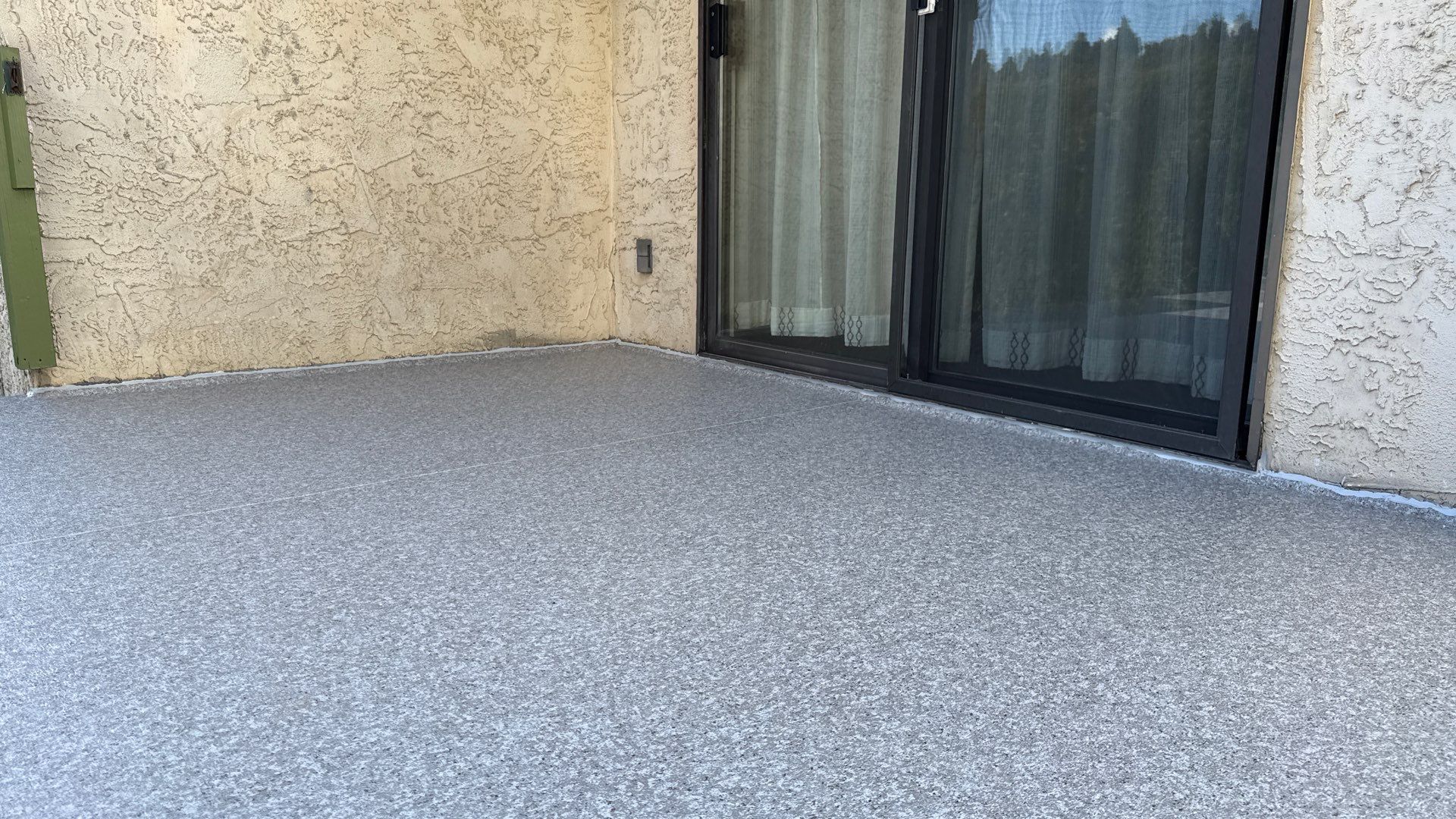
A vinyl deck membrane is a factory-made PVC sheet bonded to the balcony substrate, with the seams heat-welded into one continuous waterproof surface. It is the only option in this comparison where the walking surface, the waterproofing and the finish are the same layer, made to a controlled thickness before it reaches the job. It is not the vinyl plank flooring sold for indoor rooms; our deck vinyl flooring guide explains the difference.
Here is what that looks like in Valordek's case, based on Valordek's product specifications:
- Balcony membrane: a 68mil fleece-backed sheet, the product Valordek recommends for balconies. It is tested by CCMC and exceeds code 37.54.95, the Canadian standard for waterproof membranes on decks over living space.
- Temperature range: engineered to perform from -40°C to 80°C.
- Warranty: 15 years of waterproofing coverage and 5 years of appearance coverage, valid when a certified installer uses Valordek-approved adhesives and components. Full terms are on the Valordek warranty page.
- Substrate: installed on 5/8" tongue-and-groove plywood or untreated concrete, never over a painted surface, treated concrete or treated lumber, with a minimum slope of 1/4" per foot to drain.
- Price: membrane material starts at $3.74 per square foot (CAD). Adhesive, flashing, drainage parts, surface preparation and installation are extra, and our vinyl decking cost guide and material cost calculator show how a full project adds up.
The trade-offs are real. Vinyl needs a sound, sloped substrate and careful detailing at walls, doors and drains, which is a job for a trained installer rather than an afternoon project. It also looks like vinyl: a printed wood or stone pattern, not real wood underfoot. If you want to see how the colours look on a real balcony first, the deck visualizer previews them on a photo of your own space.
What can I put on my balcony floor?
On a vinyl membrane, anything that does not trap moisture, bond chemically or concentrate weight on a sharp point is fine. The membrane is the finished floor, so it does not need anything on top of it, but most people add furniture and planters.
- Furniture: use pads under the feet, and lift rather than drag.
- Planters: raise them on feet so water can drain and the surface underneath can dry.
- Rugs and mats: skip rubber and latex backings entirely on vinyl.
- Pavers: if you want a different surface on a rooftop deck, a pedestal system that holds pavers above the membrane lets water run underneath, though it also hides the membrane from view.
Our vinyl deck maintenance guide covers furniture, cleaning and the seasonal check in more detail.
Condo and strata balconies: what you can change
On most BC condo and townhouse balconies, the waterproofing belongs to the strata, and owners are usually limited to removable finishes. Balconies are commonly designated limited common property: the owner has the use of it, but repair of the building envelope, including the membrane, generally falls to the strata corporation under its bylaws.
In practice that means two things. Removable tiles and rugs are typically an owner's choice, subject to your bylaws, and some buildings ask for them to be lifted for inspections or repairs. Replacing the membrane with a different system is a council decision, usually made when the membrane reaches the end of its life or appears in a depreciation report. Our guides to strata balcony waterproofing in BC and to a depreciation report that flags the balcony membranes walk through who decides and who pays. This is general information, not legal advice; your strata's bylaws govern.
Frequently Asked Questions
How do you waterproof a balcony floor?
Start with the substrate: repair it, confirm it slopes toward a drain, and clean it. Then apply a waterproofing layer, either a liquid coating or a bonded membrane, carried up the walls, under the door threshold and into the drains. A Valordek vinyl membrane goes directly onto plywood or untreated concrete and becomes the finished floor.
What is the best flooring for a balcony?
For a balcony over living space, the best flooring is also the waterproofing, such as a vinyl membrane. Over a sound membrane you cannot change, removable tiles work well.
What can I put on my balcony floor?
On a vinyl membrane, furniture with protective pads, planters raised on feet, and rugs without rubber or latex backing are all fine. Avoid rubber mats, rubber tiles and turf laid directly on the surface, because they trap moisture and can permanently stain PVC. Valordek membranes are the finished floor and need nothing on top.
How do you waterproof a second-floor balcony?
A second-floor balcony usually sits over living space, so it needs a continuous waterproof layer, sloped to drain, and detailed at the wall, the door threshold and the edges. A bonded vinyl membrane on plywood is a common approach. Valordek coverage requires installation by a certified installer using approved adhesives.