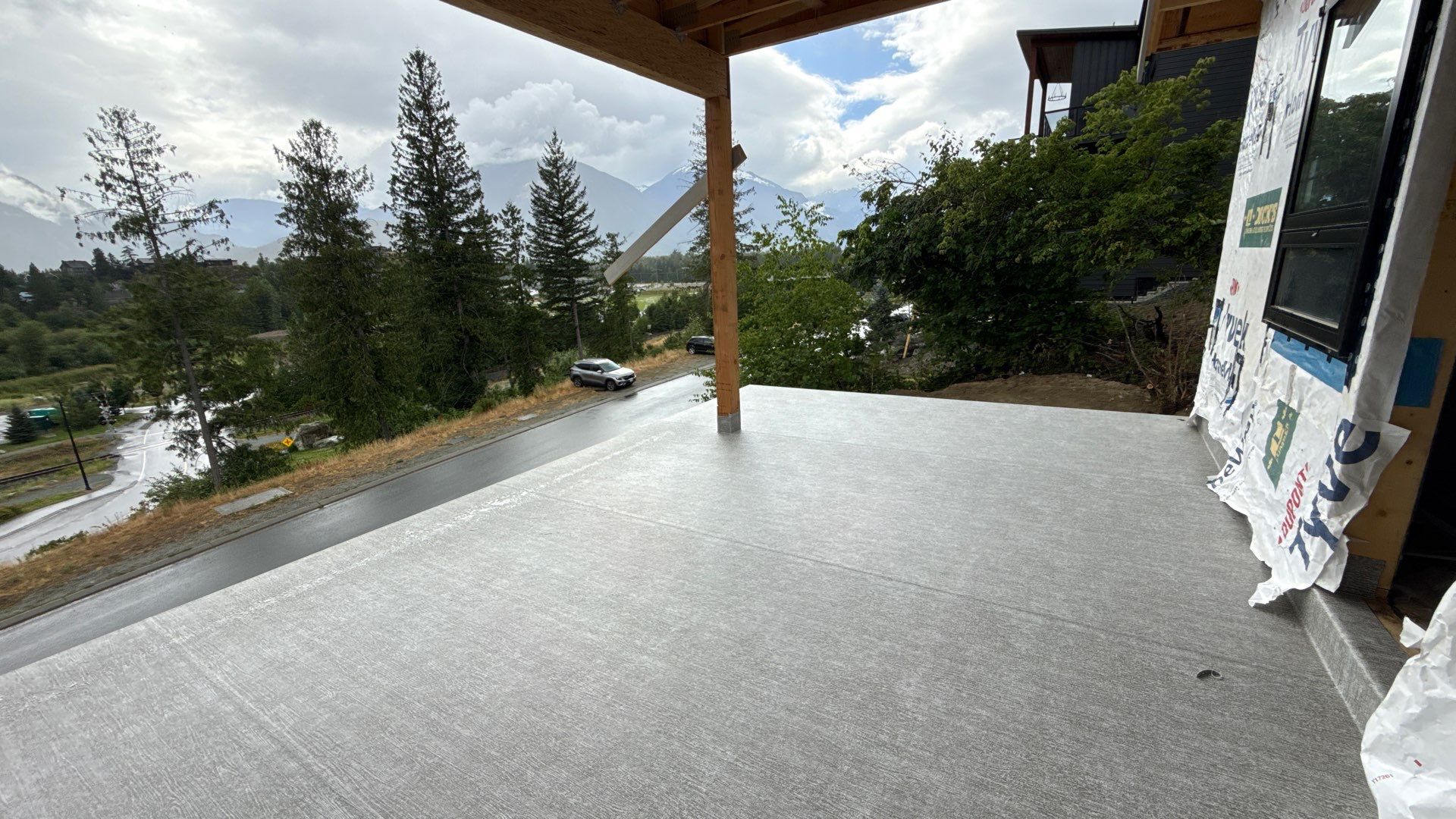
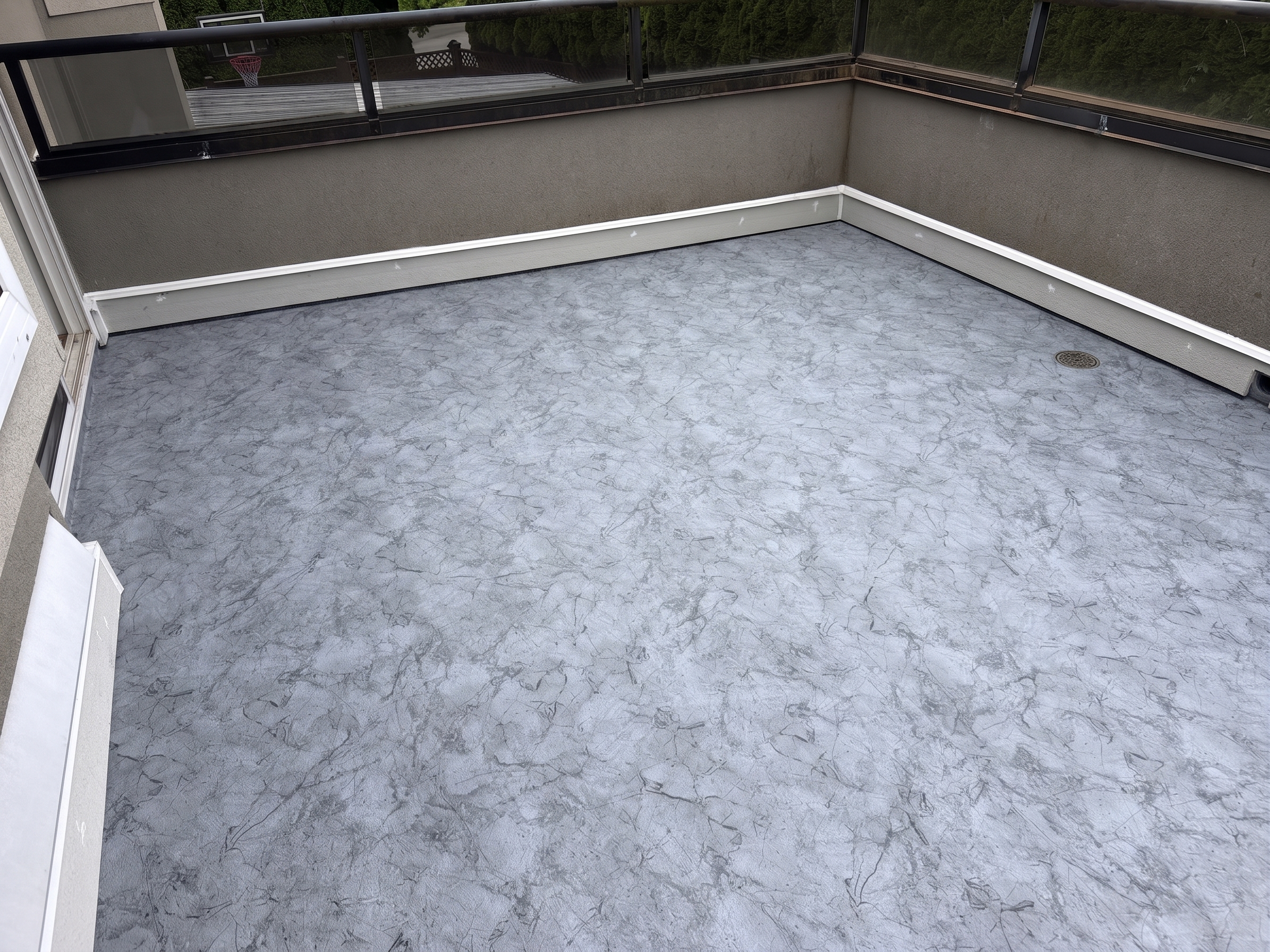
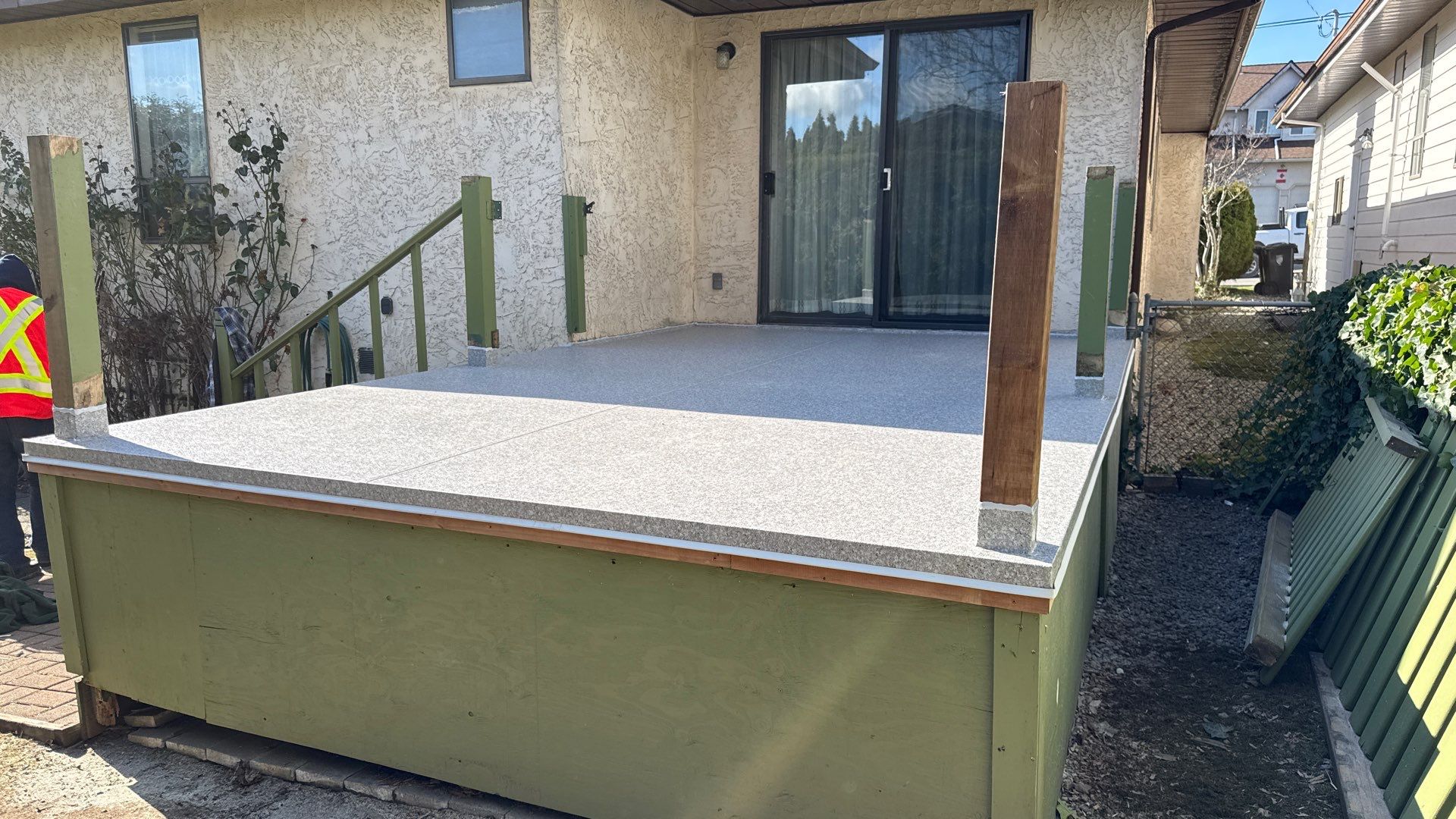
Vinyl decking requires less maintenance than any other outdoor deck surface, but it is not maintenance-free. A basic cleaning routine of soap and water 2 to 4 times per year keeps a vinyl deck membrane looking new and performing at its best. Valordek vinyl membranes are engineered with UV-stabilized PVC rated from -40°C to 80°C, and with proper care, they deliver the full 15-year waterproofing warranty period without issue.
This is the part most manufacturers gloss over. They tell you vinyl is "low maintenance" but never explain what that actually means season by season. The result is homeowners who either do nothing (and end up with preventable surface issues) or over-maintain with harsh chemicals that damage the membrane. This guide gives you the complete year-round care plan for your vinyl deck, based on manufacturer specifications and real-world performance across Canadian climates.
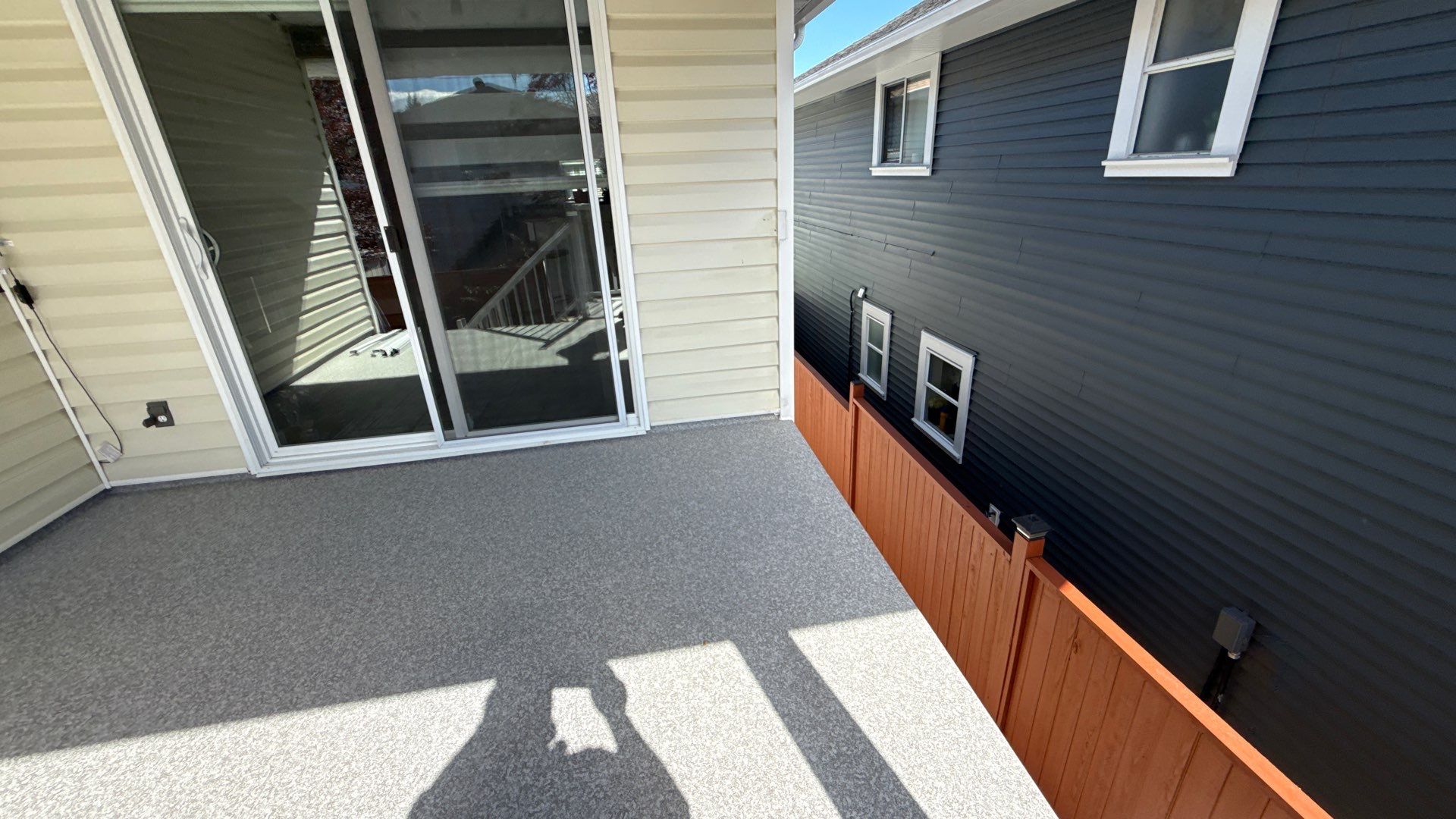
Why Vinyl Decks Are Low Maintenance (But Not No Maintenance)
Vinyl deck membrane eliminates the biggest maintenance tasks that other deck surfaces require. There is no annual staining, no sealing, no sanding, no rot repair, and no board replacement. According to Valordek's product specifications, the PVC membrane surface is UV-stabilized and waterproof from the day it is installed, which means the material itself does not degrade the way wood or composite surfaces do.
Here is how maintenance demands compare across the most common deck surfaces.
| Maintenance Task | Vinyl Membrane | Wood Deck | Composite Deck |
|---|---|---|---|
| Cleaning | Soap and water, 2-4x/year | Power wash + special cleaner, 1-2x/year | Composite cleaner, 2x/year |
| Staining/sealing | Never required | Every 1-2 years ($2-5/sqft) | Never required |
| Board/surface replacement | Rare (patch repair if damaged) | Every 5-10 years (rot, warping) | Rare (but no waterproofing) |
| Sealant inspection | Annual (edges and penetrations) | Annual (full surface recoat) | N/A (gaps between boards) |
| Structural inspection | Annual (check substrate below) | Annual (check for rot, fastener failure) | Annual (check framing) |
| Estimated annual cost | Under $50 (soap, brush) | $200-500+ (stain, sealer, tools) | $50-100 (specialty cleaner) |
The difference adds up. Over a 10-year period, a wood deck owner spends $2,000 to $5,000 on maintenance alone, not counting board replacements. A vinyl deck owner spends under $500 total. That is the real meaning of "low maintenance."
What You Need for Vinyl Deck Cleaning
Vinyl deck maintenance requires no specialty products. Everything you need is available at any hardware store or already in your home.
Recommended supplies:
- Mild dish soap (Dawn, Palmolive, or equivalent)
- Warm water
- Soft-bristled brush or push broom (not wire bristle)
- Garden hose with spray nozzle
- Plastic dustpan and soft broom for debris
Optional for tougher jobs:
- Pressure washer (maximum 1,500 PSI, fan tip only, never a pinpoint nozzle)
- Baking soda paste (for stubborn stains)
- Isopropyl alcohol (for adhesive residue or tar)
What to avoid:
- Bleach or chlorine-based cleaners. These discolour PVC and can break down UV stabilizers over time.
- Abrasive cleaners or scouring pads. These scratch the embossed surface texture, reducing both appearance and slip resistance.
- Solvent-based cleaners (acetone, paint thinner, MEK). These dissolve PVC.
- Wire brushes or metal scrapers. These gouge the membrane surface.
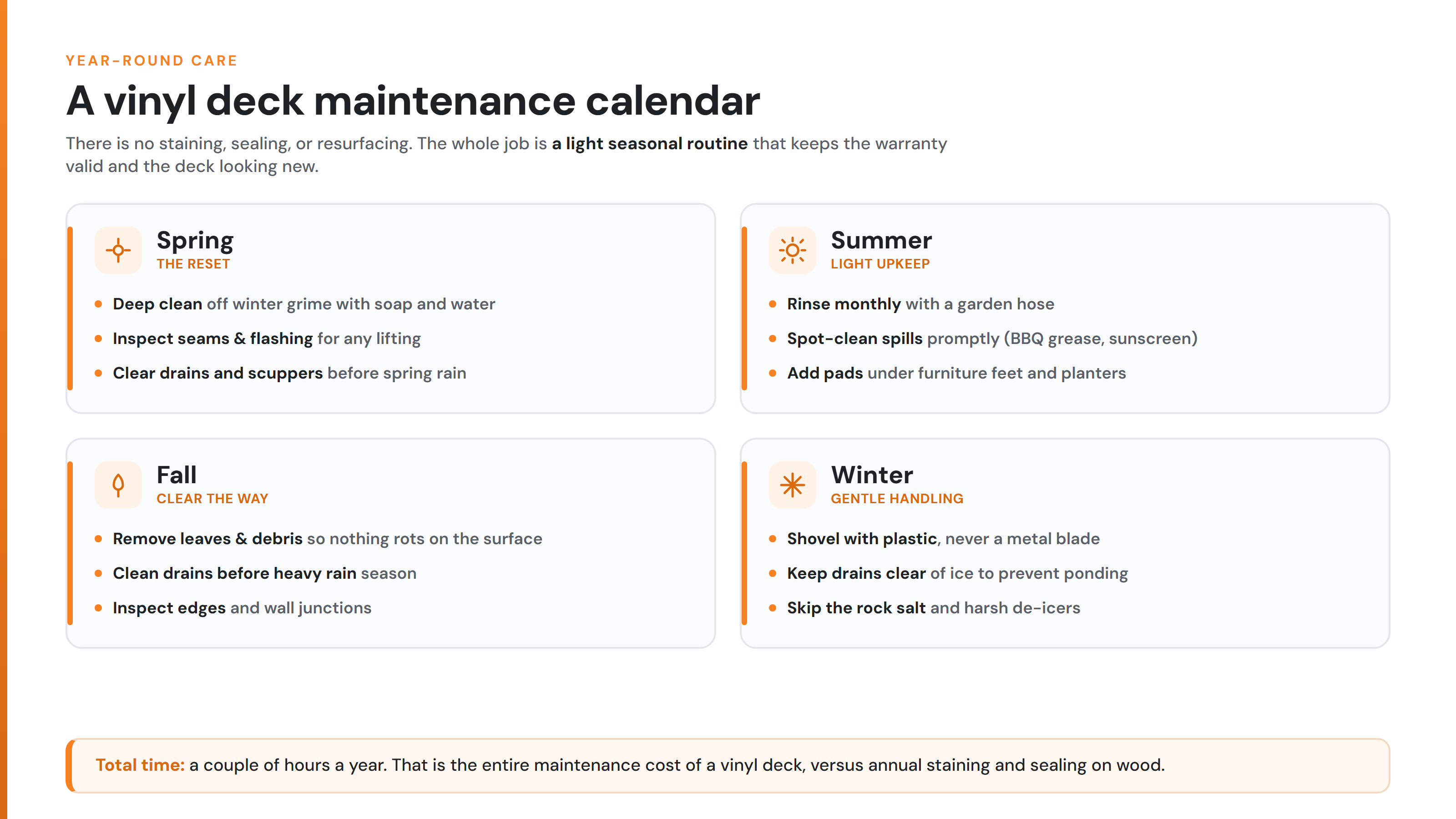
Seasonal Vinyl Deck Maintenance Checklist
The most effective approach to vinyl deck care is a seasonal routine. Each season brings different conditions, and a 30-minute check at each transition keeps small issues from becoming expensive problems.
Spring (March to April)
Spring is the most important maintenance window. Winter debris, moisture, and temperature cycling can leave residue on the membrane surface.
- Full cleaning. Sweep all debris, then wash the entire surface with warm soapy water and a soft-bristled brush. Rinse thoroughly with a hose.
- Inspect sealant. Check all edges, wall connections, post penetrations, and drain fittings. Sealant that has cracked or pulled away needs replacing before spring rains begin.
- Check drainage. Clear scuppers, drains, and overflow outlets of any leaf or debris buildup. Standing water accelerates surface wear and can void warranty coverage. what the warranty covers and what voids it sets out the exclusions in full, including why the material warranty and the installer's workmanship warranty are two separate promises.
- Look for damage. Check for cuts, tears, punctures, or membrane lifting, especially around furniture legs and high-traffic areas.
- Address mildew. Shaded areas may have developed mildew over winter. Scrub with soapy water. For persistent mildew, use a solution of 1 part white vinegar to 4 parts water.
Summer (May to August)
Summer is the lightest maintenance period. The membrane handles heat well (rated to 80°C), but furniture and BBQs need attention. Fire features need more care still: our guide covers fire pits and other heat sources on a vinyl deck.
- Regular sweeping. Sweep pollen, dust, and debris weekly if the deck gets heavy use.
- Quick wash. Hose down the surface monthly or after large gatherings.
- Furniture pads. Check that all furniture has protective pads or glides on the legs. Metal legs without pads will scratch the membrane over time.
- BBQ placement. Keep the barbecue's drip tray clean and wipe up grease promptly: drips stain PVC and are harder to remove once baked in by sun exposure. Valordek's care guide advises against leaving mats on the membrane.
- Planters. Lift and move planters every few weeks. Moisture trapped under planters creates discolouration rings. Use pot feet or risers to allow airflow underneath. Our guide to what can go on a vinyl deck covers planters, furniture and barbecues item by item.
Summer is also when the least reversible damage happens. Outdoor rugs and rubber-backed mats can react with the PVC and mark it permanently, which no amount of cleaning will lift. Our summer deck care guide covers what to watch for in the warm months.
Fall (September to November)
Fall preparation prevents the biggest winter maintenance issues.
- Leaf removal. Remove leaves regularly. Wet leaves left on vinyl create tannin stains and can form a slippery film. This is the number one preventable maintenance issue.
- Full cleaning. Do a thorough soap-and-water wash before winter. Getting the surface clean before snow and rain arrive means less work in spring.
- Store or protect furniture. Store lightweight furniture. If furniture stays out, ensure pads are intact and nothing will shift in wind and drag across the membrane.
- Sealant check. Second annual sealant inspection. Repair any gaps before freeze-thaw cycles begin. Water in cracked sealant expands when it freezes and makes the gap worse.
- Clear drainage. Make sure all drain outlets are clear for winter rain and snowmelt.
Winter (December to February)
Valordek vinyl membrane is rated to -40°C, so the material itself handles Canadian winters without issue. Winter care focuses on safe snow and ice management.
- Snow removal. Use a plastic shovel or push broom. Never use a metal shovel blade directly on the membrane surface.
- Ice melt. Calcium chloride ice melt is safe on vinyl membrane. Avoid rock salt, which leaves residue. Sand or fine gravel provides immediate traction on icy patches.
- No scraping. Do not scrape ice off the membrane surface. Let ice melt do the work, or wait for a warmer day.
- Check for ice dams. If drainage is blocked by ice and water pools on the surface, clear the drain outlet. Pooling water that freezes and expands can stress sealant joints.
How to Clean a Vinyl Deck: Step-by-Step
For a standard seasonal cleaning, follow these five steps (our dedicated guide to cleaning vinyl decking goes deeper on stains and technique). The entire process takes 20 to 30 minutes for a typical balcony.
- Clear the surface. Remove all furniture, planters, mats, and loose items. Sweep off debris with a soft broom.
- Pre-rinse. Hose down the entire surface with clean water to loosen dirt and remove loose grit.
- Scrub. Mix a few drops of mild dish soap in a bucket of warm water. Scrub the surface with a soft-bristled brush, working in sections. Use circular motions to work the soap into the embossed texture.
- Rinse thoroughly. Rinse each section completely before moving on. Soap residue left to dry creates a film that attracts more dirt.
- Inspect while cleaning. Use the cleaning process as your inspection opportunity. Check edges, sealant lines, and drain fittings while you are already down on the surface.
For pressure washing, maintain at least 12 inches between the nozzle and the surface, use a 25-degree or 40-degree fan tip, and never exceed 1,500 PSI. A pinpoint nozzle at close range can cut through the membrane.
How to Remove Common Stains from Vinyl Decking
Most stains on vinyl deck membrane come from organic sources (leaves, food, mildew) or incidental contact (grease, rust, adhesive). Here is how to handle each type.
| Stain Type | Removal Method | Prevention |
|---|---|---|
| Leaf tannin stains | Soapy water + scrub brush. For set-in stains, try baking soda paste (leave 15 min, scrub, rinse). | Remove leaves promptly in fall. Don't let wet leaves sit. |
| Mildew/algae | 1 part white vinegar to 4 parts water. Scrub with soft brush, rinse. | Keep shaded areas clean. Improve air circulation if possible. |
| Grease/BBQ drips | Dish soap applied directly to stain. Let sit 5 min, scrub, rinse. Repeat if needed. | Use a BBQ mat. Clean drips immediately before sun bakes them in. |
| Rust stains | Lemon juice or white vinegar applied directly, let sit 10 min, scrub gently. May need multiple applications. | Use non-rusting furniture. Check for metal items left on deck. |
| Adhesive residue | Isopropyl alcohol on a cloth, rub gently. Do not use acetone. | Remove tape or adhesive items promptly. |
| Scuff marks | Soapy water usually removes. For stubborn scuffs, try a melamine sponge (test in hidden area first). | Use furniture pads. Lift furniture instead of dragging. |
Important: Always test any cleaning solution on a small, hidden area first. This applies even to mild solutions like vinegar.
Protecting Your Vinyl Deck from Furniture and Traffic
The most common source of vinyl deck surface damage is not weather. It is furniture being dragged across the membrane without protective pads.
Furniture protection rules:
- Use felt, rubber, or plastic furniture glides on all legs. Check them at the start of each season and replace worn pads.
- Lift furniture to move it. Never drag chairs, tables, or planters across the membrane surface.
- Avoid rubber-backed mats or rugs directly on the membrane. Rubber traps moisture underneath, which can cause discolouration over time. Use mats with open-weave or mesh backing instead.
- Place a protective mat or pad under BBQs, fire pits, and heavy planters.
High-traffic areas: Doorway thresholds and stairway landings see the most foot traffic. These areas may show wear patterns before the rest of the deck. Keeping them clean and free of grit (which acts like sandpaper underfoot) extends the appearance life of the membrane.
When Does Your Vinyl Deck Need Professional Attention?
Most vinyl deck maintenance is straightforward and homeowner-friendly. But some situations require a professional assessment. Contact your local Valordek dealer if you notice any of the following.
- Membrane lifting or bubbling. This indicates adhesive failure underneath. Small areas can sometimes be re-adhered, but large sections may need professional repair.
- Visible tears or punctures. Small punctures can be patched, but the patch must be heat-welded or properly sealed to maintain the waterproof integrity. DIY patches with generic caulk are not adequate.
- Water appearing below the deck. If the space below your balcony or rooftop deck shows water stains, dripping, or moisture, the membrane or sealant has been compromised. This needs immediate professional inspection before structural damage occurs.
- Sealant failure at wall connections. Where the membrane meets the building wall, sealant must remain intact. Failed wall connections are the most common source of water infiltration on balcony installations. See our guide on how vinyl decking is installed for proper wall connection details.
- Extensive discolouration. Some fading is normal over many years. But sudden or patchy discolouration could indicate a chemical spill, improper cleaner use, or UV stabilizer failure. A dealer can assess whether the membrane needs replacement or just restoration.
Valordek's warranty covers waterproofing performance for 15 years (both Fuzzy-Back and Smooth-Back), plus 5 years of appearance coverage. The warranty requires that the membrane be maintained according to Valordek's cleaning guidelines, which this guide covers.
Frequently Asked Questions
How often should you clean a vinyl deck?
Clean your vinyl deck 2 to 4 times per year, aligned with seasonal transitions. Spring and fall are the most important cleaning windows. Valordek recommends a full soap-and-water wash at each seasonal transition, with additional spot cleaning as needed during summer use.
Can you pressure wash vinyl decking?
Yes, but with limits. Use a maximum of 1,500 PSI with a 25 or 40-degree fan tip, keeping the nozzle at least 12 inches from the surface. Never use a pinpoint nozzle. Most routine cleaning does not require pressure washing. Soap, water, and a soft brush are sufficient for standard maintenance.
Is bleach safe on vinyl decking?
No. Bleach and chlorine-based cleaners can discolour PVC membrane and degrade the UV stabilizers that protect the surface from sun damage. Use white vinegar (1 part vinegar to 4 parts water) for mildew removal instead. Valordek recommends mild dish soap and warm water for routine cleaning.
Can you use salt on a vinyl deck in winter?
Use calcium chloride ice melt, which is safe on vinyl membrane. Avoid rock salt (sodium chloride), which leaves a white residue that requires extra cleaning. Sand or fine gravel provides immediate traction without chemical contact. Valordek vinyl membrane is rated to -40°C and handles Canadian winters without material degradation.
How long does vinyl decking last with proper maintenance?
Valordek vinyl decking carries a 15-year waterproofing warranty (both Fuzzy-Back, 68mil, and Smooth-Back, 60mil), plus 5 years of appearance coverage on both lines. With proper maintenance following this guide, the membrane typically performs well beyond the warranty period. The PVC material is UV-stabilized and rated from -40°C to 80°C.