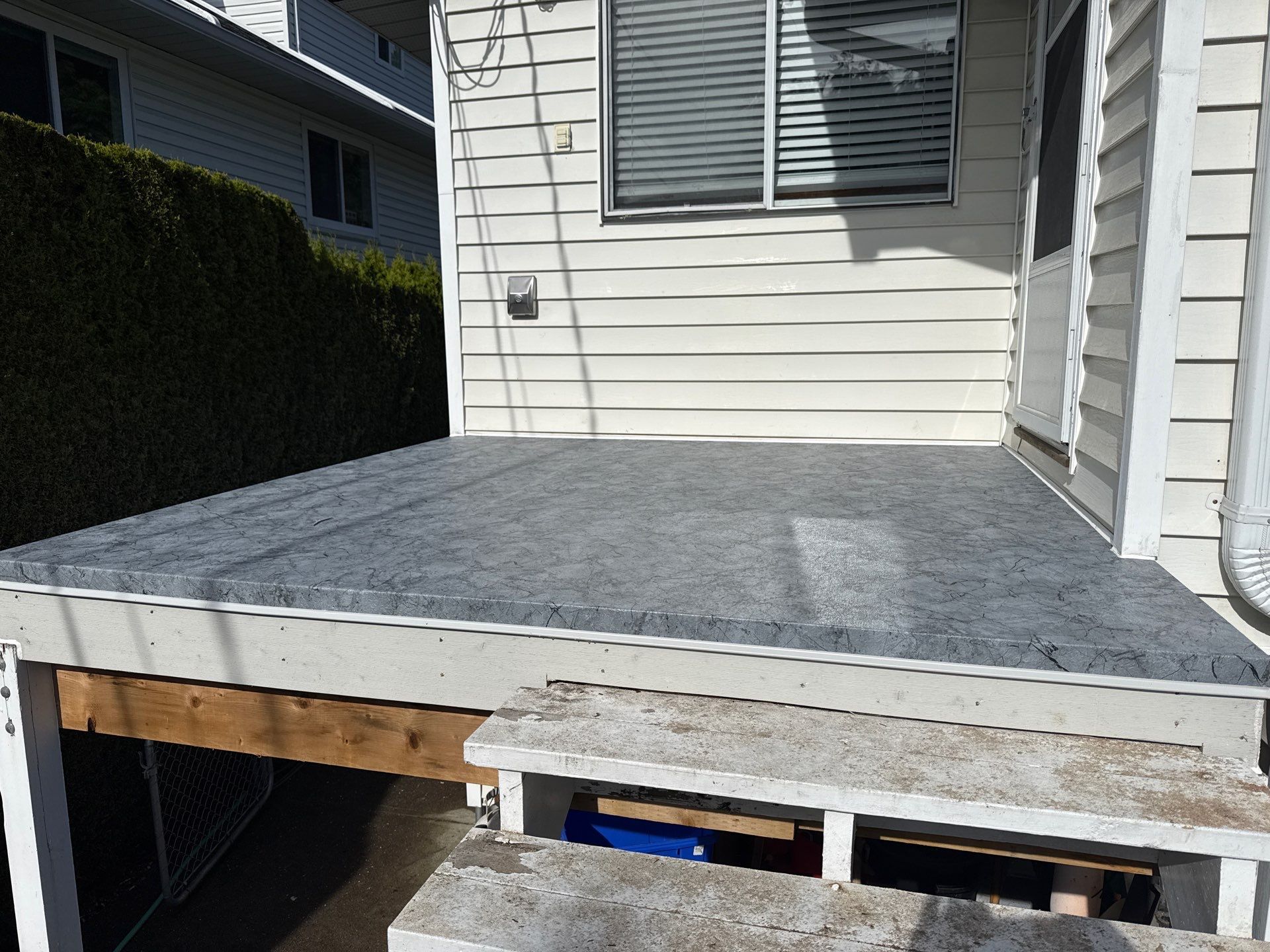
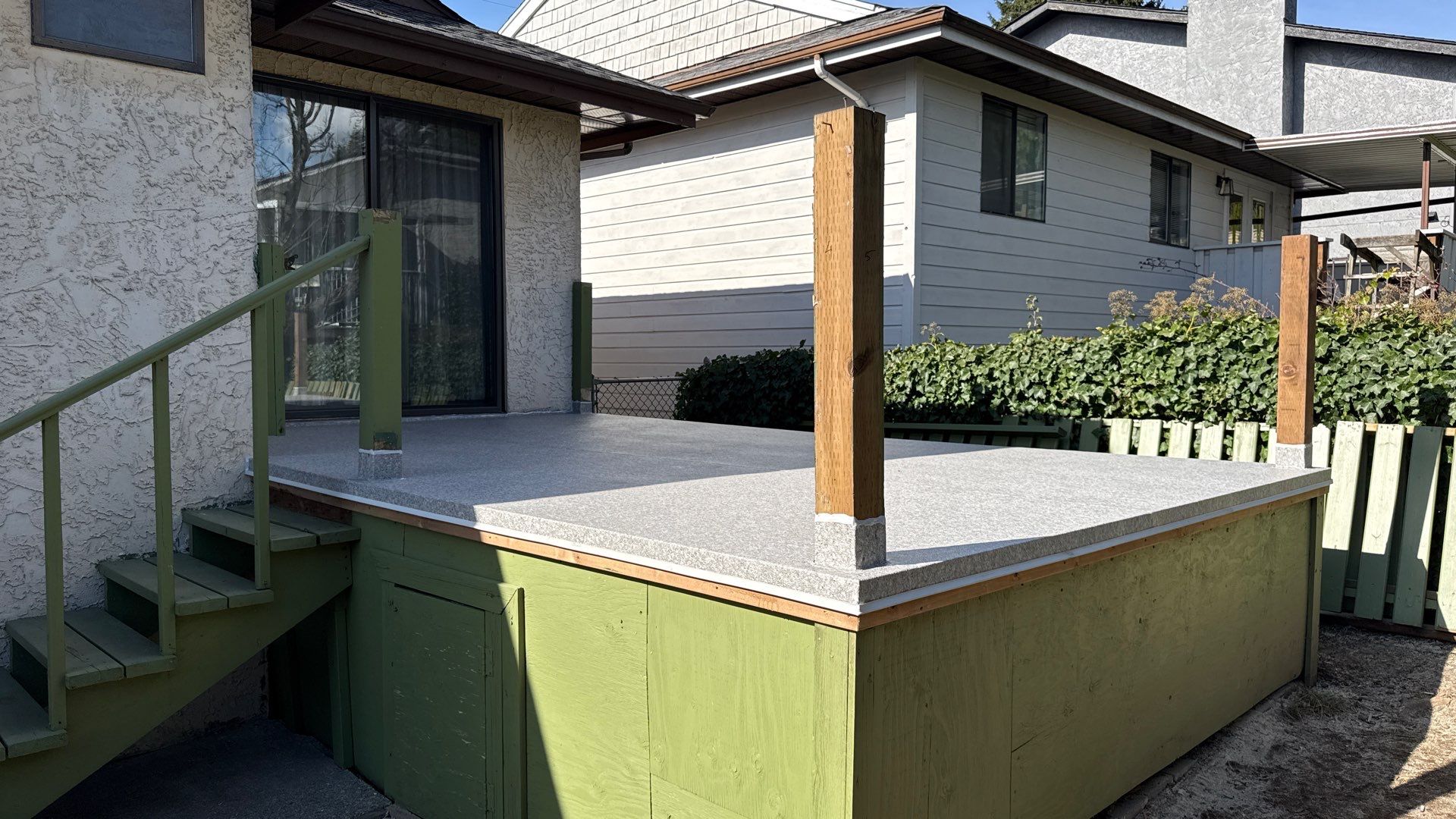
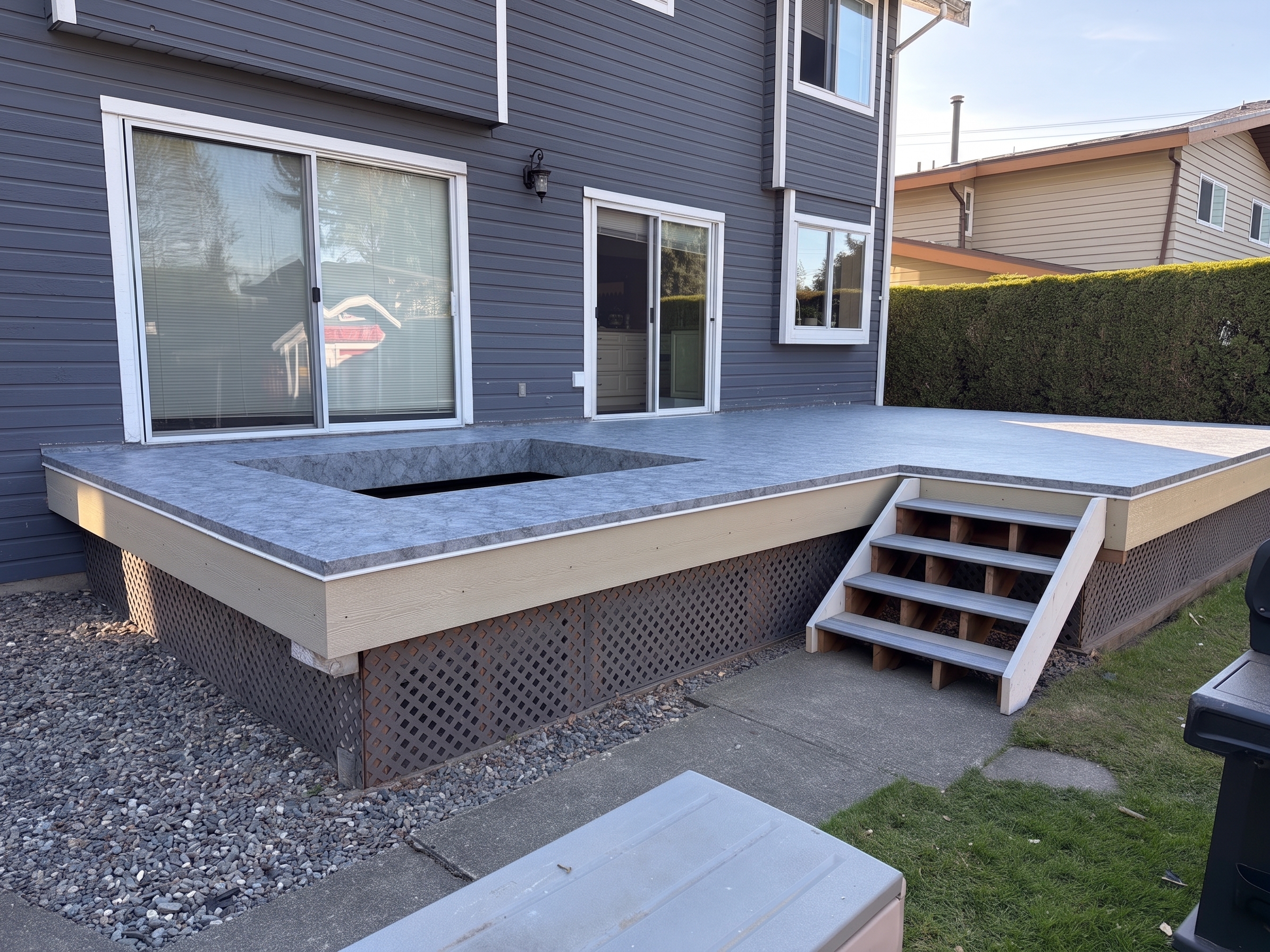
In most BC strata buildings, balconies are limited common property, which makes the strata corporation responsible for waterproofing and repairing them under the Strata Property Act, unless the bylaws assign that duty to the owner. Funding comes from strata fees, the contingency reserve fund, or a special levy approved by a 3/4 vote. The proven fix for a failing balcony is a heat-welded vinyl deck membrane, and Valordek manufactures code-compliant membranes in North America with a 15-year waterproofing warranty.
If you own a condo or sit on a strata council in British Columbia and a balcony is leaking, two questions come up immediately: who pays for it, and what is the right way to fix it. Both matter, because a balcony membrane failure over occupied space rarely stays small, and the cost is shared across owners. This guide explains how responsibility is determined under BC strata law, how these projects get funded and approved, and why a vinyl membrane is the spec-approved solution. It is general information, not legal advice, so always confirm against your own strata plan and bylaws. For the underlying failure modes, see common balcony waterproofing failures.
Who Is Responsible for Balcony Waterproofing in a BC Strata?
In a BC strata, the corporation is usually responsible for maintaining and repairing balcony waterproofing because balconies are typically classified as limited common property, and the Strata Property Act assigns that duty to the strata unless a bylaw shifts it. According to the Province of British Columbia, responsibility depends on how the balcony is classified in the strata plan and what the bylaws say.
Section 72 of the Strata Property Act governs repair and maintenance of common property, and most strata bylaws make the corporation responsible for the structure and exterior, including the waterproof membrane on a balcony. Owners are generally responsible for the interior of their lot. The practical takeaway is that a leaking balcony membrane is usually a strata responsibility, but the only way to confirm is to review the strata plan, the schedule of unit entitlement, the registered bylaws, and any alteration agreements on file. When a balcony alteration agreement exists, it can shift maintenance of a finish to the owner, which is exactly why these documents have to be checked before assuming who pays.
Is a Balcony Common Property or Limited Common Property?
A balcony in a BC strata is most often limited common property, meaning it is common property designated for the exclusive use of one strata lot, rather than part of the owner's lot itself. This classification is what places waterproofing responsibility with the strata corporation in most buildings.
The distinction matters because it changes who maintains, repairs, and pays for the surface. Common property is shared by all owners. Limited common property is still owned in common but reserved for the use of a specific lot, like the unit the balcony attaches to. The waterproof membrane on a limited common property balcony is part of the building envelope, so it generally falls to the strata to maintain even though only one owner uses the balcony. Your strata plan shows how each balcony is designated, and the bylaws confirm the maintenance split.
Who Pays for Strata Balcony Repairs, and What Does It Cost?
Strata balcony repairs are paid from the strata's operating budget, the contingency reserve fund, or a special levy, with the cost shared among owners by unit entitlement. Routine maintenance usually comes from monthly strata fees, while a full balcony membrane replacement across a building is a larger project that often requires the reserve fund or a special levy.
A special levy is a one-time charge to fund a specific project, and it requires a 3/4 vote at a general meeting. Once approved, each owner's share is calculated by unit entitlement, the same formula used for strata fees. For a building-wide balcony waterproofing project, that means the total cost is divided across all owners, not just the units with failing balconies, because the membrane is part of the common building envelope. Total project cost varies widely with the number of balconies, access, structural repairs uncovered during the work, and the membrane system specified. The membrane itself is a small fraction of a building-envelope project, with Valordek vinyl deck membrane starting at $3.74 per square foot.
What Causes Strata Balcony Membranes to Fail?
Strata balcony membranes fail most often from aged or cracked coatings, failed seams and flashing, poor drainage, and water tracking in at wall and door terminations. On a multi-unit building, a single failing balcony membrane can let water into the structure and the unit below, which is why strata councils treat balcony waterproofing as a building-envelope priority.
Older buildings frequently have original membranes or liquid coatings at or past their service life, and a depreciation report will often flag balcony waterproofing as an upcoming expense. If your council has just received one, here is what a depreciation report flagging the balcony membrane actually means. Because the failures track into common structure, the repair is rarely cosmetic. It usually means removing the failed surface, assessing the substrate, and installing a proper waterproofing system with correct slope, flashing, and drainage. For how these systems are built, see waterproofing a deck over living space and deck drainage systems.
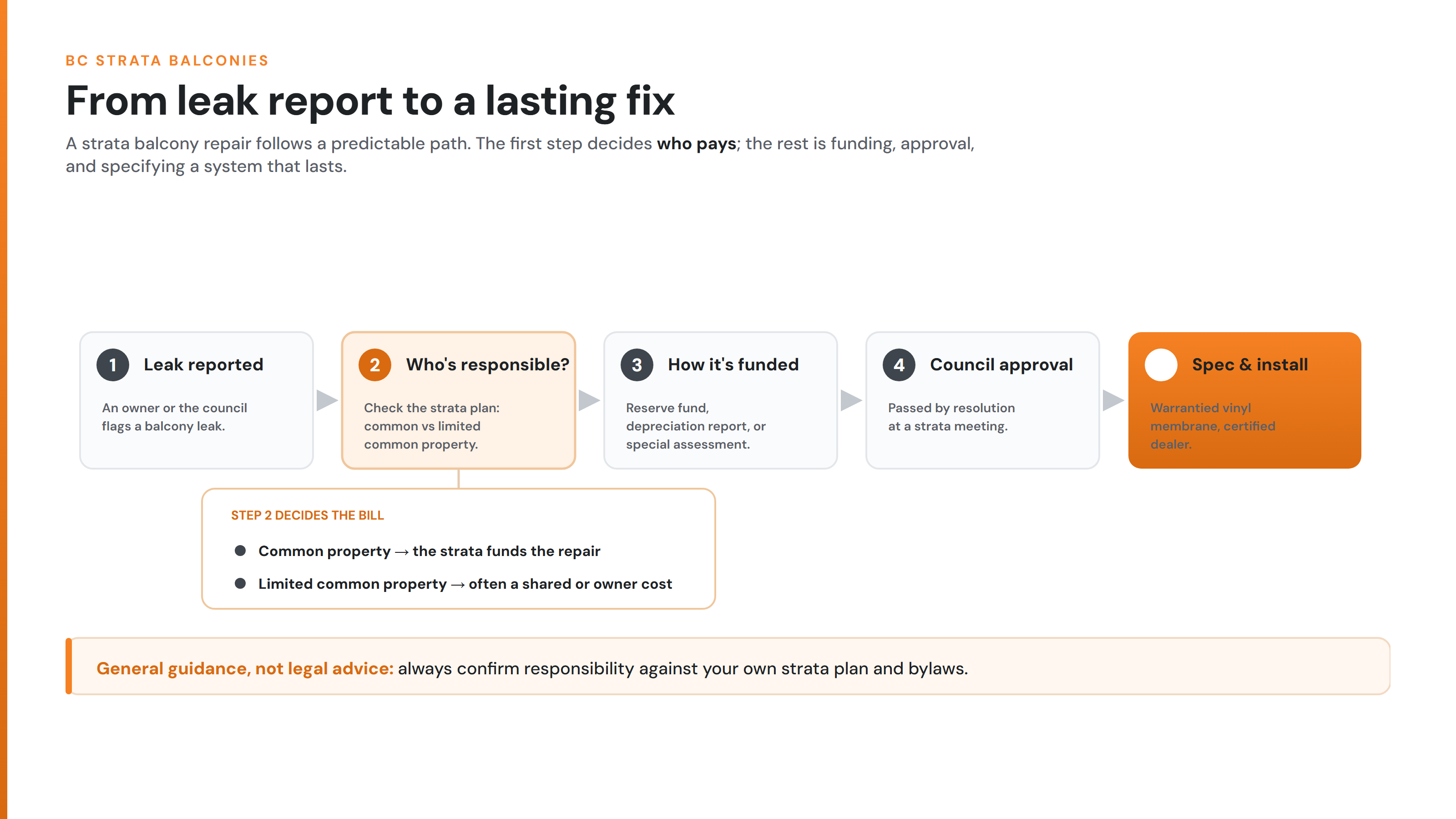
How to Get a Balcony Waterproofing Project Approved by Your Strata Council
Getting a balcony waterproofing project approved means moving it through the strata's governance process: document the failure, get a professional assessment, obtain comparable quotes, and bring funding to a vote. A clear, well-documented proposal is what moves a council from awareness to an approved budget.
- Document the problem: Record the leaks, interior damage, and any notes from the depreciation report so the council has evidence of the scope.
- Bring in a building envelope consultant: For waterproofing failures, a consultant assesses whether the issue is the membrane alone or underlying structural damage, and writes a specification the contractors quote against.
- Get comparable quotes: Quotes should be based on the same specification so the council compares like for like, including substrate repair, membrane system, flashing, and drainage.
- Confirm funding: Decide whether the work draws on the contingency reserve fund or requires a special levy, and prepare the resolution for the general meeting.
- Vote and schedule: A special levy needs a 3/4 vote. Once funded, the project is scheduled with the contractor and, ideally, a manufacturer-backed membrane system.
Specifying a membrane with a manufacturer warranty and a local dealer network gives the council confidence the repair will last. Valordek's dealer network across BC supports strata and contractor projects directly.
Why Vinyl Membrane Is the Spec-Approved Solution for Strata Balconies
Vinyl deck membrane is the spec-approved choice for strata balconies because it provides code-compliant waterproofing, a finished walking surface, and a manufacturer warranty in one system. For a strata council answerable to all owners, a membrane with documented testing and a long warranty is a defensible, durable decision.
Valordek vinyl membranes exceed building code 37.54.95 for waterproofing, with CCMC and Intertek testing behind the two product lines, and the rooftop-rated 60mil Smooth-Back membrane carries Class A and C fire ratings. The membrane is rated from -40°C to 80°C for the full BC climate range and carries a 15-year waterproofing warranty when installed by a certified installer. Because Valordek warehouses in Surrey, BC, strata projects across the Lower Mainland get local supply and dealer support. Learn more about the application on the vinyl decking for balconies page, or explore the full Valordek vinyl decking system.
Frequently Asked Questions
Who is responsible for balcony waterproofing in a BC strata?
In most BC stratas, the strata corporation is responsible for balcony waterproofing because balconies are usually limited common property, and the Strata Property Act assigns maintenance of common property to the strata. Owners should confirm against their strata plan and bylaws, since an alteration agreement can shift responsibility for a balcony finish to the owner.
Is a strata balcony common property or limited common property?
A strata balcony is most often limited common property, meaning it is common property reserved for the exclusive use of one strata lot. This classification places waterproofing and structural maintenance with the strata corporation in most buildings. The strata plan shows the exact designation for each balcony, and the bylaws confirm the maintenance split.
Who pays for strata balcony repairs in BC?
Strata balcony repairs are paid from strata fees, the contingency reserve fund, or a special levy, with cost shared among all owners by unit entitlement. A building-wide balcony membrane replacement usually requires the reserve fund or a special levy, which needs a 3/4 vote at a general meeting to approve.
What is a special levy for balcony repairs?
A special levy is a one-time charge that funds a specific strata project, such as building-wide balcony waterproofing. It requires a 3/4 vote at a general meeting, and once approved, each owner's share is calculated by unit entitlement. Special levies are common for large building-envelope projects that exceed the contingency reserve fund.
What flooring is approved for a strata balcony?
A code-compliant waterproof membrane is the approved surface for most strata balconies, since the balcony is part of the building envelope. Valordek vinyl deck membrane exceeds building code 37.54.95, carries a 15-year waterproofing warranty, and acts as both the waterproofing and the finished surface, which is why it is specified for strata and condo balconies.
How long does a vinyl balcony membrane last on a strata building?
A properly installed vinyl deck membrane lasts 15 years or more and carries a 15-year waterproofing warranty from Valordek when installed by a certified installer. Lifespan depends on installation quality, especially the flashing and drainage details, which is why strata councils should specify a manufacturer-backed system installed by a qualified dealer.