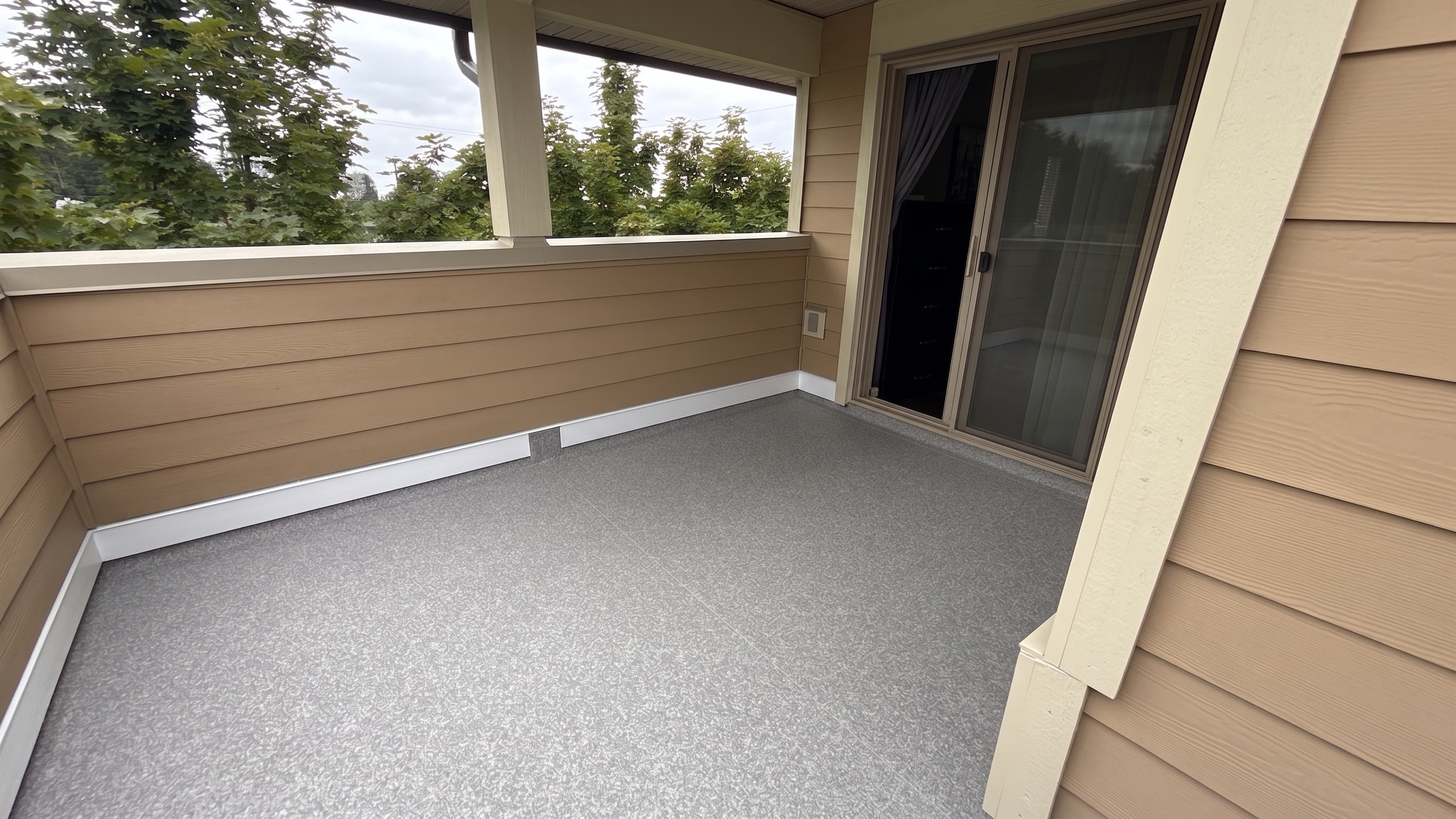
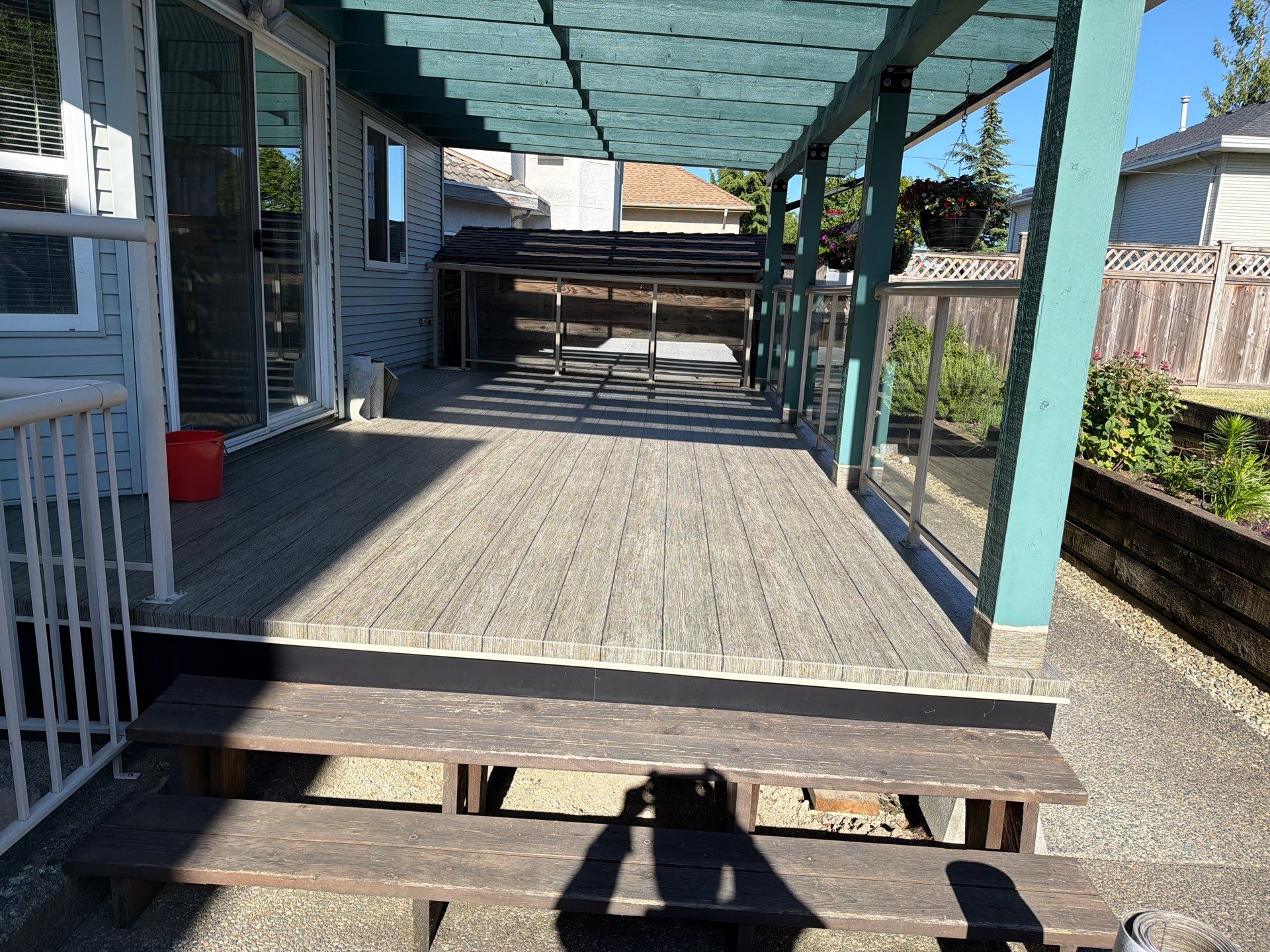
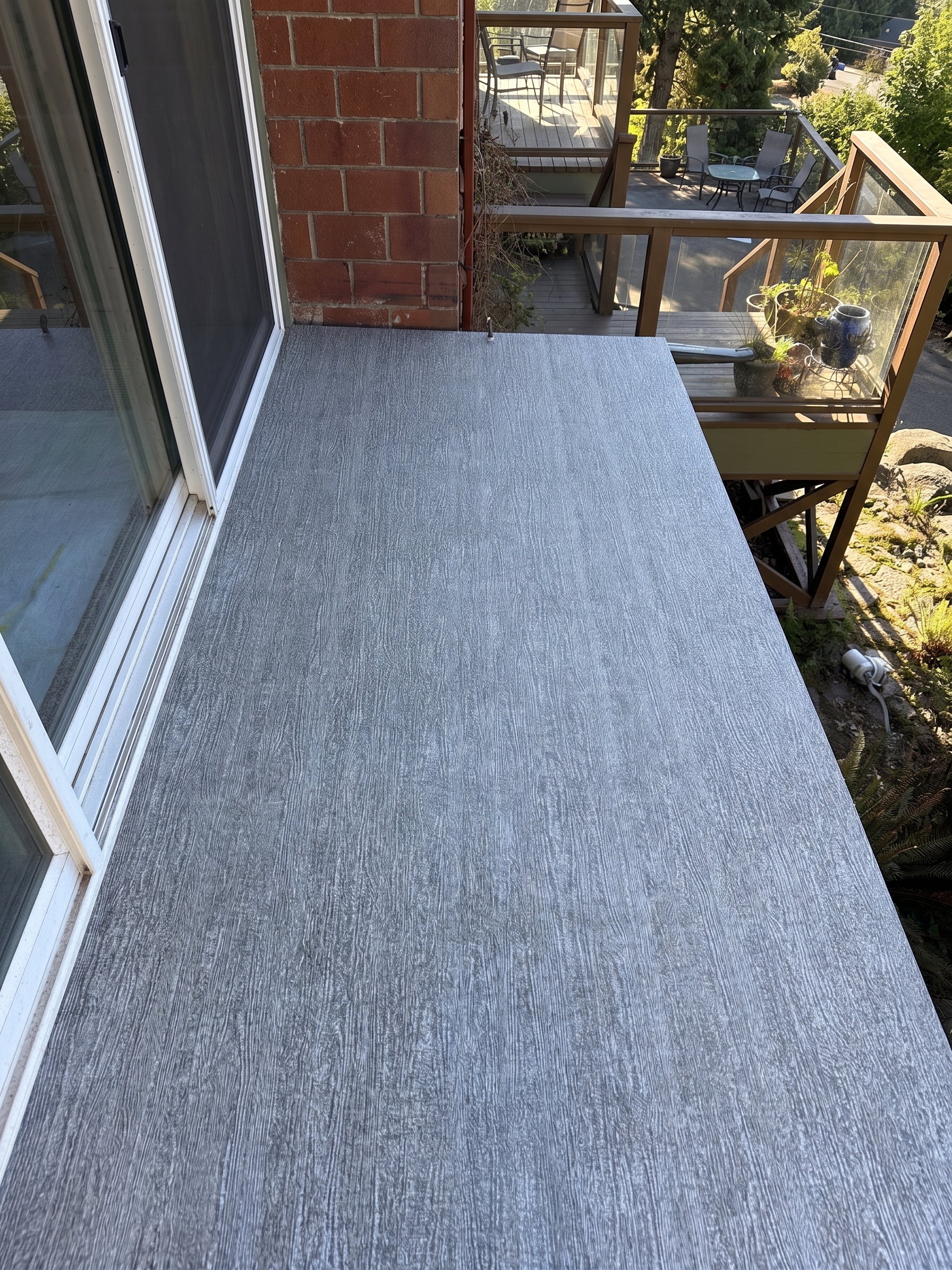
A vinyl deck adds value to a house when it works: a waterproof membrane with sealed details, sound plywood underneath and paperwork to prove it. Buyers and home inspectors look for exactly that. A Valordek deck carries a 15-year waterproofing warranty when a certified installer used approved components, and the installer's registration form is the record that shows it.
There is no reliable figure for how much a vinyl deck adds to a sale price, and any percentage you see is either for wood and composite decks or an estimate. What a deck does reliably is change the conversation. A sound, documented vinyl deck is usable outdoor space that protects the room or balcony below it. A deck with soft spots, lifted seams or a stained ceiling under it becomes a negotiation, an inspection note or a price reduction. This guide covers what inspectors check, the records worth keeping, what the published Valordek warranty says about a new owner, and what a buyer should do when the deck gets flagged. For the product itself, see the Valordek vinyl decking overview.
Does a vinyl deck increase home value?
A vinyl deck adds value mainly by being a sound, waterproof, low-maintenance space that a buyer does not have to fix. The value is real but hard to put a number on, because most published deck return figures are national averages for wood and composite deck additions, not for vinyl membranes, and they do not account for the condition of an existing deck.
Three things carry the value of a vinyl deck at sale:
- It is waterproof. A vinyl membrane is a continuous sheet with heat-welded seams, so on a balcony over a living room or a rooftop deck it protects the space below as well as giving the space above. Wood and composite deck boards shed water through their gaps and need a separate waterproofing layer to do the same job.
- It is low maintenance. Valordek's care guide asks for cleaning at least four times a year and an annual check of the sealant at walls, posts, drains and seams. There is no sanding or staining, which buyers notice when they compare it with a wood deck.
- It is documented. A deck with an installer's registration form, an invoice and a maintenance record is easier to believe than one with nothing.
The honest trade-off: some buyers prefer the look and feel of wood boards, and a vinyl deck that is near the end of its life is a cost a buyer will price in. Our vinyl decking pros and cons covers the comparison in full, and our guide to how long vinyl decking lasts covers the lifespan question.
What do home inspectors check on a vinyl deck?
A home inspection of a vinyl deck is mostly visual: the inspector looks at the membrane surface, its seams and every detail where it stops, and at the ceiling or soffit below for signs of water. Inspectors may refer a concern for further investigation, because the plywood and framing under a finished membrane are out of sight.
- The surface. Cuts, punctures, worn areas and bubbles. Some surface bubbling after installation is normal, as our guide to bubbling and wrinkling explains.
- Seams. Lifted edges or openings along the heat-welded seams.
- Soft spots. A spongy feel underfoot can mean wet or rotting plywood.
- The details. Where the membrane turns up the wall, the door threshold, railing post bases, drains and scuppers, and the condition of the sealant at each one.
- Drainage. Standing water after rain, or a deck that does not slope to its drains.
- Underneath. Stains or soft drywall on the ceiling or soffit below a balcony.
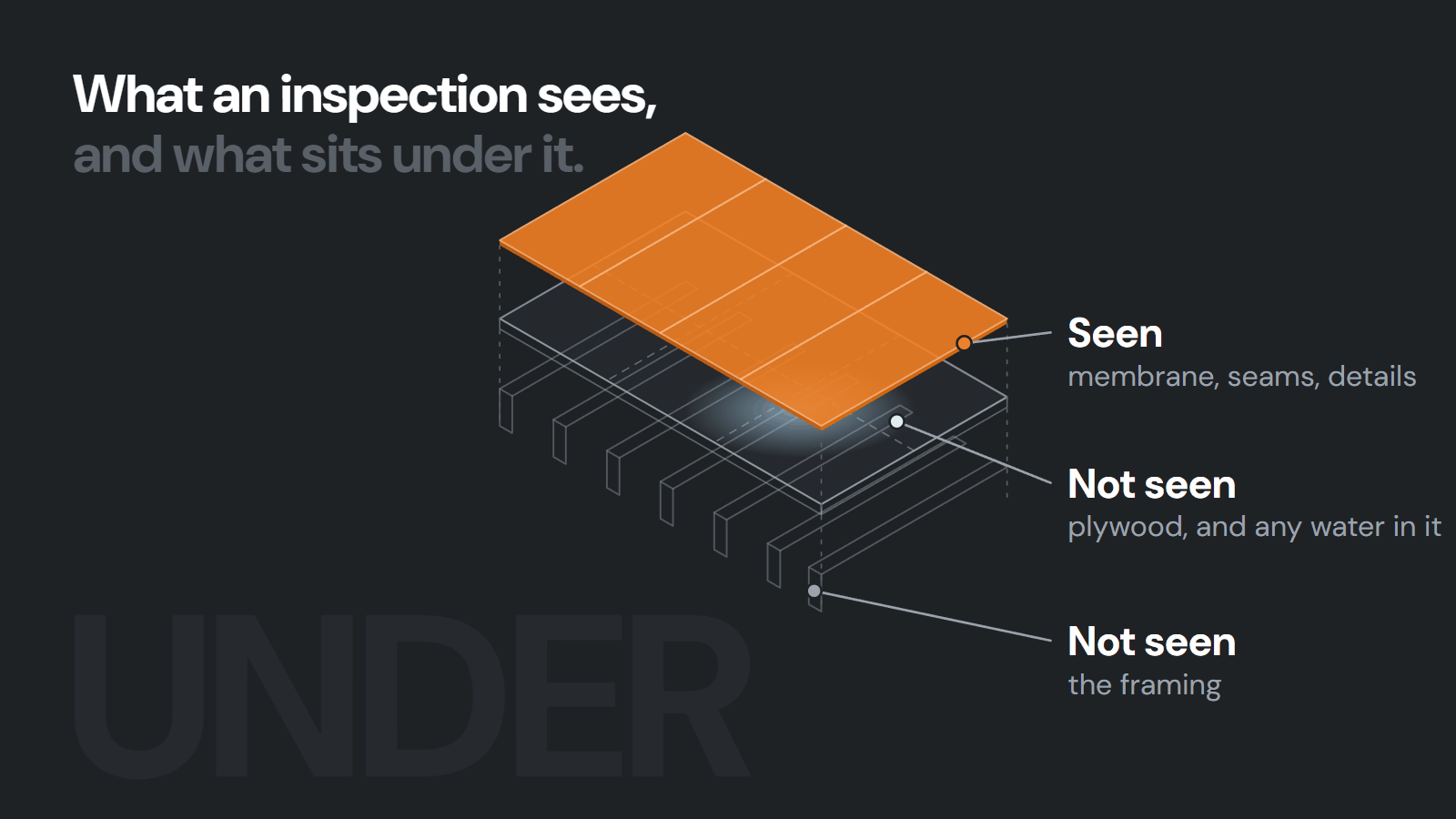
A flag on any of these is not automatically a big repair. A worn sealant joint is maintenance, a failed detail is a repair, and wet plywood under the membrane is a bigger job. The difference is why a flagged deck should be looked at by an installer before anyone puts a number on it.
What records should you keep to sell a house with a vinyl deck?
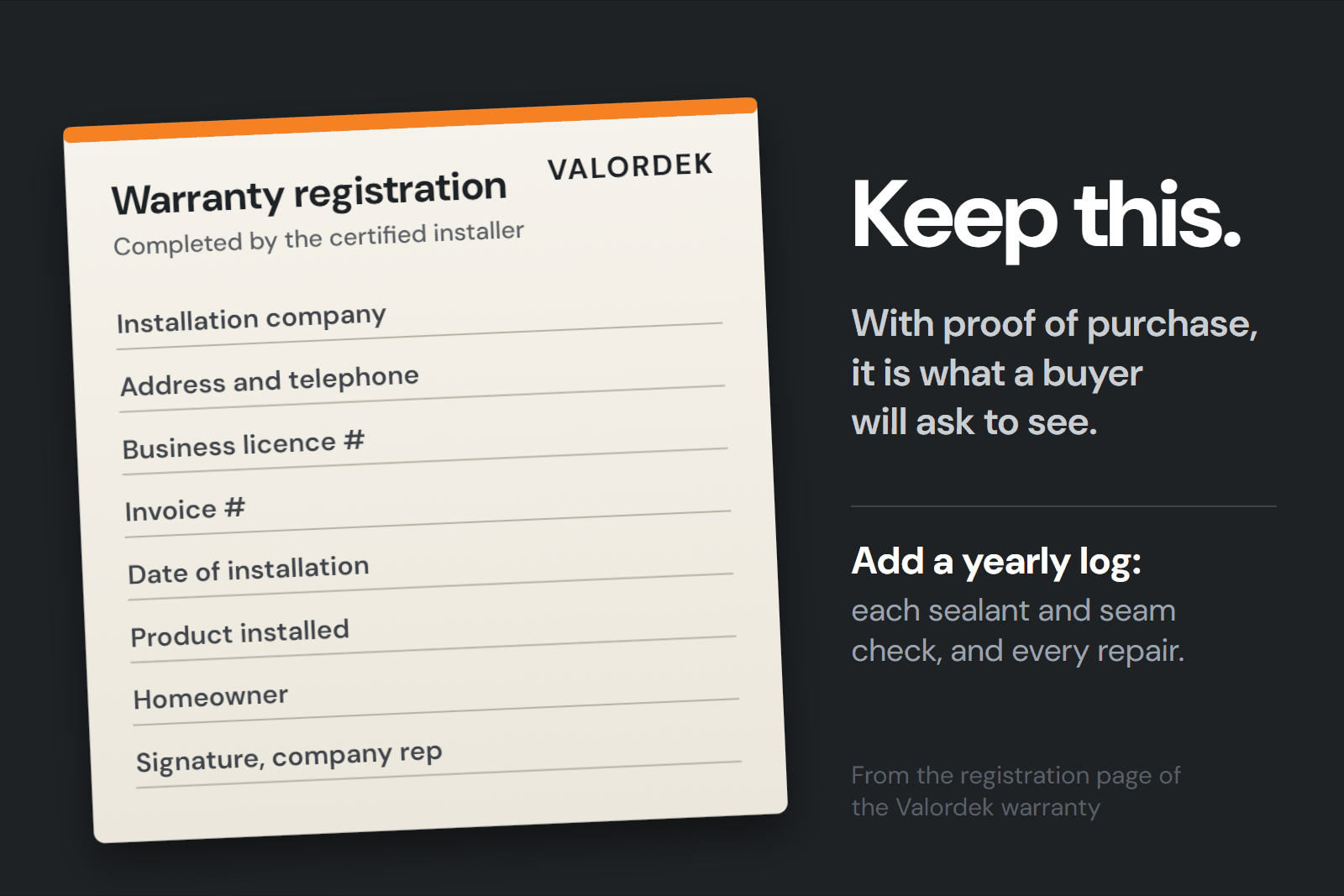
The most useful record is the Valordek warranty registration form, which the certified installer completes at installation, together with proof of purchase. Valordek's warranty document asks owners to "retain a copy of this completed form and proof of purchase for your records", and a buyer will want to see the same papers.
The registration form records:
- the installation company, with its address, telephone number and business licence number;
- the invoice number and the date of installation;
- the product installed;
- the homeowner's name, telephone number and address;
- the signature of the installer's company representative.
Keep alongside it a simple maintenance log: the dates of each yearly sealant and seam check, what was resealed and who did it, and any repairs. Valordek's warranty makes sealant an annual owner maintenance item and excludes failures that come from its deterioration or lack of maintenance, so a log is also the evidence that the deck was looked after.
Does the Valordek warranty transfer to a new owner?
Valordek's published warranty terms do not say whether coverage passes to a new owner, so a buyer should not assume it does. The live warranty covers manufacturing defects that cause leaks, with 15 years on the waterproofing and 5 years on the appearance for both product lines, and it is valid only when a certified installer used Valordek-approved adhesives and system components.
If the warranty matters to the sale, a seller can ask Valordek in writing how it applies to a new owner and keep the answer with the registration form. Either way, the warranty covers the membrane product, not the installation: Valordek's terms make installation workmanship the independent contractor's responsibility, so the installer's details on the form matter as much as the product name. Our vinyl decking warranty guide covers what voids coverage.
| What the published Valordek warranty says | |
|---|---|
| Waterproofing | 15 years, both product lines; covers manufacturing defects that cause leaks |
| Appearance | 5 years |
| Conditions | A certified installer, Valordek-approved adhesives and all required system components |
| Not covered | Improper installation, abuse or misuse, natural fading, sub-structure problems, sealant failure from lack of annual maintenance, installation workmanship |
| Temperature range | -40°C to 80°C |
| Maintenance | Clean regularly; inspect and maintain the sealant every year |
| A new owner | Not addressed in the published terms; confirm with Valordek in writing |
What should a buyer do when the inspector flags the deck?
When an inspection flags a vinyl deck, the next step is to find out which of three things it is: maintenance, a failed detail, or water damage underneath. Each has a very different cost, and the inspection report alone rarely says which.
- Read the note closely. "Sealant cracked at the wall" is maintenance. "Membrane lifting at the door" is a detail repair. "Soft areas" or "staining below" point to the plywood.
- Get an installer to assess it. A Valordek dealer can look at the membrane, the details and the substrate, and tell you whether it needs resealing, a repair or replacement.
- Ask for the records. The registration form, invoice and maintenance log tell you how old the deck is, who installed it and whether it was maintained.
- Price the right job. If the deck needs replacing, the membrane is the predictable part at $3.74 per square foot for Valordek; tear-off, plywood, adhesive, accessories and labour make up the rest. Our vinyl decking cost guide and our guide to replacing vinyl decking explain how a quote is built.
What to do with a vinyl deck before you list
A few weeks before listing, a seller can turn a vinyl deck from an inspection question into a selling point with a cleaning, a sealant check and a folder of records. None of it is expensive, and all of it is what a buyer's inspector will look at anyway.
- Clean it properly. Warm soapy water, a stiff broom and a garden hose, as Valordek's care guide describes. Skip the power washer: Valordek does not recommend one, and damage from it is not covered.
- Check every sealant joint. Walk the wall line, the door threshold, railing post bases and drains, and have cracked sealant redone. It is the cheapest fix on the deck and the most common inspection note.
- Clear the drains and check that water runs off after a hose test instead of pooling.
- Deal with real defects first. A lifted seam or a soft spot is better repaired, or at least assessed and quoted, before a buyer's inspector finds it.
- Put the records in one folder: the registration form, the invoice, the maintenance log and any repair receipts, ready to hand over with the disclosure documents.
Buying a condo with a vinyl balcony in BC
In a BC strata, a balcony's waterproofing is usually the strata corporation's responsibility, so a condo buyer checks the strata's records rather than the seller's. Balconies are usually limited common property, and the standard bylaws make the strata repair balconies and the building exterior. Ask for the depreciation report and recent council minutes and look for balcony membrane work, planned or overdue. Our guides to BC strata balcony waterproofing and to what a depreciation report means for balcony membranes cover what to look for.
Frequently asked questions
How much value does a deck add to a house?
There is no reliable single figure, and published percentages are national averages for wood and composite deck additions. For a vinyl deck, condition decides it: a sound, documented, waterproof deck is usable space that protects the room below, while a failing one becomes a negotiation. A local appraiser or realtor can say what your market pays.
Are vinyl decks worth it?
For balconies over living space and rooftop decks, usually yes, because the membrane is the waterproofing as well as the walking surface. Valordek membrane is $3.74 per square foot with a 15-year waterproofing warranty when installed by a certified installer. The trade-off is the look: some buyers prefer wood boards.
The home inspector flagged the deck. How worried should I be?
It depends on what was flagged. Cracked sealant is routine maintenance, a lifted membrane at a door or wall is a detail repair, and soft spots or stains below suggest wet plywood. Home inspections are mostly visual, so have an installer or Valordek dealer assess the deck before negotiating a price.
Who pays for the balcony membrane in a condo I'm buying?
In most BC stratas, the strata pays for balcony membrane work, through strata fees or a special levy. Check the depreciation report, council minutes and bylaws before you buy.