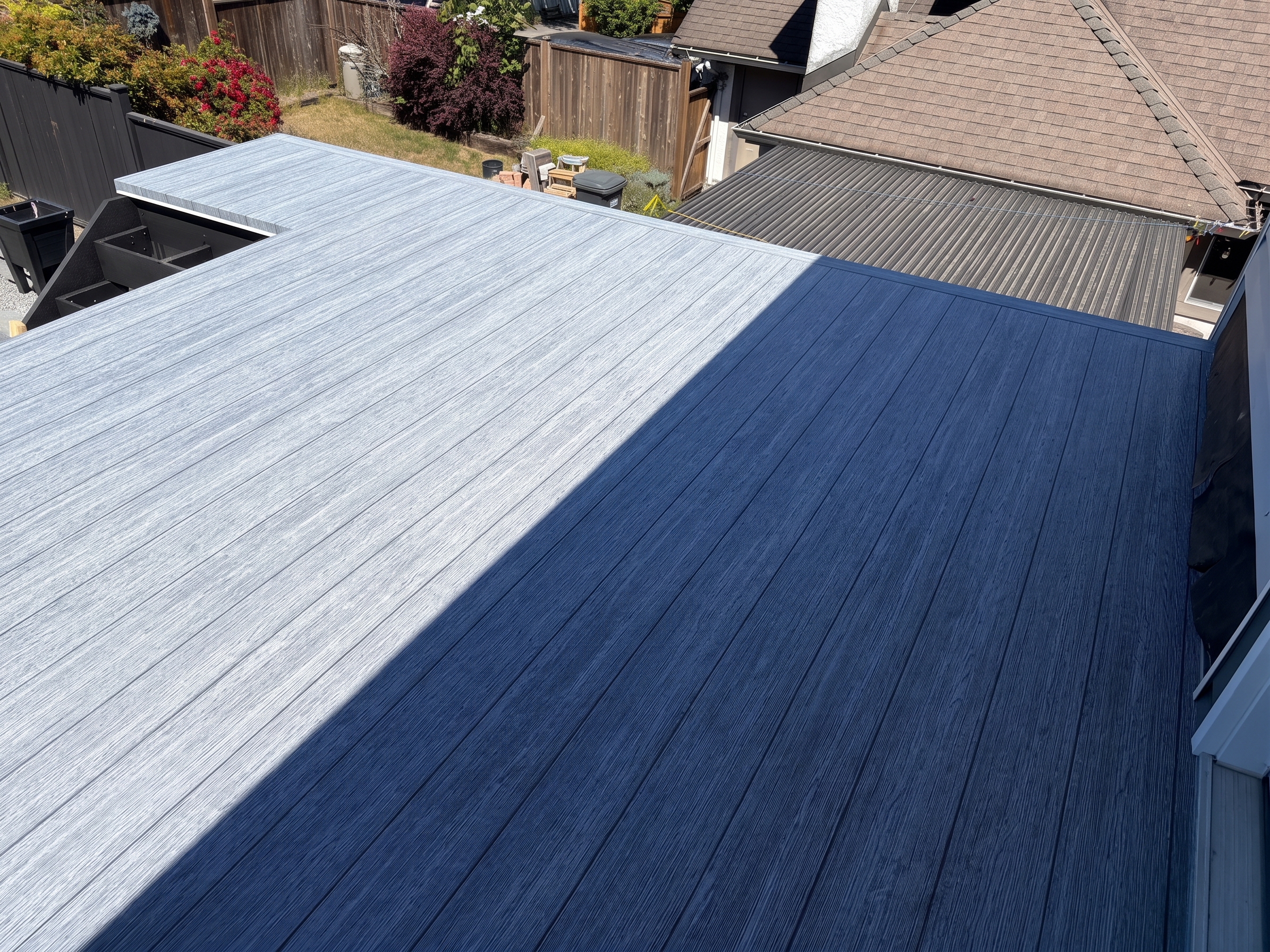
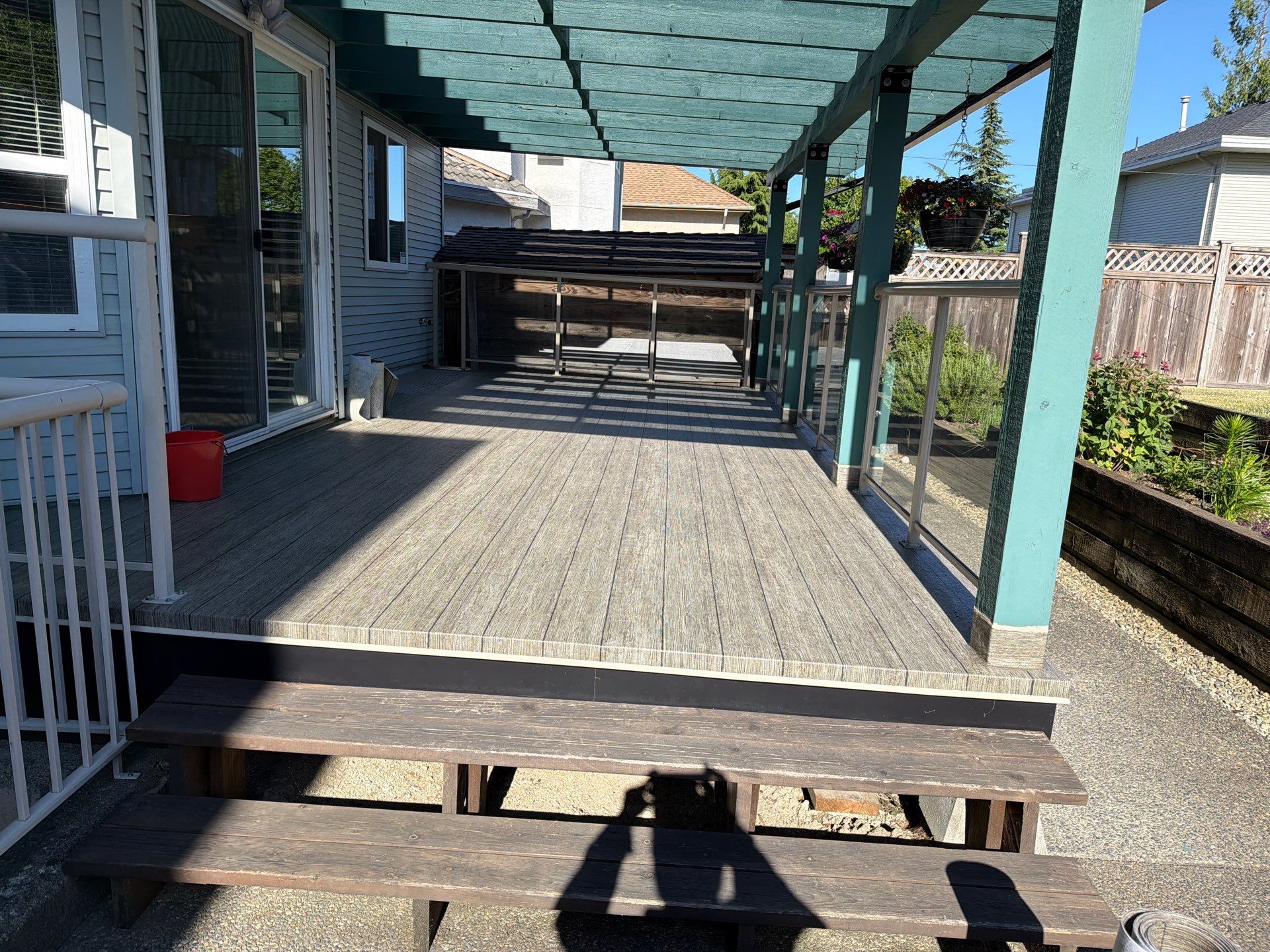
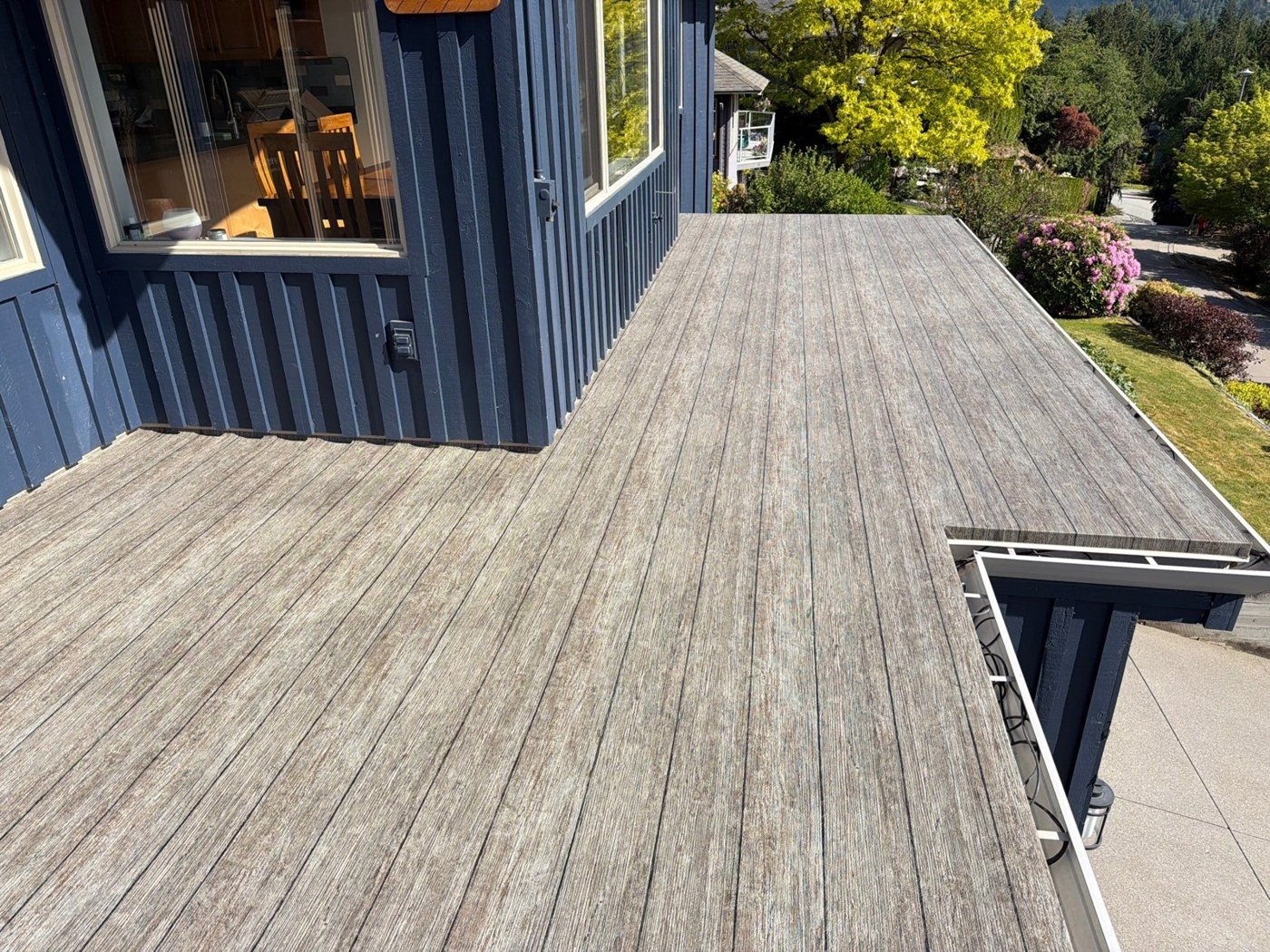
For most balconies, vinyl decking is the better choice because it waterproofs and finishes the surface in a single layer, while tile depends on a separate hidden membrane underneath that fails invisibly. Valordek vinyl deck membrane starts at $3.74 per square foot and carries a 15-year waterproofing warranty. Tile can look premium, but on an elevated balcony it adds weight, hides leaks until structural damage appears, and costs far more to repair.
The reason this comparison matters is that a balcony is not a bathroom floor. It sits over living space, and the only thing protecting the structure below is the waterproofing layer. With tile, that layer is a membrane buried under mortar and grout that you cannot see or inspect. With vinyl decking for balconies, the waterproof membrane IS the finished surface, so a problem shows up where you can find it and fix it. This guide breaks down waterproofing, cost, repairs, weight, and safety so you can choose the right surface for an elevated balcony.
What Is the Difference Between Vinyl Decking and Tile on a Balcony?
Vinyl decking is a continuous PVC membrane that bonds to the balcony substrate and acts as both the waterproofing and the walking surface, while tile is a decorative top layer that relies on a separate waterproof membrane installed beneath it. This single distinction drives every other difference in cost, repairs, and long-term reliability.
It also helps to know that "tile" on a balcony means two different things, and neither is waterproof on its own:
- Bonded tile (porcelain or ceramic set in mortar) is the permanent, high-end option. Water passes through grout lines and the tile assembly, so waterproofing depends entirely on a membrane hidden below the tile bed.
- Snap-together deck tiles (interlocking wood, composite, or stone tiles on a backing grid) sit loosely on top of the surface. They are designed to let water drain through the gaps to whatever is underneath, which means they provide zero waterproofing by design.
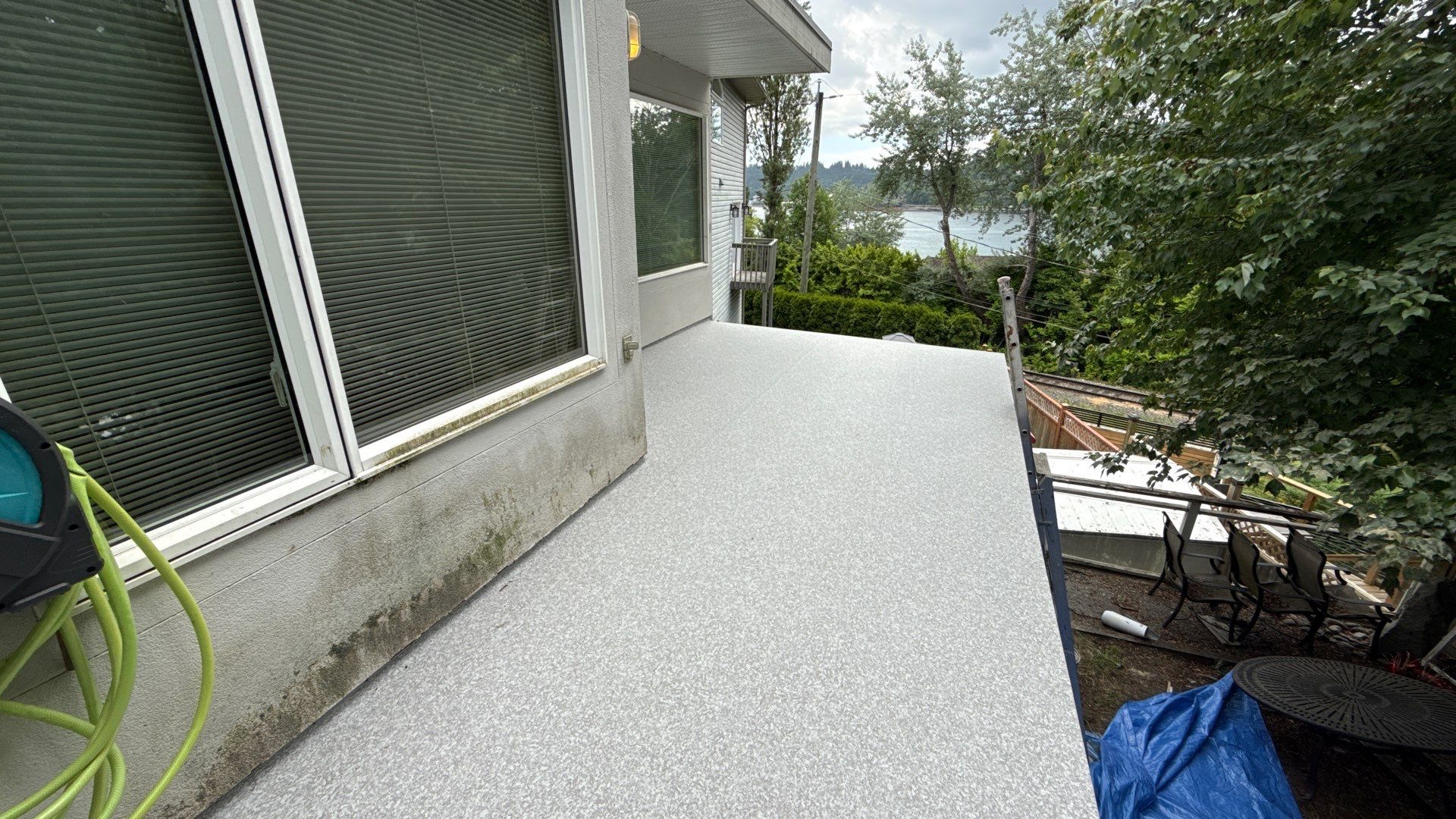
Valordek's vinyl membrane is manufactured in 72-inch-wide rolls and heat-welded at the seams to form one sealed surface with no gaps, grout lines, or hidden layers. The membrane is rated from -40°C to 80°C, so it handles the full range of Canadian balcony conditions. For a full breakdown of how the membrane works, see the Valordek vinyl decking system.
Why Are Balcony Tile Failures So Expensive?
Tile failures on a balcony are expensive because the leak is invisible until it has already damaged the structure below, while a vinyl membrane shows wear on the surface where it can be caught early. This difference in failure detectability is the most important factor most homeowners overlook when comparing the two.
When a buried waterproof membrane under tile cracks or its perimeter flashing lets go, nothing changes on the surface. The tile still looks fine. Water travels under the tile bed and into the framing, joists, and ceiling of the room below. By the time a stain appears on the ceiling or a contractor finds rot, the repair is no longer a waterproofing job. It is a structural one. Homeowners regularly report tile balcony repairs running into the tens of thousands of dollars, and resealing grout does nothing because grout was never the waterproofing in the first place.
A vinyl deck membrane fails differently. Because the membrane is the surface, any damage, lifting seam, or worn area is visible during a routine cleaning. The problem stays localized to a small area instead of spreading silently through the structure. That is the core argument for vinyl on an elevated balcony: you can see and fix a problem before it becomes a renovation. For more on how balcony surfaces fail, read our guide on common balcony waterproofing failures.
Vinyl Decking vs Tile for Balconies: Full Comparison
The table below compares vinyl deck membrane against tile across the factors that matter most for an elevated balcony. Each row reflects the practical difference between a single-layer waterproof surface and a decorative layer over a hidden membrane.
| Factor | Vinyl Deck Membrane | Tile (Bonded or Snap-Together) |
|---|---|---|
| Waterproofing | The membrane is the waterproofing. One continuous sealed layer. | Not waterproof on its own. Relies on a separate hidden membrane (bonded tile) or none at all (snap tiles). |
| Failure visibility | Visible on the surface. Caught early during cleaning. | Hidden under tile. Often found only after structural damage. |
| Membrane cost | $3.74/sq ft (Valordek vinyl membrane) | $15 to $30/sq ft typical installed (tile, mortar, hidden membrane, labour) |
| Weight on structure | Lightweight membrane. Minimal added load. | Heavy. Tile plus mortar bed adds significant dead load to an elevated balcony. |
| Slip resistance (wet) | Textured surface engineered for foot traffic | Many tiles become slippery when wet unless slip-rated |
| Repairability | Patch or re-weld a small area. Surface stays accessible. | Lift tile to reach the membrane below. Often a full tear-out. |
| Maintenance | Soap and water. No resealing. | Periodic grout sealing and crack monitoring |
| Temperature range | -40°C to 80°C (Valordek rated) | Tile is durable, but grout and membrane joints crack with freeze-thaw movement |
| Warranty | 15-year waterproofing (Valordek, both product lines) | Varies by component. Waterproofing warranty depends on the hidden membrane, not the tile. |
| Installation | Adhesive-applied, DIY-possible (Fuzzy-Back). Heat-welded for rooftops (Smooth-Back). | Professional tile setting plus separate membrane installation |
| Best for | Balconies and rooftop patios over living space | Polished decorative look where a proven membrane already exists below |
Is Tile or Vinyl Better for Waterproofing a Balcony?
Vinyl deck membrane is better for waterproofing a balcony because it forms one continuous sealed surface, while tile always depends on a separate membrane underneath that becomes the single point of failure. On an elevated balcony, waterproofing is the entire job, and that changes how you should weigh the two.
With bonded tile, water reaches the substrate through grout lines, hairline cracks, and the natural porosity of the assembly. That is expected and normal. The waterproofing is supposed to happen below the tile, at a membrane layer you never see again once the tile is set. If that membrane was installed without proper slope, flashing, or perimeter detailing, it will leak, and the tile above gives you no warning. Snap-together deck tiles remove the membrane entirely and rely on whatever surface sits below them to handle water.
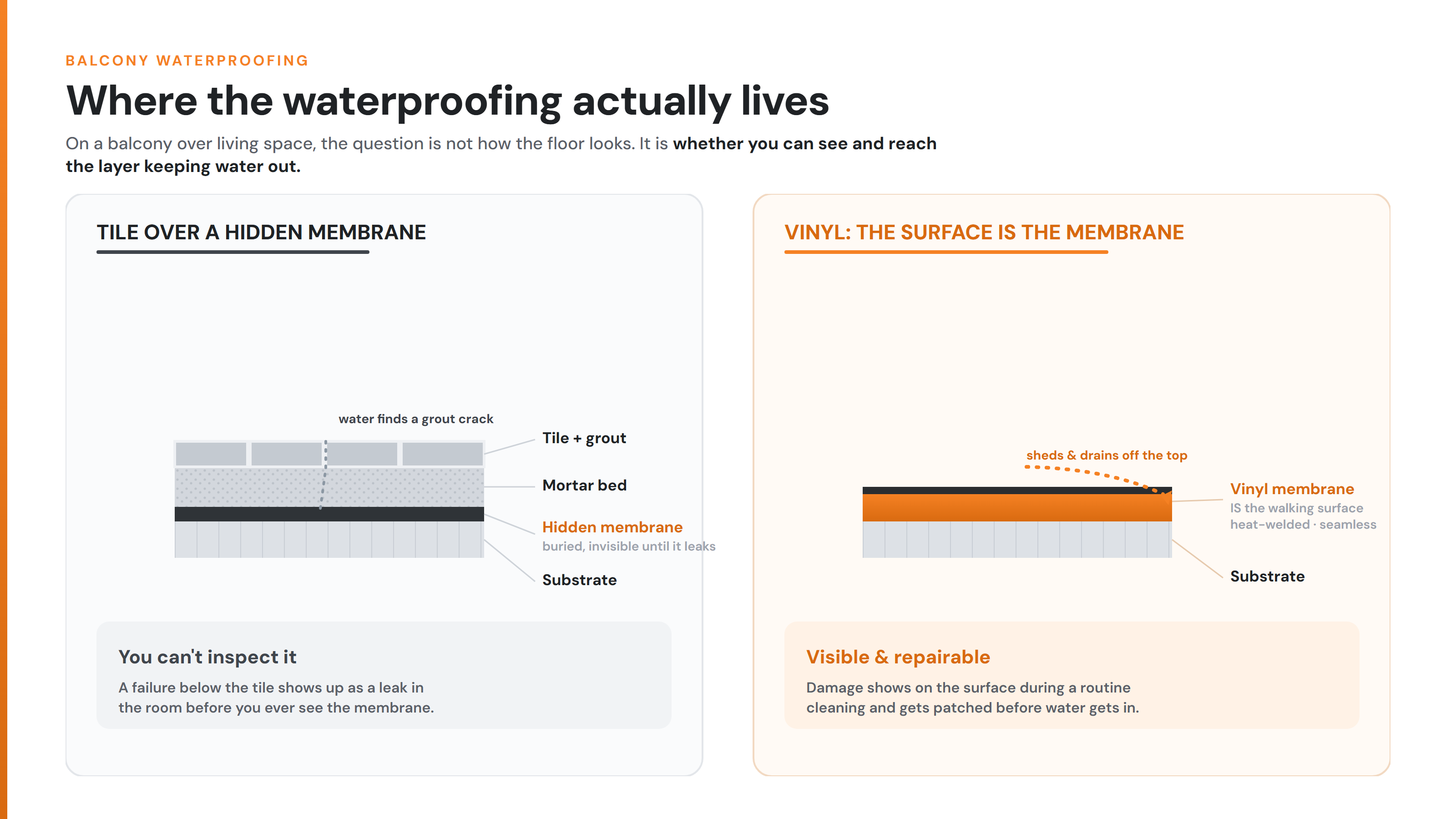
Vinyl deck membrane consolidates waterproofing and the finished floor into one layer. Heat-welded seams create a bond stronger than the membrane itself, and the PVC formulation includes UV screens and stabilizers so the surface holds up to sun and weather. Both Valordek product lines carry a 15-year waterproofing warranty, and the membrane exceeds building code 37.54.95 for waterproofing based on CCMC and Intertek testing. There is no second layer to fail because the membrane is the system.
How Much Does It Cost to Tile a Balcony vs Install Vinyl Decking?
Vinyl decking is typically the more economical balcony surface once you account for the full system, with Valordek membrane at $3.74 per square foot versus $15 to $30 per square foot for a tiled balcony installed. Tile carries a higher cost because the price includes the tile, a mortar bed, a separate waterproof membrane, and skilled labour to set all three.
For a typical 100-square-foot balcony, the surface comparison looks like this:
| Cost Component | Vinyl Deck Membrane | Tiled Balcony |
|---|---|---|
| Surface material | $374 ($3.74/sq ft membrane) | $300 to $1,200 (tile, varies by grade) |
| Waterproofing layer | Included (membrane IS the waterproofing) | $300 to $700 (separate membrane below tile) |
| Adhesive, trim, mortar | $50 to $100 | $150 to $400 |
| Labour | DIY possible, or $200 to $400 professional | $800 to $1,500 (tile setting plus membrane) |
| Total estimate | $624 to $874 | $1,550 to $3,800 |
These are surface estimates, not firm quotes, and tile pricing varies widely by tile grade and balcony complexity. The larger cost difference is not the install. It is what happens when the waterproofing fails. A vinyl membrane repair is a small surface patch. A failed membrane under tile means lifting the entire tile floor to reach it, often after the leak has already damaged the structure below. For a full breakdown of decking costs, see our vinyl decking cost guide.
What Happens When Each Surface Needs a Repair?
Repairing a vinyl deck membrane is a localized surface job, while repairing the waterproofing under tile usually requires tearing out the tile to reach the hidden layer. Repairability is where the two surfaces differ the most over a balcony's life.
If a vinyl membrane is damaged, a qualified installer cuts out the affected area and heat-welds in a new section of matching membrane, or patches it with compatible material. The rest of the surface stays in place and the balcony is back in service quickly. Because the membrane is visible, most issues are caught while they are still small.
Tile repairs are far more disruptive. To fix a leaking membrane under bonded tile, the tile, grout, and mortar bed above it have to come up first. That means demolition, debris removal, a new membrane, fresh mortar, new tile, and new grout, often across the whole balcony because you cannot reliably patch a hidden membrane in one spot. Snap-together deck tiles lift out easily, but they were never waterproofing the balcony to begin with, so any leak originates in the surface below them.
Is Vinyl Decking or Tile Safer When Wet?
Vinyl deck membrane is engineered with a textured, slip-resistant surface for foot traffic, while many tiles become slippery when wet unless they carry a specific slip rating. On a balcony exposed to rain, dew, and snow, wet-surface traction is a real safety factor, not a minor detail.
Polished and many glazed tiles offer very little grip once water is on them, which is a concern on an elevated balcony used by kids, older adults, or anyone in bare feet. Slip-rated outdoor tile exists, but it narrows the design options and adds cost. Valordek vinyl membrane is manufactured as a walking surface from the start, with surface texture built into the PVC across wood-look, stone-look, and classic patterns. To learn more about traction, see our guide on whether vinyl decking is slippery.
When Does Tile Still Make Sense for a Balcony?
Tile can be the right choice when a proven, properly detailed waterproof membrane already exists below the balcony surface and the goal is a specific decorative look. Being honest about this builds the case for choosing each surface where it actually fits.
Bonded tile delivers a hard, premium finish and a design range that vinyl does not try to replicate, including natural stone and large-format porcelain. In a setting where the waterproofing system underneath is known to be sound, inspected, and warrantied, tile can be a durable decorative top layer. It is also common in condo and commercial settings where the building's waterproofing assembly was engineered as a separate system. The risk is never how the tile looks. It is the hidden membrane you are trusting to keep water out of the structure. When that membrane is the unknown, a single-layer vinyl deck surface removes the guesswork. For the other balcony surfaces as well, including rugs, loose tiles and coatings, see our guide to waterproof balcony flooring. Explore vinyl decking for balconies to compare the options for your project.
Frequently Asked Questions
Is vinyl decking or tile better for a balcony?
Vinyl decking is better for most balconies because it waterproofs and finishes the surface in one continuous layer, while tile relies on a separate hidden membrane that fails invisibly. Valordek vinyl membrane starts at $3.74 per square foot with a 15-year waterproofing warranty. Tile suits balconies where a proven membrane already exists below.
Do balcony deck tiles leak?
Yes. Snap-together deck tiles are designed to let water drain through the gaps, so they provide no waterproofing on their own. Bonded tile also lets water through grout lines and relies on a membrane hidden below it. On an elevated balcony, only a continuous waterproof surface like vinyl deck membrane keeps water out of the structure.
Can you install vinyl decking over existing balcony tile?
In most cases vinyl decking requires a sound, flat substrate, so existing tile is usually removed first to expose the plywood or concrete below. Valordek vinyl membrane installs best on 5/8 tongue-and-groove plywood or untreated concrete. A qualified installer assesses the substrate before recommending whether tile must come up.
How much does it cost to tile a balcony versus vinyl decking?
A tiled balcony typically costs $15 to $30 per square foot installed because the price includes tile, a mortar bed, a separate waterproof membrane, and skilled labour. Valordek vinyl membrane is $3.74 per square foot, and a 100-square-foot balcony surface often totals $624 to $874 versus $1,550 to $3,800 for tile.
Why do tiled balconies crack and leak?
Tiled balconies crack and leak when freeze-thaw movement, structural flex, or a poorly detailed membrane below the tile lets water reach the substrate. Grout and tile are not waterproof, so the buried membrane does the real work. When it fails, water damages the structure before any sign shows on the surface.
Is tile or vinyl decking more slippery when wet?
Many tiles are more slippery than vinyl decking when wet, especially polished or glazed tile without a slip rating. Valordek vinyl membrane is manufactured with a textured, slip-resistant surface engineered for foot traffic across all of its wood-look, stone-look, and classic patterns, making it a safer choice on a rain-exposed balcony.