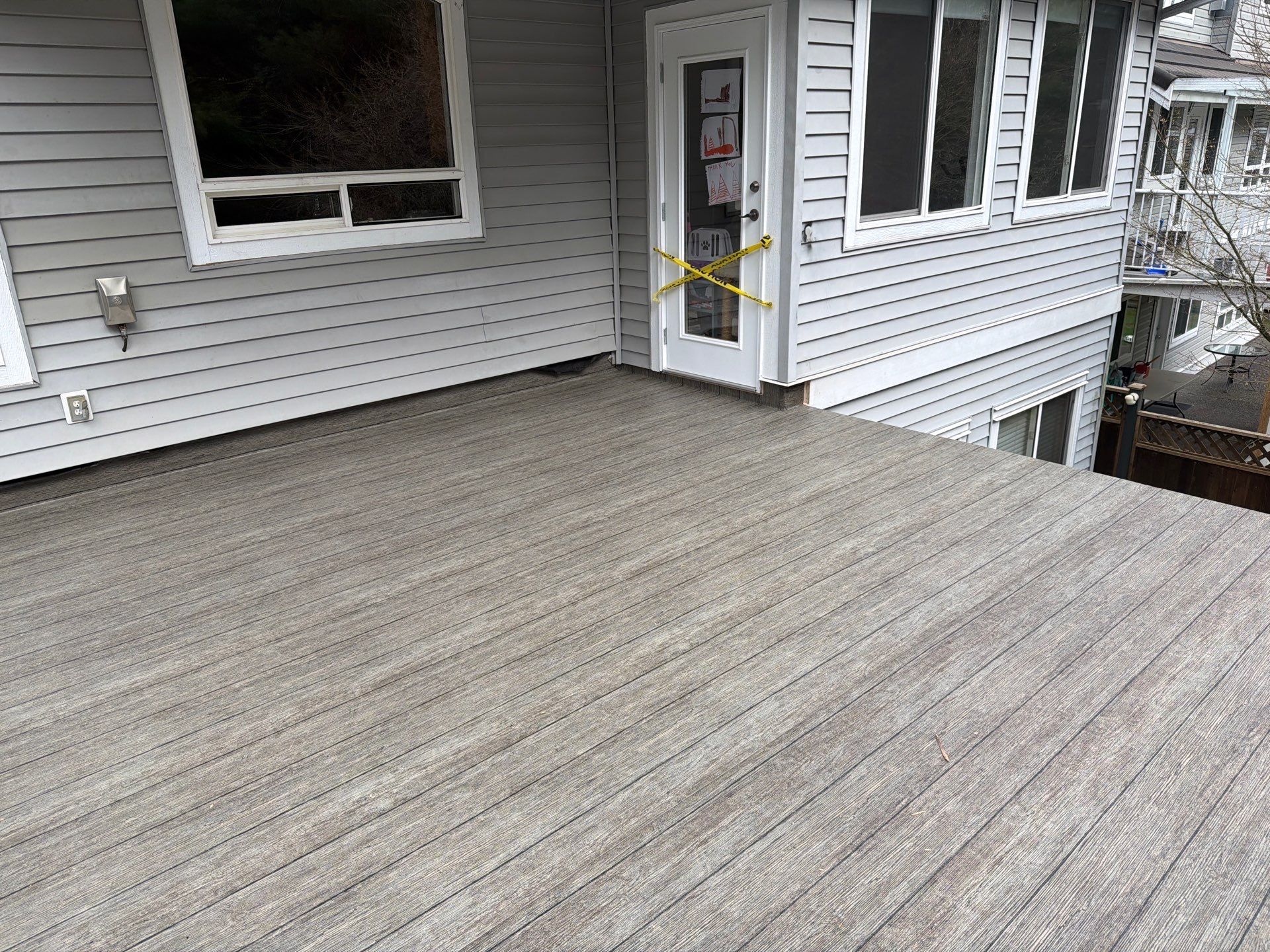
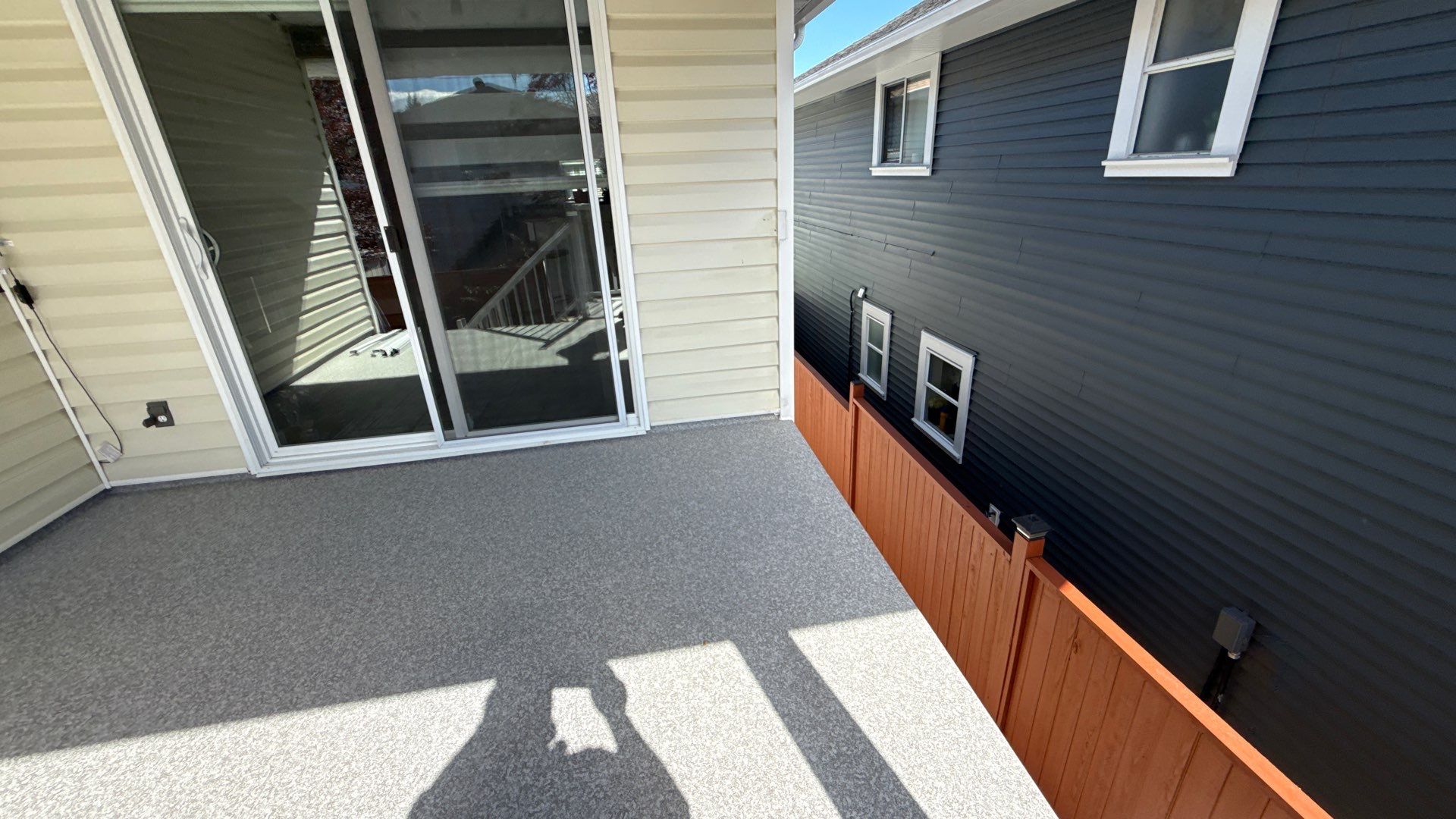
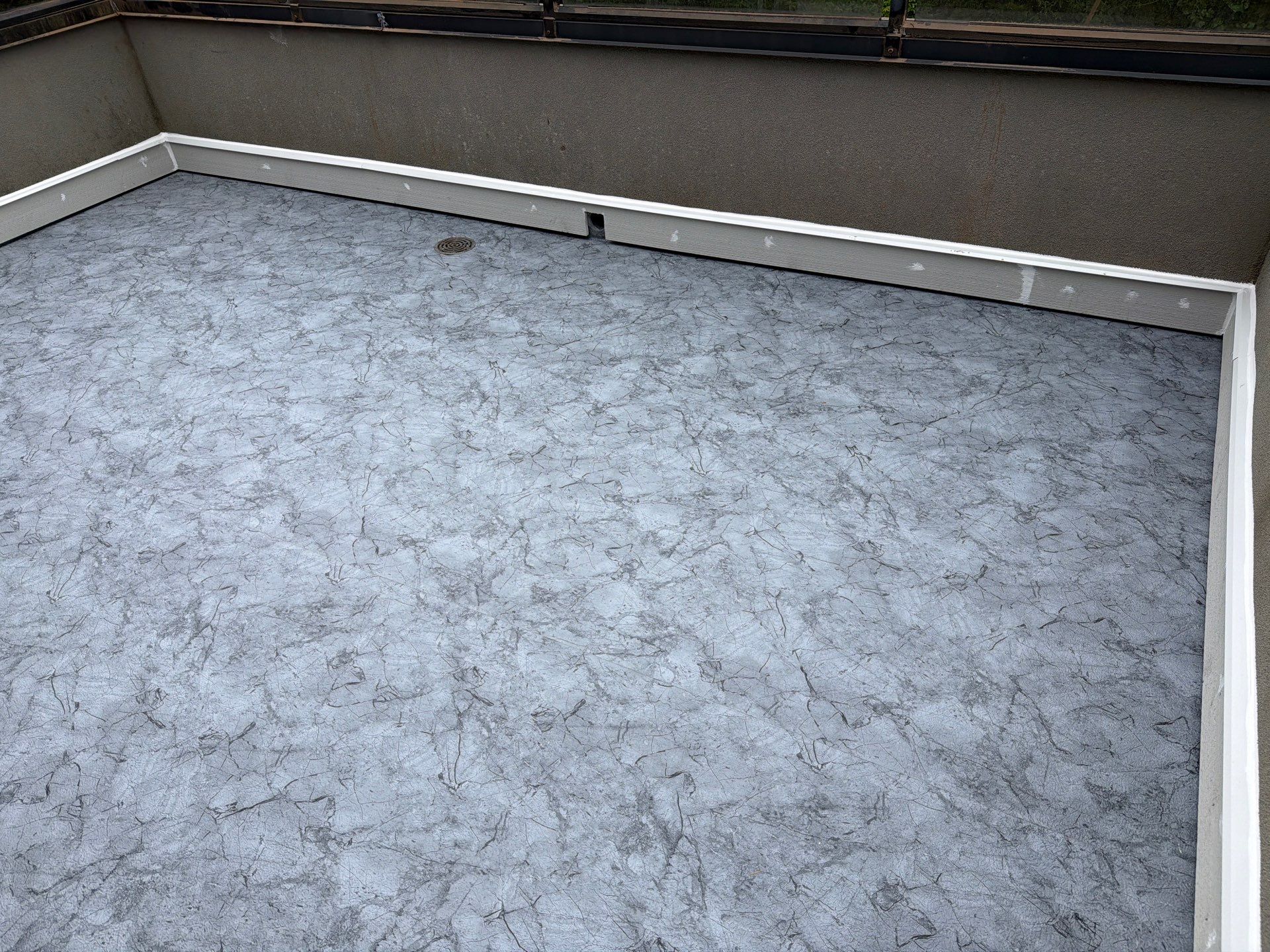
Deck vinyl flooring is a continuous PVC membrane that bonds directly to a deck or balcony substrate to create a fully waterproof outdoor surface. It is sold in 72-inch wide rolls, installed with contact adhesive, and seam-welded into a single sheet. Valordek manufactures deck vinyl flooring starting at $3.74 per square foot, with 15-year waterproofing warranties.
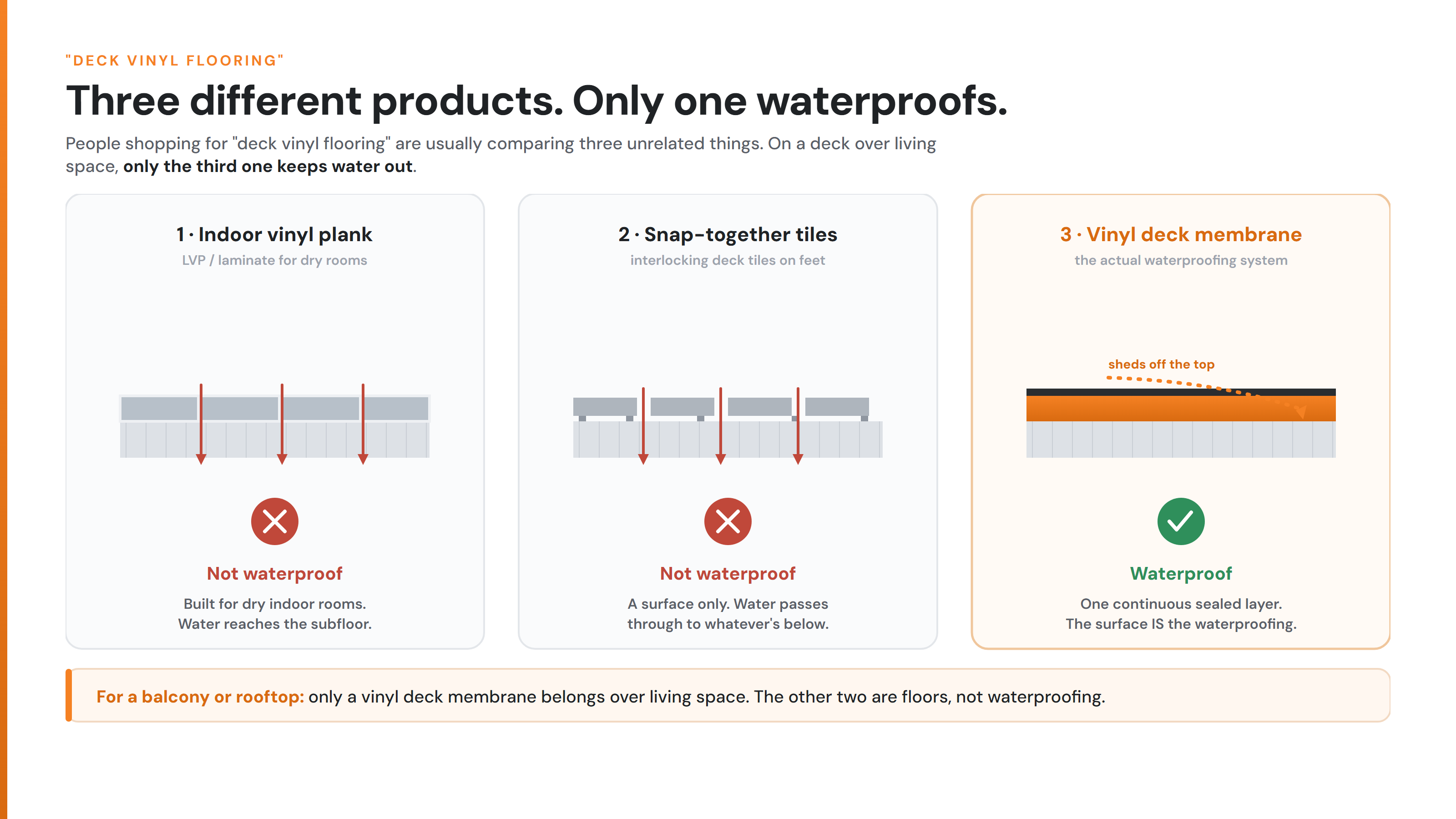
If you are searching for deck vinyl flooring, you are likely comparing three very different products without realizing it: vinyl plank flooring designed for indoor rooms, snap-together deck tiles, and actual vinyl deck membrane systems. Only the third one waterproofs your deck. For a side-by-side look at every balcony surface, see our guide to waterproof balcony flooring options. This guide explains what deck vinyl flooring is, how it differs from the other two, and how to choose the right system for a balcony or rooftop patio. For the full Valordek product range, visit our vinyl decking hub. Before choosing a finish, weigh the pros and cons of vinyl decking, including upkeep, installation and repair expectations.
What deck vinyl flooring actually is (and what it isn't)
Deck vinyl flooring is a polyvinyl chloride (PVC) waterproofing membrane manufactured in continuous sheets and installed over a prepared substrate. It is not a flooring tile, a snap-together panel, or a board product. The membrane bonds permanently to plywood or concrete, and the seams between rolls are heat-welded into a single waterproof surface. The result is a deck floor with no gaps, no joints, and no water path through to the structure below.
This is the source of most confusion. People search "deck vinyl flooring" because they have heard vinyl is durable, low-maintenance, and waterproof. But the search results mix three product categories together:
- Indoor vinyl plank flooring (LVP). Designed for kitchens, bathrooms, and basements. Not UV stable. Not built for freeze-thaw. Will fail in a single outdoor season.
- Snap-together deck tiles. Interlocking plastic or composite squares that sit on top of an existing surface. They look tidy but they do not waterproof anything. Water still passes through the gaps and reaches whatever is underneath.
- Vinyl deck membrane systems (the actual category). Continuous PVC sheets bonded to the substrate. Heat-welded seams. Code-certified for waterproofing. This is what protects balconies and rooftop patios from leaks.
Valordek manufactures the third category. Our vinyl deck membranes are made in 72-inch wide rolls, up to 480 lineal feet long, with PVC formulated for UV exposure, freeze-thaw, and continuous outdoor use. The product is engineered around one job: stop water from reaching the structure under your deck.
How deck vinyl flooring is installed
Deck vinyl flooring is installed by bonding the membrane to a prepared substrate with contact adhesive, then heat-welding the seams between rolls into a continuous waterproof surface. Installation takes one to three days for a typical residential balcony. The substrate must be clean, dry, sound, and either 5/8 tongue-and-groove plywood or untreated concrete.
The general steps are the same across vinyl deck membrane systems:
- Substrate preparation. Replace any rotted plywood. Patch low spots and gaps. Clean the surface and let it dry completely. Concrete substrates may need a primer or patching compound.
- Adhesive application. Contact cement is rolled onto the substrate and the back of the membrane. The two surfaces are joined when the adhesive flashes off.
- Membrane layout. Rolls are unrolled, positioned, and pressed firmly into the adhesive. The 72-inch roll width minimizes the number of seams on most balconies.
- Heat-welding the seams. A specialized hot air welder fuses overlapping membrane edges into a single continuous sheet. This is what makes the surface fully waterproof.
- Flashing and edge details. Walls, drains, and posts are flashed with PVC corner pieces and termination bars. This is where most leaks happen on competing products. Proper flashing matters more than the membrane itself.
Valordek's Fuzzy-Back (68mil) product is designed for homeowner installation. The fleece backing bonds well to plywood and forgives small substrate imperfections. Most homeowners with basic carpentry skills can install Fuzzy-Back on a balcony in a weekend with the right adhesives and a hot air welder rented from a tool supplier. Our Smooth-Back (60mil) product is engineered for rooftop patios over living space and requires professional installation. The PVC flashing system on open decks demands specialized tools and training.
Where deck vinyl flooring works (and where it doesn't)
Deck vinyl flooring is engineered for two specific applications: residential balconies and rooftop patios over living space. It is not a product for ground-level patios, pool decks, driveways, walkways, or indoor rooms. Using it outside its intended applications voids the warranty and produces poor results.
For balcony waterproofing, Valordek's Fuzzy-Back membrane is the workhorse product. Balconies sit over living space (sometimes your own, often a neighbour's), and a leak means structural damage, mould remediation, and in stratas, potentially a special assessment. The 68mil Fuzzy-Back system carries a 15-year waterproofing warranty plus a 5-year appearance warranty, and the contact adhesive installation is forgiving enough that homeowner installs are common.
For rooftop patios, the 60mil Smooth-Back system is the right choice. Rooftop decks are higher stakes: they sit directly over occupied rooms, the wind exposure is greater, and most jurisdictions require a Class A or Class C fire-rated surface. Smooth-Back is Class A and C fire-rated, Intertek-tested, and carries a 15-year waterproofing warranty.
Where deck vinyl flooring should not be used:
- Ground-level patios over dirt or gravel. The substrate doesn't allow proper bonding. A patio paver system is the right choice here.
- Pool decks. Constant chlorine exposure and UV are outside the warranty conditions. Specialized pool deck coatings exist for this.
- Generic flat-roof waterproofing without deck use. A roof without a walking surface needs a roofing membrane, not a deck membrane. Different installation, different warranty, different code requirements.
- Indoor rooms. Indoor LVP exists for a reason. It's cheaper, easier to install, and designed for the conditions of a kitchen or basement.
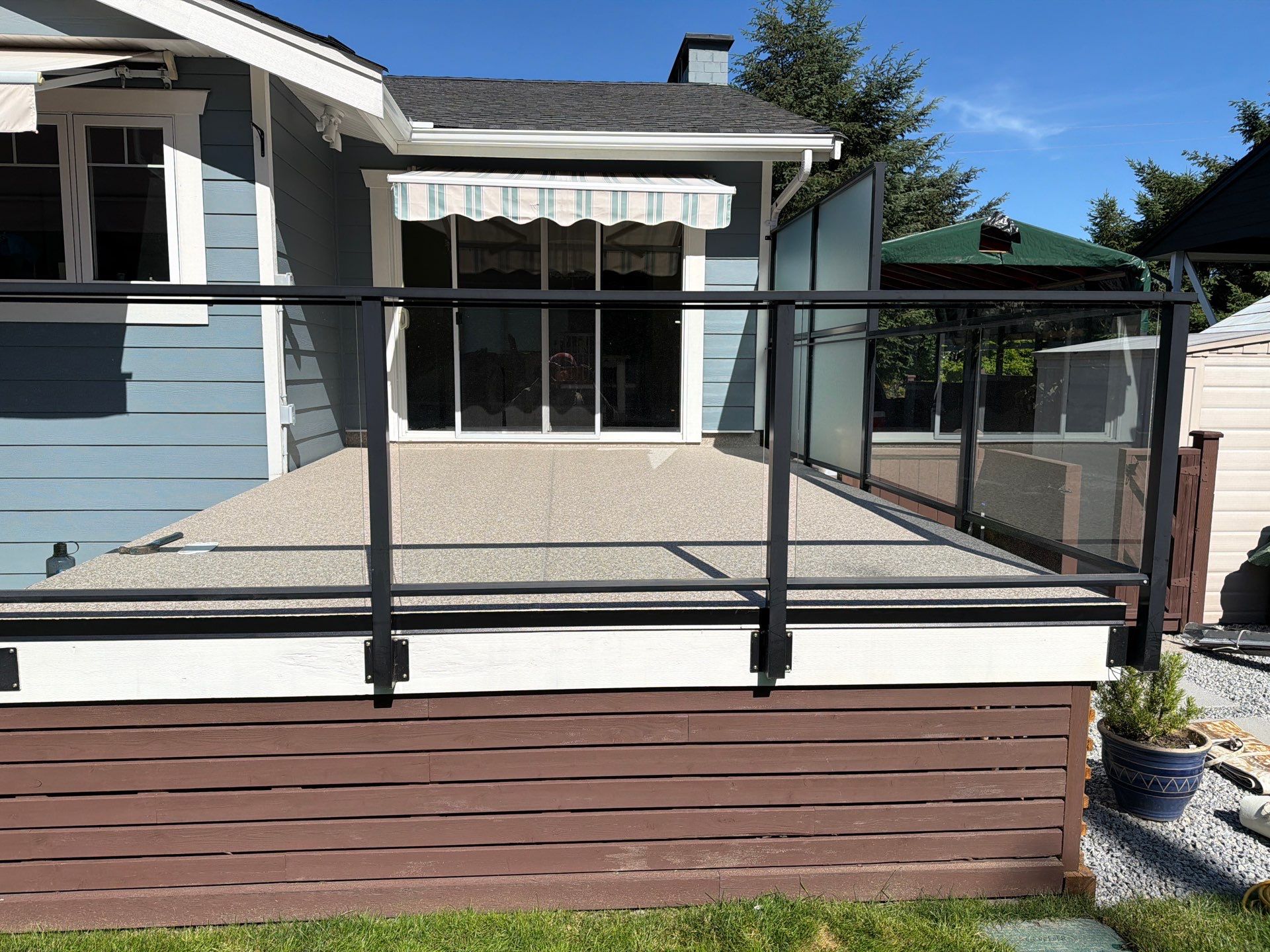
Deck vinyl flooring vs other outdoor surface options
The fastest way to see why deck vinyl flooring is a distinct category is to compare it directly against the products it's most often confused with. Below is a comparison of deck vinyl flooring (vinyl deck membrane) against the four most common alternatives, focused on the factors that matter for balconies and rooftop patios.
| Surface | Waterproofing | Lifespan | Maintenance | Material Cost | Best Application |
|---|---|---|---|---|---|
| Deck vinyl flooring (Valordek) | Fully waterproof. Heat-welded seams. CCMC-tested. | 15-year waterproofing warranty | Hose off as needed. No staining or sealing. | From $3.74/sq ft | Balconies and rooftop patios |
| Indoor vinyl plank (LVP) | Water-resistant only. Not UV stable. | Fails outdoors within one season | Not designed for outdoor cleaning | $2-6/sq ft | Indoor kitchens, bathrooms, basements |
| Snap-together deck tiles | Not waterproof. Water passes through gaps. | 3-7 years before lifting or warping | Lift periodically to clean debris underneath | $3-8/sq ft | Cosmetic upgrade over a sound surface |
| Composite decking | Water-resistant boards. Gaps still let water through. | 15-25 years structural | Periodic cleaning | $5-15/sq ft installed | Ground-level decks where waterproofing is not required |
| Wood decking with sealer | Sealer is temporary. Wood absorbs water. | 5-10 years before major maintenance | Sand, stain, and seal every 1-2 years | $4-12/sq ft installed | Ground-level decks where look matters more than waterproofing |
The honest tradeoffs: composite decking has stronger brand recognition. Wood looks more natural to many buyers. Deck tiles install faster on a small balcony if waterproofing isn't a concern. But none of those products solves the actual problem on a balcony or rooftop patio: water reaching the structure underneath. That's the job deck vinyl flooring was designed for.
How much does deck vinyl flooring cost?
Deck vinyl flooring costs $3.74 per square foot for the membrane itself, with total installed cost varying based on substrate prep, accessories (adhesive, flashing, drains), and whether the installation is DIY or professional. A typical 100 square foot balcony installed by a homeowner with the right materials runs $700 to $1,200 in materials. A professional installation on the same balcony typically falls between $2,000 and $4,000 depending on substrate condition and regional labour rates.
The factors that drive total cost:
- Substrate condition. A sound, flat plywood substrate needs little prep. A water-damaged substrate needs replacement before the membrane can be installed. Plywood replacement adds material and labour.
- Square footage. The 72-inch roll width means smaller balconies have more waste. Larger balconies and rooftop patios use the roll efficiency better.
- Product line. Fuzzy-Back (68mil) is the residential balcony product. Smooth-Back (60mil) is the rooftop patio product and is priced higher per square foot due to the heat-welded PVC system and 15-year warranty.
- Accessories. Contact adhesive, PVC flashing, drainage scuppers, termination bars, and edge trims add up. These are not optional. Skipping flashing is the most common cause of premature deck vinyl flooring failure.
- Installation method. DIY saves the labour cost but requires the right tools (heat gun, roller, contact adhesive applicator) and the time to do it correctly. Professional installation is required for Smooth-Back rooftop applications.
For a complete cost breakdown including comparisons to wood and composite, see our vinyl decking cost guide.
How long does deck vinyl flooring last?
Valordek deck vinyl flooring carries a 15-year waterproofing warranty on both the 68mil Fuzzy-Back and 60mil Smooth-Back products. Both lines also carry a 5-year appearance warranty. Real-world installations often exceed the warranty period when properly installed and maintained, with documented Valordek installations still performing well after 18-20 years of continuous outdoor exposure.
What determines real-world lifespan:
- Substrate quality. The membrane is only as good as what it's bonded to. Rotted or moving plywood will fail the membrane no matter how good the membrane is.
- Edge and flashing details. Most failures start at the edges, not in the middle of the membrane. Proper PVC flashing at walls, drains, and posts is non-negotiable.
- Climate exposure. Valordek is tested from -40°C to 80°C, the full Canadian temperature range. The PVC formulation includes UV screens and stabilizers to resist sun degradation.
- Maintenance. Annual sealant inspection at penetrations and edge details is required to maintain warranty. Regular cleaning per the Valordek Cleaning Guide keeps the appearance warranty valid.
For more on warranty terms, see our warranty page with full conditions for both product lines.
How to choose the right deck vinyl flooring for your project
Choosing between deck vinyl flooring systems comes down to one question: is your project a residential balcony or a rooftop patio over living space? Valordek manufactures two product lines engineered for these two distinct applications, and the right choice depends on what you're protecting and who is installing it.
Choose Valordek Fuzzy-Back (68mil) if:
- You're surfacing a residential balcony
- The substrate is plywood
- You want a 15-year waterproofing warranty
- You're considering a DIY install with the right preparation
- You want maximum colour and style options across Wood Look, Stone Look, and Classic finishes
Choose Valordek Smooth-Back (60mil) if:
- You're surfacing a rooftop patio over living space
- You need a Class A or Class C fire rating for code compliance
- You want the longest waterproofing warranty available (15 years)
- The project requires professional installation
- You're working on a strata or commercial building
Both systems use the same heat-welded seam process. Both bond to substrate with contact adhesive. The real difference is the warranty length, the fire rating, and the installation requirements. For a deeper comparison of the two product lines, visit the Valordek products page.
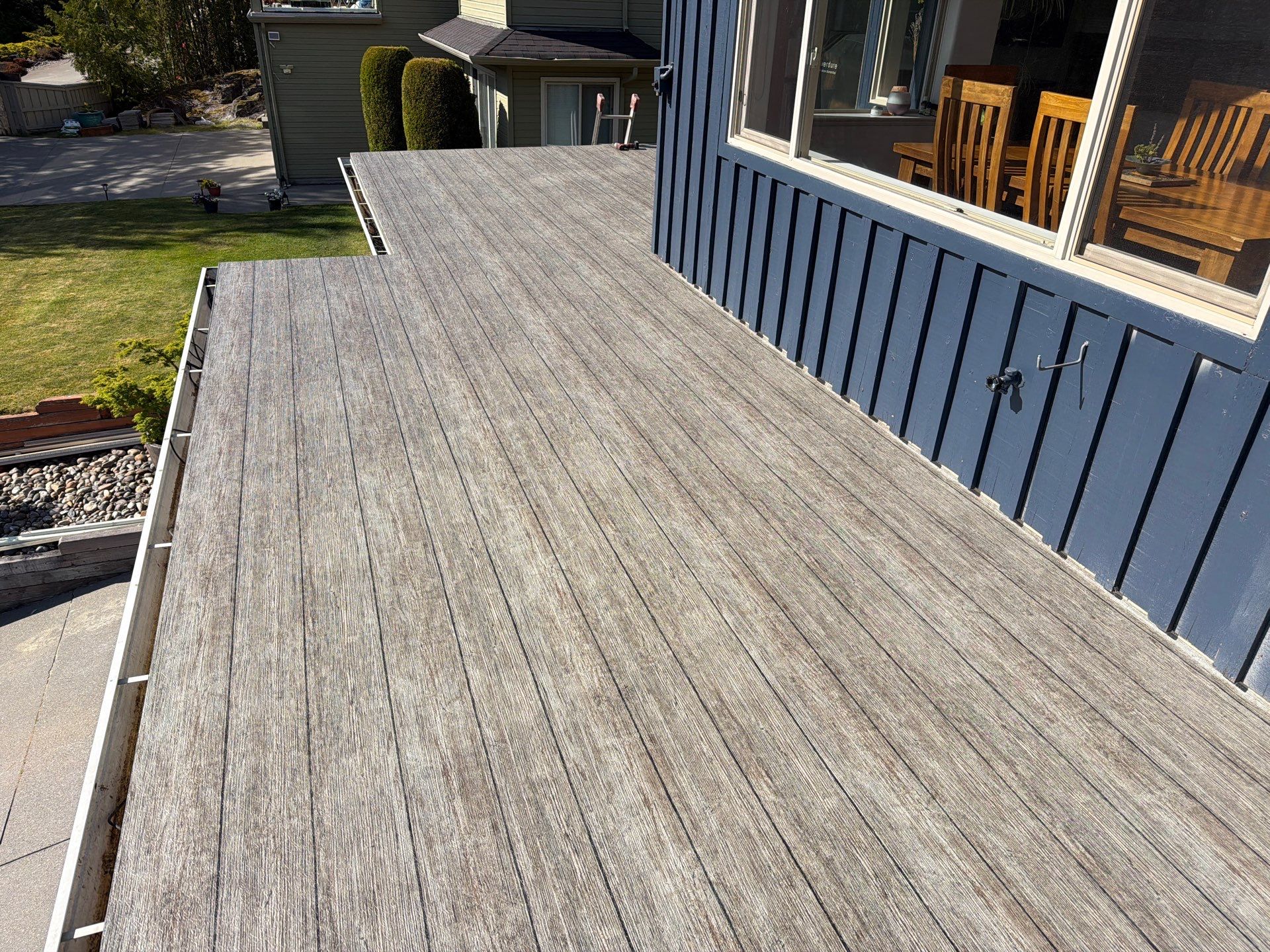
Frequently asked questions about deck vinyl flooring
What is deck vinyl flooring?
Deck vinyl flooring is a continuous PVC waterproofing membrane installed in 72-inch wide rolls over a deck or balcony substrate. The membrane bonds with contact adhesive and the seams are heat-welded into a single waterproof sheet. Valordek manufactures deck vinyl flooring rated for -40°C to 80°C with 15-year warranties.
Can I put vinyl flooring on my deck?
Yes, but only if it's vinyl deck membrane designed for outdoor use, not indoor vinyl plank flooring. Indoor LVP is not UV-stable and fails within one season outdoors. Valordek vinyl deck membrane is engineered for outdoor balconies and rooftop patios with a 15-year waterproofing warranty starting at $3.74 per square foot.
Is deck vinyl flooring waterproof?
Valordek deck vinyl flooring is fully waterproof, not water-resistant. The PVC membrane is heat-welded into a single continuous sheet with no seams for water to penetrate. CCMC-tested and exceeds code 37.54.95. Both product lines carry a 15-year waterproofing warranty.
What is the best vinyl for decking?
The best vinyl for decking depends on the application. For residential balconies, Valordek Fuzzy-Back (68mil) is the right choice with a 15-year waterproofing warranty and DIY-friendly installation. For rooftop patios over living space, Valordek Smooth-Back (60mil) offers a 15-year warranty plus Class A and C fire ratings required by most building codes.
How much does deck vinyl flooring cost?
Valordek deck vinyl flooring starts at $3.74 per square foot for the membrane. Total installed cost on a typical 100 square foot balcony ranges from $700-$1,200 for a DIY install with materials, or $2,000-$4,000 for professional installation. Costs vary by substrate condition, product line, and accessories required.
How is deck vinyl flooring different from outdoor LVP or deck tiles?
Deck vinyl flooring is a continuous waterproof PVC membrane that bonds to your substrate as one sheet. Outdoor LVP is indoor flooring that fails under UV and freeze-thaw. Snap-together deck tiles sit on top of a surface and let water through the gaps. Only vinyl deck membrane provides true waterproofing on a balcony or rooftop patio.