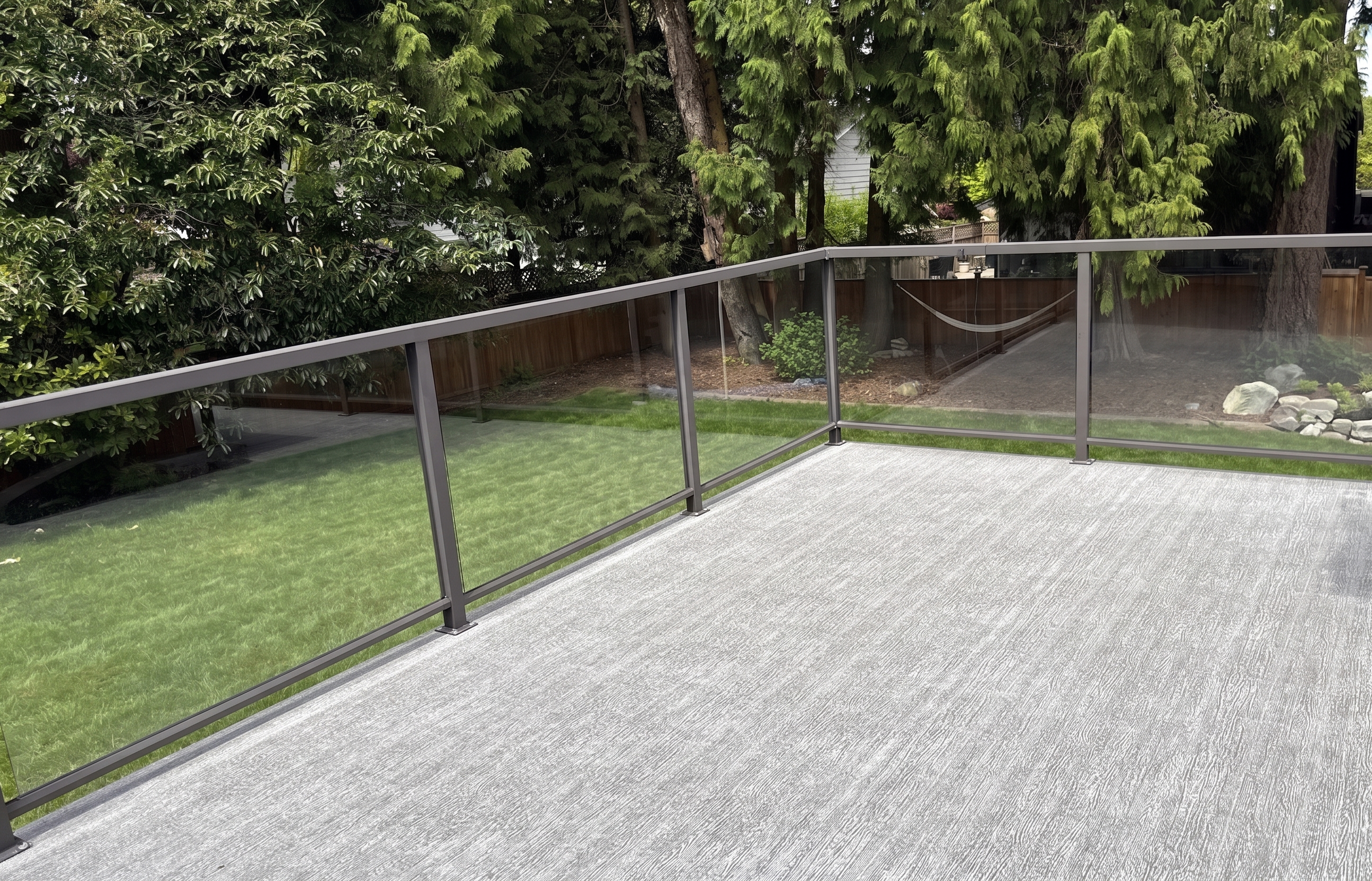
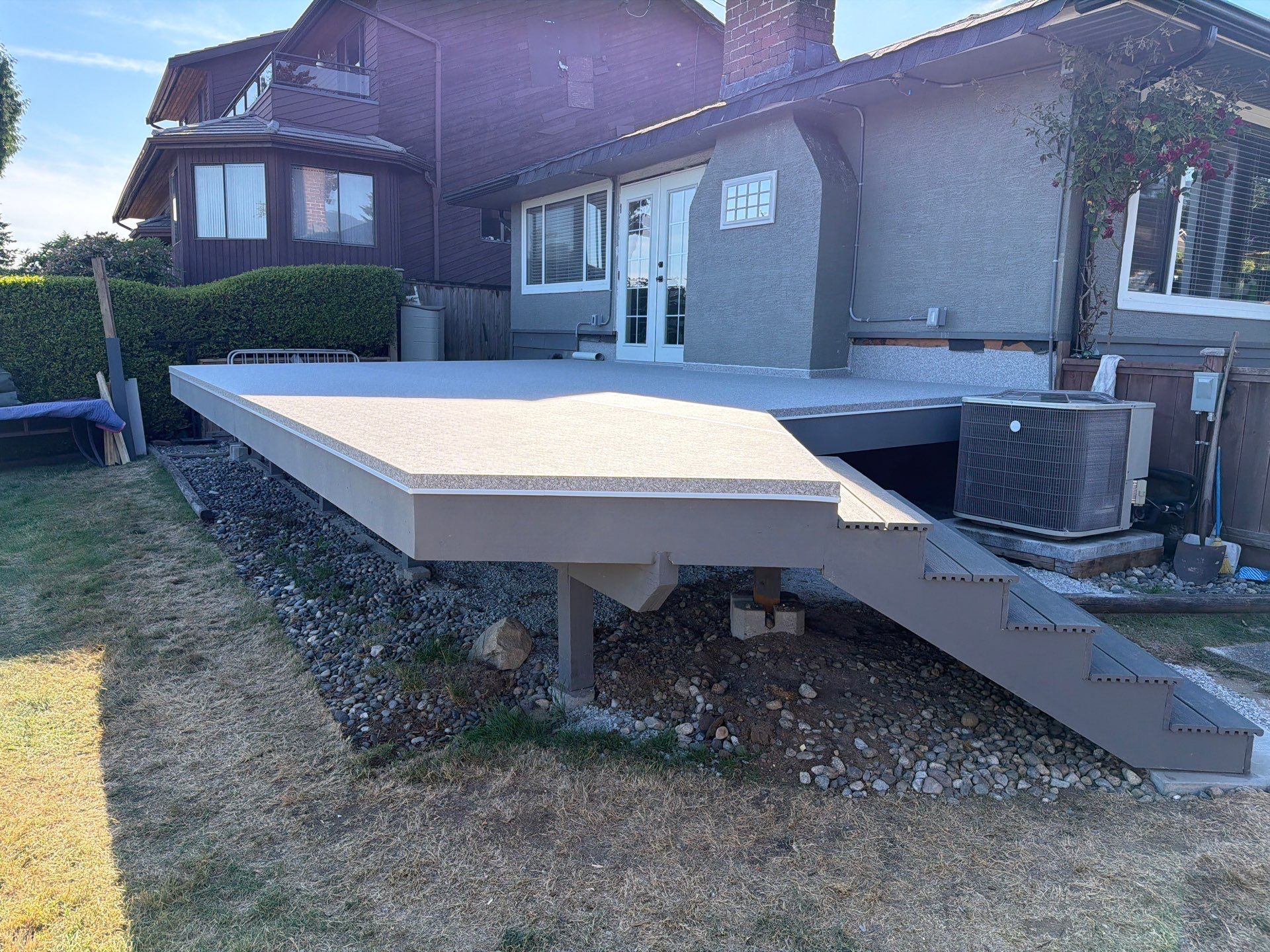
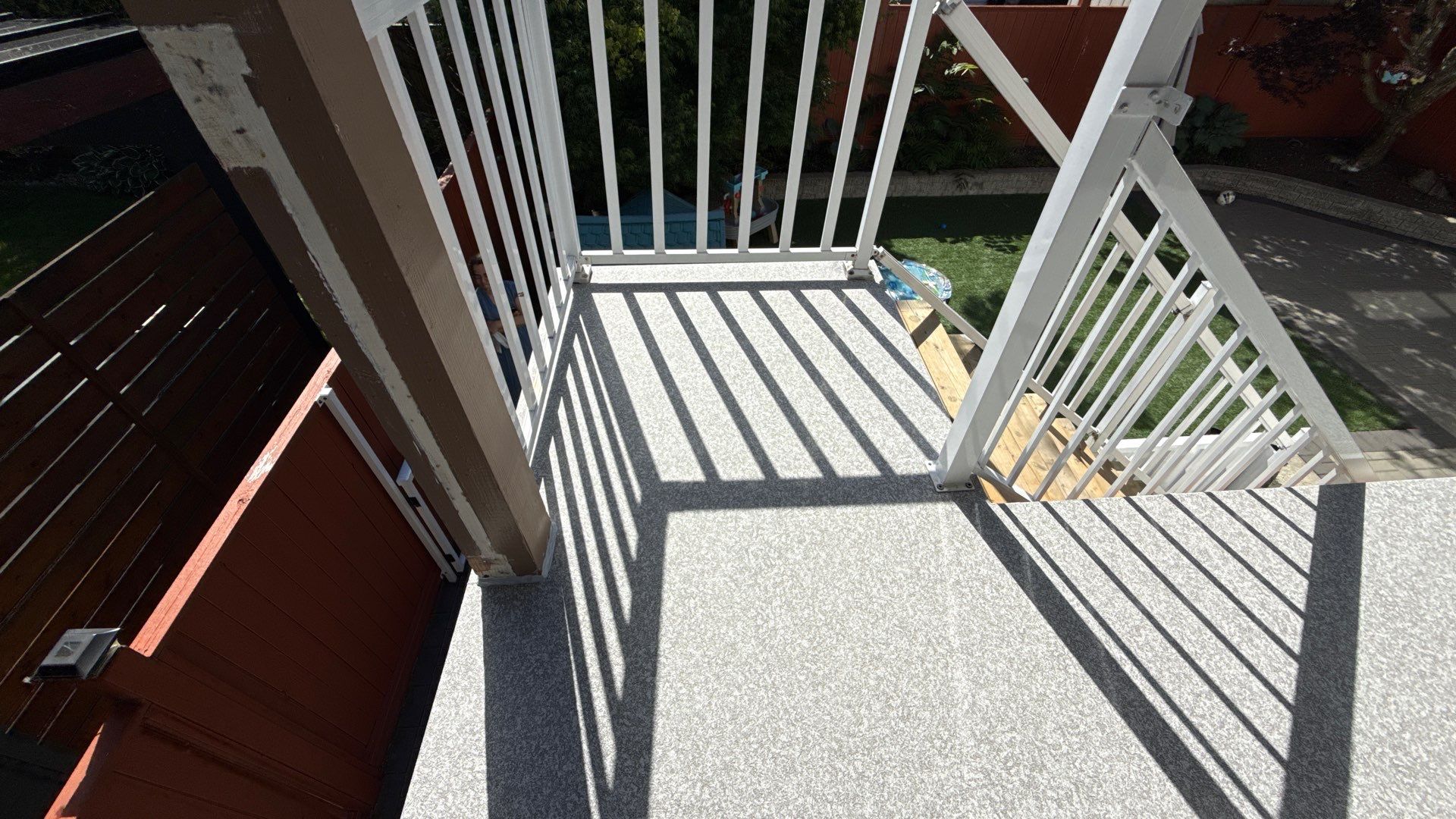
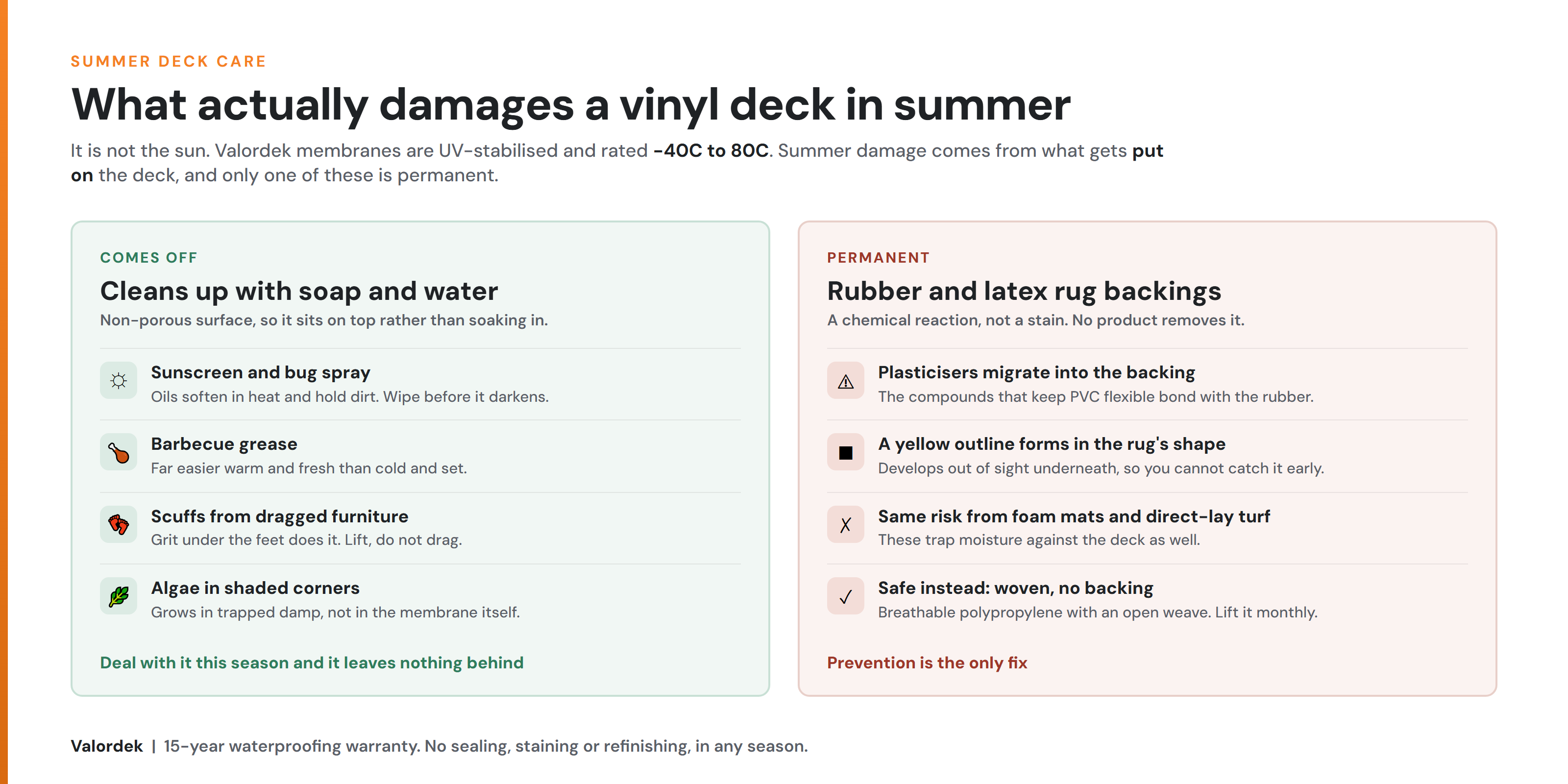
Summer damages a vinyl deck through contact, not sunlight. Valordek membranes are UV-stabilised and rated from -40C to 80C, so heat itself is not the threat. The real risks are sunscreen, barbecue grease, and rubber-backed outdoor rugs, and the rug is the only one that causes permanent staining.
That last point catches people out every summer. Most summer damage washes off if you catch it reasonably soon, because a vinyl membrane is a non-porous sheet rather than a wood surface that absorbs. But rubber and latex rug backings react chemically with PVC and leave a yellow outline that does not come out at all. Knowing which category a spill falls into tells you whether to deal with it now or whether it can wait for your next clean. This guide covers what summer actually does to a vinyl deck, what to keep off the surface, and the short routine that keeps a deck looking new through the season.
Does summer sun damage vinyl decking?
Sunlight alone does not degrade a quality vinyl deck membrane. Valordek membranes are manufactured with UV screens and stabilisers built into the PVC rather than applied as a surface treatment, which is why the material carries a 5-year appearance warranty alongside its 15-year waterproofing warranty. A surface coating wears off. A stabiliser compounded into the sheet does not.
Heat is similarly a non-issue for the material. The membrane is rated for continuous service from -40C to 80C, a range built for Canadian winters that comfortably covers any summer surface temperature. What does change in summer is how the deck gets used, and use is where the damage comes from.
What actually damages a vinyl deck in summer
Five things account for nearly all warm-weather damage, and they are all things people put on the deck rather than anything the weather does to it.
- Rubber and latex rug backings. The one that causes permanent damage. Covered in detail below.
- Sunscreen and insect repellent. Oils and DEET soften into the surface in heat and attract dirt, leaving a darkened patch around loungers if left through the season.
- Barbecue grease and cooking oil. Removable, but far easier warm and fresh than cold and set.
- Dragged furniture. Point loads and grit under a dragged chair leg scuff the surface. Lift rather than drag, and check for embedded grit under furniture feet.
- Trapped moisture. Anything solid left flat on the deck for weeks holds damp underneath, which is where algae starts even on a non-porous surface.
Notice the pattern. Four of the five are reversible if you deal with them within the season. Only the rug backing is permanent, which is why it deserves its own section.
Will an outdoor rug stain my vinyl deck?
A rubber-backed or latex-backed outdoor rug will permanently stain a vinyl deck. The plasticisers that keep PVC flexible migrate and react with the rubber backing, bonding into the membrane and leaving a yellow or amber outline in the exact shape of the rug. This is a chemical reaction rather than surface dirt, so no cleaning product removes it. Prevention is the only fix.
The damage is slow and invisible while it happens. A rug goes down in June, comes up in September, and the outline is already there. Because it develops under the rug, there is no point at which you can catch it early.
Rugs are not the problem. The backing is. Safe choices:
- Woven or flat-weave rugs with no backing at all are the safest option
- Breathable polypropylene rugs designed for outdoor use, with an open weave that lets the deck dry
- Anything you lift and move regularly rather than leaving in place all season
Avoid rubber backing, latex backing, foam-backed mats, and rubber-footed planters or furniture pads left in one place. The same reaction applies to rubber gym-style tiles and to artificial turf laid directly on the membrane, both of which also trap moisture underneath. If you want a different surface on a rooftop deck, a pedestal system that holds pavers above the membrane avoids both problems, though it is worth saying that a vinyl membrane is manufactured as the finished floor and does not need anything on top of it.
How do you clean summer stains off a vinyl deck?
Most summer marks come off with warm water, mild dish soap, and a soft brush. Because a vinyl membrane is non-porous, nothing soaks in the way it does with wood, so stains sit on the surface rather than penetrating.
Work in this order:
- Rinse first. Clear loose grit before scrubbing, so you are not grinding it into the surface.
- Warm water and mild dish soap with a soft-bristle brush. This handles sunscreen, food, drink spills, and general traffic film.
- For grease, treat while warm. A degreasing dish soap works well on barbecue splatter. Cold, set grease takes considerably more effort.
- For algae in shaded corners, a diluted household cleaner and a brush, followed by a full rinse.
- Rinse thoroughly. Leftover detergent film attracts dirt and makes the surface look worse a week later.
Avoid solvents, acetone, bleach at full strength, abrasive pads, and pressure washers at close range. These can damage the surface or, in the case of a pressure washer aimed at a seam, drive water where it should not go. Our complete guide to cleaning vinyl decking covers products and technique in more depth, and the year-round maintenance guide sets out the full schedule.
The summer routine that actually matters
Vinyl decking needs very little maintenance, which is most of its appeal. The useful summer routine is short.
| How often | What to do | Why it matters |
|---|---|---|
| Weekly | Sweep or rinse off grit and debris | Grit under furniture and feet is what causes scuffing |
| After entertaining | Wipe up grease, sunscreen and spills | Fresh comes off easily, set-in takes real effort |
| Monthly | Lift and move rugs, mats and planters | Lets trapped damp dry out before algae starts |
| Monthly | Check the deck drains are clear | Standing water finds the weakest point in any system |
| Once a season | Full wash with mild soap and a soft brush | Resets the surface and keeps the appearance warranty intact |
| Once a season | Inspect seams and wall terminations | Catches a problem while it is still small and cheap |
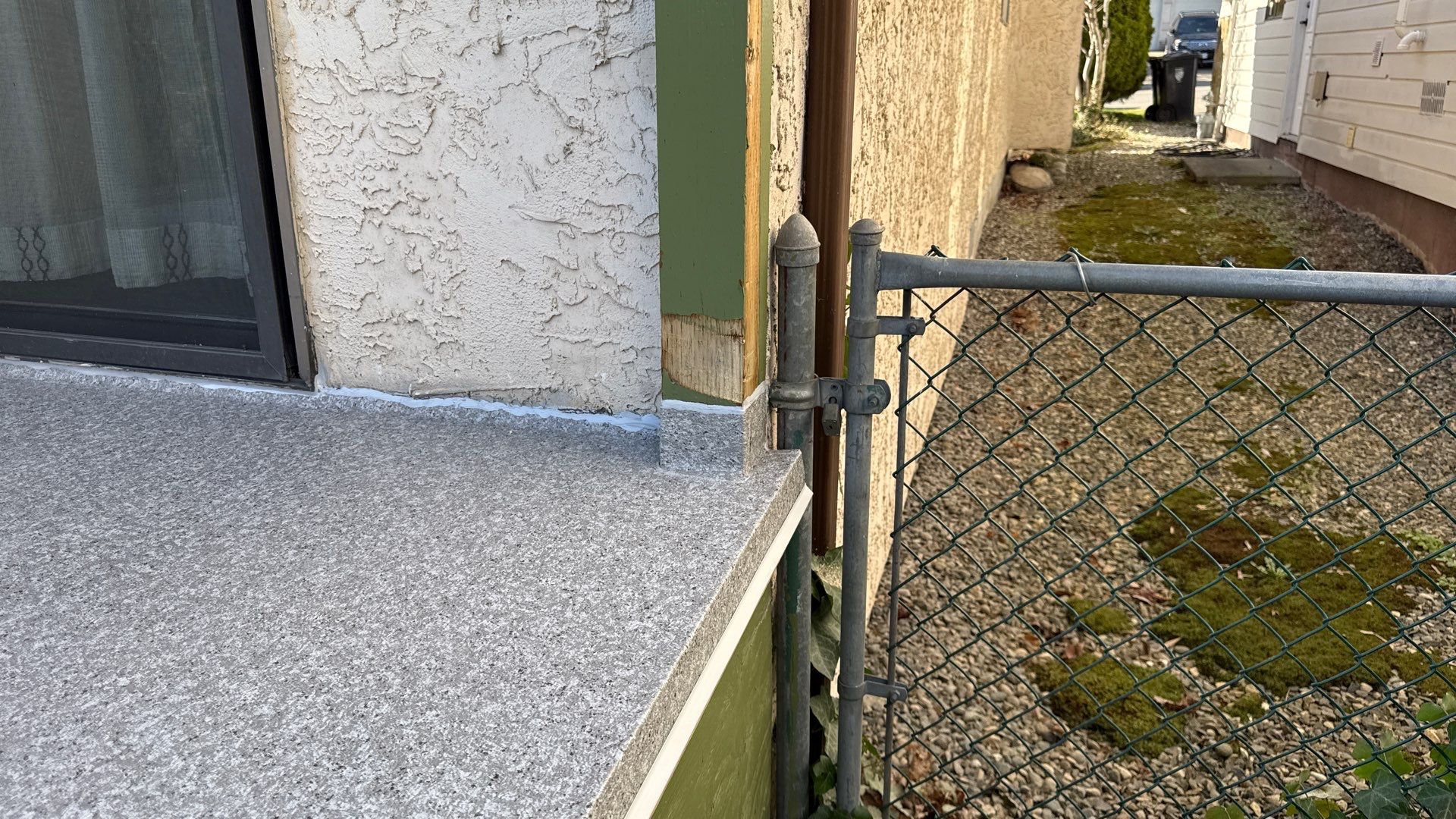
That seam and termination check is the one worth doing properly. Leaks in vinyl deck systems most often begin where the membrane turns up a wall behind siding rather than out in the open field of the deck, so look at the edges and the perimeter rather than the middle. Anything that looks lifted, split, or open is worth a call to a dealer while it is still a small repair. Our vinyl deck repair guide explains what is fixable and what is not.
Summer is also when you find out if your deck is failing
Warm months are the best time to assess a deck's condition, because a problem that hides under rain and snow shows itself in dry weather. Look for soft or spongy areas underfoot, which suggest the substrate below has taken on water. Look for staining on the ceiling of any space beneath the deck. Look for standing water that has not drained within a few hours of rain.
These are substrate and drainage symptoms rather than surface ones, and no amount of cleaning fixes them. If you see any of them, read our guide to why balcony waterproofing fails, and if the deck sits above a room, waterproofing a deck over living space explains what a correct assembly looks like.
If a deck is reaching the end of its life, summer is also the practical window to replace it. Installation needs dry conditions and a dry substrate, so the work that gets booked in August happens in good conditions. You can price a replacement with our deck cost calculator, compare options across the product range, or read the vinyl decking cost guide for what drives the number. The full range sits on our vinyl decking hub, with dedicated pages for balconies and rooftop decks.
Frequently asked questions
Can you put an outdoor rug on a vinyl deck?
Yes, but only a rug with no rubber or latex backing. Rubber-backed rugs react with the PVC and leave a permanent yellow outline that cannot be cleaned off. Choose a woven or breathable polypropylene rug with an open weave, and lift it periodically so the deck underneath can dry out.
How do you clean stains off a vinyl deck?
Rinse loose grit away first, then wash with warm water, mild dish soap and a soft-bristle brush, and rinse thoroughly. Because a vinyl membrane is non-porous, most summer stains sit on the surface rather than soaking in. Avoid solvents, abrasive pads and close-range pressure washing.
How do you clean algae off a vinyl deck?
Scrub the affected area with a diluted household cleaner and a soft brush, then rinse fully. Algae on vinyl decking grows in trapped damp rather than in the material itself, so it usually appears in shaded corners or under objects left in place. Moving mats and planters monthly prevents it returning.
Does vinyl decking get hot in summer?
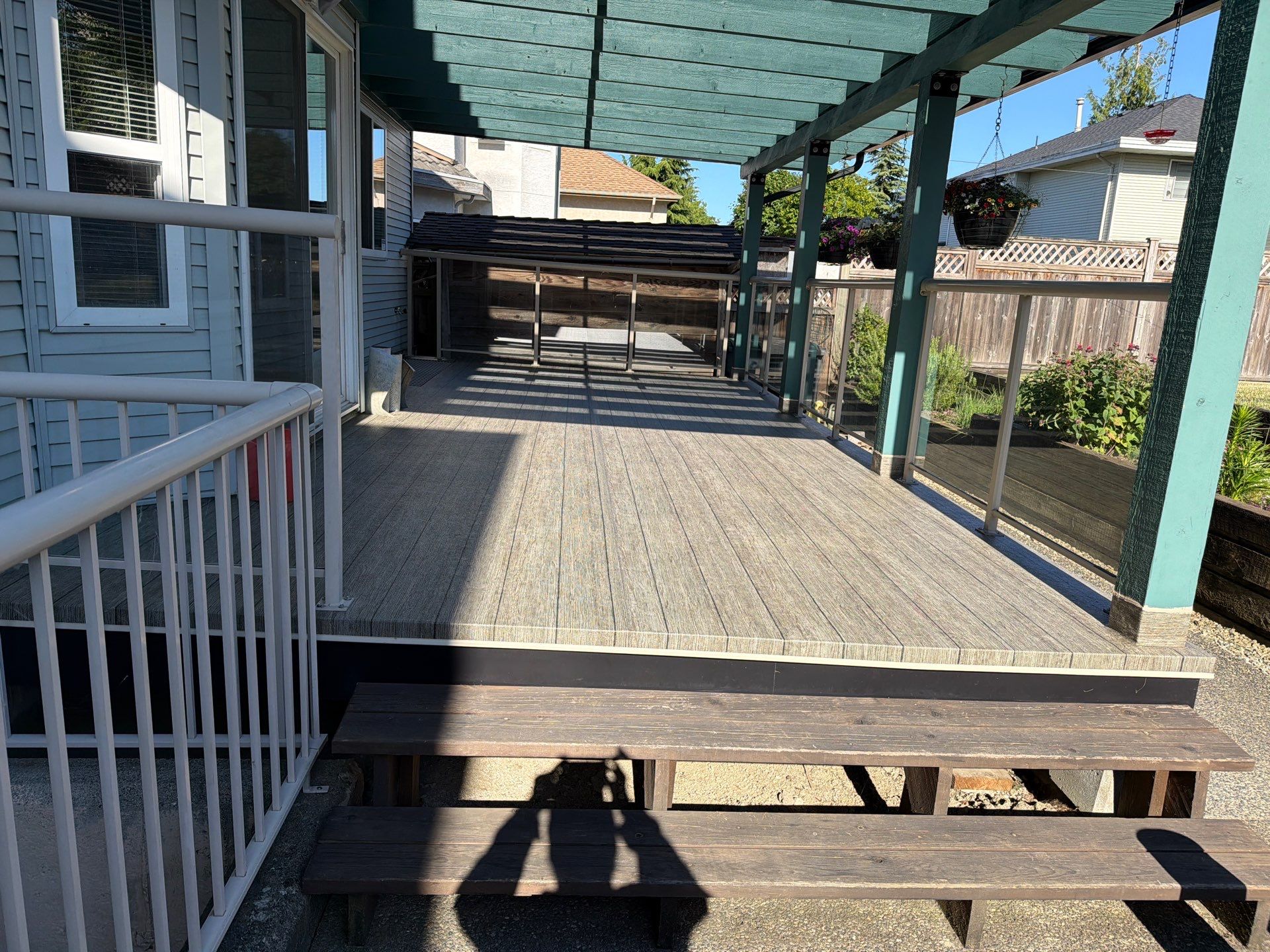
A vinyl deck warms in direct sun like any outdoor surface, and lighter colours stay noticeably cooler than darker ones. The material itself is rated for continuous service from -40C to 80C, so summer heat poses no risk to the membrane or its 15-year waterproofing warranty. What heat can do is make the membrane expand enough to show soft wrinkles on the hottest afternoons, which relax again as the deck cools; when summer wrinkling is normal and when it is not explains how to tell that apart from a real defect.
How often should you clean a vinyl deck in summer?
A weekly sweep or rinse plus one full wash across the season is enough for most decks. Wipe up grease and sunscreen when they happen rather than waiting. Valordek membranes need no sealing, staining or refinishing at any point, which is the main maintenance difference against wood.