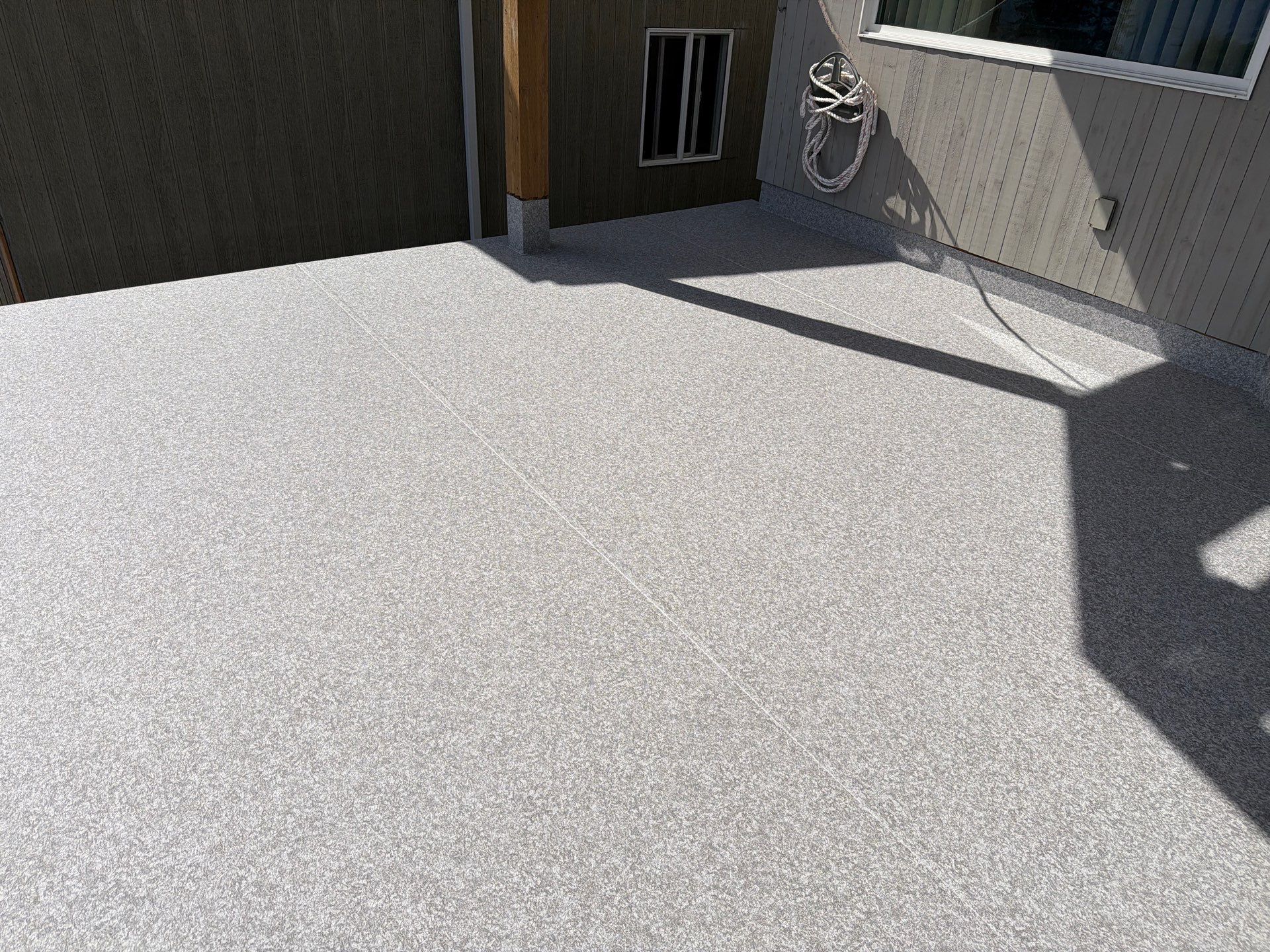
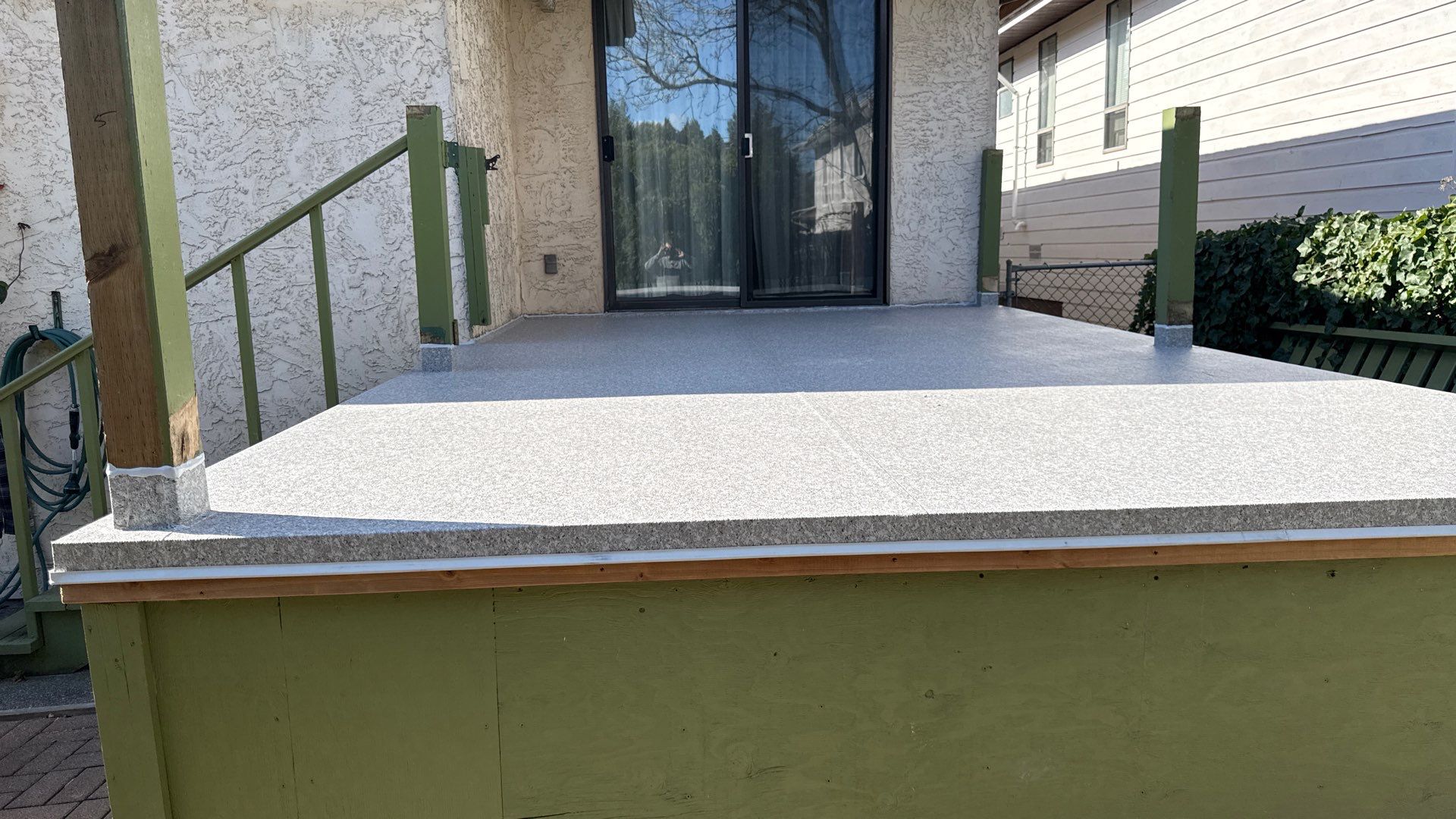
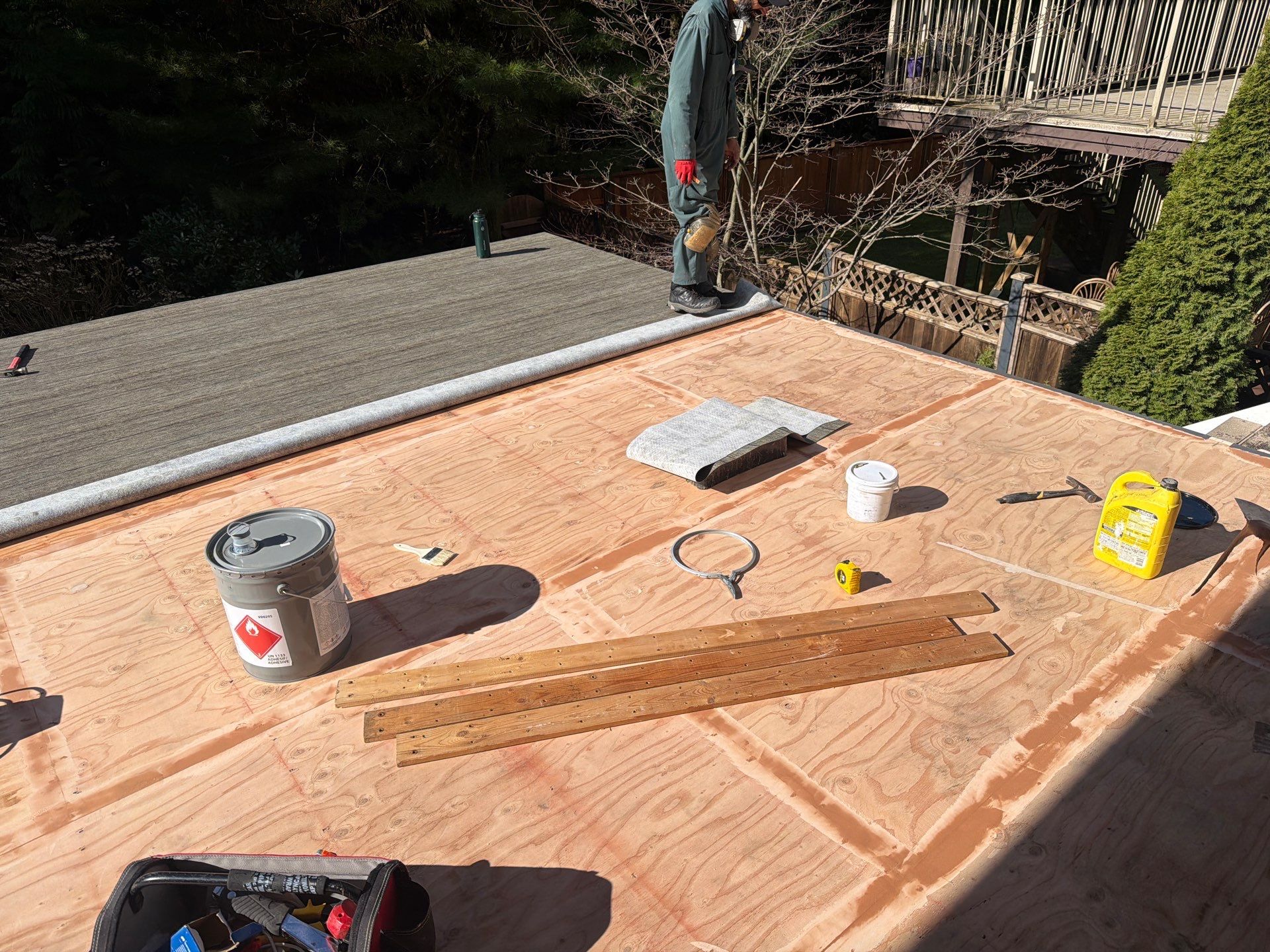
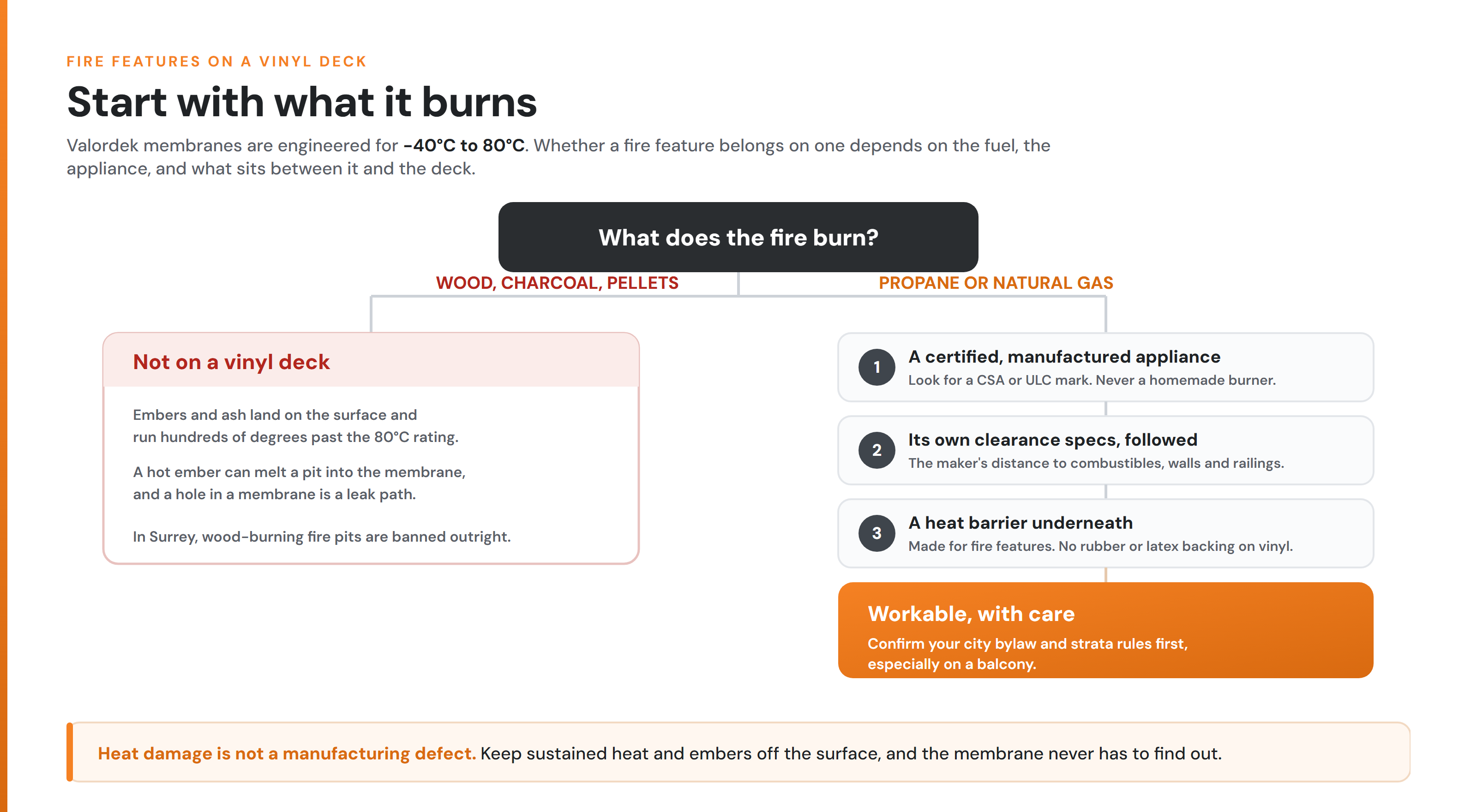
You can use a fire pit on a vinyl deck if it is a certified propane or natural gas unit, set up at its maker's clearances with a heat barrier underneath. A wood-burning fire pit does not belong on one. Valordek vinyl deck membranes are engineered for -40°C to 80°C, and burning embers run hundreds of degrees hotter than that.
The reason comes down to what the surface is. A vinyl deck is not a floor covering sitting on top of the waterproofing. The membrane is the waterproofing, so anything that melts, scorches or pits the surface opens a leak path into the structure below. That changes the question from "will it leave a mark?" to "will it let water in?" This guide covers which fire features are workable, what to put underneath them, how much heat the membrane is built for, what the rules say in BC, and what the warranty does and does not cover. For how the membrane system works as a whole, see our vinyl decking overview.
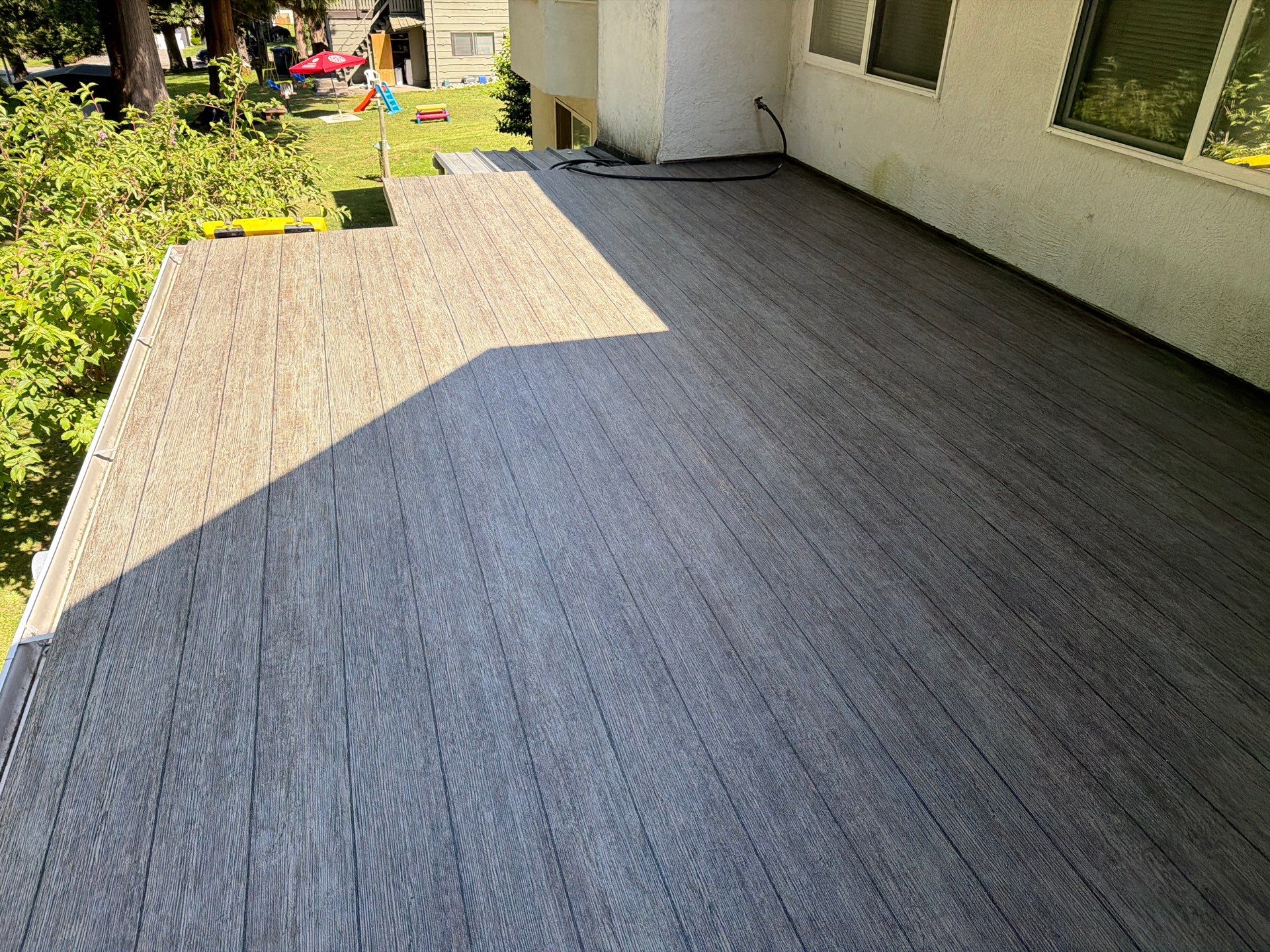
Is it okay to use a fire pit on a deck?
It depends on the deck surface and the fuel. Wood decking can catch fire. Composite and PVC deck boards soften and warp under heat. A vinyl deck membrane behaves differently from both: it is a continuous, bonded waterproof layer, so heat damage to it is a waterproofing problem, not only a cosmetic one.
Valordek membranes are engineered to perform across a -40°C to 80°C range, which comfortably covers a hot July afternoon and a prairie cold snap. What that range does not cover is a heat source sitting on or near the surface for an evening. The underside of a steel fire bowl, a dropped coal or a stray ember are all far above 80°C. The membrane is tough, but it is still PVC, and PVC softens when it is overheated.
So the useful question is not "fire pit or no fire pit". It is what the fire burns, how the appliance is built, and what sits between the heat and the deck.
Which fire features are safe on a vinyl deck?
Gas-fuelled, certified appliances with a heat barrier are workable. Anything that burns solid fuel is not. The difference is embers: a gas flame stays where the burner puts it, while wood and charcoal throw hot material onto whatever is nearby.
| Fire feature | What reaches the deck | Waterproofing risk | On a vinyl deck |
|---|---|---|---|
| Wood-burning fire pit | Radiant heat, embers, hot ash | High. Embers can melt pits or holes into the membrane. | No |
| Chiminea or outdoor wood stove | Radiant heat from the base, sparks from the mouth and chimney | High | No |
| Charcoal brazier used as a fire bowl | Intense heat from the base, falling coals | High | No |
| Certified propane or natural gas fire table | Radiant heat only, reduced by the table's own base | Low when clearances and a heat barrier are in place | Yes, with care |
| Small tabletop propane fire bowl | Heat close to whatever it sits on | Depends on the surface under it and its clearances | Only on a non-combustible table, never directly on the deck |
The waterproofing risk rises with anything that can put concentrated heat onto a small spot of the surface, because that is how a membrane gets pitted. A hole the size of a pencil eraser is enough to let water into the substrate, and a vinyl membrane is non-porous, so once water is underneath it has no easy way out. Our guide on how to tell if there is rot under your vinyl deck membrane explains why a small breach can turn into a large repair.
Can you put a propane fire pit on a vinyl deck?
Yes, a propane fire table can go on a vinyl deck when three conditions are met. Each one matters on its own, so treat them as a checklist rather than a menu.
- A certified, manufactured appliance. Buy a propane or natural gas fire table built for outdoor use and certified for the Canadian market, with a CSA or ULC mark. Homemade burners and converted wood pits are out.
- The maker's clearance specifications, followed exactly. Every certified appliance comes with minimum distances to combustible materials, walls and overhead structures. Those numbers are specific to the unit, which is why there is no single rule of thumb worth trusting. Read the manual, and measure.
- A heat barrier underneath. Even a well-insulated fire table radiates some heat downward over a long evening. A purpose-made barrier spreads and blocks it before it reaches the vinyl surface.
A few habits make the difference over a full season. Keep the propane tank inside the table's enclosure or on its designated stand, not loose on the deck. Let the unit cool completely before covering or moving it. Lift it rather than dragging it, because metal feet under load can scuff the surface. And think about wind: a gusty balcony pushes flame sideways, which is exactly what the clearance specifications assume will not happen.
What can I put under my fire pit on my deck?
Use a heat shield or deck protector made specifically for fire features, and check its backing before it touches vinyl. This is the step people most often get wrong, because the wrong mat causes a different kind of damage.
Many outdoor mats and pads are backed with rubber or latex for grip. On a vinyl deck, that backing is a problem in its own right. The plasticizers that keep PVC flexible migrate into rubber and latex and react with them, leaving a permanent yellow or amber outline in the exact shape of the mat. It does not clean off. We cover the same reaction with outdoor rugs in our summer deck care guide, and it applies just as much to a fire mat that sits in one place all season.
What to look for in a heat barrier:
- It is sold for use under fire pits or fire tables, with a stated heat rating.
- Its underside is not rubber or latex. If the product does not say, ask the manufacturer before buying.
- It extends well beyond the footprint of the appliance on every side, so a dropped item or a gust of wind does not put heat onto bare membrane.
- It lies flat. A curled edge traps water against the surface and can mark it.
How much heat can a vinyl deck handle?
Valordek membranes are engineered to perform from -40°C to 80°C, and that range, not the fire rating, is the number that governs a fire feature. It is worth separating the two, because some vinyl membranes carry a fire rating and it is easy to read that as permission.
Valordek's 60mil rooftop membrane is tested by Intertek and carries a Class A & C fire rating. A fire rating describes how a roofing or deck material performs against fire in a standardized building-code test. It is a life-safety property: it tells a building inspector how the surface behaves if fire reaches it. It does not mean the material can sit under a heat source for hours without softening, scorching or discolouring. Here is what the manufacturer data actually says about the membrane around a fire feature:
| Property | Valordek membrane | What it means near a fire feature |
|---|---|---|
| Waterproofing | Continuous, bonded vinyl membrane with heat-welded seams | The surface is the waterproofing. A melted pit or hole is a leak path, not just a mark. |
| Temperature range | -40°C to 80°C | Embers, coals and the base of a solid-fuel pit run far above 80°C. Keep sustained heat off the surface. |
| Warranty | 15 years waterproofing, 5 years appearance, both lines | Covers manufacturing defects that cause leaks. Heat damage is not a manufacturing defect. |
| Fire rating | Class A & C (60mil rooftop membrane, Intertek tested) | A code fire-resistance rating, not heat tolerance. It does not make the deck fire-pit safe. |
| Code standard | Both lines exceed code 37.54.95 (68mil tested by CCMC, 60mil by Intertek) | Approved for decks over living space, which is exactly where a leak does the most damage. |
| Maintenance | Annual inspection of sealant and seams; warm soapy water for cleaning | Add the spot under the fire feature to that annual inspection. |
You can read what each Valordek product is tested and rated for on our certifications page.
Balconies and fire features: check the rules first
Before the membrane even becomes a question, check whether a fire feature is allowed where you live. In BC, the rules come from several layers at once, and the strictest one wins.
- Your city's fire bylaw. Rules differ between municipalities. In Surrey, for example, the city's fire prevention bylaw (No. 22020) does not allow open burning: backyard fires, fire pits, chimineas and any other outdoor burning are prohibited, other than propane or natural gas fire pits. Other cities set their own terms, so check your municipality's current rules rather than assuming a neighbour's apply.
- Your strata bylaws. In a condo or townhouse, strata bylaws can be stricter than the city's, and many restrict open-flame appliances on balconies. The balcony surface is often limited common property, which also affects who pays if it is damaged.
- Fire bans. Seasonal provincial or municipal fire bans can apply on top of everything else. Check before you light anything in summer.
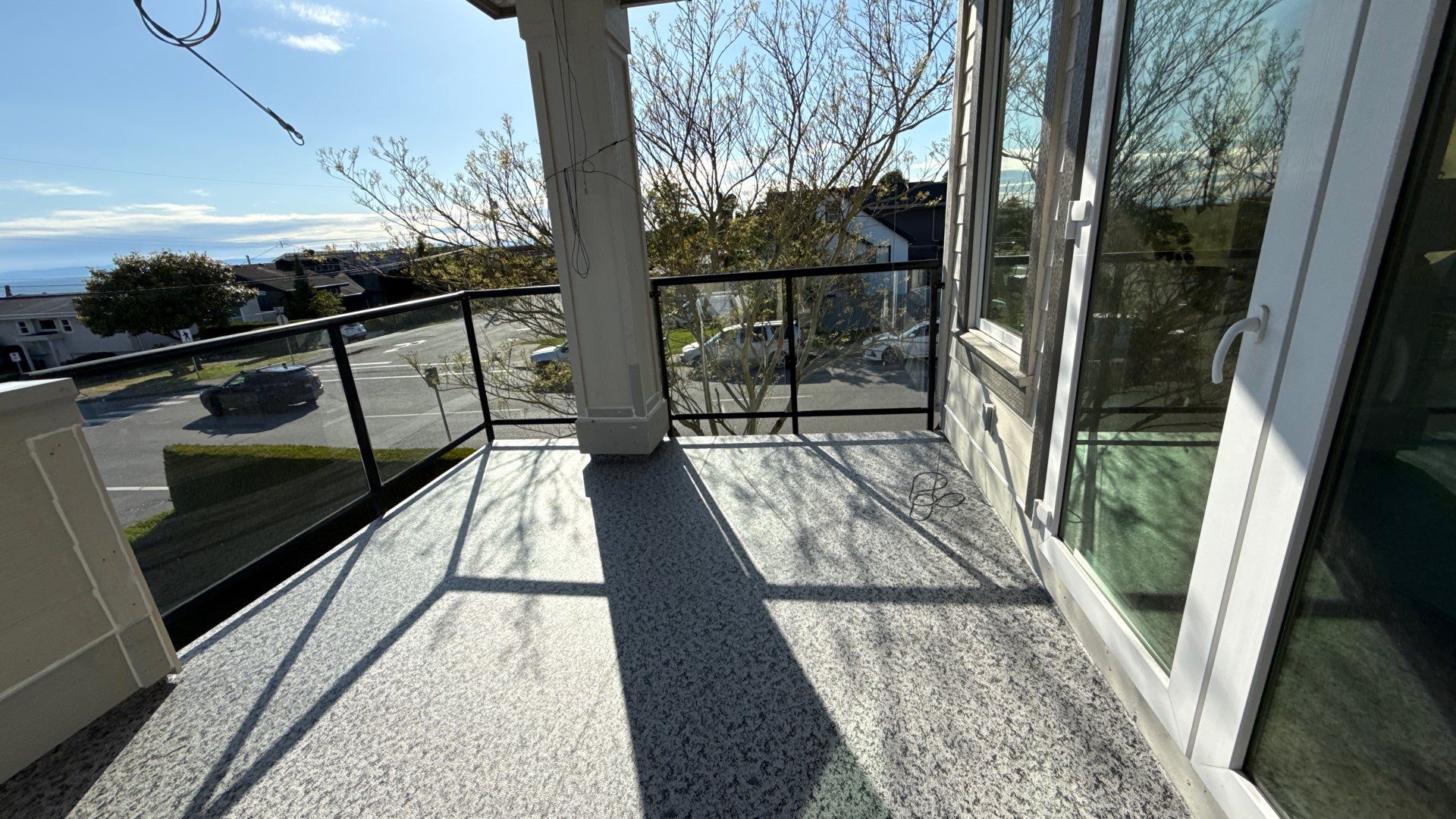
Balconies deserve extra caution for practical reasons too. They are smaller, so clearances are harder to achieve, and there is often another unit's balcony, soffit or window directly above or below. If your membrane protects living space underneath, as it does on most balcony waterproofing installations, a heat-damaged spot is a leak into someone's ceiling, not just yours. The same logic applies to waterproof rooftop decks over occupied rooms.
What does the warranty say about heat damage?
The Valordek warranty covers manufacturing defects that cause leaks. Heat damage from a fire feature is not a manufacturing defect, so plan as though it is not covered. Valordek membranes carry 15 years of waterproofing coverage and 5 years of appearance coverage, and the published exclusions include improper installation, abuse and misuse.
That is not a technicality. A warranty exists to protect you from a product that was made wrong, not from a surface that was put in harm's way. A scorch mark, a softened patch under a fire bowl or a pit from an ember tells an inspector what happened, and none of those point back to the factory. The full terms, including what keeps coverage valid, are on the Valordek warranty page, and our guide to vinyl decking warranty coverage explains how the membrane warranty and the installer's workmanship fit together.
How do you protect a deck from a fire pit?
Most fire-feature damage is gradual, so a simple routine catches it early.
- Check the spot after the first few uses. Lift the heat barrier once the unit is cold and look at the membrane underneath. Any change in gloss, colour or texture means heat is still getting through, and the setup needs more clearance or a better barrier.
- Clean soot and residue the way the membrane is designed to be cleaned. Valordek's Care and Cleaning Instructions call for warm soapy water and a stiff broom, followed by a thorough rinse. For stubborn marks, dab cleaning solutions rather than rubbing them, and never use solvents, abrasive powders or steel wool: they can strip the top coat, UV inhibitors and printed pattern. Our guide on how to clean vinyl decking covers what is safe to use.
- Never sweep hot debris. If anything falls from the appliance, let it cool where it is. Sweeping a hot fragment drags it across the surface.
- Add the fire feature's spot to your annual inspection. Valordek recommends an annual check of sealant joints and seams. Before you store the fire table for winter, look closely at the area it occupied too. Our vinyl deck maintenance guide walks through the full check.
- Do not patch damage with sealant. A softened, pitted or blistered spot needs a proper repair, not a dab of caulking on top. A qualified installer can heat-weld a matching patch into the membrane. Our vinyl deck repair guide explains when a patch is enough and when a section needs replacing.
What about barbecues and patio heaters?
The same principles apply: keep the heat source off the surface and follow the appliance's clearances. Barbecues on legs and tall patio heaters generally keep their heat well above the deck. With a barbecue, the more common problem is grease rather than flame. Wipe or scrape off the excess first, then clean with a diluted cleaner and a thorough rinse, and use a grease mat with the same caution about rubber backing. The summer care guide covers grease and cleaning in more detail.
Frequently Asked Questions
Can you put a fire pit on a deck?
It depends on the fuel and the deck surface. A certified propane or natural gas fire table can be used on most decks with its clearances followed and a heat barrier underneath. Wood-burning pits throw embers and do not suit wood, composite or vinyl decks. On a Valordek vinyl deck, heat damage is a leak risk.
Can you put a gas fire pit on a deck?
Yes, if it is a certified gas appliance set up at its maker's clearances, with a purpose-made heat barrier underneath. Never let flame or sustained heat reach a vinyl surface.
Can you put a fire pit table on a deck?
Yes. A propane or natural gas fire table is the most deck-friendly fire feature, because the burner sits inside a table rather than on the surface. Follow its clearance specifications, keep the tank in its enclosure, and use a heat barrier without rubber or latex backing. Valordek membranes are rated to 80°C, so the barrier matters.
Can you put a fire pit on a wood deck?
Only a certified gas appliance, with the maker's clearances and a non-combustible heat barrier underneath. Wood decking is itself combustible, so wood-burning pits do not belong on it. If the deck is a balcony or rooftop over living space, a vinyl membrane adds waterproofing, but the same fire rules still apply to the surface.