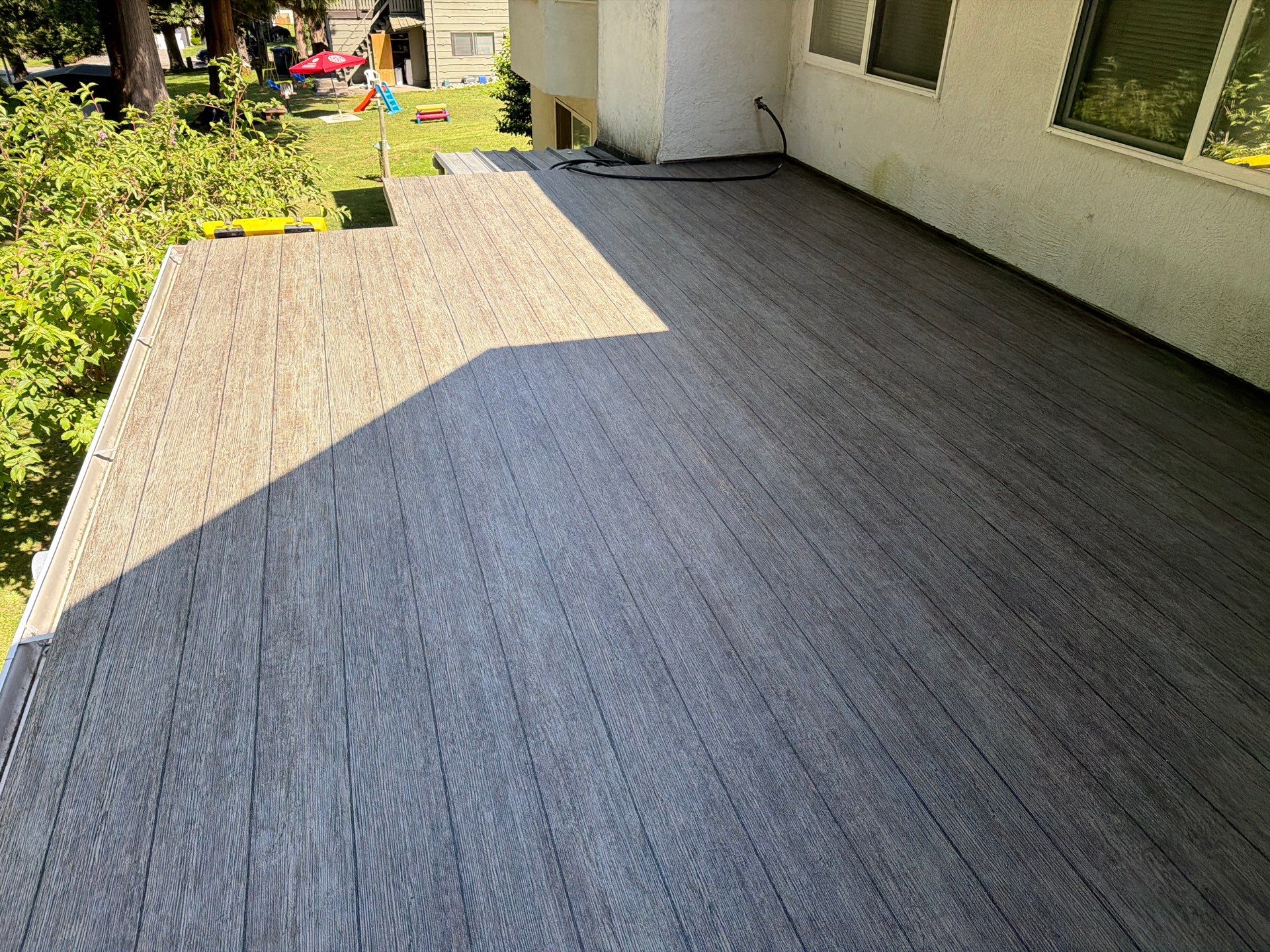
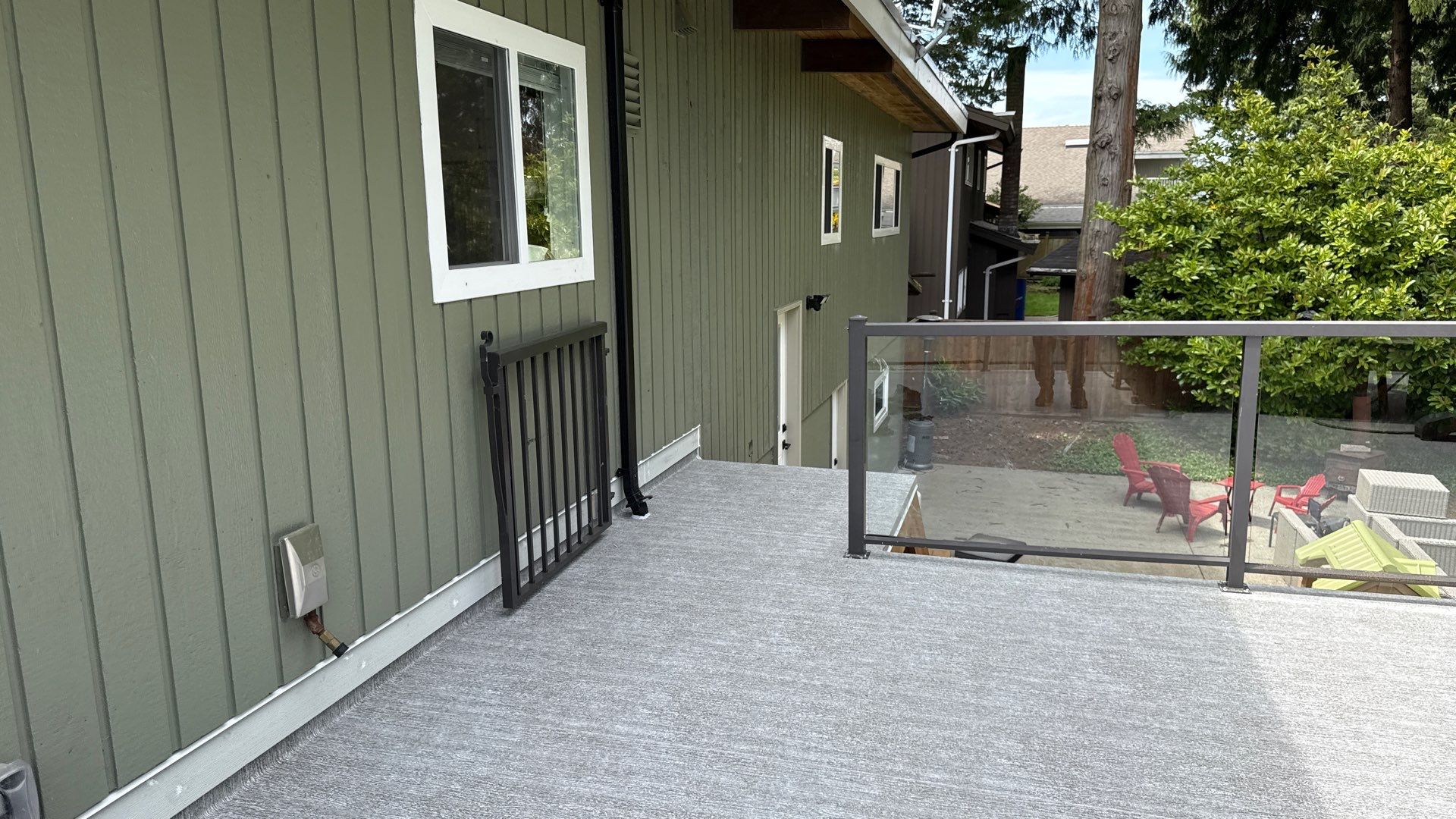
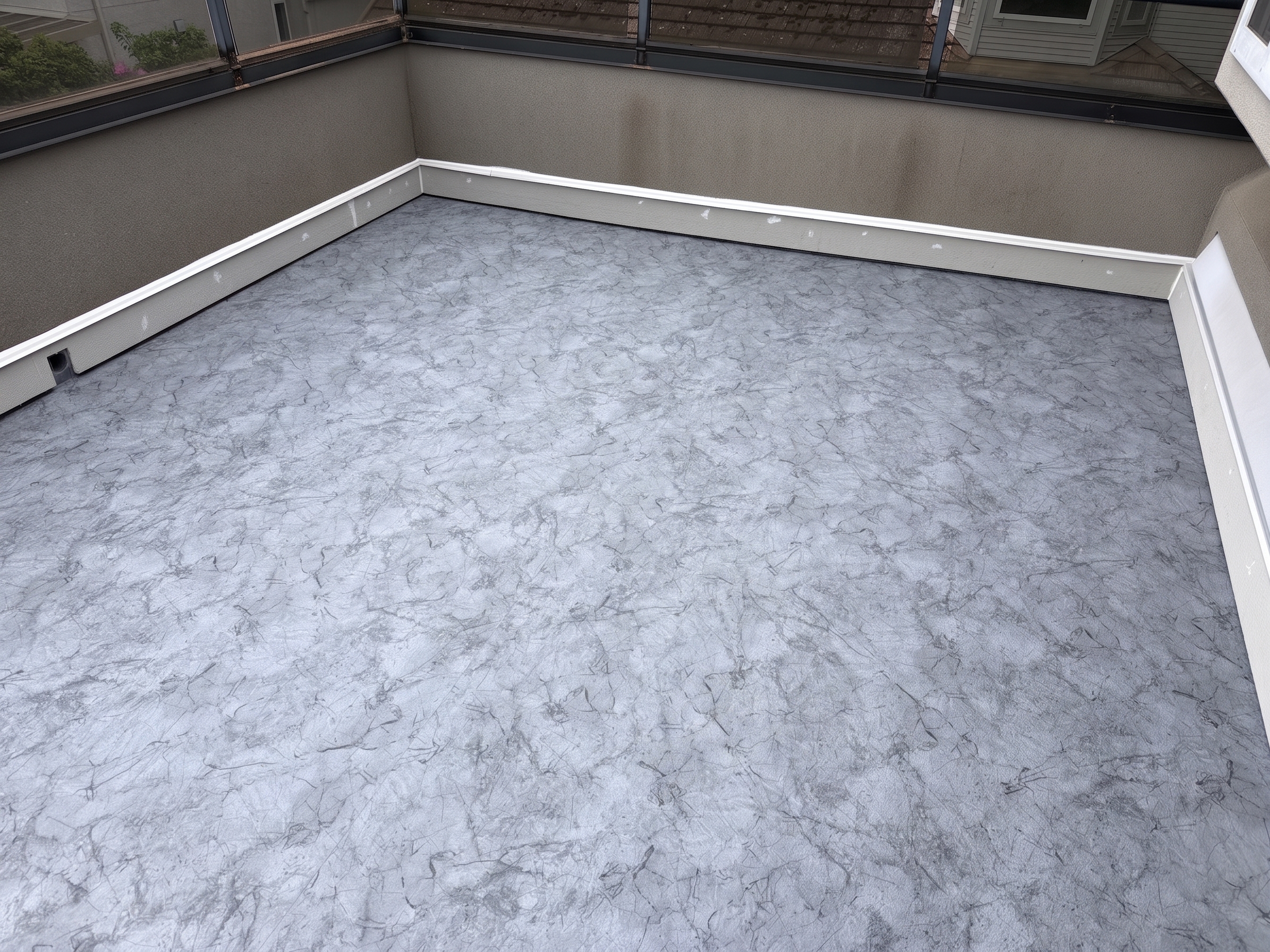
A deck over living space needs true waterproofing from a continuous membrane, not a surface coating, because any leak drains straight into the occupied room below. The proven solution is a fully bonded, heat-welded vinyl sheet membrane that serves as both the waterproof layer and the finished walking surface. Valordek vinyl deck membrane starts at $3.74 per square foot, carries a 15-year waterproofing warranty, and is rated from -40°C to 80°C for year-round protection over a room or garage.
Waterproofing a deck that sits over a bedroom, kitchen, or garage is the highest-stakes deck project a homeowner can take on. When a ground-level deck leaks, water hits the dirt. When a deck over living space leaks, water hits drywall, insulation, framing, and eventually the ceiling of the room below. That difference changes which materials are acceptable and why installation quality is non-negotiable. This guide covers why these decks are different, how membranes compare to liquid coatings, what proper installation looks like, and what it should cost. For the broader category overview, see our waterproof decking systems guide.
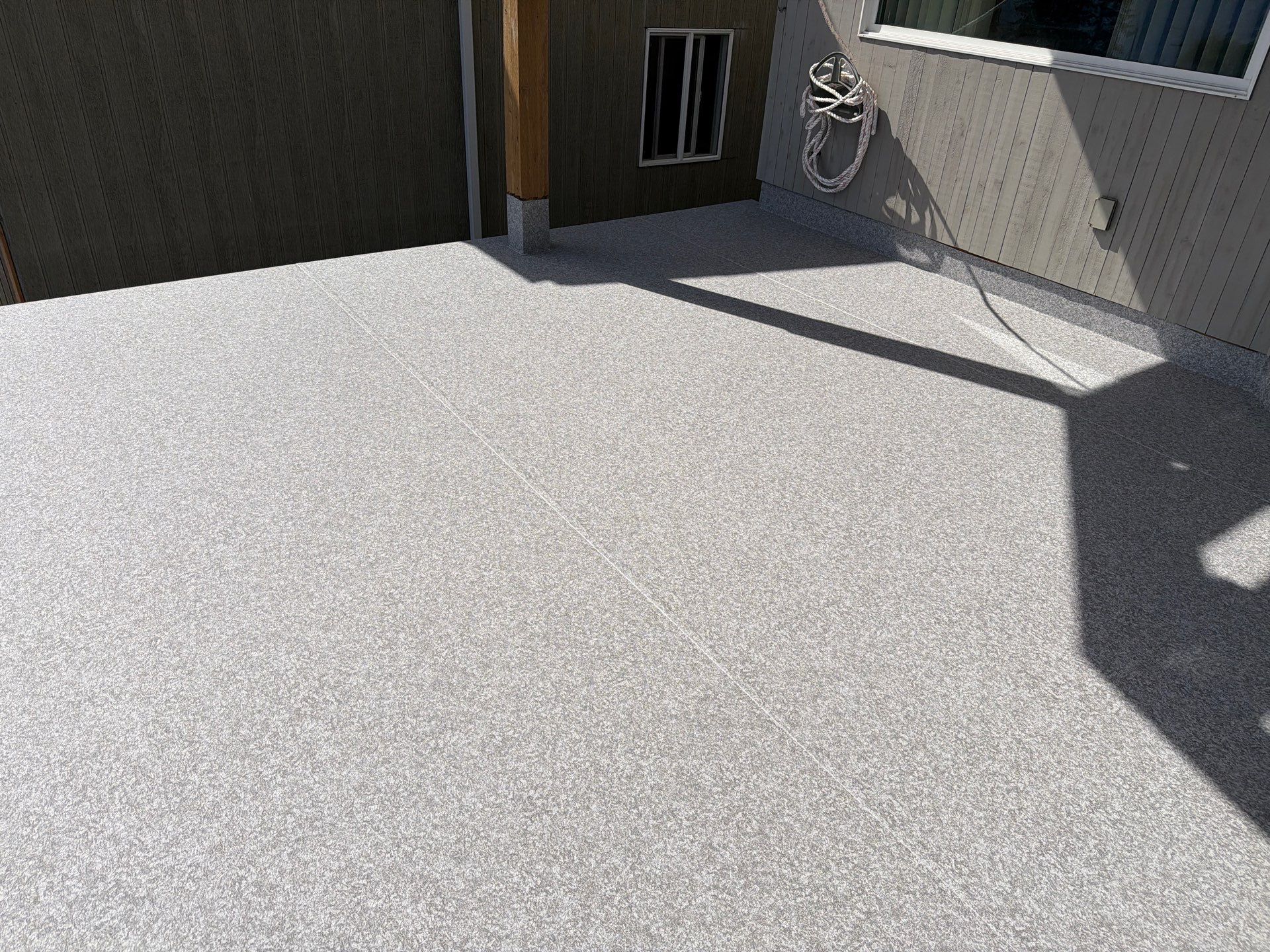
Why Is Waterproofing a Deck Over Living Space Different?
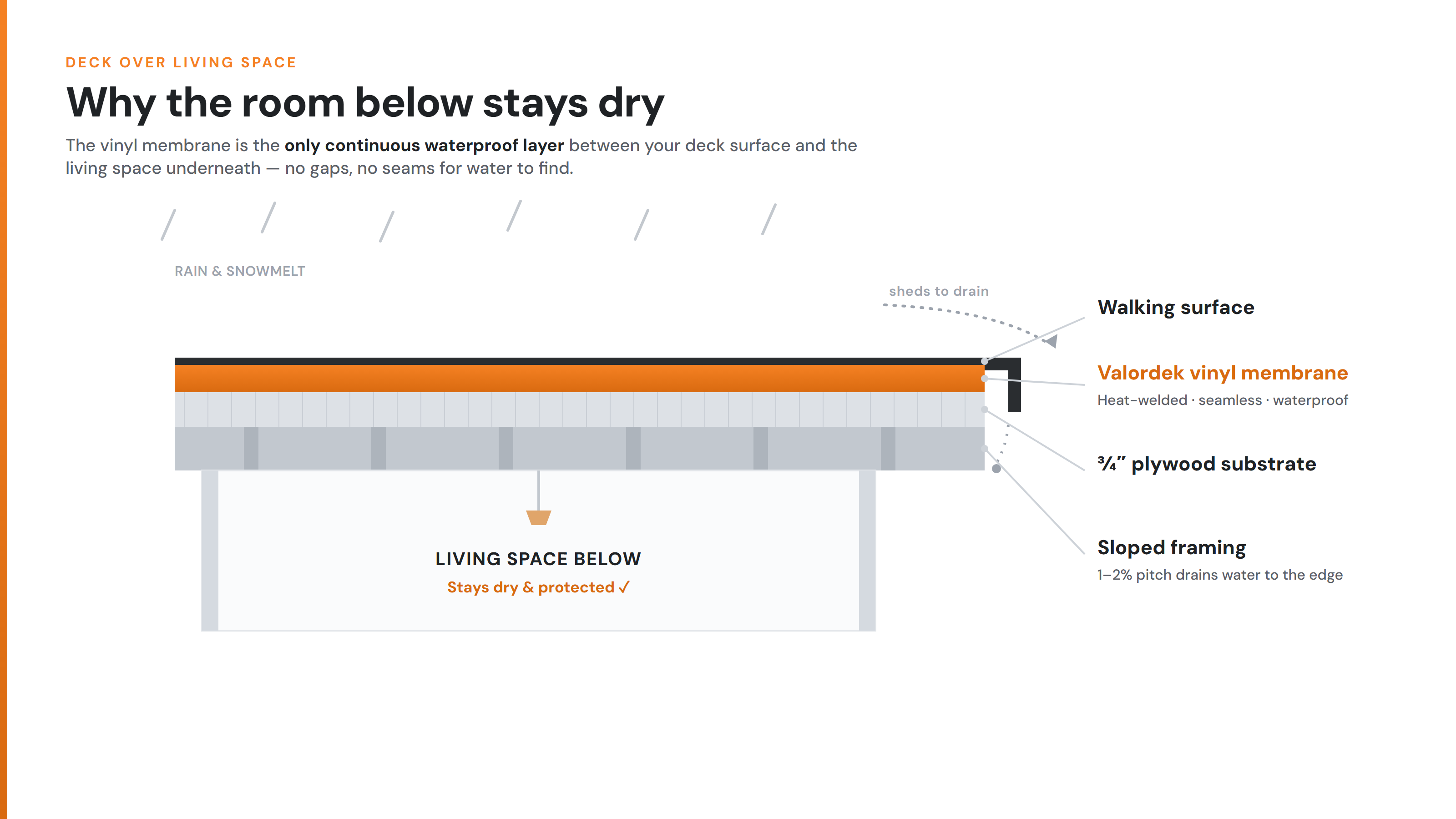
Waterproofing a deck over living space is different because the surface is effectively a roof, and any failure damages the occupied space directly below it. A ground-level deck can shed water imperfectly without consequence, but a deck over a room has zero tolerance for leaks, which raises the standard for both materials and workmanship.
The stakes are concrete. Water that gets past the surface soaks insulation, rots joists and rim boards, feeds mould inside the wall and ceiling cavity, and can trigger insurance disputes if the assembly was never built to waterproof an occupied space. This is why experienced contractors are blunt about it: do not treat a deck over living space like a ground-level deck, and do not hire the cheapest bidder. The repair cost of a failed assembly over a finished room dwarfs the price difference between doing it right and doing it cheap. For the failure modes that drive these leaks, see common balcony waterproofing failures.
One clarification matters here. This guide is about waterproofing the deck surface over occupied space, not installing an under-deck drainage system that diverts rain below an open ground-level deck. Those are different products for different problems. A deck over living space needs the surface itself to be waterproof.
Membrane, Coating, or Boards: What Actually Waterproofs a Deck Over Living Space?
Only a true waterproofing system keeps water out of an occupied space below, which rules out water-resistant deck boards and puts the real decision between a sheet membrane and a liquid-applied coating. Understanding the three options prevents the most expensive mistake homeowners make: assuming water-resistant is good enough.
- Deck boards (wood or composite): Not waterproof. Water passes through the gaps between boards by design. Boards can sit above a deck over living space only when a separate waterproof layer handles the water underneath. On their own, they protect nothing below.
- Liquid-applied coatings (elastomeric, polyurethane, acrylic): A true waterproofing approach when applied correctly. A liquid cures into a seamless film bonded to the substrate. Lower skill to apply and good for complex shapes, but it needs recoating and fails differently than a sheet membrane.
- Sheet vinyl membrane: A factory-made PVC sheet bonded to the substrate with heat-welded seams. The membrane is both the waterproofing and the finished surface. Consistent factory thickness, long warranty, and a failure mode you can see and fix.
For most decks over living space, the practical choice comes down to a vinyl sheet membrane versus a liquid coating. The next section compares them directly. To see the membrane system itself, visit the Valordek vinyl deck membrane page.
Vinyl Membrane vs Liquid Coating for a Deck Over Living Space
A vinyl sheet membrane generally outperforms a liquid coating over living space because it carries a longer warranty and fails locally and visibly, while a coating fails system-wide and often invisibly until water has already entered the space below. Both are legitimate waterproofing methods, so the right choice depends on lifespan, failure behaviour, and repairability.
| Factor | Vinyl Sheet Membrane | Liquid Coating (Elastomeric) |
|---|---|---|
| Waterproofing | Fully waterproof. Factory-consistent thickness. | Fully waterproof when applied at correct thickness everywhere |
| Seams and weak points | Heat-welded seams stronger than the membrane itself | Seamless film, but thin spots and pinholes become leak points |
| Failure mode | Local and visible. Damage shows on the surface. | System-wide and often invisible until water appears below |
| Lifespan | 15+ years with warranty backing | Often needs recoating every 5 to 10 years |
| Repairability | Patch or re-weld a localized area | Recoat sections or the full surface; finding the leak is harder |
| Surface finish | Finished walking surface in wood-look, stone-look, and classic patterns | Textured coating, limited finish options |
| Warranty | 15-year waterproofing (Valordek, both product lines) | Varies; tied to recoating schedule and maintenance |
| Membrane cost | $3.74/sq ft (Valordek vinyl membrane) | Lower upfront material cost, recurring recoat cost |
| Best fit | Decks and balconies over living space where longevity matters | Complex geometry, tight detailing, or recoating a sound existing surface |
Liquid coatings are not a bad product, and they are sometimes the right call. They handle complex shapes, awkward transitions, and tight detailing where a sheet is difficult to terminate cleanly, and they can renew a sound substrate without a tear-off. The honest tradeoff is lifespan and failure behaviour. A coating that thins at a corner or wears at a high-traffic spot can leak without any visible warning, and over occupied space that means water reaches the ceiling before anyone sees a problem. A vinyl membrane shows wear on the surface where it can be caught, and its heat-welded seams remove the thin-spot risk entirely.
There is a common objection that vinyl membrane cannot terminate cleanly at 90-degree angles around walls and doors. Properly detailed PVC terminates at walls, doors, and posts using compatible flashing and heat-welded transitions. That is an installer-skill question, not a limitation of the material, which is the entire reason workmanship matters so much on these projects.
The same comparison applies to decks that are not over living space, where the stakes are lower but the economics still matter. We have broken it down separately in how waterproof deck coatings compare to membranes.
What Does Proper Installation Look Like?
Proper waterproofing of a deck over living space follows a strict sequence: a sound sloped substrate, a fully bonded membrane, heat-welded seams, flashing at every wall and door, and integrated drainage. Skipping or rushing any step is where decks over occupied space fail.
- Substrate: A clean, dry, structurally sound base with positive slope to drainage. Valordek vinyl membrane installs best on 5/8 tongue-and-groove plywood or untreated concrete. Standing water has no place to go on a flat deck, so slope is built in first.
- Membrane bonding: The membrane is bonded to the substrate with contact adhesive across the full surface, leaving no voids where water could track.
- Seams: Membrane sheets are heat-welded so the seams become a single continuous waterproof surface, not an overlapped joint relying on tape or sealant.
- Flashing and terminations: The membrane is detailed up walls, around door thresholds, posts, and drains so water cannot get behind it at the edges. This is the most failure-prone area and where skilled installation pays off.
- Drainage: Scuppers, drains, or overflow points carry water off the deck and away from the structure. For more on this, see our guide to deck drainage systems.
Because the membrane has to meet building code over an occupied space, both Valordek product lines exceed code 37.54.95 for waterproofing, with CCMC and Intertek testing behind them. For the code side of these projects, see deck waterproofing code requirements.
Should You DIY Waterproofing a Deck Over Living Space?
Waterproofing a deck over living space is not a recommended DIY project, because the cost of a single missed detail is structural damage to the room below. While some balcony membrane installs are achievable for experienced DIYers, a deck over occupied space raises the stakes high enough that professional installation is the safer choice.
Valordek's adhesive-applied 68mil Fuzzy-Back membrane is DIY-possible for experienced installers on simpler balcony projects, but the flashing and termination detailing that protects an occupied space below is exactly where inexperience causes leaks. The 60mil Smooth-Back membrane used on rooftop decks requires professional installation. Over living space, the smart move is a certified installer who details the walls, doors, and drains correctly, because that detailing is what keeps water out of your ceiling. A Valordek dealer can assess the structure and handle the install.
How Much Does It Cost and How Long Does It Last?
Valordek vinyl deck membrane starts at $3.74 per square foot for the material, with total installed cost depending on substrate condition, drainage, detailing complexity, and professional labour. A vinyl membrane over living space carries a 15-year waterproofing warranty, while liquid coatings cost less upfront but recur as recoating expense every 5 to 10 years.
The honest way to compare cost is over the life of the deck, not at install day. A liquid coating can win on the first invoice and then need multiple recoats over the same period a single membrane install lasts. More importantly, the real cost risk over occupied space is not the surface, it is the structural repair when waterproofing fails. A membrane that fails visibly and locally gets caught and patched cheaply. Waterproofing that fails invisibly over a finished room is discovered as water damage. For a fuller cost breakdown, see our vinyl decking cost guide.
Frequently Asked Questions
How do you waterproof a deck over living space?
You waterproof a deck over living space with a continuous waterproofing system, most often a heat-welded vinyl sheet membrane bonded to a sloped substrate with flashing at walls, doors, and drains. Valordek vinyl membrane is both the waterproof layer and the finished surface, exceeds code 37.54.95, and carries a 15-year waterproofing warranty.
Is a vinyl membrane or a liquid coating better for a deck over living space?
A vinyl sheet membrane is generally better over living space because it lasts 15+ years and fails locally and visibly, while a liquid coating needs recoating every 5 to 10 years and can fail invisibly until water reaches the space below. Coatings suit complex geometry, but membranes win on lifespan and detectable failure for occupied-space decks.
Can you DIY waterproofing a deck over living space?
It is not recommended. A deck over occupied space has zero tolerance for leaks, and the flashing and termination details are where inexperience causes failures. Valordek's adhesive-applied membrane is DIY-possible on simpler balconies, but professional installation is the safer choice over living space, where a missed detail means structural damage below.
How much does it cost to waterproof a deck over living space?
Valordek vinyl deck membrane starts at $3.74 per square foot for the material, with total installed cost varying by substrate, drainage, detailing, and professional labour. Liquid coatings cost less upfront but add recoating expense every 5 to 10 years. Over the life of the deck, a membrane is often the more economical waterproofing choice.
How long does deck waterproofing last over living space?
A vinyl sheet membrane over living space lasts 15 years or more and carries a 15-year waterproofing warranty from Valordek. Liquid coatings typically need recoating every 5 to 10 years to stay watertight. Lifespan depends heavily on installation quality, especially the flashing and terminations at walls, doors, and drains.
What is the best way to waterproof a deck over a garage?
The best way to waterproof a deck over a garage is a fully bonded, heat-welded vinyl membrane with proper slope, flashing, and drainage, because a garage ceiling is occupied space that cannot tolerate leaks. Valordek vinyl membrane exceeds building code 37.54.95 and provides waterproofing and a finished surface in one layer.