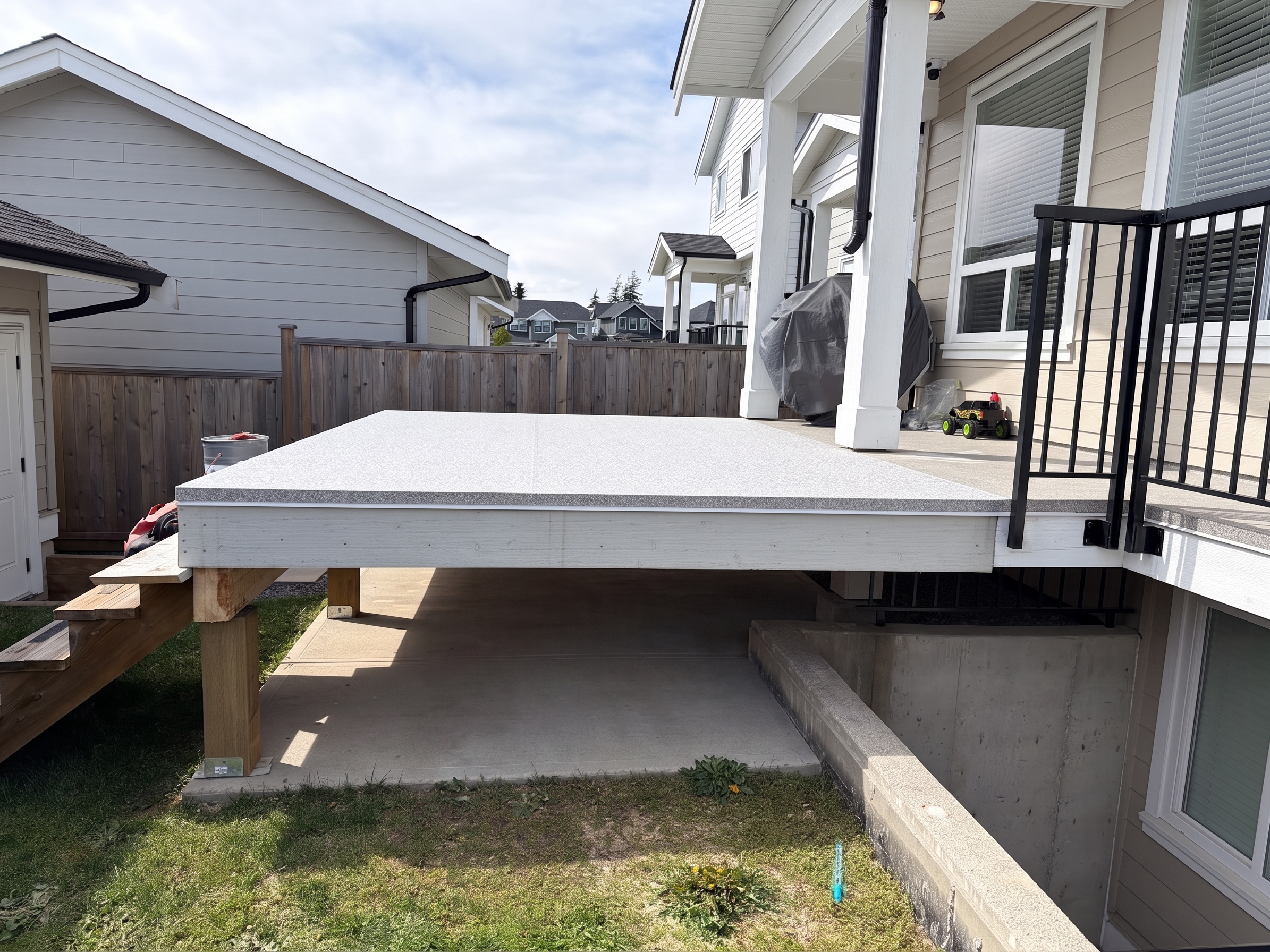
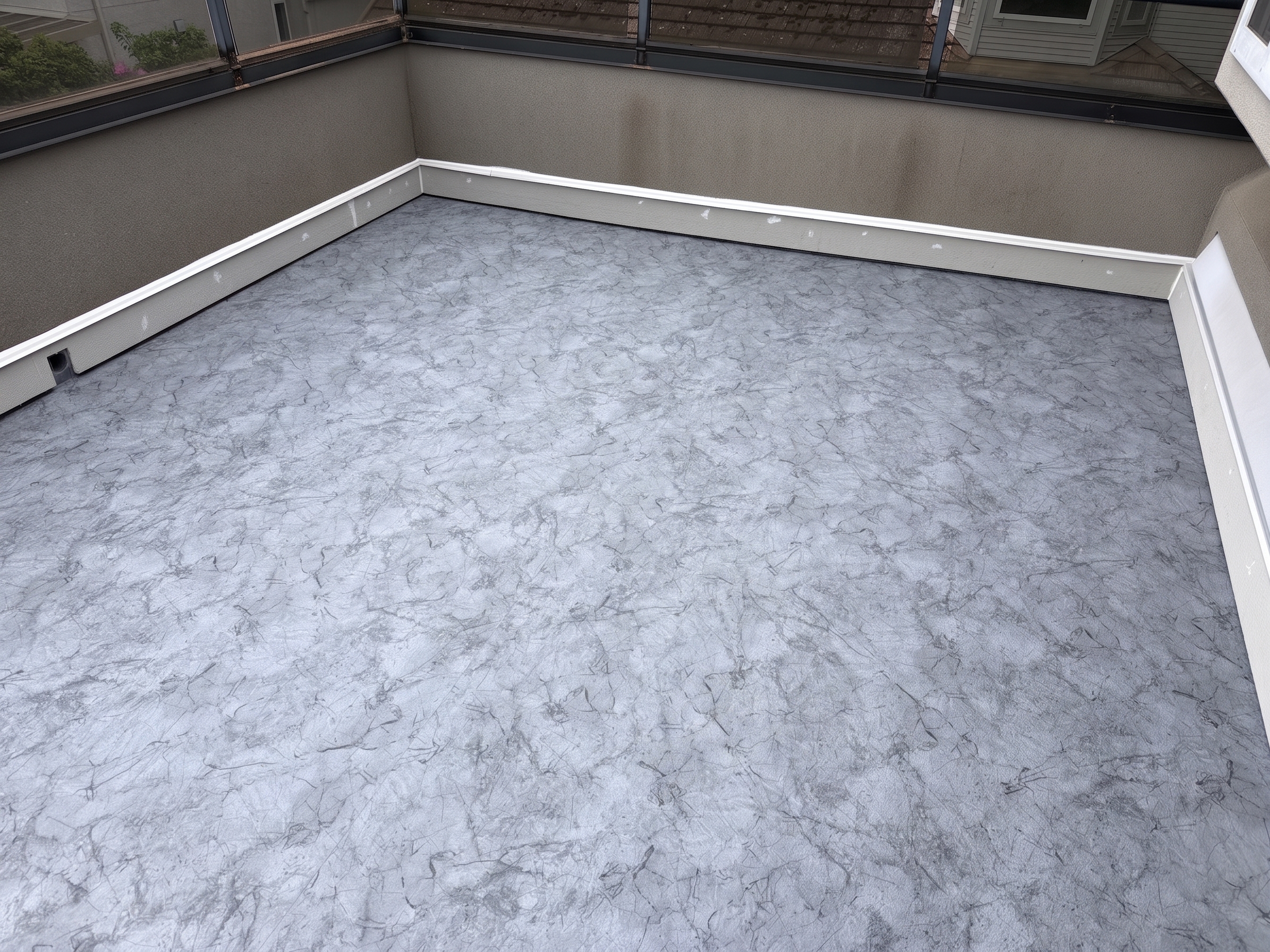
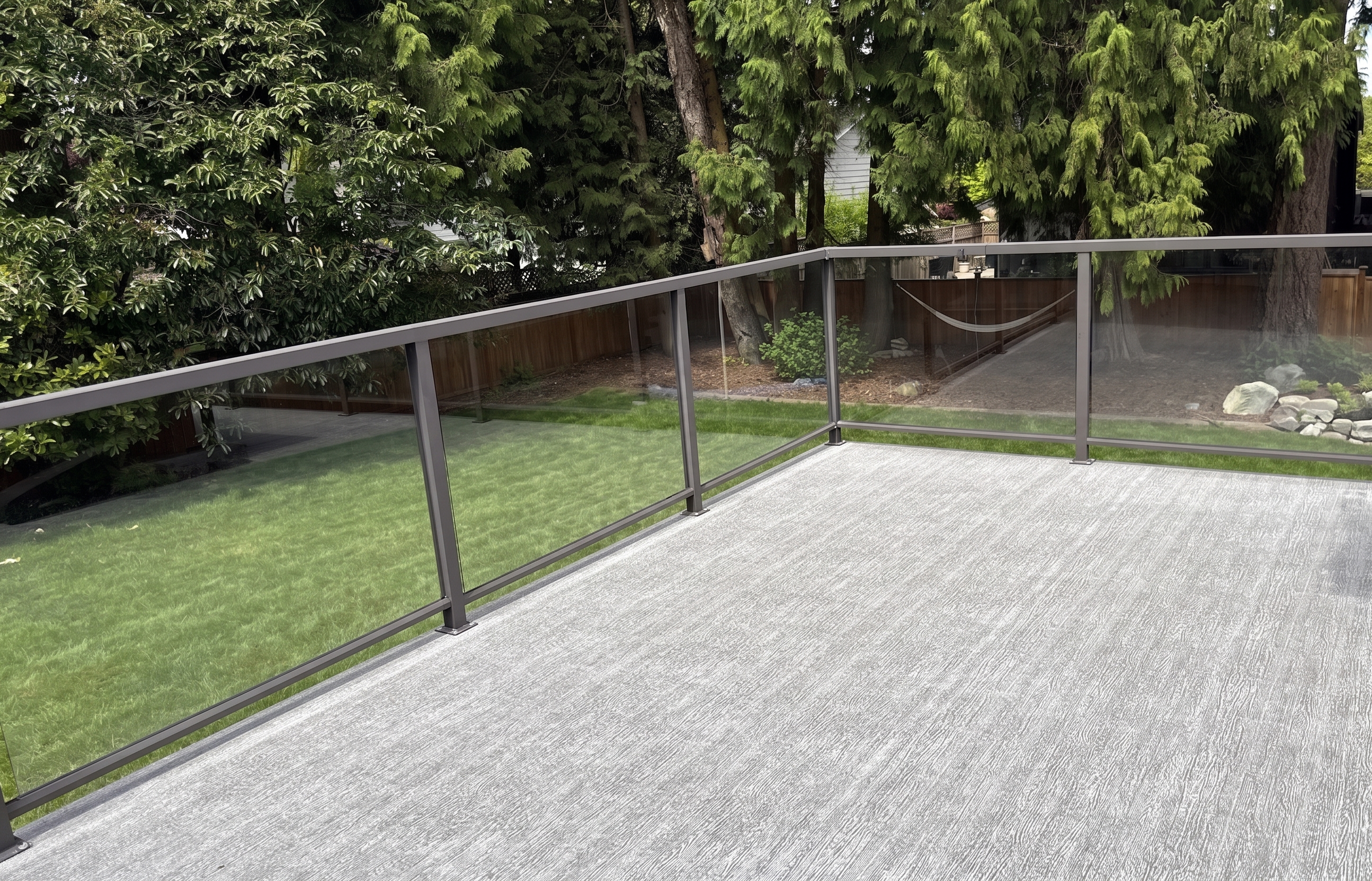
Vinyl decking membrane typically lasts 15 to 25 years or more with proper installation and maintenance. Valordek vinyl decking carries a 15-year manufacturer waterproofing warranty on both product lines. Actual lifespan depends on UV exposure, installation quality, climate conditions, and how well the deck is maintained over time.
That warranty-backed longevity is one of the main reasons vinyl membrane has become the standard waterproofing solution for balconies and rooftop patios across Canada. But "how long does it last?" is never a simple number. Here's what actually determines lifespan, what Valordek's warranties cover, and how vinyl compares to every other decking material on the market.
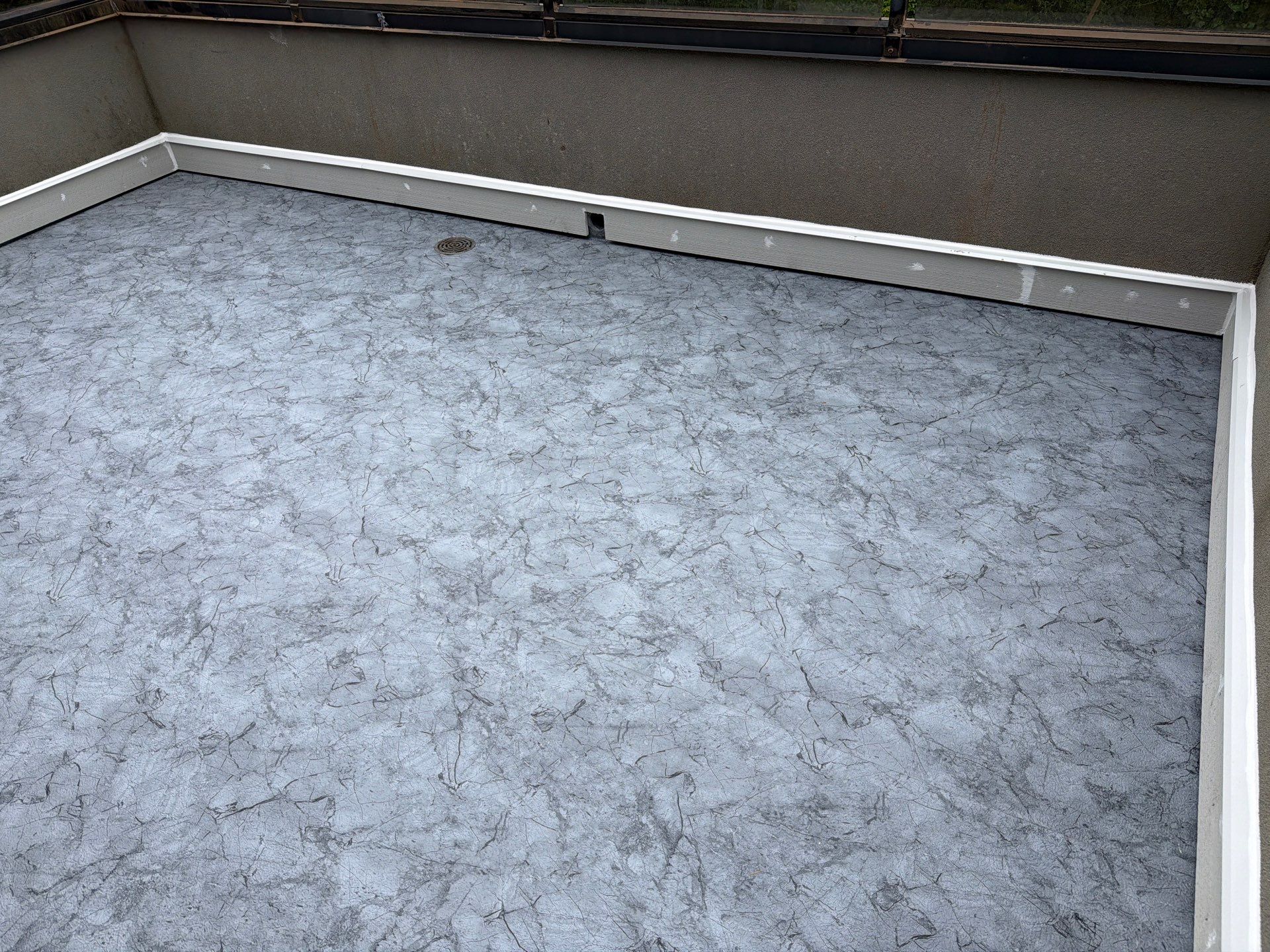
What Determines Vinyl Decking Lifespan?
No decking material lasts forever. But vinyl membrane is engineered to outlast most alternatives by a wide margin, especially in waterproofing applications. Five factors determine how long your vinyl deck will actually perform.
1. Material Quality
Not all vinyl decking is created equal. The PVC composition, UV stabilizers, and wear-layer thickness vary between manufacturers and product lines.
Valordek vinyl decking is manufactured with UV screens and stabilizers built into the PVC compound. This protects the membrane from ultraviolet degradation, which is the primary cause of failure in cheaper materials. The membrane material is rated to perform in temperatures from -40 degrees C to 80 degrees C, covering the full range of Canadian weather extremes.
According to the National Research Council of Canada, PVC membranes with proper UV stabilization retain more than 80% of their tensile strength after 15 years of outdoor exposure (NRC Building Science Reports). This is why high-quality vinyl decking outlasts coatings, paints, and unstabilized materials by a factor of three to five.
2. Installation Quality
Even the best vinyl membrane will fail prematurely if installed incorrectly. The three installation factors that most affect lifespan are:
- Substrate preparation. The plywood or concrete surface must be clean, dry, and smooth. Bumps, debris, or moisture trapped under the membrane create weak points that can lead to adhesion failure or bubbling over time.
- Adhesive application. Proper contact cement coverage and bonding pressure are critical. Incomplete adhesion leaves areas where water can migrate under the membrane.
- Seam and edge treatment. Overlaps, transitions around drains, and edge details must be properly sealed. On heat-welded systems, the welds create a chemically bonded seam that is stronger than the membrane itself.
This is why Valordek's warranty requires installation by a certified installer using Valordek-approved adhesives. Proper installation is the single biggest variable in long-term performance.
3. Climate and UV Exposure
UV radiation is the number one environmental factor that degrades outdoor PVC products. South-facing decks at higher elevations receive more UV exposure and will age faster than shaded, north-facing decks.
That said, Valordek vinyl is specifically formulated for outdoor UV exposure. The UV screens in the PVC compound slow photodegradation significantly compared to generic PVC products not designed for roofing or decking applications.
Temperature cycling (freeze-thaw) also matters. Vinyl membrane is flexible enough to expand and contract without cracking, unlike rigid coatings or tiles that fracture when substrates shift. Valordek's rated temperature range of -40 degrees C to 80 degrees C covers virtually every climate zone in North America.
4. Maintenance
Vinyl decking requires minimal maintenance compared to wood or composite, but "minimal" does not mean "zero." The two maintenance tasks that protect longevity are:
- Regular cleaning. Soap and water a few times per year. This removes dirt, debris, and organic matter that can hold moisture against the surface.
- Annual sealant inspection. Check sealant joints around drains, edges, and wall flashings once a year. Sealant is a consumable item that breaks down faster than the membrane itself. Replacing degraded sealant before it fails prevents water from bypassing the membrane at transition points.
Industry data from the Vinyl Institute indicates that PVC membranes maintained with annual inspections last 30% to 40% longer than those left unattended for years at a time.
5. Product Line and Thickness
Different vinyl decking products are engineered for different applications, and their expected lifespan reflects this.
Valordek's Fuzzy-Back system (68mil thickness) is designed for balconies and uses adhesive installation with contact cement. It carries a 15-year waterproofing warranty.
Valordek's Smooth-Back system (60mil thickness) is designed for rooftop patios and uses heat-welded PVC seams for a chemically bonded, continuous waterproof surface. It carries a 15-year waterproofing warranty and Class A and C fire ratings.
The heat-welded seams on the Smooth-Back system create joints that are actually stronger than the surrounding membrane, which is why the warranty period is longer despite the slightly thinner gauge. Weld integrity is a bigger factor in long-term waterproofing than raw thickness alone.
Valordek's Warranty Structure
Warranty coverage is the most concrete measure of a manufacturer's confidence in their product. Here is exactly what Valordek covers.
| Fuzzy-Back (68mil) | Smooth-Back (60mil) | |
|---|---|---|
| Waterproofing warranty | 15 years | 15 years |
| Appearance warranty | 5 years | 5 years |
| Installation requirement | Certified installer, Valordek-approved adhesives | Certified installer, heat-welded seams, Valordek-approved adhesives |
| Primary application | Balconies | Rooftop patios |
| Fire rating | N/A | Class A and C |
| Certifications | CCMC tested, exceeds code 37.54.95 | Intertek tested, exceeds code 37.54.95 |
What's Covered
- Waterproof membrane failure (water passing through the membrane material itself)
- Material defects in the PVC compound
What's Not Covered
- Damage from improper installation or installation not performed by a certified installer
- Fading or discolouration (cosmetic changes from UV exposure over time)
- Substructure issues (rot, settling, or movement in the plywood or framing underneath)
- Damage from sharp objects, dragged furniture, or chemical spills
- Failure of sealant joints (sealant is a maintenance item, not a permanent seal)
Warranty Conditions
- Must be installed by a certified installer using Valordek-approved adhesives
- Annual sealant inspection and regular cleaning per the Valordek Cleaning Guide are required
- Claims must be submitted in writing to Valordek at 17514 55B Avenue, Surrey, BC V3S 7G6
Transparency note: No vinyl decking manufacturer warranties cover fading. UV exposure causes gradual colour change in all PVC products over time. The rate of fading depends on UV intensity and geographic location. High-quality UV stabilizers (like those in Valordek vinyl) slow this process significantly, but some colour shift over 10 to 15 years is normal for any outdoor PVC product.
Lifespan Comparison: Vinyl Decking vs Other Materials
How does vinyl membrane stack up against every other decking and waterproofing option? Here is a direct comparison based on industry data and manufacturer warranties.
| Material | Expected Lifespan | Warranty (Typical) | Waterproof? | Maintenance Level |
|---|---|---|---|---|
| Vinyl membrane | 15-25+ years | 15 yr waterproofing | Yes, fully waterproof | Low (soap and water, annual sealant check) |
| Wood decking | 10-15 years | None for waterproofing | No | High (annual staining, sealing, rot repair) |
| Composite decking | 25-30 years (structural) | 25-50 yr structural (varies) | No, water passes through gaps | Low (cleaning only) |
| Rubber membrane | 10-20 years | 5-15 yr (varies) | Yes | Low to moderate |
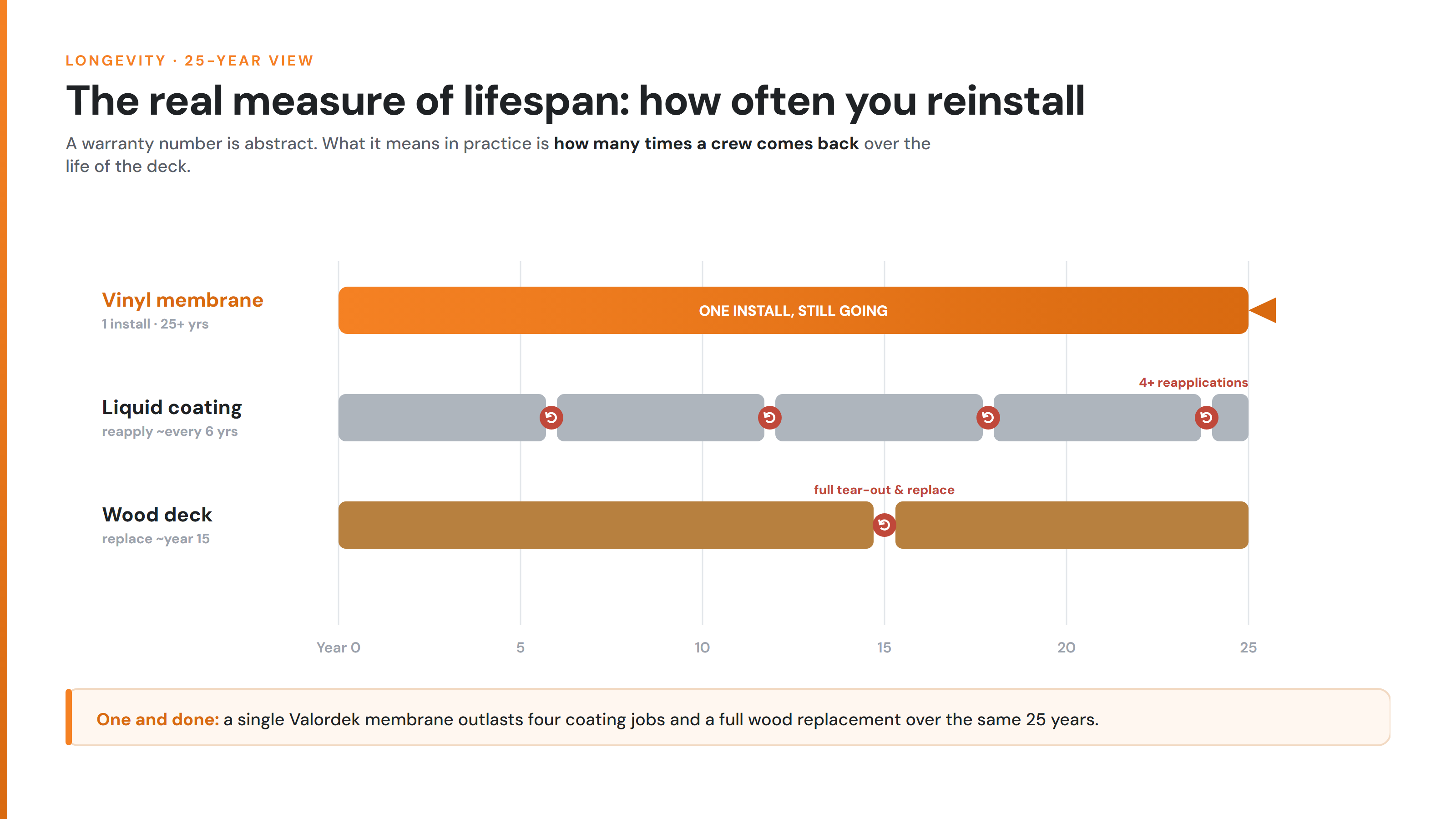
| Liquid coatings | 3-5 years before reapplication | 1-3 yr (if any) | Partially, degrades quickly | High (reapply every 3-5 years) |
| Torch-on membrane | 15-20 years | 5-10 yr (varies) | Yes | Low |
Key Takeaways from This Comparison
Vinyl membrane offers the best balance of lifespan, waterproofing, and low maintenance. Composite boards last longer structurally, but they do not waterproof. If your deck is over a living space, composite is not a substitute for vinyl membrane, as we cover in our vinyl vs composite comparison.
Liquid coatings are the cheapest option upfront but the most expensive over 15 years. Reapplying deck coatings every three to five years adds up to two to four times the cost of a vinyl membrane that lasts 15+ years without replacement. A study by the Waterproof Magazine technical review found that liquid-applied coatings require an average of 3.2 reapplications over a 15-year period, making total cost of ownership 2.1 times higher than sheet membrane systems.
Wood decking requires constant maintenance to reach even 10 years. Annual staining, sealing, and rot repair are non-negotiable with wood. Skip a year and the lifespan drops significantly. See the full vinyl vs wood comparison.
Rubber membrane is a solid waterproofing option but degrades faster under UV exposure. EPDM and TPO rubber membranes are common in commercial roofing but lack the UV stabilizers needed for walkable deck surfaces. Vinyl PVC membrane with UV screens outlasts rubber in exposed, south-facing applications by approximately 30%, according to roofing membrane degradation studies published by the National Roofing Contractors Association (NRCA). See our vinyl vs rubber membrane comparison.
How to Maximize Your Vinyl Decking Lifespan
You can extend the life of vinyl decking well beyond warranty periods with straightforward maintenance. According to the Canadian Construction Association's building envelope guidelines, proactive maintenance extends waterproof membrane life by 25% to 40% compared to reactive-only approaches. Our vinyl decking maintenance guide walks through the full routine.
Clean regularly. Use soap and water or a mild detergent two to four times per year. Remove leaves, dirt, and standing debris that can trap moisture. A soft-bristle brush or mop works best. Avoid pressure washers at close range, which can damage the membrane surface.
Inspect sealant annually. Walk the perimeter of your deck once a year and check the sealant joints at walls, drains, and edges. If sealant is cracked, pulling away, or missing, replace it before the rainy season. Sealant replacement is inexpensive and takes a few hours. Waiting until water gets in costs thousands.
Keep drains clear. Blocked drains cause standing water, which accelerates wear on any membrane. Clear drain covers of leaves and debris after storms and during fall.
Protect the surface from damage. Use furniture pads under heavy items. Avoid dragging sharp or heavy objects across the membrane. When moving barbecues, planters, or furniture, lift rather than drag.
Address damage promptly. Small cuts or punctures can be patched before they become water entry points. Contact a certified installer for repairs. Vinyl membrane is one of the few decking materials that can be spot-repaired without replacing the entire surface.
Avoid harsh chemicals. Standard household cleaners are fine. Avoid solvents, acetone, and abrasive cleaners that can attack the PVC compound or scratch the wear surface.
Signs Your Vinyl Decking Needs Attention
Vinyl membrane is durable, but it does not last forever. Watch for these indicators:
Sealant deterioration. Cracked, shrunk, or missing sealant at edges and transitions is the most common maintenance issue. This is not a membrane failure. It means the sealant needs replacing. Address it before water bypasses the membrane.
Bubbling or lifting. If the membrane is separating from the substrate, adhesion has failed in that area. Small bubbles can sometimes be re-adhered. Larger areas may need section repair or replacement by a certified installer.
Visible wear or thinning. High-traffic areas like doorway thresholds and stairway landings wear faster. If you can see the pattern wearing through or the surface feels noticeably thinner, that section should be inspected.
Water appearing below. If water is showing up in the space below your deck, something has been compromised. It could be a sealant joint, a drain connection, or membrane damage. Get it inspected promptly. Early detection prevents structural damage.
Significant colour change. Gradual fading over years is normal. Sudden or uneven discolouration could indicate chemical damage or localized UV degradation. Inspect the affected area for surface integrity.
Does Vinyl Decking Fade?
This is one of the most common questions buyers ask, and it deserves an honest answer.
Yes, all vinyl decking will experience some degree of colour change over time. UV radiation breaks down colour pigments in any outdoor material, including PVC, wood, composite, and rubber. No outdoor product maintains its exact original colour for 15+ years.
What separates quality vinyl from cheap alternatives is the rate and severity of fading. Valordek vinyl decking contains UV screens and stabilizers engineered into the PVC compound during manufacturing. These additives absorb and deflect ultraviolet radiation before it reaches the colour pigments, significantly slowing the fading process.
In practice, high-quality UV-stabilized vinyl decking like Valordek's will show subtle, even colour change over 10 to 15 years. The change is gradual and uniform across the surface, which most homeowners find acceptable. Low-quality vinyl without adequate UV stabilizers can fade noticeably within 3 to 5 years, often unevenly, creating a blotchy appearance.
Important distinction: Fading is cosmetic. It does not affect waterproofing performance. A vinyl membrane that has faded in colour is still fully functional as a waterproof barrier. The waterproofing warranty and the appearance warranty are separate for this reason.
Frequently Asked Questions
Does vinyl decking crack in cold weather?
No. Vinyl decking membrane is flexible PVC, not rigid. It expands and contracts with temperature changes without cracking. Valordek vinyl is rated to perform in temperatures as low as -40 degrees C. This is a critical advantage over rigid coatings, tiles, and some rubber products that can crack during freeze-thaw cycles. Across Canada's harshest winters, properly installed vinyl membrane maintains its integrity.
Can vinyl decking be repaired?
Yes. One of vinyl membrane's advantages over rigid decking materials is that it can be spot-repaired. Small punctures or cuts can be patched with matching membrane material and adhesive. Damaged sections can be cut out and replaced without removing the entire deck surface. A certified installer can assess the damage and determine whether a patch repair or section replacement is the best approach.
Does vinyl decking fade over time?
All outdoor materials experience some colour change from UV exposure. High-quality vinyl decking with UV stabilizers, like Valordek vinyl, fades gradually and evenly over 10 to 15 years. The colour change is typically subtle and does not affect waterproofing performance. Fading is cosmetic and is not covered under waterproofing warranties for any vinyl decking manufacturer.
How often does vinyl decking need to be replaced?
With proper installation and maintenance, vinyl decking membrane typically lasts 15 to 25 years before full replacement is needed. Some installations exceed 25 years. The most common maintenance interval is annual sealant inspection and periodic cleaning, not membrane replacement. When replacement is eventually needed, the old membrane is removed, the substrate is inspected and repaired if necessary, and new membrane is installed.
Is vinyl decking worth the investment compared to cheaper alternatives?
Over a 15-year period, vinyl membrane is one of the most cost-effective waterproofing solutions available. At $3.74 per square foot for Valordek membrane, a 200-square-foot balcony costs roughly $748 in material (estimate your own project with the cost calculator or the full cost guide). Liquid deck coatings that cost less upfront require reapplication every 3 to 5 years, making their 15-year total cost significantly higher. Wood decking requires annual maintenance costs of $200 to $500 per year in staining, sealing, and repairs. Over 15 years, vinyl membrane's total cost of ownership is typically 40% to 60% lower than wood for waterproof deck applications.