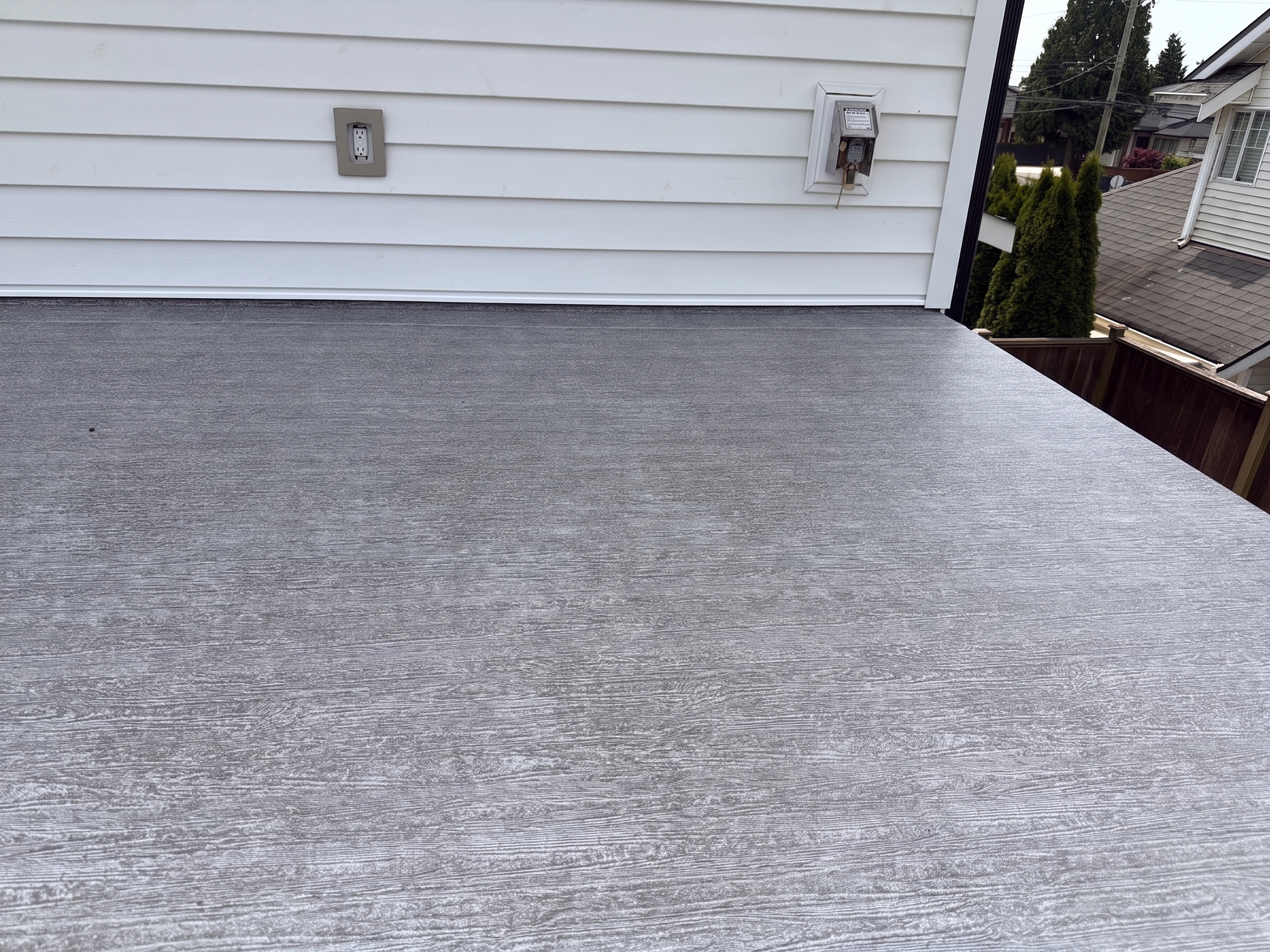
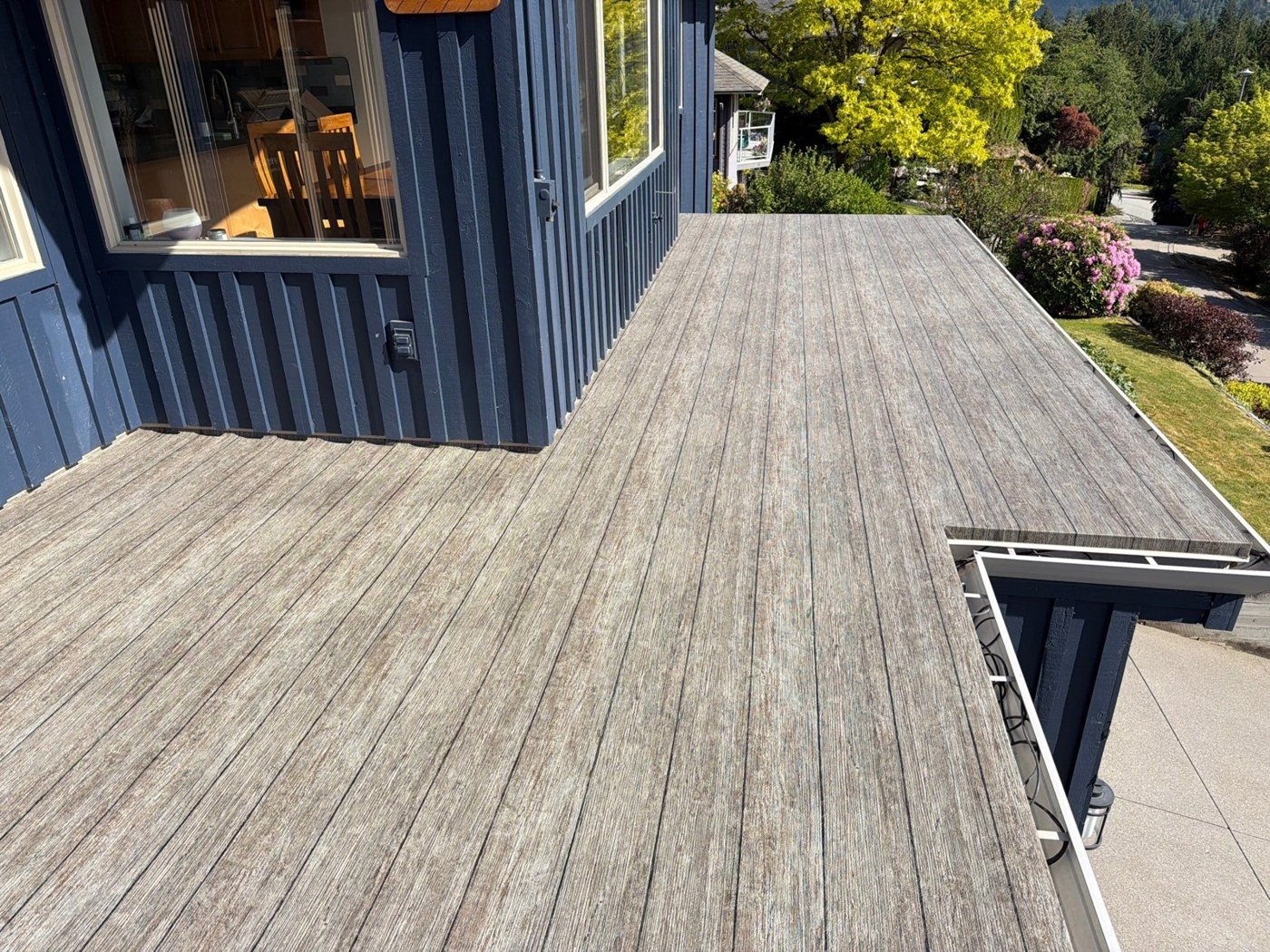
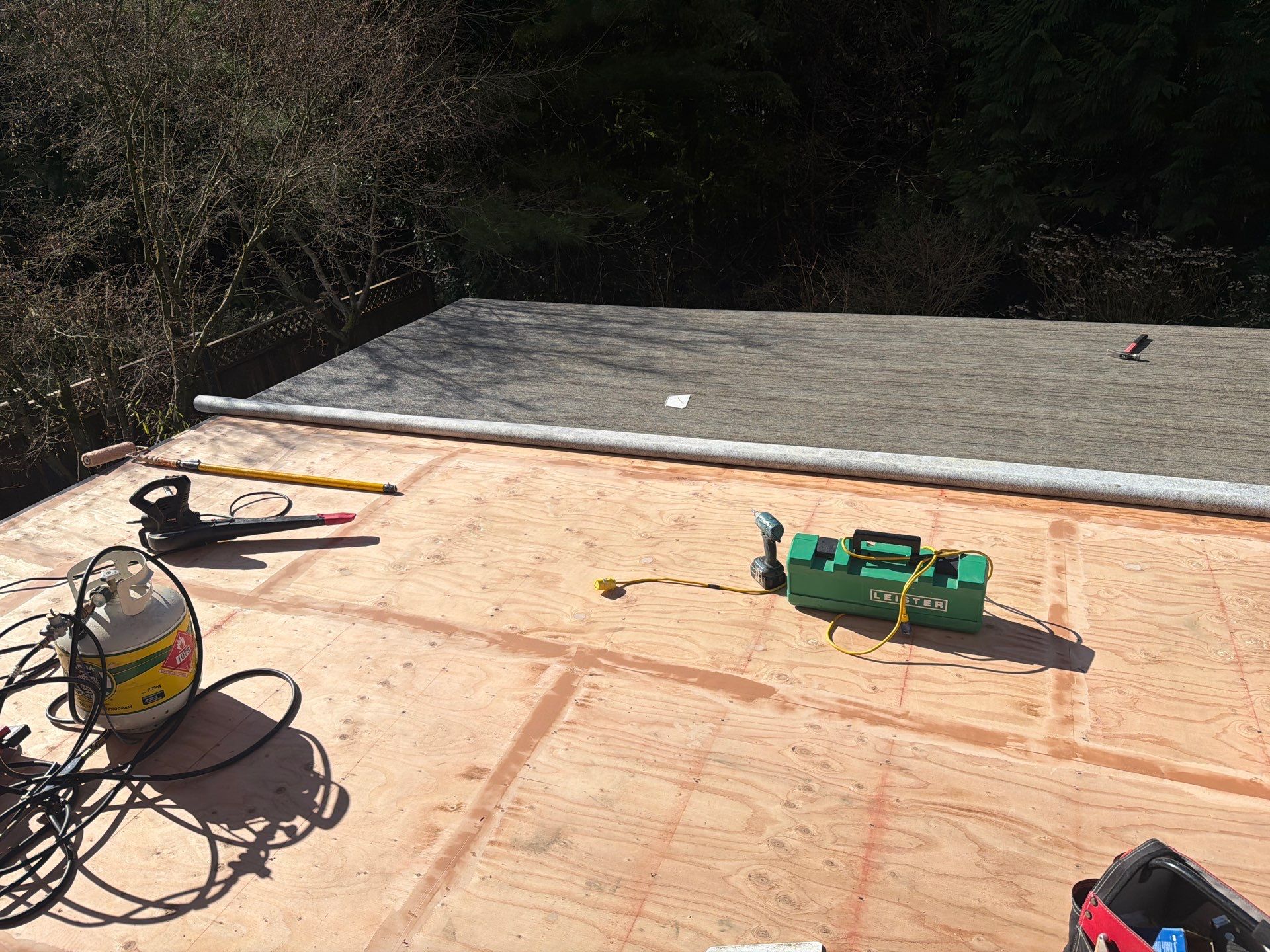
You should not paint a vinyl deck membrane with ordinary exterior paint. It will not bond. Vinyl decking is PVC, a non-porous surface containing plasticisers that migrate toward the surface, and the membrane expands and contracts with temperature. Acrylic and latex paints have nothing to grip and no ability to move with it, so the film peels, flakes and traps water underneath.
That is the short answer, and it is worth being direct about it because most of the content on this question is published by people selling coatings. There are vinyl-specific products, and they are not fraudulent, but they change what your deck is and what it needs from you. There is also a good chance the deck does not need recolouring at all. A membrane that looks tired is very often a membrane that is dirty, and cleaning is free. This guide covers what actually happens chemically, what the coating route genuinely costs you, and when replacement is the honest answer.
Why will paint not stick to vinyl decking?
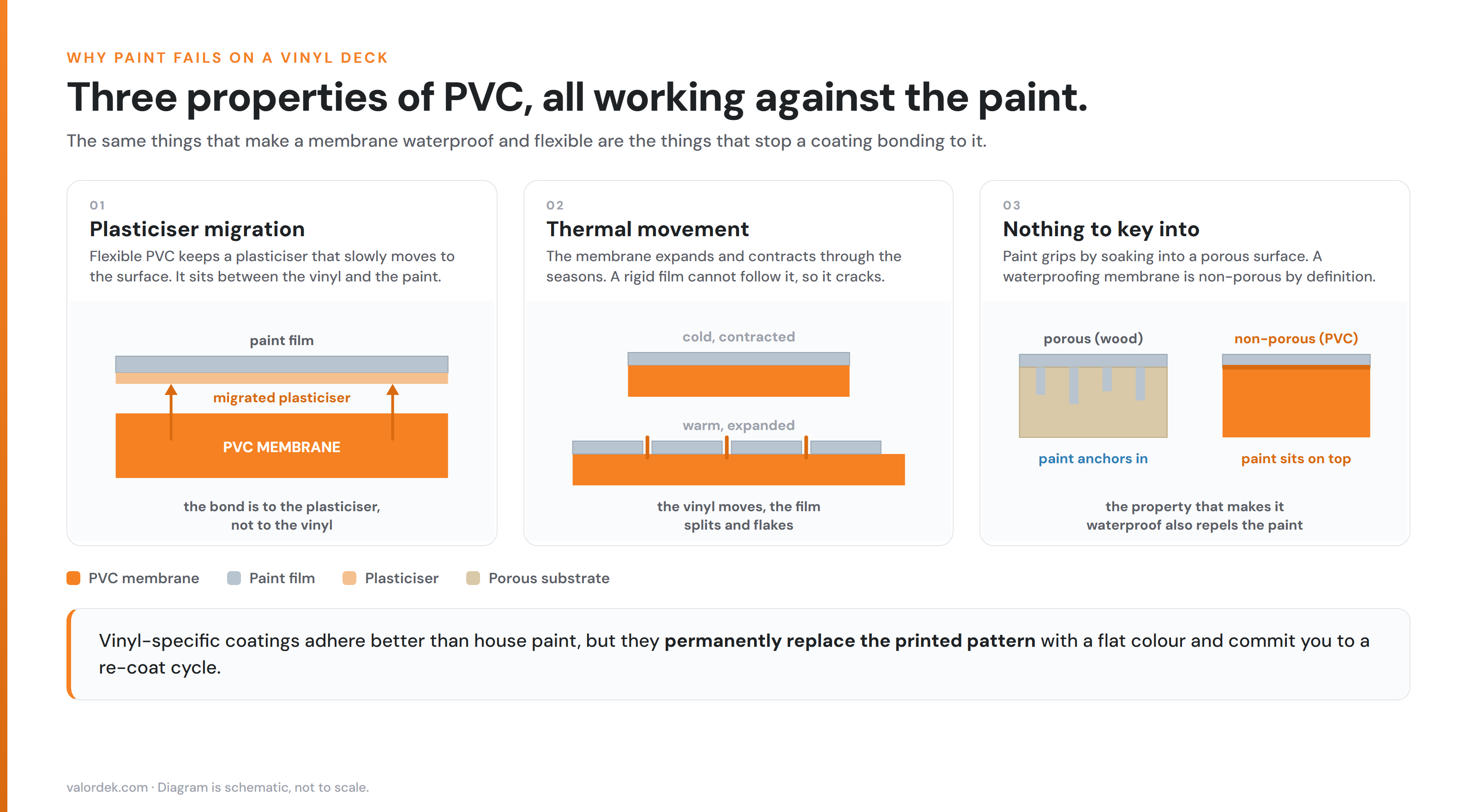
Three properties of PVC membrane defeat ordinary paint, and all three work against you at once.
- Plasticiser migration. Flexible PVC contains plasticisers that keep it pliable. They move slowly toward the surface over the life of the material. That migrating layer sits between the vinyl and anything applied on top, which is why a coating that looks well bonded on day one lifts months later.
- Thermal movement. A deck membrane in Canadian conditions swings through a wide temperature range and dimensionally moves with it. A rigid paint film cannot follow that movement, so it micro-cracks, then flakes.
- No mechanical key. Paint grips porous surfaces by soaking into them. A waterproofing membrane is non-porous by definition. There is nothing for the paint to key into, which is the same property that makes the membrane waterproof in the first place.
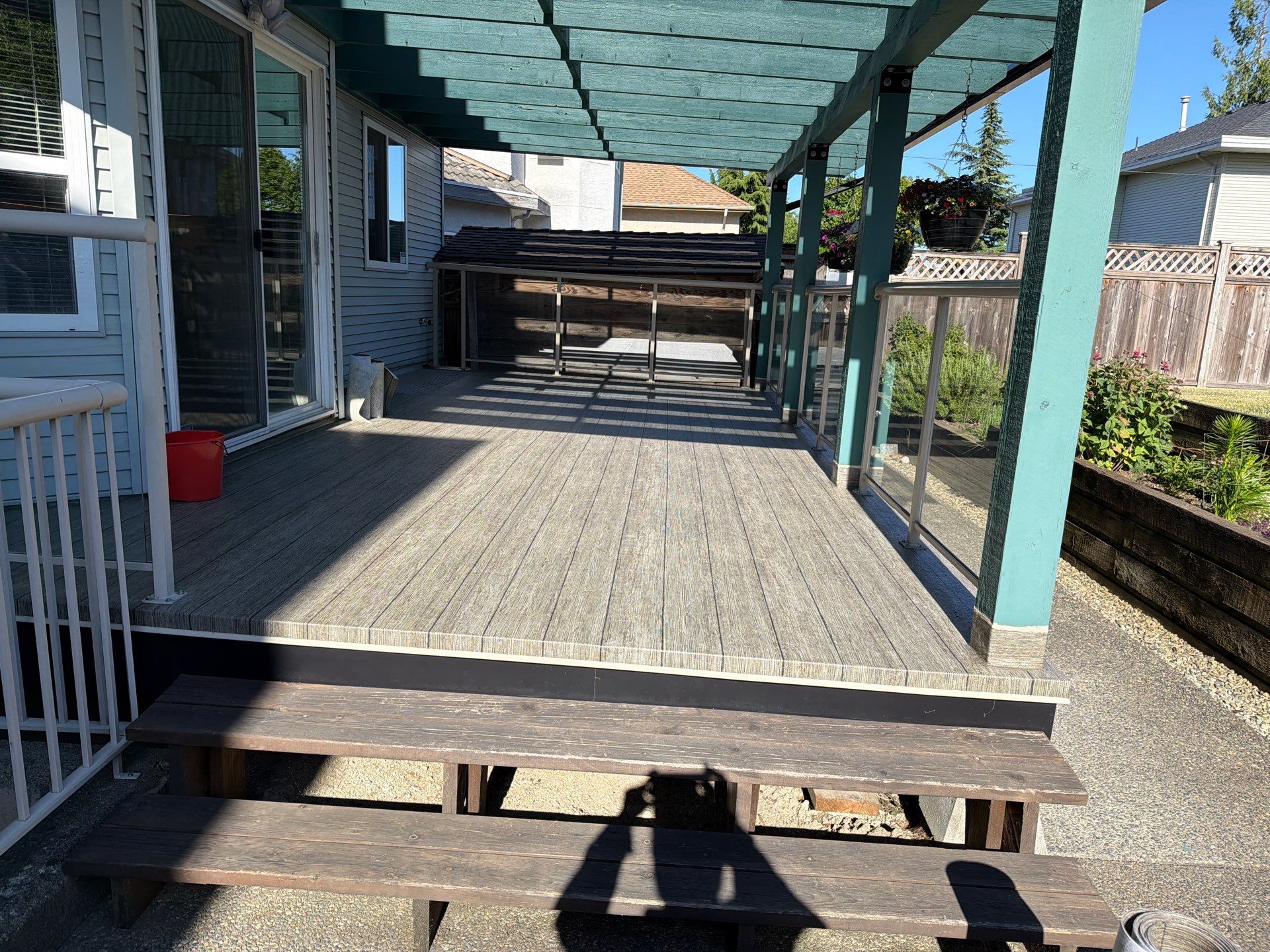
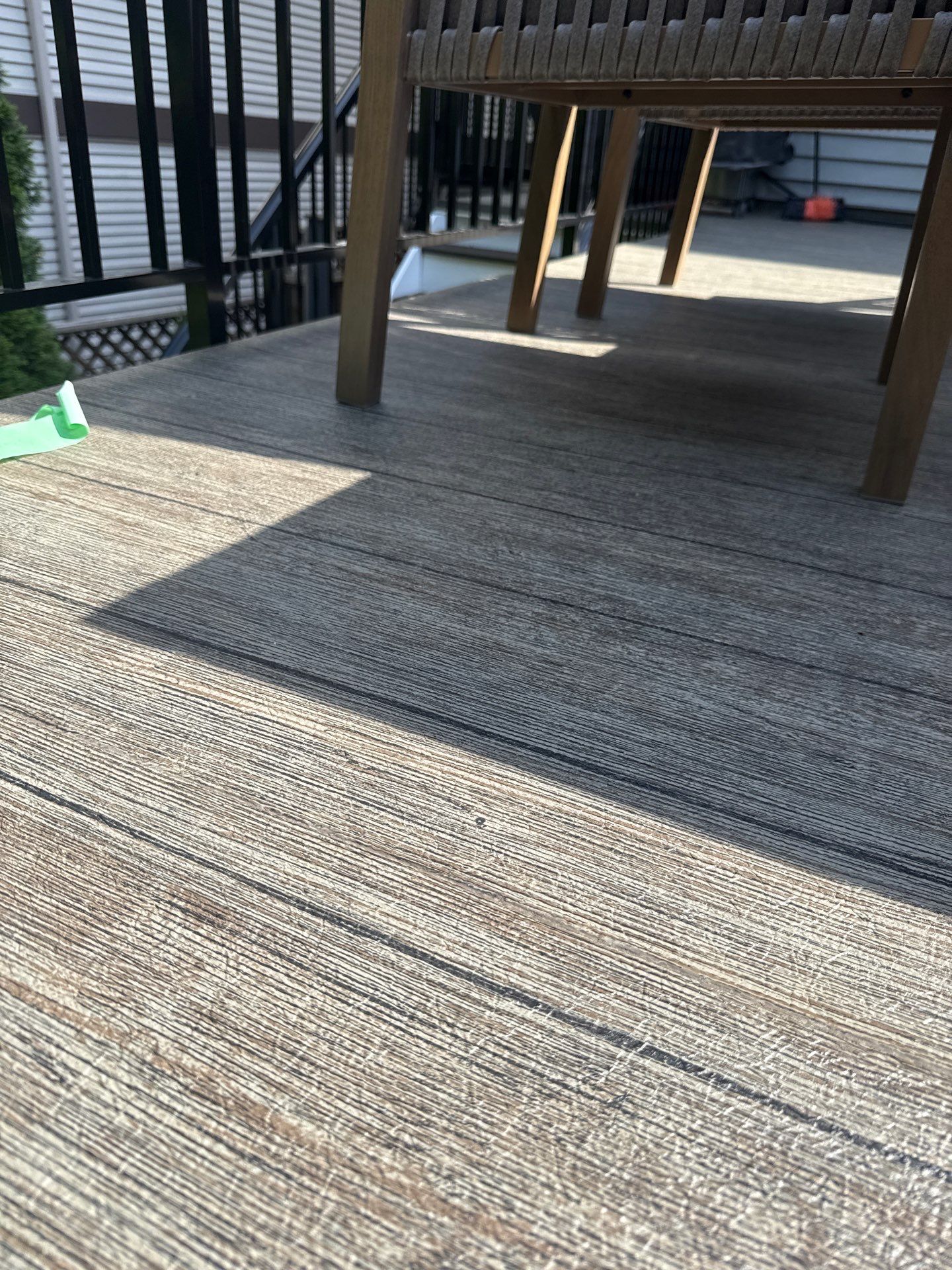
There is a fourth reason that has nothing to do with chemistry. The colour on a vinyl deck is not a surface coating. It is the product. Wood-look and stone-look membranes carry a printed pattern with grain, variation and depth. Paint is opaque and flat. Covering the pattern removes the thing that made the deck look like anything other than a painted floor.
What about the vinyl-specific re-coat products?
Vinyl-specific refresh coatings do exist, they are sold at retail, and they will adhere far better than house paint. What they will not do is leave your deck the way it was. Being fair about them matters, so here is what they actually change.
| What changes | What that means in practice |
|---|---|
| Appearance | A solid colour replaces the printed pattern. Wood grain and stone variation are gone permanently. |
| Slip resistance | The coating has its own surface texture. It may be more or less slippery when wet than the membrane was. On a raised deck this is a safety change, not a cosmetic one. |
| Maintenance | A coated deck becomes a deck you re-coat. You have converted a no-maintenance surface into a cyclical one. |
| Reversibility | There is no going back to the original finish. Removing a coating from a membrane without damaging it is not practical. |
| Waterproofing | The membrane still does the waterproofing. A coating is cosmetic and does not repair a failing membrane. |
That last row is the one to be firm about. If a deck is leaking, a coating will not fix it. Painting over a membrane with failed seams or a failed termination hides the evidence while the water keeps going where it was going. If there is any question about whether the deck is watertight, read how to tell if there is rot under the membrane before you consider a cosmetic product.
Is my deck faded, or is it just dirty?
Most decks that look faded are dirty, and the difference is easy to test. Clean a small area properly and compare it against an adjacent patch. If the cleaned patch comes back, the problem was never the colour.
Vinyl membranes accumulate a fine layer of pollen, algae film and airborne grime that dulls the pattern evenly, which reads to the eye as fading. Under a planter or a deck box you will usually find the original colour preserved. That is a useful control sample, and it costs nothing to check. Our guide to cleaning vinyl decking covers the method, and the maintenance guide covers the cadence that prevents it recurring.
Genuine fading does happen with UV exposure over many years, and it is worth knowing that Valordek's warranty explicitly does not cover natural fading, discolouration or wear. That is standard across the category and it is stated plainly on our warranty page. So if the colour really has gone, the question is a practical one about options rather than a warranty claim.
Does painting a vinyl deck void the warranty?
Applying a coating is a modification, and it is not something the appearance warranty contemplates. Valordek's coverage excludes abuse and misuse, and separately excludes natural fading and wear, so a coated deck sits outside what the warranty was written to cover.
The practical advice is simple: if your deck is still within its coverage period, speak to an authorized dealer before applying anything. It is a short conversation and it protects a 15-year waterproofing warranty plus 5-year appearance coverage. Spending an afternoon with a roller to save a phone call is a poor trade.
What are the honest options?
There are four, and they are not equivalent. Ranked by what they cost and what they give back.
- Clean it properly. Free, reversible, and solves the majority of cases. Always do this first, because it also tells you whether you have a colour problem at all.
- Live with it. A membrane that has faded but is still watertight is still doing its job. Fading is cosmetic, and the waterproofing warranty is separate from the appearance one.
- Apply a vinyl-specific coating. Cheapest way to change the colour. Accept that you lose the pattern, alter the slip characteristics, take on a re-coat cycle, and step outside the appearance coverage.
- Replace the membrane. The only route that genuinely restores a factory finish, and the only one that also renews the waterproofing. Materials start at $3.74 per square foot, and you choose from the current colour range rather than a paint chip.
Replacement is more attractive than it sounds when the deck is already at an age where the colour has gone. A membrane that has faded through years of UV is often approaching the back half of its service life anyway, and the repair versus replacement decision is worth making deliberately rather than deferring behind a coat of paint. If you want to see how a different colour would actually look before committing, the deck visualizer does that on a photo of your own deck.
What if I want a different colour, not a restored one?
Wanting a genuinely different look is a replacement conversation, not a coating one. A coating gives you one flat colour. Replacement gives you the wood-look, stone-look and classic ranges, with the pattern and depth that made you choose vinyl rather than a painted surface.
It is also the moment to fix anything else the deck needs. The membrane comes off, the substrate gets inspected, and terminations are re-detailed. Doing the cosmetic change and the waterproofing renewal as one job costs far less than doing them separately two years apart. Our vinyl decking systems overview and the balcony application page cover what a replacement involves.
Frequently Asked Questions
Can vinyl decking be painted?
Not with ordinary exterior paint. Vinyl decking is non-porous PVC containing plasticisers that migrate to the surface, and the membrane moves with temperature. Acrylic and latex coatings cannot bond or flex with it, so they peel and flake. Vinyl-specific coatings adhere better but permanently replace the printed pattern with a flat colour.
What is the best type of paint to use on vinyl decking?
No conventional paint is suitable. If you are set on recolouring, the only products worth considering are coatings formulated specifically for flexible PVC membranes, and they must be applied to a properly cleaned surface. Understand before you start that the change is permanent, alters slip resistance, and commits you to a re-coat cycle.
What kind of paint will stick to vinyl?
Paints formulated for rigid vinyl, such as vinyl siding paints, are engineered for a different material than a flexible walking-surface membrane. A deck membrane flexes underfoot and moves with temperature while carrying foot traffic, so adhesion that works on static siding does not transfer. Use a product made for flexible PVC decking or none at all.
Will painting my deck fix a leak?
No. A coating is cosmetic and does not restore waterproofing. Painting over failed seams or a failed wall or door termination conceals the evidence while water continues entering the substrate. If the deck leaks, diagnose the entry point first. A cosmetic product applied over an active leak makes the eventual repair more expensive.
Why does my vinyl deck look faded?
Usually because it is dirty rather than faded. Pollen, algae film and airborne grime dull the pattern evenly, which reads as colour loss. Clean a small test area and compare it to the surrounding deck, or lift a planter and check the protected patch underneath. Genuine UV fading takes many years and is not covered by warranty.
Can you change the colour of a vinyl deck?
Permanently and properly, only by replacing the membrane. That is the only route that restores a factory finish with pattern and depth, and it renews the waterproofing at the same time. Valordek membrane starts at $3.74 per square foot in wood-look, stone-look and classic ranges.