Balconies leak around railing posts because the posts are almost always bolted through a finished waterproof membrane, leaving a bead of sealant as the only barrier against water. Railing penetrations are the second most common balcony leak origin after wall terminations. The deck surface itself is rarely the problem.
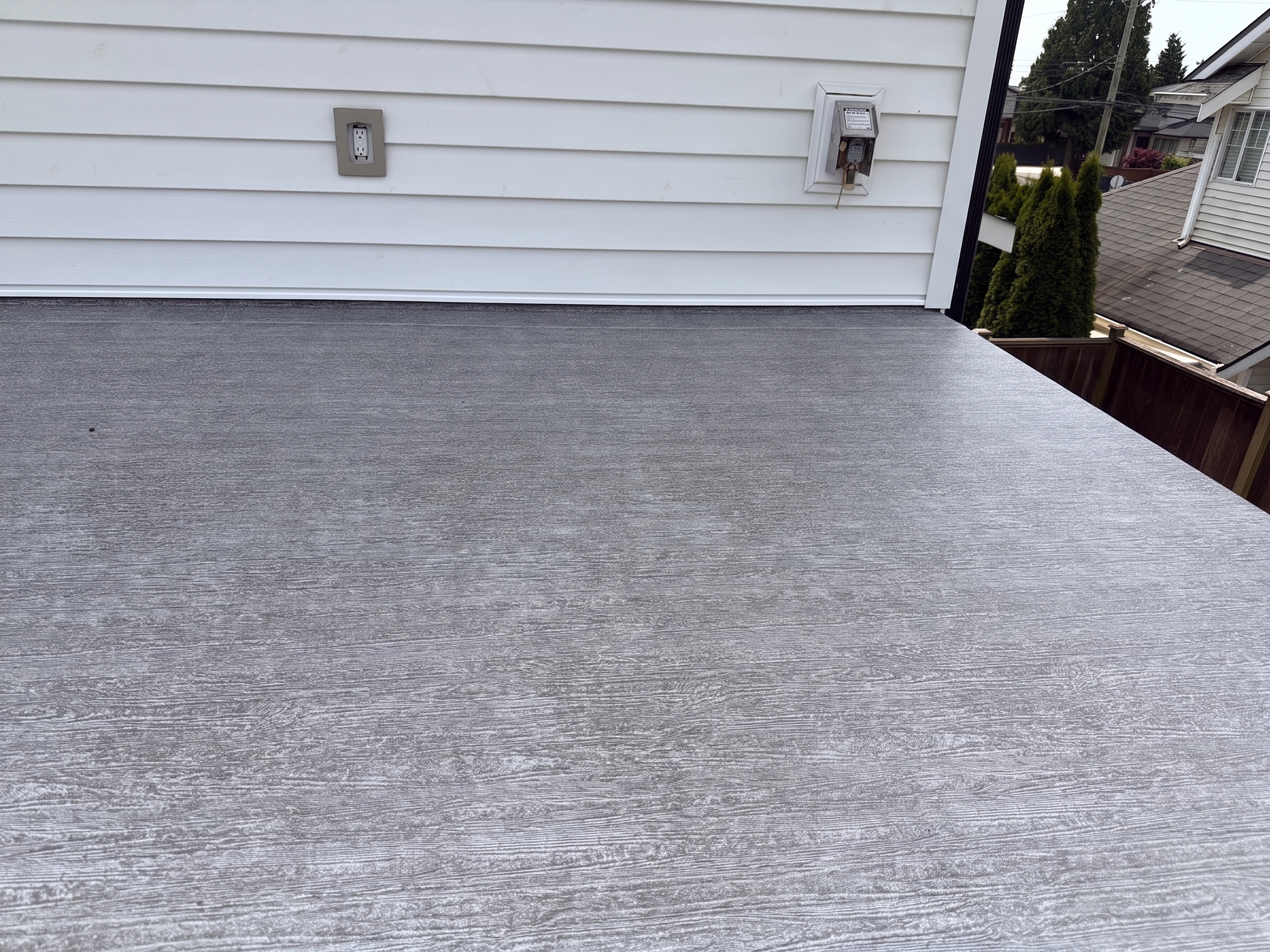
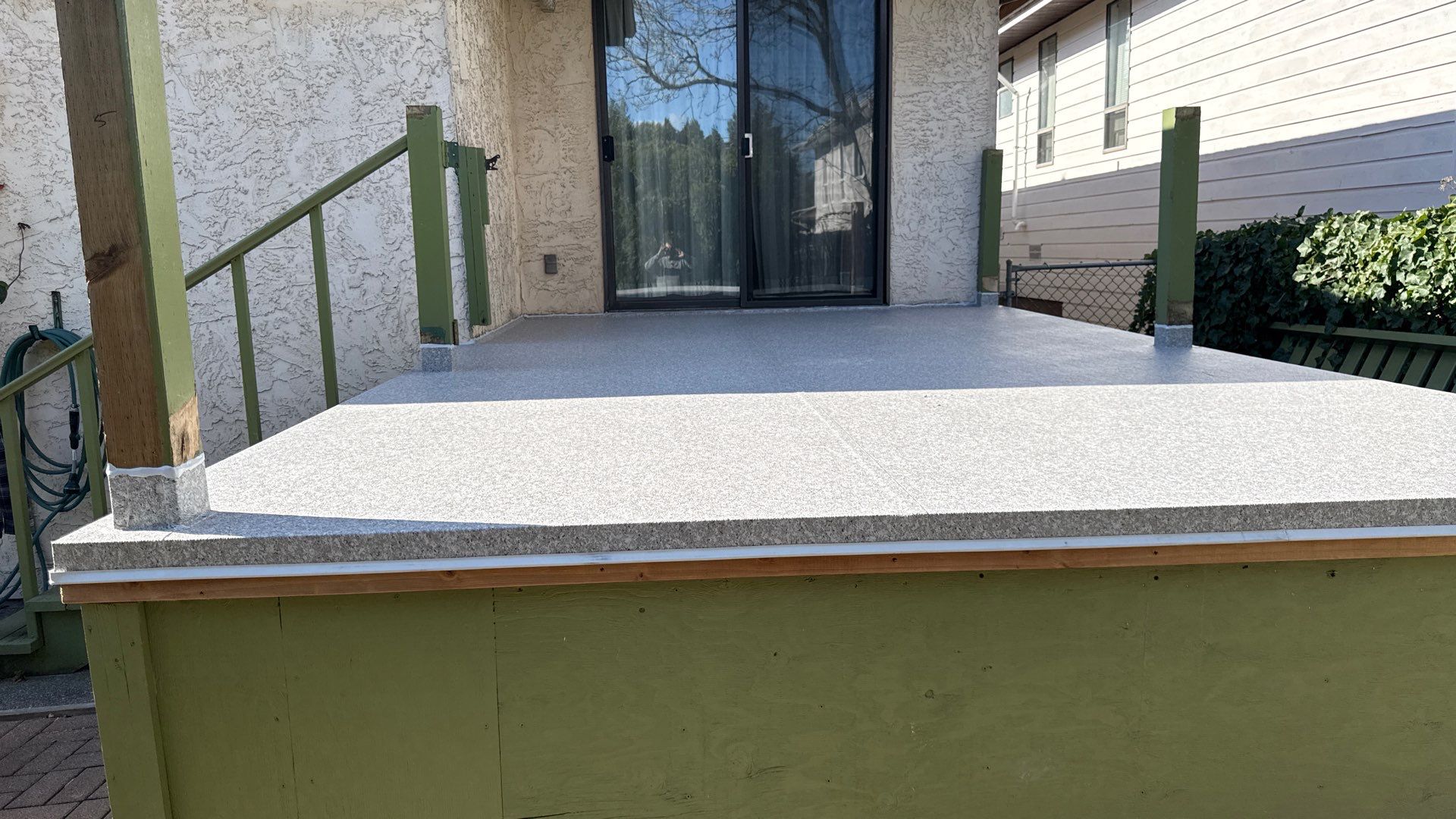
This matters because most homeowners inspect the wrong thing. When a ceiling stain appears below a balcony, the instinct is to look for a tear or a failed seam out in the open field of the deck. On a heat-welded vinyl deck there usually is not one. A Valordek membrane is a continuous sheet with welded seams, rated for continuous service from -40C to 80C and backed by a 15-year waterproofing warranty. The field is the strongest part of the assembly. The weak points are the places where somebody deliberately made a hole, and railing posts are the most common of those. For the wider picture of how balconies fail, read our guide to why balconies leak.
Why do railing posts leak more often than the rest of the deck?
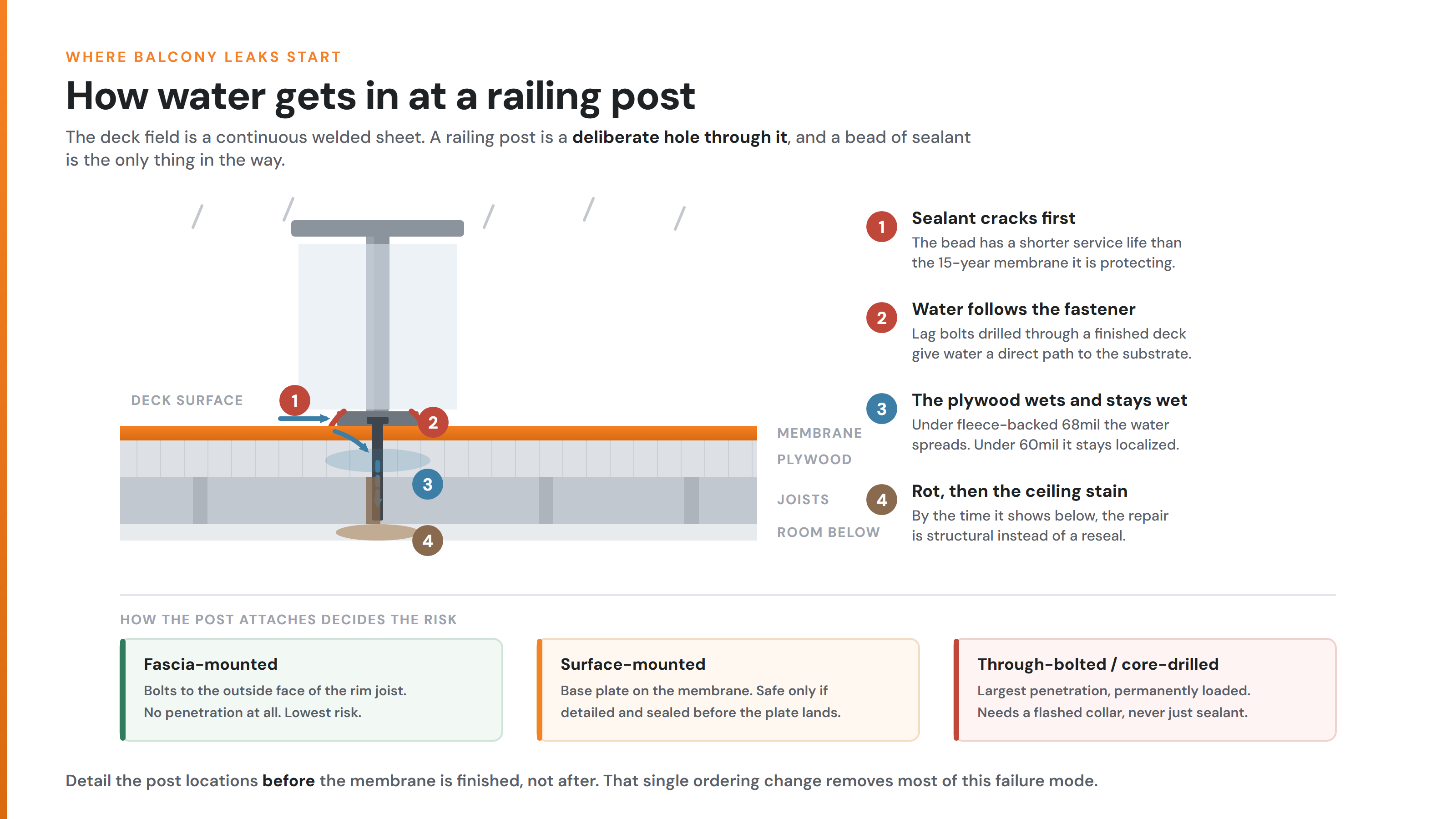
A railing post concentrates three failure risks into one small area: a hole through the waterproofing, a fastener that moves, and a sealant bead with a shorter service life than the membrane around it. The field of a vinyl deck has none of these. It is a single continuous sheet, bonded to the substrate with contact adhesive and heat-welded at every seam, which is why a properly installed deck can go 15 years without a field failure while a post base fails in a fraction of that.
The sequence that causes most of these leaks is an ordering problem on site. The membrane goes down and gets welded. Then the railing contractor arrives, sets out the posts, and drills lag bolts straight through the finished surface into the framing below. Every one of those holes is a direct path into the substrate, and the only thing stopping water is whatever sealant was squeezed under the base plate at the time.
Sealant is not a waterproofing system. It is a consumable. It shrinks, it loses adhesion, and it cracks under the same thermal cycling the membrane is engineered to absorb. Worse, a railing is a lever: every time somebody leans on it, the load transfers to the base plate and works the fastener against the sealant. The bead breaks its bond long before it looks visibly failed. That is why post leaks so often appear on decks that look perfect from above.
Five signs your leak is coming from a railing post
Post leaks announce themselves differently than field leaks, and the signals are visual and specific. If you can see any of the following, check the posts before you check anything else.
- Rust streaks running down from a post base. Water is reaching the fastener inside the post. The stain runs downward from the base plate, often on the fascia directly under it.
- White chalky trails below a post location. Efflorescence is mineral salt left behind as water passes through concrete or grout and evaporates. A trail that starts under a post and not under the deck field points straight at the penetration.
- A ceiling stain below a post, not below the middle of the deck. Map the stain against the deck above. Post leaks stain the perimeter. Field or seam leaks stain further in.
- Movement or wobble at the base. A post that shifts under hand pressure has already broken its sealant bond, whether or not the bead looks intact.
- Hairline cracks in the sealant bead around the base plate. The most direct evidence. A cracked bead means the last line of defence is already open.
One caution on timing. Post leaks are usually intermittent, showing up only in wind-driven rain or after heavy snowmelt, because water needs to be pushed into the fastener path rather than simply sitting on it. An intermittent stain is not evidence that the leak is minor. It is evidence that the entry point is small and directional, which is exactly what a post penetration looks like.
How post leaks differ from wall and seam leaks
Diagnosing the origin correctly decides whether the repair costs a few hundred dollars or several thousand. These three origins account for the large majority of balcony leaks, and each leaves a different signature.
| Leak origin | Where the stain appears | What you see at deck level | Usual cause | Repairable without replacing the deck? |
|---|---|---|---|---|
| Railing post penetration | Perimeter, directly under a post | Rust streaks, cracked sealant, post movement | Fasteners drilled through finished membrane; sealant aged out | Usually yes, if caught before the substrate rots |
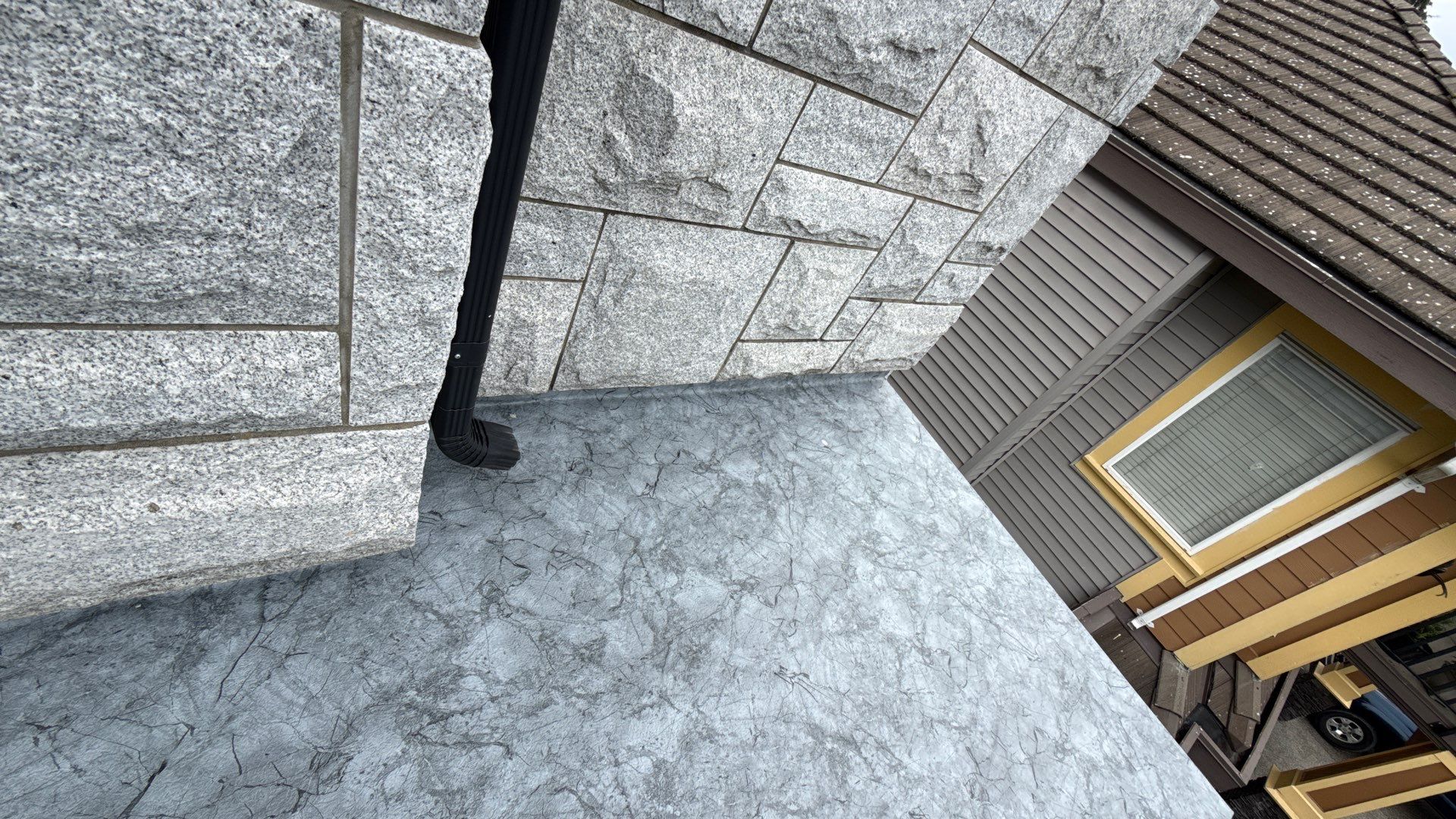
| Wall or door termination | Along the wall line, often inside the room | Membrane lifting at the upturn, gapped flashing | Membrane not carried high enough, or flashing lapped the wrong way | Often yes, but needs the termination rebuilt |
| Field seam | Mid-deck, away from edges | Visible split or lifted edge along a weld line | Incomplete original heat weld | Yes, welded patch with matching membrane |
The practical test is location. Stand under the balcony and mark where the water actually arrives, then measure that point against the deck above. Perimeter arrival under a post is a penetration problem. Arrival along the building wall is a termination problem. That is the more common of the two origins, and where deck leaks actually start covers how the wall detail fails and what a correct one looks like. Arrival in the middle is a seam or a puncture. Arrival at a doorway is its own case, covered in why a balcony leaks at the sliding door. If water is arriving in several places at once, the issue is more likely drainage backing up and overwhelming the perimeter than three separate failures.
Surface-mounted, through-bolted, or fascia-mounted posts
How the post attaches determines whether a leak is even possible, and the three common methods carry very different risk. This is the single most useful thing a homeowner can learn before approving a railing quote.
Fascia-mounted posts bolt to the outside face of the rim joist and never penetrate the deck surface at all. The waterproofing stays continuous from wall to edge. This is the lowest-risk option and the one to specify wherever the railing design and local code allow it.
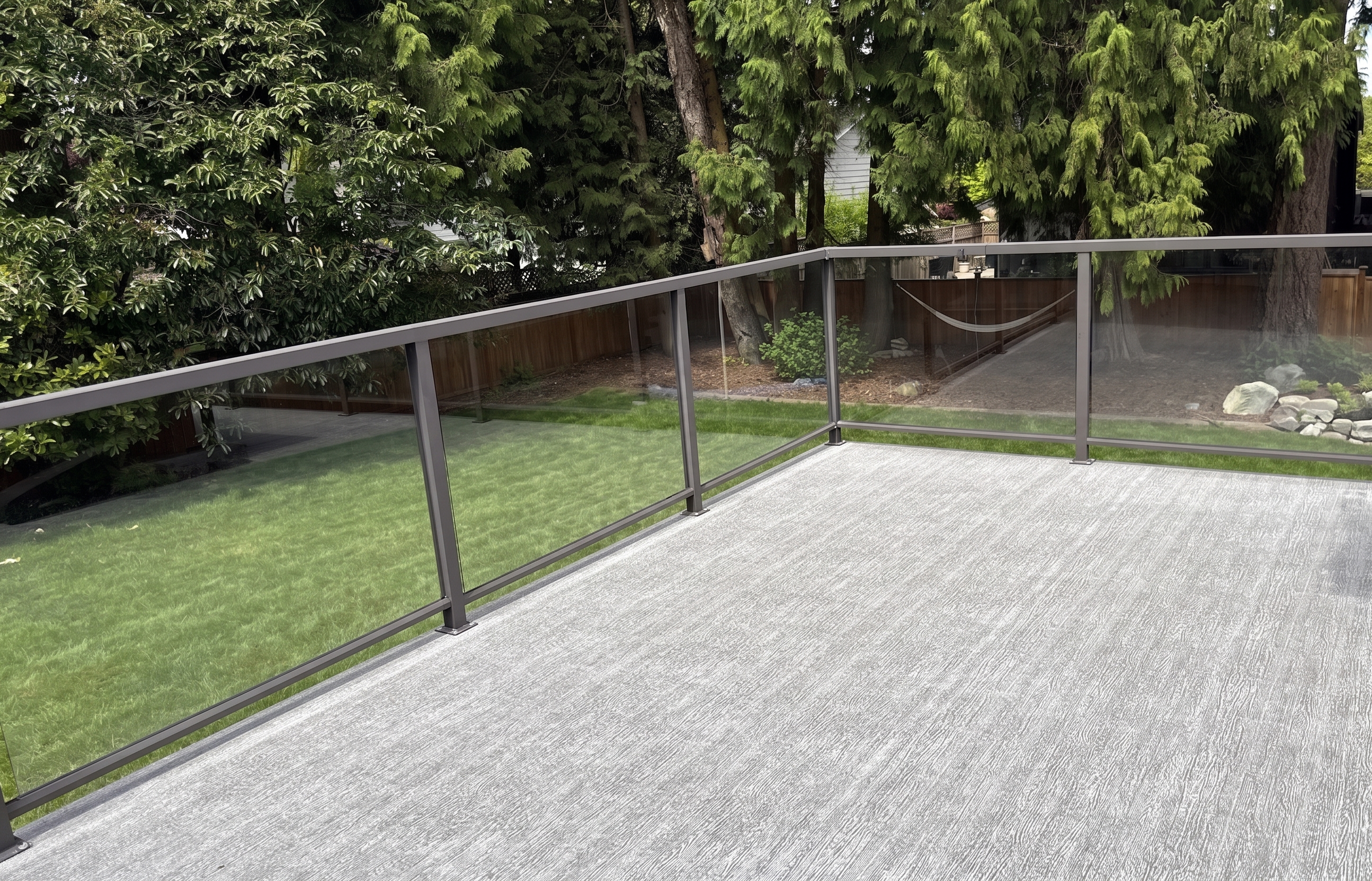
Surface-mounted posts sit on a base plate on top of the membrane, fixed with fasteners that pass through it. Risk here is entirely down to detailing. Done properly, the fastener locations are reinforced and sealed before the plate goes down, and the plate is bedded rather than simply set on the surface. Done as an afterthought, it is four unsealed holes under a metal plate.
Through-bolted or core-drilled posts pass the post itself through the deck into the structure below. These give the strongest railing and the worst waterproofing exposure, because the penetration is large and permanently loaded. They demand a purpose-built flashed collar, not a sealant bead.
The order of work matters as much as the method. Posts should be laid out and their locations detailed before the membrane is finished, so penetrations are reinforced and flashed as part of the waterproofing rather than cut into it afterwards. See how vinyl decking is installed for the full sequence a proper installation follows.
Why the membrane backing changes how a post leak behaves
Two Valordek membranes handle a penetration leak differently, and knowing which one you have changes how the leak is traced. This is manufacturer-level detail that materially affects diagnosis.
Under 68mil Fuzzy-Back, the fleece backing wicks. Water entering at a fastener spreads through the backing over a wider area rather than staying at the entry point, so the stain below can appear some distance from the post that caused it. The upside is that a spreading leak reveals itself sooner, before the water has concentrated long enough to rot one spot of substrate.
Under 60mil Smooth-Back, water stays localized in a small area directly at the penetration. Tracing is far easier because the damage sits where the leak is, but a slow leak can also sit undetected in one place for longer. On an open deck, 60mil requires PVC flashing, which is precisely the kind of detail that protects a penetration properly.
Neither backing is better in the abstract. They are engineered for different applications: Fuzzy-Back for balconies, Smooth-Back for rooftop decks. What matters for a leak investigation is knowing that a stain 600mm away from a post does not rule that post out on a fleece-backed deck.
Can a leaking railing post be fixed without replacing the deck?
In most cases caught early, yes. The repair path depends entirely on how long water has been getting in, which is why the intermittent stain people ignore for two seasons is the expensive version of this problem.
- Reseal the base. If the sealant has cracked but the substrate below is still sound, the plate is lifted, the surface prepared, and the penetration resealed properly. This is the cheapest outcome by a wide margin.
- Re-flash the penetration. If the original detail was inadequate rather than merely aged, resealing repeats the failure. The penetration needs a proper flashed collar with the membrane dressed into it.
- Lift, dry, and re-bond locally. If water has tracked under the membrane, that section is lifted, the substrate dried or replaced, and the membrane re-bonded with a welded patch.
- Full replacement. Only once the substrate has rotted. At that point the membrane is not the failed component, it is what was hiding the damage. Our deck repair guide covers where that line sits, and the cost calculator will price a replacement at $3.74 per square foot for material.
The honest summary is that railing post leaks are cheap to fix and expensive to ignore. A resealed base plate is a maintenance item. A rotted rim joist is a structural repair, and it is the same leak eighteen months later. If you are unsure which stage you are at, the waterproofing system behind the surface is what decides it, and a qualified installer can tell you in one visit.
Frequently asked questions
Why is my balcony leaking around the railing posts?
Because the posts are bolted through the waterproof membrane and the sealant around those fasteners has failed. Railing penetrations are the second most common balcony leak origin after wall terminations. The deck surface is usually intact. The hole somebody drilled through it is not.
How do you stop water dripping from a balcony?
Find the entry point before sealing anything. Mark where water arrives underneath, then check the railing post bases directly above it for rust streaks, cracked sealant or movement. Sealing from below traps water inside the assembly and accelerates substrate rot rather than stopping the leak.
How do you stop water from dripping under a deck?
Repair the penetration on the top side, not the underside. On a Valordek deck, that means lifting the base plate, preparing the surface, and re-flashing the fastener path so the membrane is continuous again. Under-deck drainage trays manage runoff but do not fix a leaking post.
What are the posts on a deck railing called?
The vertical uprights carrying the handrail are newel posts, and they attach by fascia mount, surface mount, or core drilling. Fascia-mounted posts never penetrate the deck surface, which is why they carry the lowest leak risk of the three on a waterproofed balcony.
How do you fix water pooling under a deck?
Pooling underneath usually means water is entering above and collecting on the ceiling membrane or framing. Trace it to a penetration or termination first. Valordek membranes are rated from -40C to 80C and carry a 15-year waterproofing warranty, so standing water below points to a detail failure, not the material.