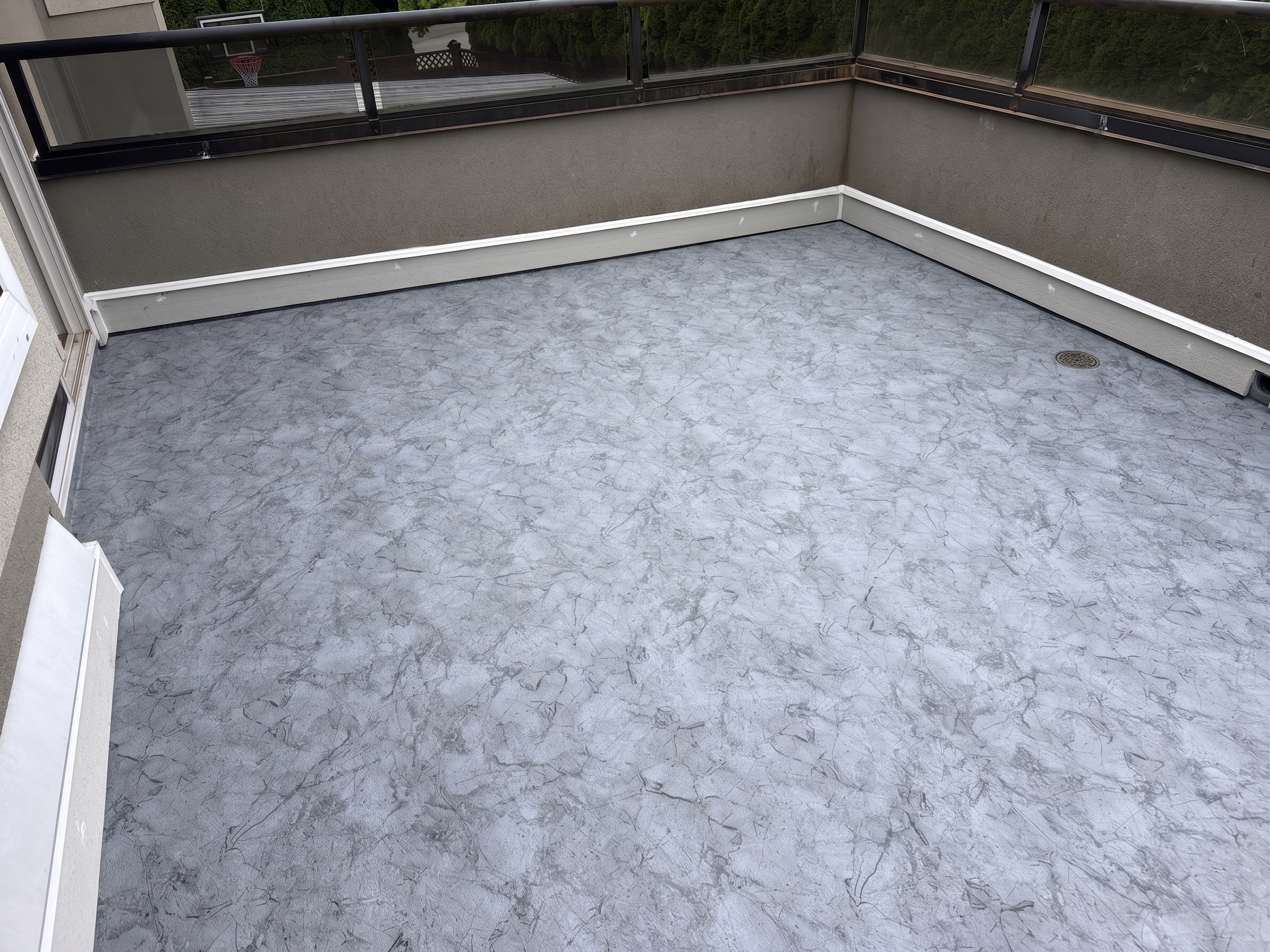
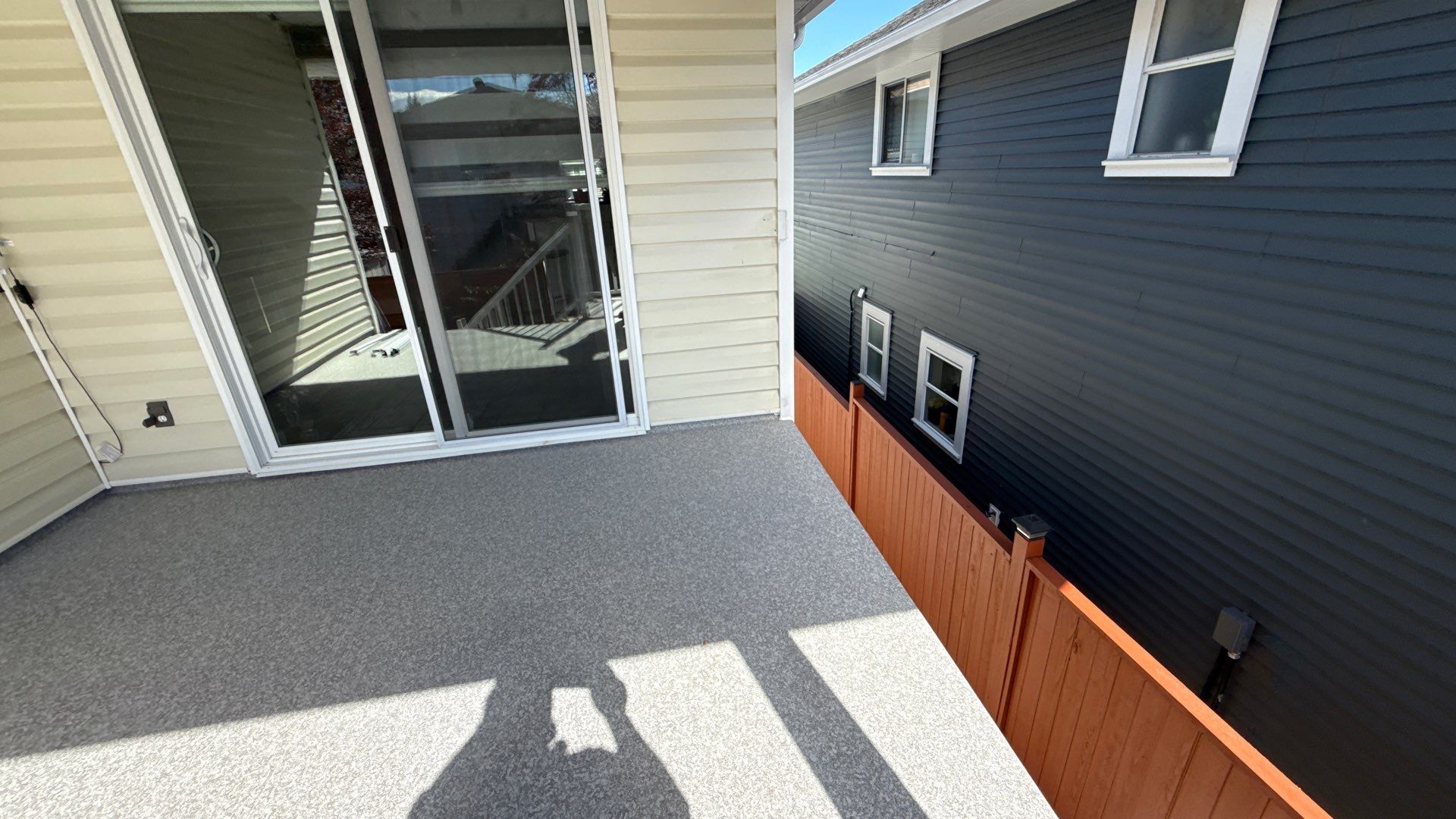
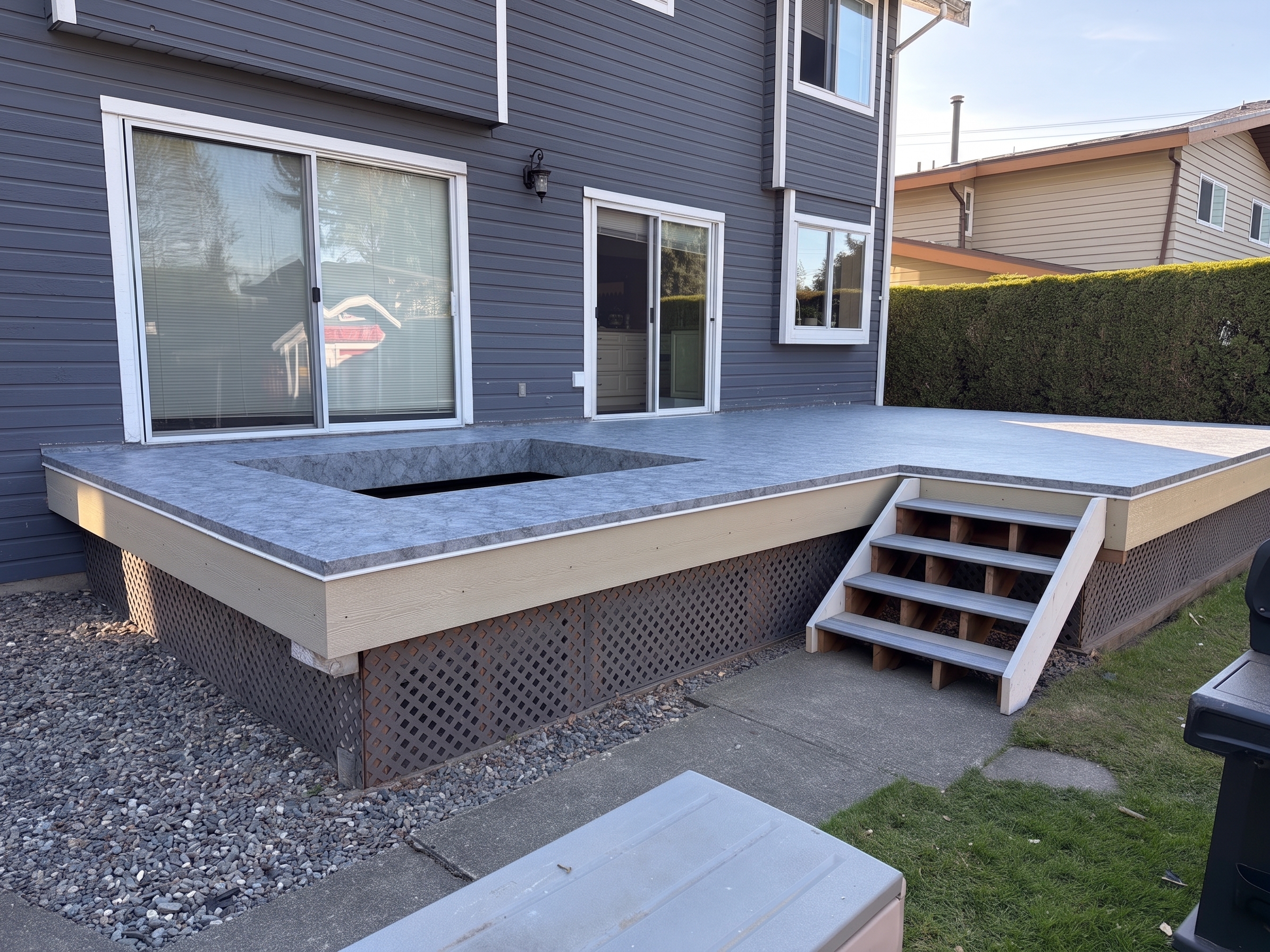
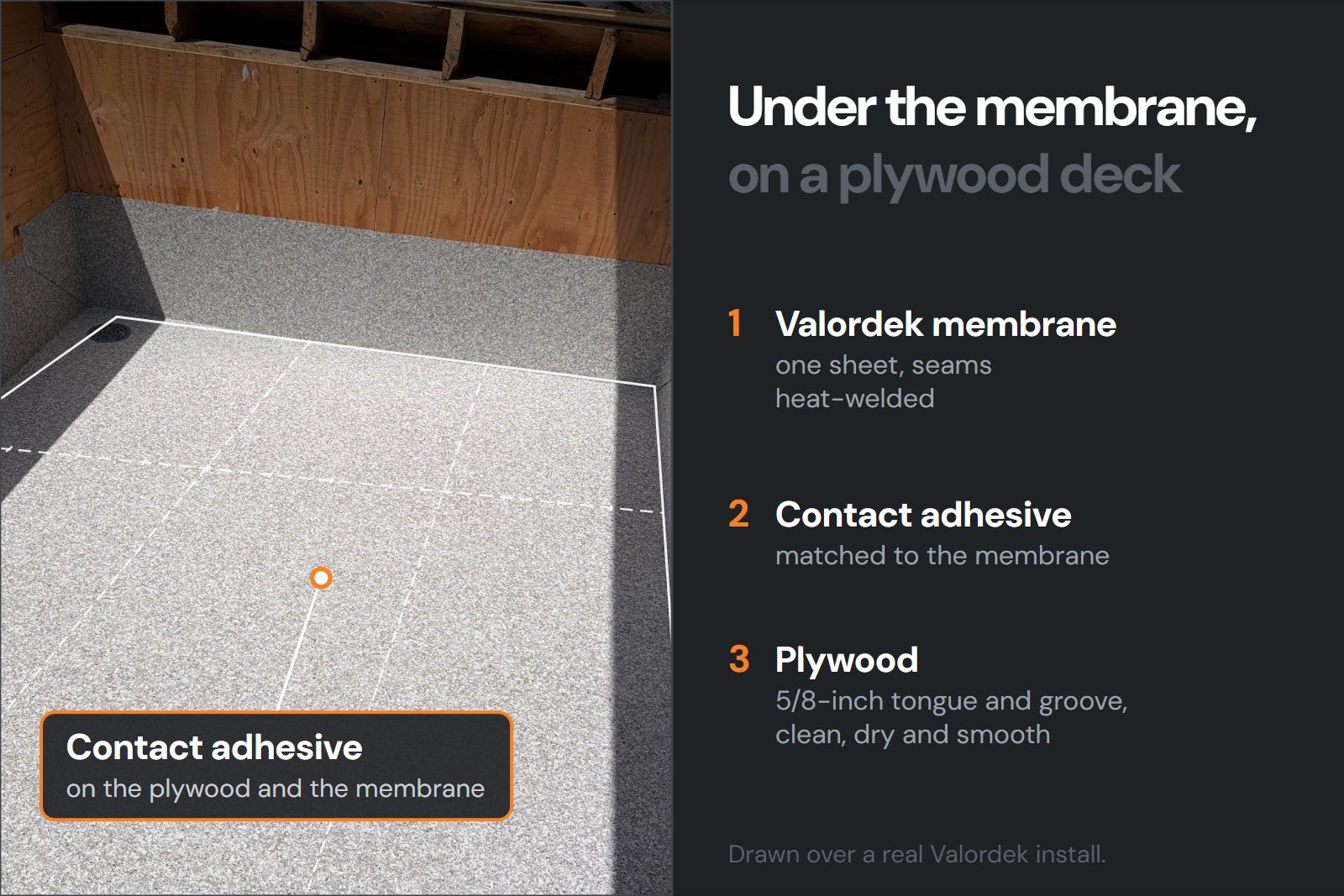
Vinyl decking is glued down with a contact adhesive matched to the membrane. For Valordek Fuzzy-Back (68 mil) that means VD 0295, VD 0220 winter grade or VD 0330; for Smooth-Back (60 mil) it means Sarnacol 2170 R. Valordek's warranty requires Valordek-approved adhesives, so the glue is part of the system, not a free choice.
A contact adhesive is not the glue used for vinyl plank flooring indoors, and it is not a construction adhesive from a caulking tube. It goes onto both the deck and the back of the membrane, is left to become tacky, and bonds the moment the two touch. The adhesive holds the membrane flat and tight to the deck; the membrane, with its heat-welded seams, is the waterproofing. This guide covers which adhesive goes with which membrane, how it is applied, what the surface has to be, how much to plan for, and when the winter grade matters. Every adhesive here is listed on the Valordek accessories page, and the product itself is covered on the Valordek vinyl decking overview.
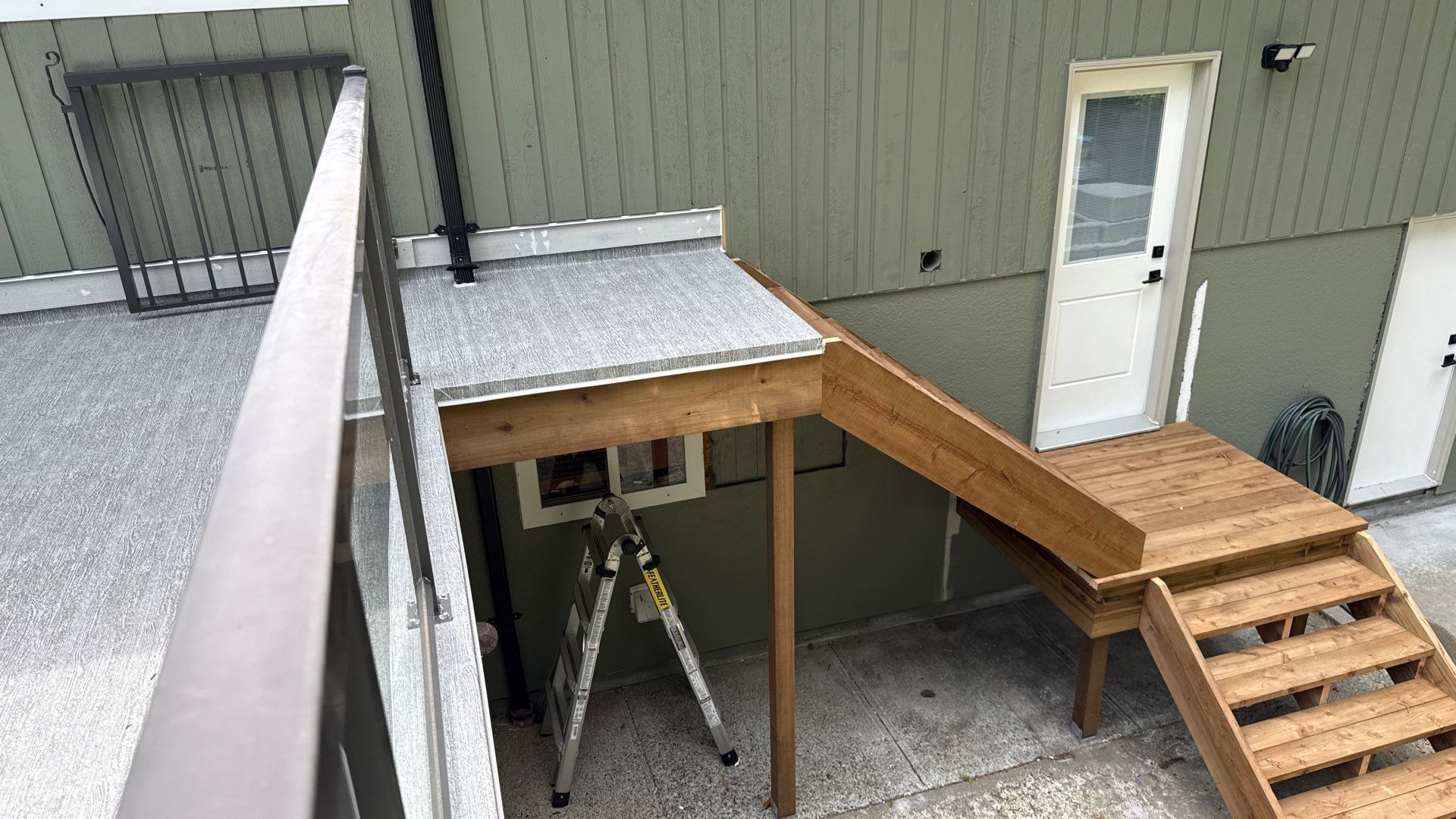
Which adhesive goes with which Valordek membrane?
Valordek lists four contact adhesives on its accessories page, each for one membrane only: three for Fuzzy-Back and one for Smooth-Back. The two membranes have different backings, so an adhesive listed for one is not listed for the other.
| Adhesive | For membrane | What it is for | Published coverage per 5 gal pail |
|---|---|---|---|
| Valordek VD 0295 | Fuzzy-Back only | Premium solvent-based contact adhesive for properly prepared plywood; fast drying | 400 to 500 sq ft |
| Valordek VD 0220 (Winter Grade) | Fuzzy-Back only | Formulated for cold-weather installations; stays easy to work with in lower temperatures | 350 to 400 sq ft |
| Valordek VD 0330 | Fuzzy-Back only | Economical contact adhesive for residential projects | Not published |
| Sarnacol 2170 R | Smooth-Back only | High-performance contact adhesive for Smooth-Back membranes; fast drying | 400 to 500 sq ft |
All four come in 2 US gallon (7.6 L) and 5 US gallon (18.9 L) pails. On an open deck, Smooth-Back also requires PVC flashing at its edges, which is one reason Valordek treats it as a professional installation; our guide to 60 mil and 68 mil vinyl decking explains how the two membranes differ.
How does contact adhesive bond a vinyl deck?
Contact adhesive is applied to both the deck and the back of the membrane, left until both surfaces are tacky, and then the two are pressed together, bonding on first touch. That is why the method is called contact adhesive, and why the timing matters more than the amount.
- Coat both surfaces. The adhesive goes onto the plywood with a paint roller or a V-notch trowel, and onto the back of the membrane.
- Wait for tack. Each surface is left until it is tacky. This open time is critical, and the label for the adhesive gives it.
- Lay it once. Contact adhesive grabs on first touch, so the membrane is positioned carefully before it goes down, because it cannot be slid into place afterwards.
- Roll it down. The membrane is rolled with a J-roller or hand roller to press out air and seat it fully.
- Weld the seams. Where rolls meet, the seams are heat-welded with a hot air welder, so the finished surface is one continuous sheet.
Our step-by-step guide to how vinyl decking is installed covers the rest of the job, from preparing the deck to the flashing at its edges.
These adhesives are flammable. The safety data sheets for the solvent-based contact adhesives classify them as flammable liquids, and Sarnacol 2170 R's sheet gives a flash point of about -5°C. Use them only outdoors or in well-ventilated areas, keep sparks, flames and other ignition sources away, and follow the label and safety data sheet for the product in hand.
What surface does vinyl decking glue need?
Contact adhesive needs a clean, dry, smooth and sound surface, and Valordek is best installed on 5/8-inch tongue-and-groove plywood or untreated concrete. The adhesive can only bond to what it touches, so anything loose, dusty or damp between the glue and the deck weakens the bond.
- Clean: free of debris, dust and old adhesive.
- Dry: no active moisture.
- Smooth: sanded, with no raised nail heads, gaps or rough spots.
- Sloped: at least 1/4 inch per foot toward the drains.
Valordek's FAQ lists three surfaces it should not be installed on: painted surfaces, treated concrete and treated lumber. Our guide to vinyl decking over plywood covers preparing the deck in detail.
How much vinyl deck adhesive do you need?
Plan on 350 to 500 square feet of deck per 5-gallon pail, depending on the adhesive, and use the low end of the range when you order. The accessories page publishes 400 to 500 square feet per 5-gallon pail for VD 0295 and Sarnacol 2170 R, and 350 to 400 for VD 0220 winter grade; it publishes no figure for VD 0330.
Coverage depends on the substrate, the tool and the person applying it, and running short halfway through a bond is the problem worth avoiding. Valordek's cost calculator plans conservatively at 400 square feet per 5-gallon pail and 160 square feet per 2-gallon pail, and it picks the mix of pail sizes for your deck area. Membrane is $3.74 per square foot; our vinyl decking cost guide covers adhesive alongside the rest of a quote.
Homeowners doing their own install often use more adhesive than they need. The goal is an even coat on both surfaces, as the label describes, not a thick one.
When do you need winter-grade adhesive?
Valordek VD 0220 is the winter-grade contact adhesive, formulated for cold-weather installations of Fuzzy-Back membrane. It stays easy to work with at lower temperatures while delivering the same bond, and it is listed for Fuzzy-Back only.
This guide gives no application temperature: the label and data sheet for the product you buy decide when it can go down. The season still changes how the glue behaves. Standard adhesive gets harder to work with in the cold, which is what the winter grade is formulated for, and in heat the solvent evaporates faster. Decks glued in warm weather are more likely to show small bubbles in the first days as solvent escapes, and our guide to bubbling and wrinkling explains when that is normal.
Common vinyl decking glue mistakes
Most adhesive problems on a vinyl deck come from the surface or the choice of glue, not from the adhesive failing. These are the mistakes worth avoiding, whether you install it yourself or check an installer's work.
- The wrong adhesive for the membrane. Fuzzy-Back adhesives are not listed for Smooth-Back, and Sarnacol 2170 R is not listed for Fuzzy-Back.
- A substitute glue. Construction adhesive or flooring glue is not approved, and it puts the warranty at risk.
- Bonding to a dirty or damp deck. Dust, old adhesive and moisture sit between the glue and the plywood.
- The wrong substrate. Painted surfaces, treated concrete and treated lumber are on Valordek's list of surfaces to avoid.
- Bonding before the adhesive is tacky, or trying to reposition the membrane once it has touched.
- Running short. Ordering at the high end of the coverage range and stopping halfway through a bond.
- Poor ventilation. Solvent-based adhesives are flammable, so keep ignition sources away and work outdoors or in a well-ventilated area.
Why the right glue matters for the warranty
Valordek's warranty is valid only when a certified installer used Valordek-approved adhesives and system components. The waterproofing warranty runs 15 years on both product lines and covers manufacturing defects that cause leaks; keeping it valid includes using "only Valordek-approved adhesives, per our specifications".
That rules out substitutes, however strong they claim to be. Construction adhesive, vinyl plank flooring glue or a general-purpose outdoor adhesive is not an approved Valordek adhesive, and a membrane bonded with one sits outside the warranty. If you are hiring the work out, ask which adhesive the installer will use and check it against the table above. The full terms are on the Valordek warranty page.
Frequently asked questions
What kind of glue do you use for vinyl plank flooring, and is it the same?
No. Vinyl plank flooring is an indoor product with its own installation methods. A vinyl deck membrane is an outdoor waterproofing sheet bonded with a contact adhesive matched to the membrane, such as Valordek VD 0295 for Fuzzy-Back or Sarnacol 2170 R for Smooth-Back.
What is the strongest adhesive for outdoor use?
For a vinyl deck, the right adhesive matters more than the strongest. Valordek's warranty requires Valordek-approved adhesives, so a stronger general-purpose outdoor glue would leave the membrane outside its warranty.
What is the most effective glue for vinyl repairs?
A vinyl deck repair is not a glue job on its own. A damaged area is repaired with a colour-matched patch of membrane, bonded with the approved contact adhesive and heat-welded at its edges, so the repair is fused into the surface. Injecting glue under the membrane or sealing a patch around its edges is not a correct repair.
Why is my new vinyl deck bubbling after it was glued?
Usually because solvent from the contact adhesive is still escaping. Small domes on a new deck, especially one glued in warm weather, normally flatten on their own within about two weeks as the adhesive cures. Bubbles that stay, grow or feel soft need an installer to look at them.