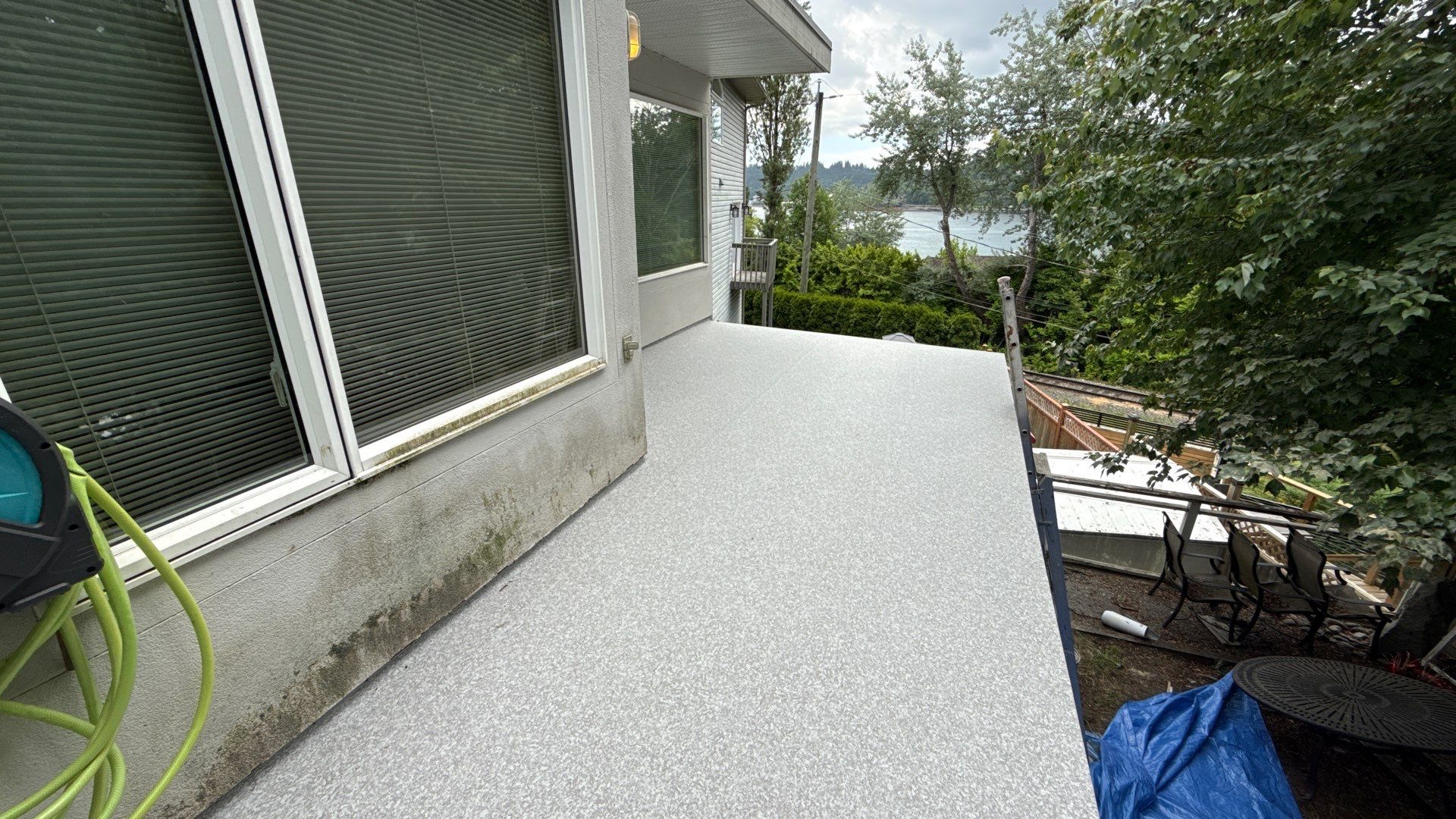
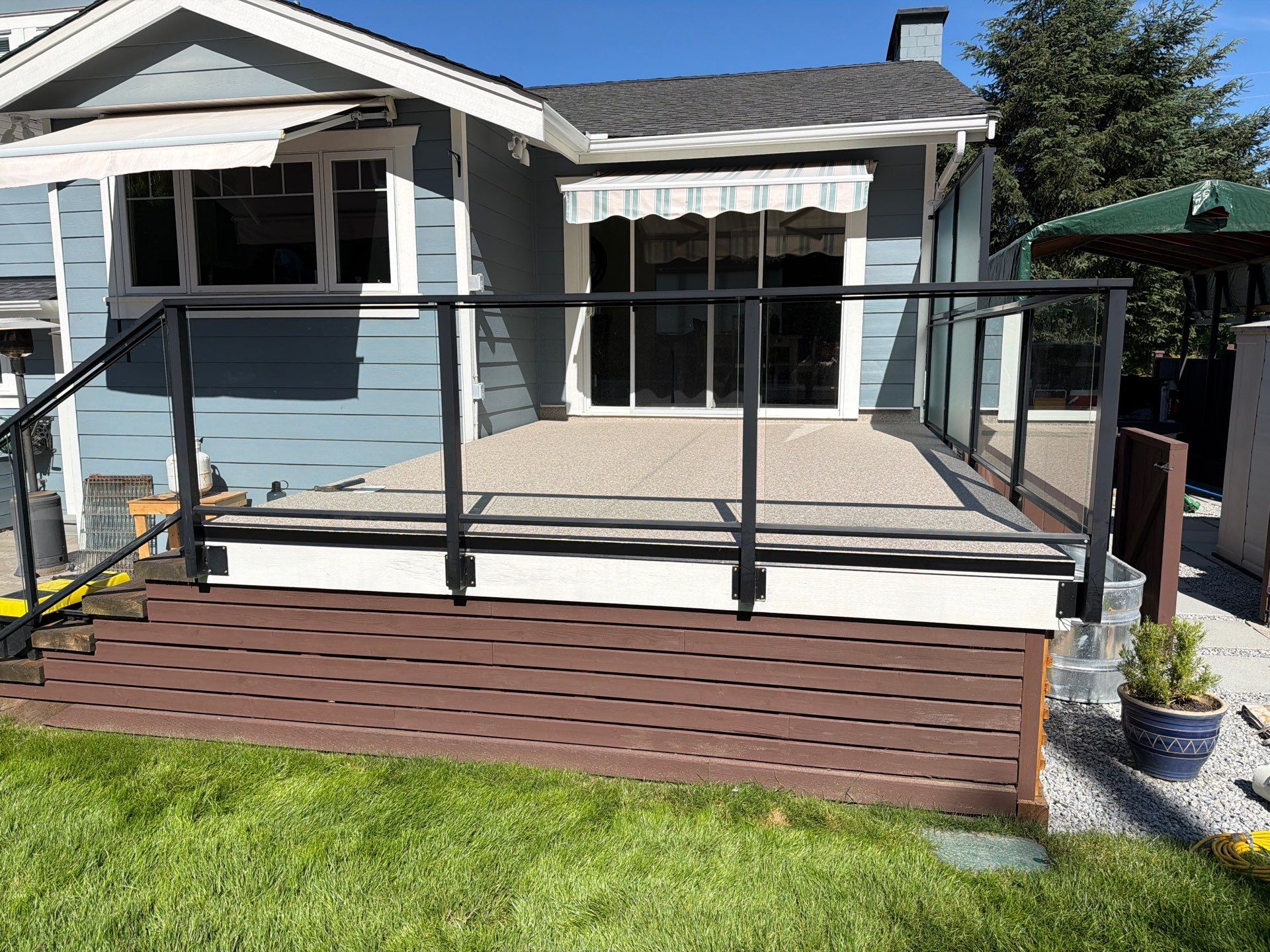
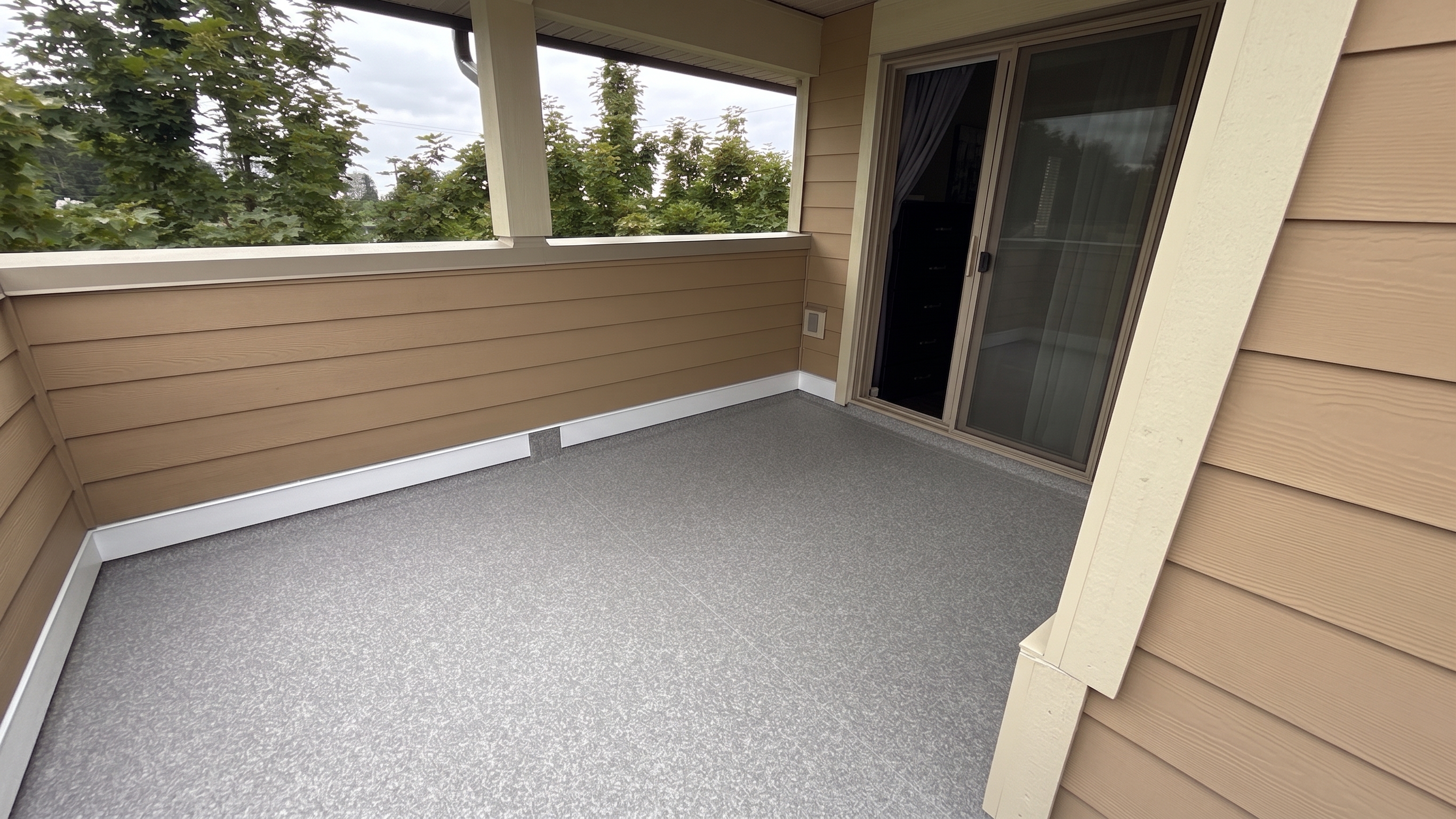
Over a 10-year period, vinyl deck membrane is the cheapest decking option for any balcony or rooftop patio above occupied space, with a total cost of ownership of roughly $5-$8 per square foot per decade including maintenance. Wood comes in second at $9-$15 per square foot per decade once staining, sealing, and partial replacement are factored in. Composite is the most expensive at $12-$20 per square foot per decade because the boards still need a separate waterproof underlayment. For ground-level decks where waterproofing is not required, the math changes, and composite and wood can compete with vinyl on TCO.
Most decking buyers compare the wrong number. They look at the upfront materials price and pick the cheapest one. That's the price of the deck on day one. The total cost of ownership is what the deck actually costs across its full service life: materials, installation, maintenance, replacement cycles, and the consequences of failure. The category that wins on day one rarely wins over a decade. This guide runs the actual 10-year numbers for vinyl, wood, and composite decking, with honest tradeoffs for each, so you can make the comparison the right way. For Valordek's current pricing, see the vinyl decking cost guide or estimate your project with the cost calculator.
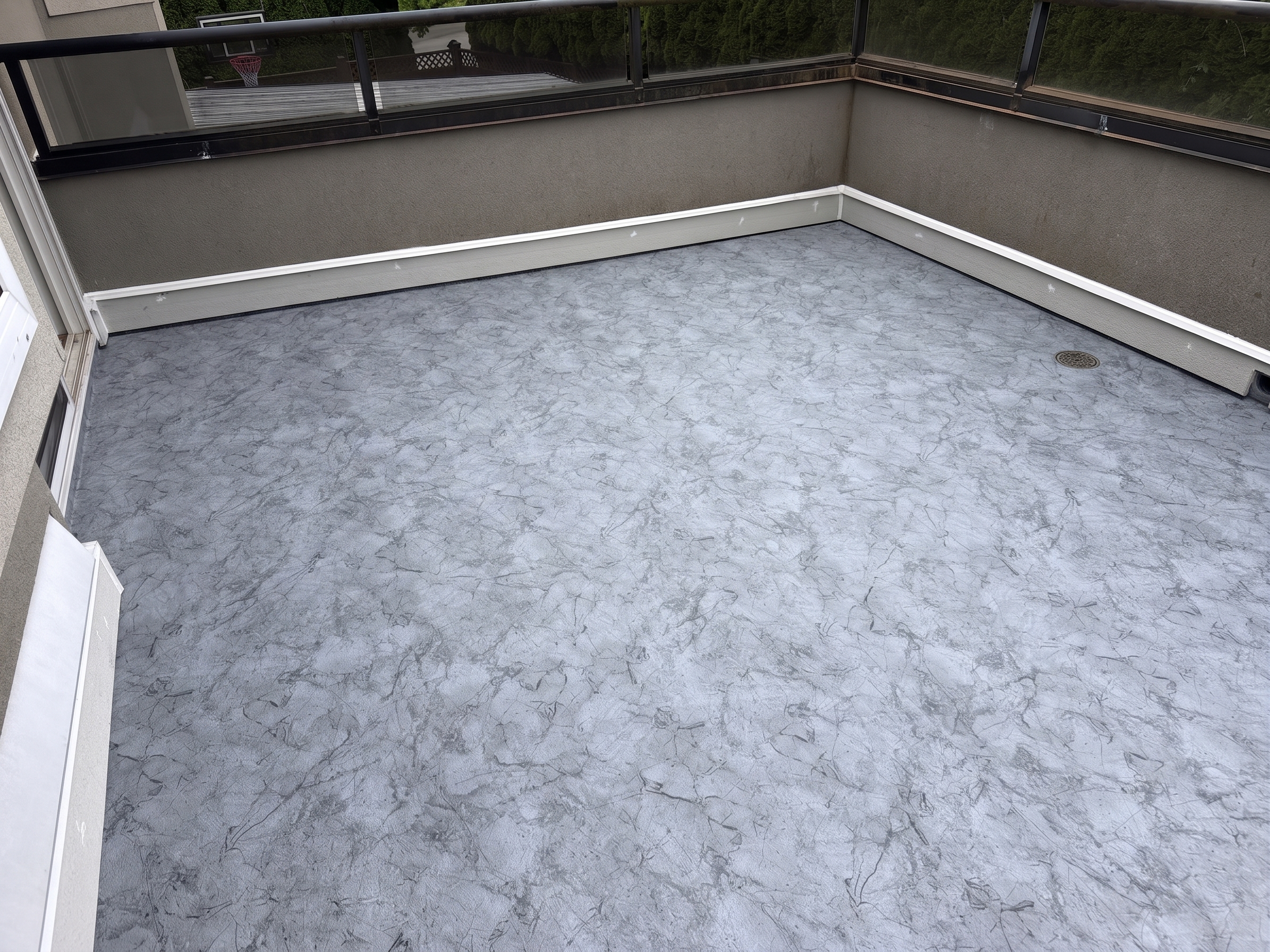
What does "total cost of ownership" actually include?
Total cost of ownership for a deck is the sum of materials, installation, ongoing maintenance, replacement of failed components, and the cost of any water damage that results from waterproofing failure during the period being measured. A 10-year TCO is the standard timeframe used in commercial property analysis because it covers at least one full maintenance cycle for every common decking material. Anything less than 10 years undercounts the true cost of materials that need refinishing or replacement.
The five components of decking TCO:
- Materials: The decking surface itself (boards, membrane, or coating) plus structural components if not already in place.
- Installation: Labour cost, accessories (fasteners, adhesives, flashing, trim), and substrate preparation.
- Routine maintenance: Annual cleaning, sealing, staining, or other periodic upkeep specific to the material.
- Replacement of failed components: Boards that warp, crack, or rot. Membrane sections that fail at seams. Coatings that peel.
- Failure consequences: The cost of water damage to the structure below if waterproofing fails. This is the single largest cost variable on balconies and rooftop decks above occupied space, and it gets ignored in most decking comparisons.
Materials and installation are visible. Maintenance is partially visible. Replacement and failure consequences are usually invisible until they happen, which is why most homeowners and property managers underestimate them. Honest TCO modelling counts all five.
10-year cost of vinyl deck membrane
Vinyl deck membrane has the lowest 10-year total cost of ownership for any deck above occupied space, at roughly $5-$8 per square foot per decade. The membrane itself starts at $3.74 per square foot at Valordek. Installation adds $4-$11 per square foot depending on substrate prep and complexity. After installation, the maintenance cost is minimal: annual washing with mild soap and water, plus a periodic sealant inspection at terminations. There is no annual staining, no sealing, no recoating. The membrane is also the waterproof layer, so failure-cost risk is dramatically lower than alternatives.
The 10-year breakdown for a typical 200 sq ft balcony installed with Valordek vinyl deck membrane:
- Membrane materials: $748 (200 sq ft x $3.74)
- Adhesive, trim, and accessories: $200-$400 depending on edge conditions and drainage
- Professional installation (Fuzzy-Back DIY-possible / Smooth-Back required): $800-$2,200 depending on labour rate and complexity
- Year 1-10 maintenance: $50-$150 in cleaning supplies and inspection costs
- Replacement of failed components: $0 expected within warranty period (15-year for both Fuzzy-Back and Smooth-Back)
- Water damage failure cost: Effectively $0 over warranty period for properly installed code-compliant systems
Total 10-year TCO: roughly $1,800-$3,500 for a 200 sq ft balcony, or $9-$18 per square foot per decade including installation. Strip out the installation (which is a one-time cost on any decking choice) and the per-square-foot ongoing TCO is closer to $5-$8 per square foot per decade. This is the number to compare against alternatives.
10-year cost of wood decking
Wood decking carries a 10-year total cost of ownership of roughly $9-$15 per square foot per decade for cedar or pressure-treated lumber, before factoring in waterproofing failure costs. Materials are cheap: cedar runs $4-$8 per square foot, pressure-treated lumber runs $2-$5. Installation is roughly comparable to vinyl. The cost driver on wood is annual maintenance (staining and sealing), plus partial replacement of warped or rotted boards over the decade.
The maintenance reality of wood is rarely budgeted accurately. Cedar requires a full re-stain every 2-4 years, costing $1-$3 per square foot in materials and labour each cycle. Pressure-treated wood requires sealing every 1-2 years at similar cost. By year 10, most homeowners have refinished the deck three to five times, and 5-15% of the boards have warped, cracked, or split badly enough to need replacement.
The bigger issue: wood decking is not waterproof. On a ground-level deck where water drains into soil, this is fine. On a balcony or rooftop above living space, wood requires a separate waterproof underlayment, typically a vinyl, EPDM, or modified bituminous membrane. That underlayment carries its own materials, installation, and replacement costs. Once a separate waterproof system is required, the wood-as-the-finish-surface approach becomes a two-layer system that costs more than vinyl deck membrane alone.
The 10-year breakdown for a typical 200 sq ft cedar deck above occupied space:
- Cedar boards: $1,200 (200 sq ft x $6 average)
- Waterproof underlayment + installation: $1,400-$2,400 (the layer the wood sits on)
- Installation: $1,000-$2,400
- Year 1-10 staining/sealing: $1,200-$3,000 (3-5 cycles at $1-$3/sq ft)
- Board replacement (5-15% by year 10): $200-$600
- Water damage failure cost (statistical risk): Variable. See "hidden costs" below
Total 10-year TCO: roughly $5,000-$8,800 for a 200 sq ft balcony, or $25-$44 per square foot per decade including installation and the required underlayment. Per-square-foot ongoing TCO (excluding installation) lands around $11-$18 per square foot per decade. Wood's reputation for being "cheap" is built on the materials price, not the lifecycle cost.
10-year cost of composite decking
Composite decking has a 10-year total cost of ownership of roughly $12-$20 per square foot per decade for above-occupied-space applications, making it the most expensive option of the three when a waterproofing requirement is in play. Materials are the most expensive ($5-$15 per square foot for boards), maintenance is the lowest of any decking material, but the boards are not waterproof. They have gaps between them where water passes straight through. For any deck above occupied space, composite still requires a separate waterproof underlayment, plus the boards above.
The composite advantage is real on the right project. Composite boards do not need staining, sealing, or refinishing. Most carry 25-30 year structural warranties (against rot, splintering, and decay) and 5-10 year fade warranties. Maintenance is limited to occasional washing. On a ground-level deck where waterproofing is not required, composite's TCO is competitive with vinyl deck membrane and superior to wood.
The composite disadvantage is the same waterproofing problem wood has, with worse economics. Composite boards cost more than wood. They still need a waterproof underlayment when installed above occupied space. The total system (boards + underlayment + framing) is the most expensive of any of these three options for balcony or rooftop installations.
The 10-year breakdown for a typical 200 sq ft composite deck above occupied space:
- Composite boards: $1,800 (200 sq ft x $9 average)
- Waterproof underlayment + installation: $1,400-$2,400
- Framing/structural pedestals: $400-$1,000
- Installation: $1,200-$2,800
- Year 1-10 maintenance: $100-$300 (washing, occasional fastener replacement)
- Water damage failure cost (statistical risk): Variable. See "hidden costs" below
Total 10-year TCO: roughly $4,900-$8,500 for a 200 sq ft balcony, or $25-$43 per square foot per decade including installation and the required underlayment. Per-square-foot ongoing TCO (excluding installation) lands around $12-$20 per square foot per decade. Composite's "low-maintenance" pitch is true, but it does not solve the waterproofing problem on elevated decks.
The hidden cost: water damage failure on elevated decks
Water damage failure is the single largest cost variable in decking TCO on elevated decks above occupied space, and it is almost always missing from cost comparisons. A failed waterproofing layer on a balcony or rooftop deck costs $5,000-$30,000 to remediate per single event, depending on how long the leak runs and how much structure and finish is affected. Most decking comparisons ignore this cost because it does not happen on every deck. It does, however, happen on a meaningful percentage of poorly waterproofed decks, and the expected cost when amortized across the population of decks is significant.
What a water damage failure typically costs:
- Structural rot remediation: $3,000-$15,000 to replace rotted plywood, joists, and ledger components
- Drywall and ceiling replacement in the room below: $2,000-$6,000
- Mould remediation if leak runs longer than 30 days: $5,000-$25,000 depending on extent
- Personal property damage: Variable, covering flooring, furniture, and electronics in the affected space
- Strata/HOA special assessment if multi-unit: Often $1,000-$5,000 per unit affected
- Insurance claim impact: Premium increases or coverage exclusions on subsequent renewals
The failure-cost risk is highest when the waterproofing layer is something other than the walking surface itself. Two-layer systems (wood-on-membrane, composite-on-membrane) have more potential failure points than single-layer vinyl deck membrane. Liquid-applied coatings have shorter service lives than membranes. Generic uncertified products lack the third-party testing that supports warranty claims when something goes wrong. Vinyl deck membrane that serves as both the walking surface AND the waterproofing layer eliminates the most common failure modes.
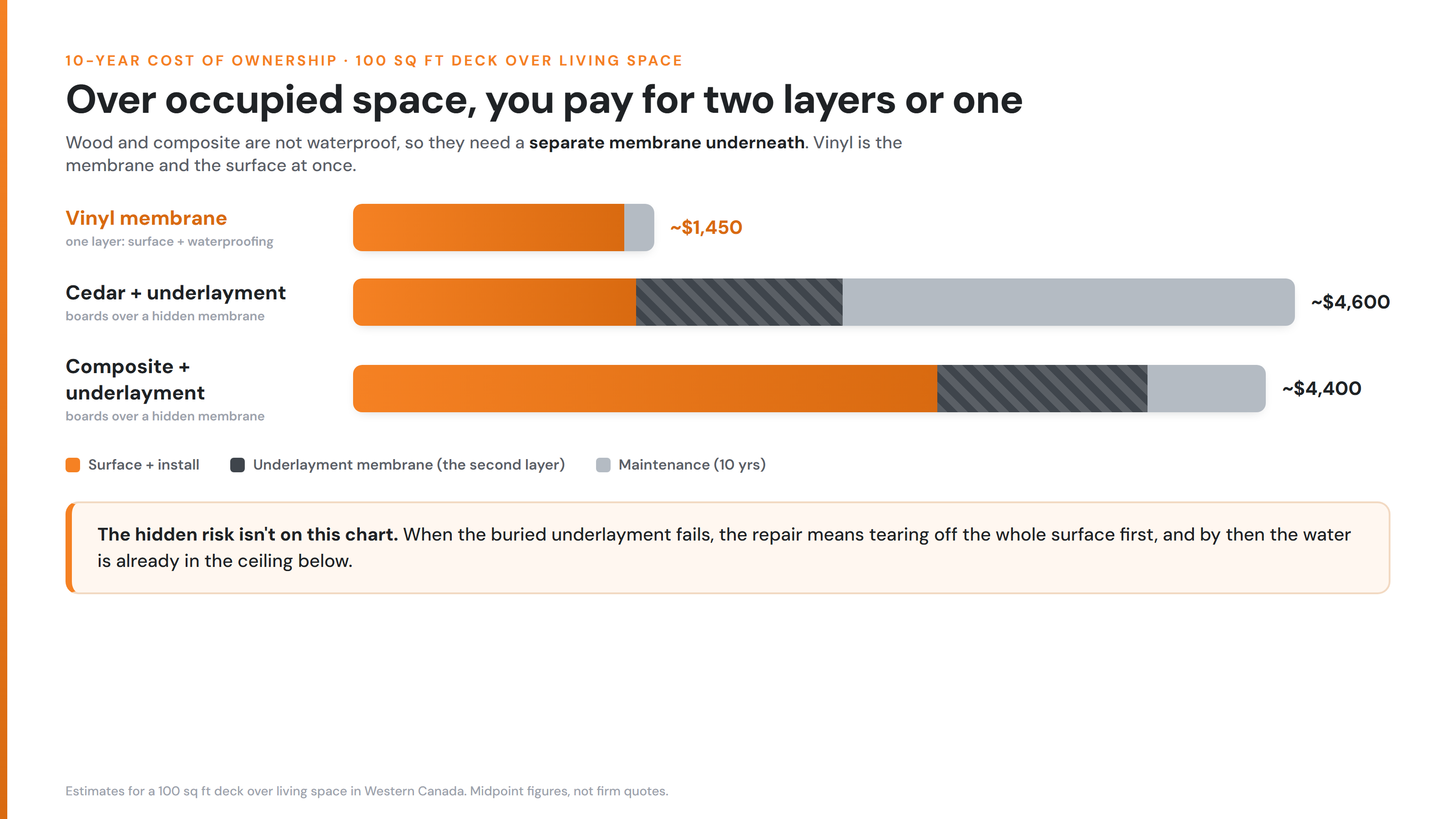
10-year TCO comparison: vinyl vs wood vs composite
| Cost Component (200 sq ft balcony, 10-year TCO) | Vinyl Deck Membrane | Cedar Wood + Membrane Underlayment | Composite + Membrane Underlayment |
|---|---|---|---|
| Surface materials | $748 | $1,200 | $1,800 |
| Waterproofing underlayment + install | (included, same product) | $1,400-$2,400 | $1,400-$2,400 |
| Framing/structural extras | (none required) | (minimal) | $400-$1,000 |
| Adhesive / fasteners / accessories | $200-$400 | $150-$300 | $300-$500 |
| Installation labour | $800-$2,200 | $1,000-$2,400 | $1,200-$2,800 |
| Year 1-10 maintenance | $50-$150 | $1,200-$3,000 | $100-$300 |
| Replacement of failed components | $0 (warranty) | $200-$600 | $0-$200 |
| 10-year total | $1,798-$3,498 | $5,150-$9,900 | $5,200-$8,200 |
| Per sq ft per decade | $9-$18 | $26-$50 | $26-$41 |
| Waterproofing | Single layer, fully waterproof | Two-layer system, more failure points | Two-layer system, more failure points |
| Warranty | 15-year waterproofing | 1-2 year on stain, no waterproofing warranty | 25-30 year structural, no waterproofing warranty on system |
| Water-damage failure risk | Lowest | Higher (membrane hidden under wood) | Higher (membrane hidden under boards) |
The numbers above assume a code-compliant installation with appropriate waterproofing on each system. They do not include the cost of a water damage event, which would shift the totals significantly upward for any system where one occurs. Our guide to what it costs to waterproof a balcony shows how far that shift can go once water reaches the substrate. Vinyl deck membrane wins on TCO for balconies and rooftop patios specifically because it is the only single-layer system that is fully waterproof and serves as the finished walking surface.
When wood or composite still makes sense
Wood and composite decking still make sense when the deck is at ground level and waterproofing is not required, when the project is purely a structural rebuild with no occupied space below, or when the homeowner has a strong aesthetic preference that justifies the higher TCO. Vinyl deck membrane is the right choice for elevated decks above occupied space because of the waterproofing economics. It is not necessarily the right choice for every deck.
Wood remains the most popular choice for ground-level decks because the materials are inexpensive, the look is natural, and the maintenance burden is acceptable to homeowners who enjoy the work (see our vinyl vs wood comparison). The TCO penalty over a decade is real, but it is paid in time and effort more than dollars on a project where the deck is not over a finished space.
Composite is the best fit for ground-level decks where the homeowner wants low ongoing maintenance and is willing to pay a higher upfront cost (see our vinyl vs composite comparison). Composite is also the right choice for some rooftop deck designs that use a separate waterproofing layer plus pedestal-set composite tiles for an architectural look. Those projects typically involve professional design and run in a higher cost bracket overall, where the composite premium is not the deciding factor.
Vinyl deck membrane is the right choice when the project is a balcony or rooftop patio above occupied living space, when waterproofing reliability matters more than aesthetics, when the long-term maintenance burden needs to be minimal, and when the budget for the project is governed by total cost over a decade rather than the cheapest day-one materials price. For Valordek's two product lines and current pricing, see the vinyl decking hub.