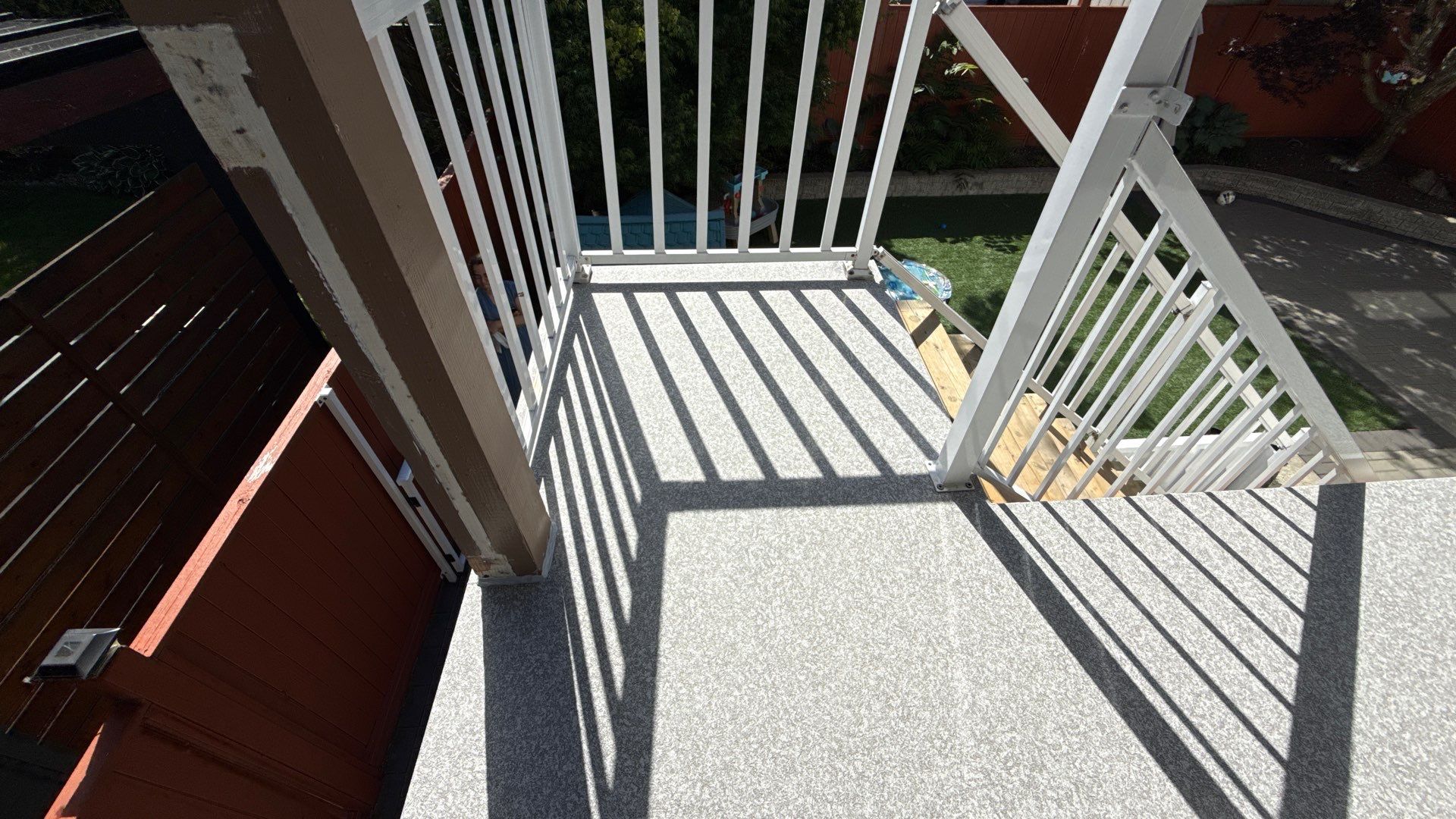
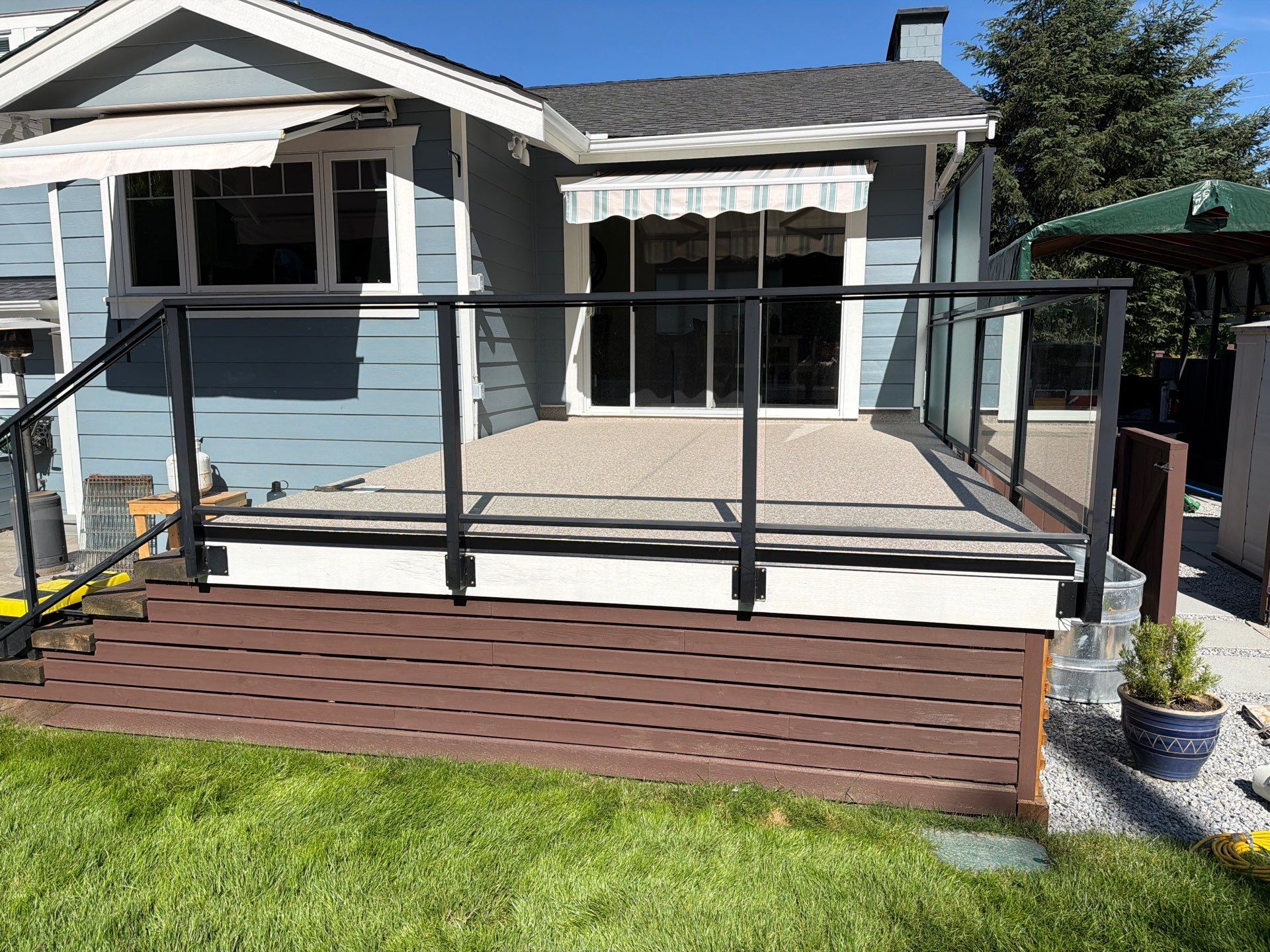
Waterproof decking systems prevent water from reaching the structure beneath a deck, balcony, or rooftop patio. The four main categories are continuous PVC membranes (like Valordek), liquid-applied coatings, EPDM and TPO sheet membranes, and two-layer systems (waterproof underlayment plus a separate walking surface). PVC vinyl deck membrane is the only category that combines waterproofing AND a finished walking surface in one product, making it the most cost-effective for residential balconies and rooftop patios. Costs range from $8-$40 per square foot installed depending on system choice.
If you have a deck or balcony over occupied living space, the waterproofing question is not optional. A leak does not just mean a wet floor below. It means structural damage, mould remediation, drywall replacement, possible insurance claims, and in stratas, special assessments and angry neighbours. Picking the right waterproofing system from the start is the cheapest decision you will make on the project. This pillar guide explains every category of waterproof decking system, how they actually work, what they cost, and how to decide between them. For Valordek's vinyl deck membrane lineup, see our vinyl decking hub.
Why decks need waterproofing systems (and what happens when they don't)
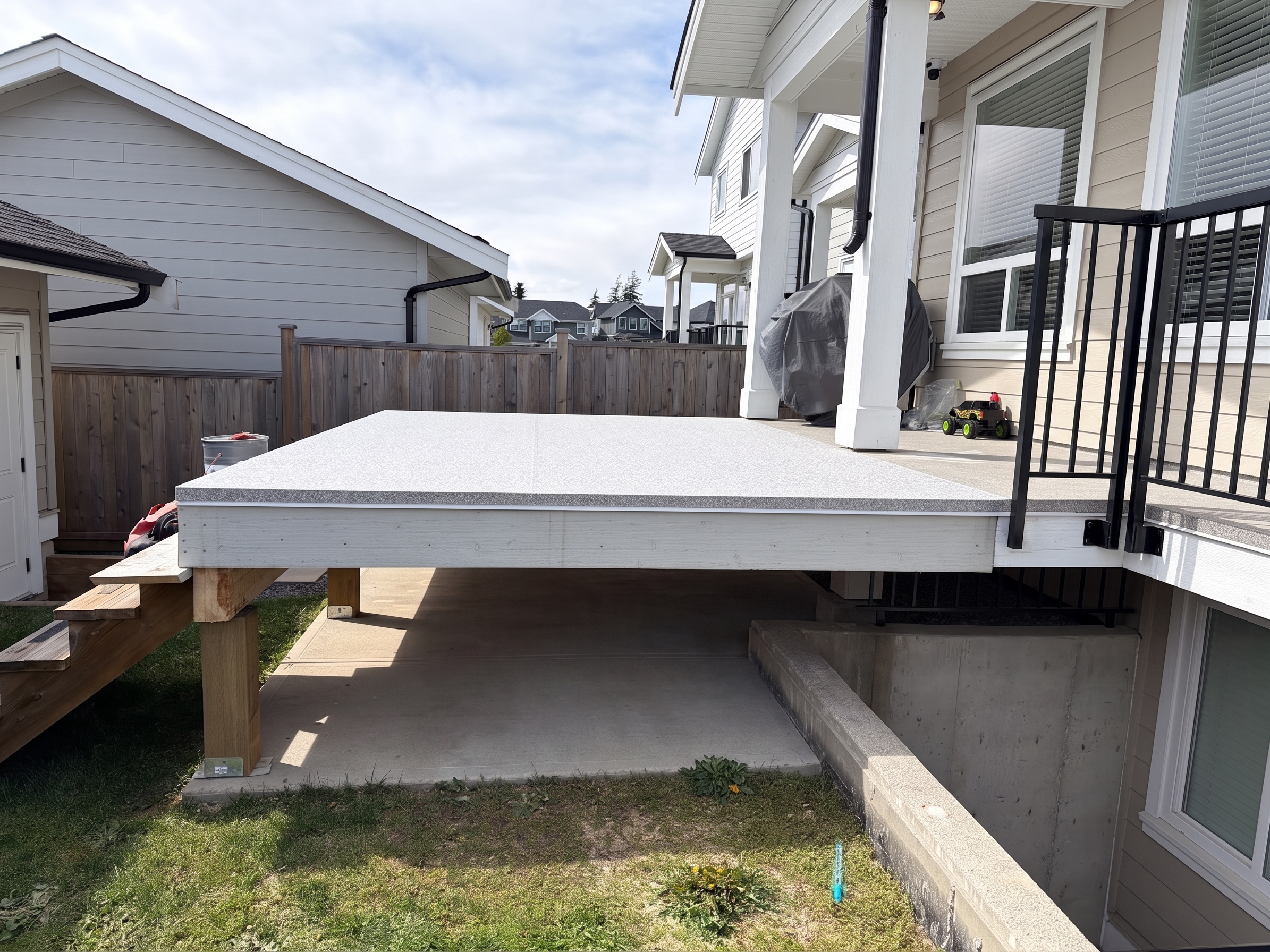
A deck or balcony over occupied living space is functionally a roof. The walking surface IS the structure that protects the room below from rain, snowmelt, and standing water. Unlike a ground-level deck where water just drains into the soil, a rooftop deck or balcony has nowhere for water to go except into the structure if waterproofing fails. The cost of getting this wrong is significantly higher than the cost of getting it right.
What happens when waterproofing fails:
- Water damage to the room below. Drywall stains, ceiling collapse, ruined flooring, damaged personal property. Repair costs typically $5,000-$30,000 for a single failure.
- Structural rot. Plywood substrate, joists, and framing absorb water and rot. Once structural members are compromised, the entire deck has to be rebuilt, not just resurfaced.
- Mould infestation. Trapped moisture under the deck surface creates ideal mould conditions. Remediation can cost $10,000-$50,000 depending on extent.
- Strata or insurance disputes. Condo balcony leaks often trigger special assessments. Some insurance policies exclude water damage from "improperly maintained" decks.
- Building code violations. Unfixed waterproofing failures can lead to occupancy issues on commercial and multi-unit residential buildings.
The honest framing: a $2,000-$4,000 vinyl deck membrane installation prevents tens of thousands in potential repair costs. Skipping waterproofing or choosing the cheapest possible solution is the most expensive decision homeowners make on deck projects.
The four main categories of waterproof decking systems
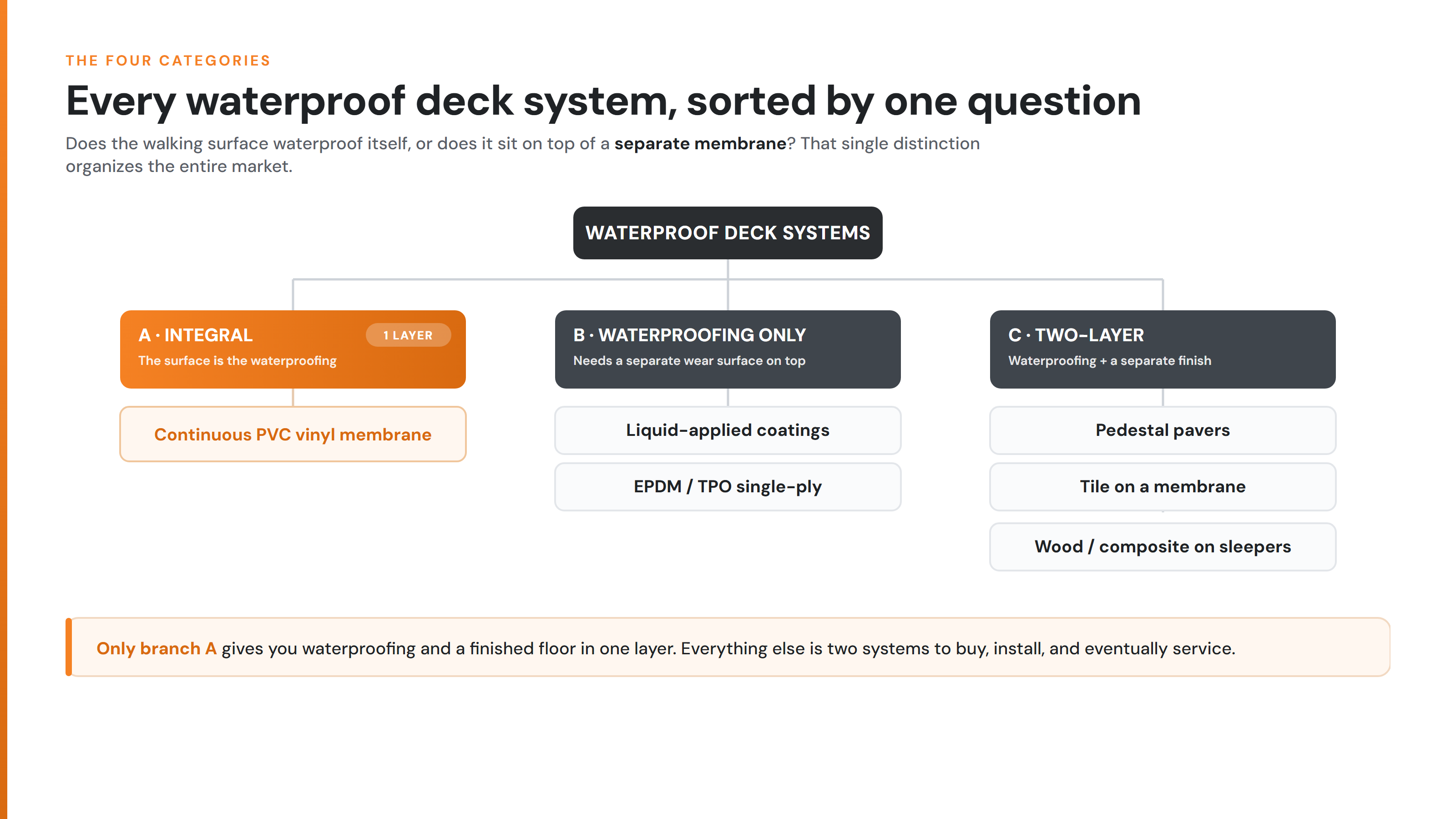
Every waterproof decking system falls into one of four categories. Each category works differently, costs differently, and has different application strengths. Understanding the categories first makes the specific product choice obvious.
Category 1: Continuous PVC vinyl deck membranes. A single sheet of PVC membrane bonded to the substrate with contact adhesive, with heat-welded seams between rolls. The membrane is BOTH the waterproofing layer AND the finished walking surface. One installation, one product, one warranty. This is the category Valordek manufactures.
Category 2: Liquid-applied waterproofing coatings. A roll-on or sprayed-on coating that cures into a continuous waterproof film. Examples include polyurethane, acrylic, and elastomeric coatings. Some products are designed as the finished walking surface; others require a topcoat or separate walking layer above.
Category 3: EPDM and TPO single-ply roofing membranes. Sheet membranes used in commercial flat roofing, sometimes adapted for deck use. Black EPDM rubber is the most familiar. These are waterproofing layers only. They require a separate walking surface above for any deck use.
Category 4: Two-layer systems with separate waterproofing and walking surfaces. A waterproof membrane (any of categories 1-3) installed first, then a separate walking surface (pavers, deck tiles, wood, composite) installed on top. The most common high-end approach but also the most expensive and complex.
The rest of this guide explains each category in detail.
Category 1: Continuous PVC vinyl deck membranes
PVC vinyl deck membrane is the most cost-effective waterproof decking system for residential balconies and rooftop patios because it serves as both the waterproof layer and the finished walking surface in one product. A single sheet of polyvinyl chloride membrane bonds to the substrate with contact adhesive. The seams between rolls are heat-welded into a continuous waterproof surface. The result is a deck that is fully waterproof and ready to walk on with no second layer required.
How it works:
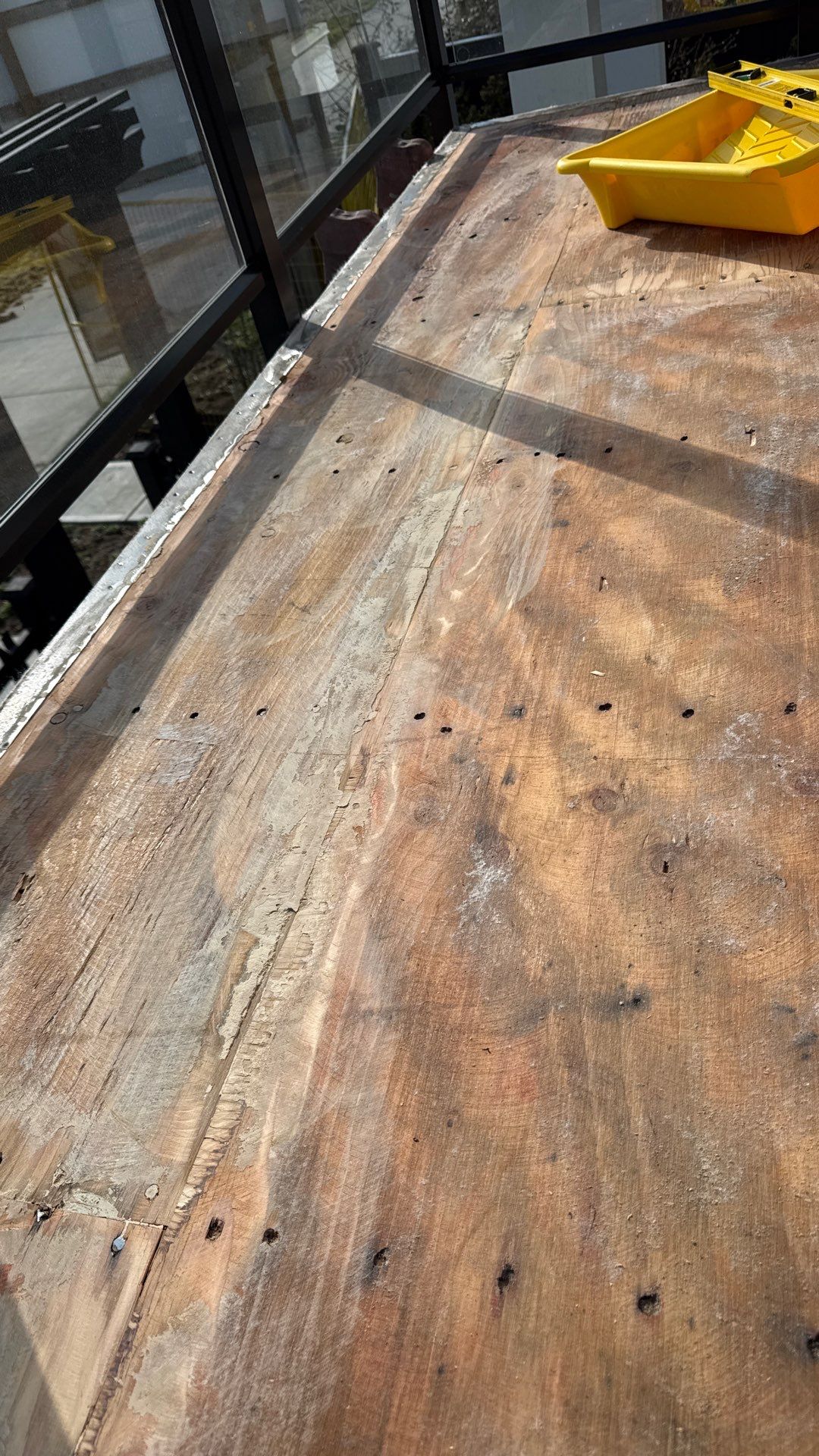
- Substrate prep: Clean and inspect the plywood or concrete substrate. Replace any rotted plywood. Patch low spots.
- Adhesive application: Roll contact cement onto both the substrate and the back of the membrane.
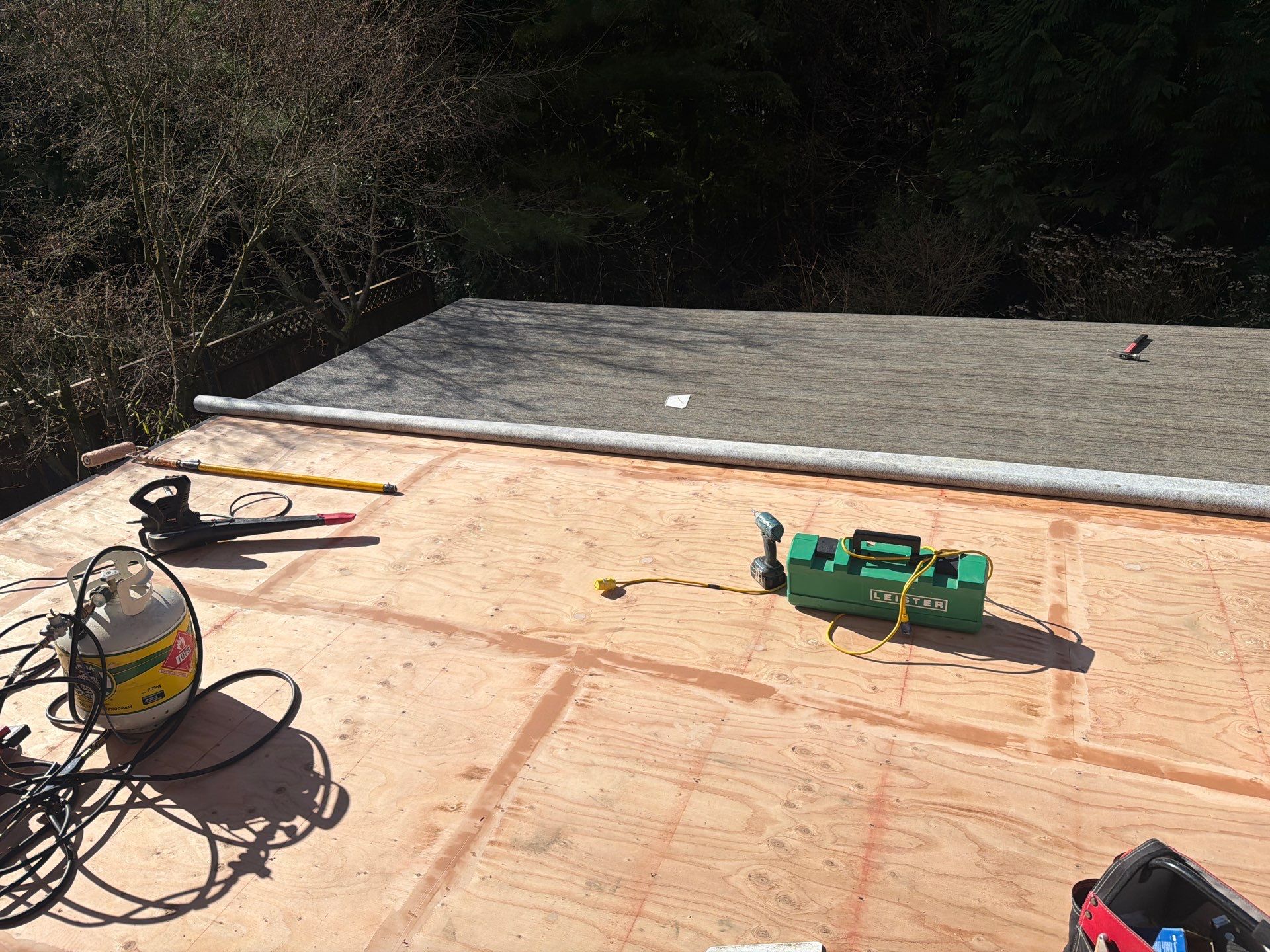
- Membrane layout: Unroll the 72-inch wide membrane and press it into place. Roll firmly to remove air pockets.
- Seam welding: Use a hot air welder to fuse overlapping membrane edges into one continuous waterproof surface. This step is what makes the deck fully waterproof.
- Flashing details: Install PVC flashing at walls, drains, posts, and edges. Most leaks happen at edges, not in the middle of the membrane.
Why it wins for balconies and rooftop patios:
- Single-layer installation (waterproofing + walking surface combined)
- Lowest installed cost: $8-$15 per square foot for a complete system
- 15-year waterproofing warranty (Valordek)
- Class A and C fire ratings (Valordek Smooth-Back)
- Tested -40°C to 80°C, full Canadian climate range
- UV-stabilized PVC formulated for continuous outdoor exposure
- Multiple colour and style options (Valordek offers 12 colours across Wood Look, Stone Look, and Classic style lines)
- Heat-welded seams cannot leak when installed correctly
- CCMC-tested and exceeds code 37.54.95
The honest tradeoffs:
- Manufactured aesthetic: uniform pattern that some homeowners find too consistent compared to natural wood
- Smooth-Back rooftop installations require professional heat-welding (not DIY-friendly)
- Once installed, individual sections cannot be easily replaced without rewelding
Best for: residential balconies (Valordek Fuzzy-Back 68mil), rooftop patios above living space (Valordek Smooth-Back 60mil), strata and condo applications, and any project where waterproofing reliability matters most.
Category 2: Liquid-applied waterproofing coatings
Liquid-applied coatings are roll-on or sprayed waterproofing products that cure into a continuous waterproof film. Polyurethane, acrylic, elastomeric, and modified bitumen products all fall into this category. Some coatings are sold as complete deck waterproofing systems (with a textured walking surface built in); others are pure waterproofing that needs a separate walking surface above.
How they work: a primer is applied to the substrate. A base coat of waterproofing is rolled or sprayed on. A reinforcing fabric or fleece is sometimes embedded into the wet base coat. One or more topcoats cure on top, with the final coat usually pigmented or textured for the finished look.
Why some projects use coatings:
- Conforms to complex shapes (curved decks, irregular substrates)
- No visible seams (the coating is applied as one continuous layer)
- Can be applied over existing deck surfaces in some cases (resurfacing)
- Lower upfront cost than pavers or composite systems
The trade-offs:
- Cracking is the failure mode. Coatings are rigid (or semi-rigid). When the substrate moves with temperature changes, the coating cracks. Cracks let water through.
- Reapplication is required. Most coatings need to be recoated every 5-10 years to maintain waterproofing. Membrane-based systems do not.
- UV degradation. Many coating products break down under continuous UV exposure faster than PVC membranes.
- Application errors are common. Coatings need to be applied at the right thickness, in the right weather conditions, with proper substrate prep. Field application errors create thin spots and weak seams.
- Shorter warranties. Most liquid-applied systems carry 5-10 year warranties vs 10-15 years for vinyl deck membrane.
Best for: small projects, irregular substrates, or applications where the substrate cannot accommodate a sheet membrane installation. Generally not the best choice for new residential balconies or rooftop patios where vinyl deck membrane is an option.
For a closer look at this specific decision, including how the two compare on lifespan, repairability and what each one costs to keep waterproof over ten years, see our full waterproof deck coating vs membrane comparison.
Category 3: EPDM and TPO single-ply roofing membranes
EPDM (ethylene propylene diene monomer) is a synthetic rubber sheet membrane used widely in commercial flat roofing. TPO (thermoplastic polyolefin) is a similar single-ply roofing membrane. Both are sometimes used for deck waterproofing as the underlayment beneath a separate walking surface. They are NOT walking surfaces themselves and should not be used as such.
How they work: large sheets of black EPDM rubber or white/grey TPO are unrolled across the substrate. Seams are joined with adhesive tape (EPDM) or heat welding (TPO). The membrane is mechanically fastened or adhered to the substrate. A separate walking surface (pavers, tiles, wood, composite) is installed above.
Why some projects use EPDM or TPO:
- Long lifespan as a roofing membrane (20-30 years on flat commercial roofs)
- Familiar to commercial roofing contractors
- Lower per-square-foot membrane cost than PVC ($1-$4 per sq ft for EPDM material)
- Works well as the waterproof layer underneath pedestal pavers or tile systems
The trade-offs:
- Not a walking surface. EPDM is too thin and slippery for foot traffic. TPO is similar. Both require a separate walking surface above, which doubles the system cost.
- Aesthetics. Black EPDM and white TPO look industrial. Both are usually hidden under another finish.
- EPDM seams are taped, not welded. Tape adhesive can fail over time, especially in climates with wide temperature swings. PVC heat-welded seams are stronger.
- Walking-on-membrane wear. Even with a walking surface above, foot traffic compresses and wears EPDM faster than PVC.
Best for: commercial flat roofing where the deck is a small portion of the overall roof, or as the waterproof underlayment in two-layer systems (Category 4). Not recommended as the standalone waterproofing for residential balconies or rooftop patios when single-layer PVC membrane is an option.
Category 4: Two-layer systems (waterproofing + separate walking surface)
Two-layer systems install a waterproof membrane first, then a separate walking surface on top. The walking surface is usually pedestal pavers, snap-together deck tiles, wood on sleepers, or composite decking. The waterproof layer underneath does the actual waterproofing; the walking surface above provides the finished look. This is the most expensive and most aesthetic approach.
How they work: a waterproof membrane (typically EPDM, TPO, or vinyl) is installed across the substrate first. Then pedestals, sleepers, or directly-laid pavers create a walking surface above. Water drains through gaps in the walking surface, hits the membrane underneath, and flows to drains.
The walking-surface options:
- Pedestal pavers (concrete or porcelain). Adjustable plastic pedestals support 24"x24" pavers. Premium architectural look, Class A fire-rated, heaviest option.
- Snap-together deck tiles. Interlocking 12"x12" or 24"x24" panels in wood, composite, or PVC. Easier DIY installation.
- Wood on sleepers. 2x4 or 2x6 sleepers laid across the membrane, deck boards on top. Most natural-looking option, highest maintenance.
- Composite on sleepers. Same as wood but with composite boards. Lower maintenance, higher cost.
Why projects use two-layer systems:
- Premium architectural look that vinyl deck membrane cannot match
- Walking surface can be removed individually for membrane access (better than wood/composite glued or fastened directly)
- Wider material choice: wood, stone, tile aesthetics available
- Pedestals can level a sloped substrate
The trade-offs:
- Cost. Two-layer systems cost 2-4x more than single-layer vinyl deck membrane. $15-$40 per square foot installed vs $8-$15 for vinyl membrane.
- Weight. Concrete pavers add 25-40 lbs/sq ft of dead load. Many residential rooftops cannot support the weight.
- Maintenance access. If the membrane underneath fails, the walking surface above has to come up to access it. With wood or composite on sleepers, this is a major project.
- Debris collection. Leaves and dirt accumulate between pavers/tiles and on the membrane underneath. Periodic cleaning required.
- Lifespan mismatch. The walking surface and the membrane underneath rarely have matching lifespans. The system fails when whichever fails first.
Best for: high-end residential and commercial projects where the architectural look justifies the cost premium and the structure supports the weight. For more on rooftop deck material options specifically, see our rooftop deck materials guide.
How to choose the right waterproof decking system
The right waterproof decking system depends on three things: where the deck is, what the structure can support, and what the budget allows. Here is a decision framework that gets you to the right category in under 5 minutes.
Step 1: Where is the deck?
- Ground-level deck (no occupied space below) → Waterproof system not strictly required. Wood, composite, or any standard deck material works.
- Residential balcony (above another living space) → Waterproof system required. Vinyl deck membrane (Category 1) is almost always the best choice. Valordek Fuzzy-Back is engineered specifically for this.
- Rooftop patio (above occupied living space) → Waterproof system required AND fire rating usually required by code. Valordek Smooth-Back (Category 1) or two-layer paver system (Category 4).
- Commercial flat roof with deck use → EPDM/TPO underlayment with two-layer paver system, or vinyl deck membrane for the deck portion.
Step 2: What is the substrate?
- Plywood (5/8 tongue-and-groove) → All four categories work. Vinyl deck membrane is the simplest installation.
- Concrete → All four categories work. May need primer or patching prep first.
- Existing deteriorated deck surface → Substrate must be prepared or replaced before any waterproof system. Skipping prep causes premature failure.
Step 3: What is the budget?
- $8-$15 per square foot installed → Vinyl deck membrane (Category 1). Best value for waterproof decks.
- $10-$20 per square foot installed → Vinyl deck membrane plus higher-end colour/pattern options, OR mid-range two-layer system with deck tiles.
- $15-$30 per square foot installed → Two-layer wood or composite over a separate membrane.
- $20-$40+ per square foot installed → Two-layer pedestal paver system.
Step 4: What aesthetic do you want?
- Wood look → Vinyl deck membrane in Wood Look (single-layer, lowest cost) OR composite on sleepers (two-layer, higher cost, more "real wood" look but still composite)
- Stone or hardscape look → Vinyl deck membrane in Stone Look (single-layer) OR pedestal pavers (two-layer, true stone)
- Solid colour modern → Vinyl deck membrane in Classic line
- Real wood → Two-layer wood on sleepers (only category that delivers actual wood, with the maintenance trade-off)
For most residential balconies and rooftop patios, the answer to all four questions points to vinyl deck membrane. That is why it has become the default choice for new residential waterproof deck projects across Western Canada.
Waterproof decking system costs
Waterproof decking system costs vary by category and complexity. Vinyl deck membrane is the most cost-effective at $8-$15 per square foot installed for a complete single-layer system. Two-layer systems with pavers or composite over a separate membrane run $15-$40 per square foot installed. Liquid-applied coatings fall in the middle at $10-$20 per square foot installed.
Cost comparison across waterproof decking systems:
| System | Material Only | Total Installed (Typical) | Warranty | Best Application |
|---|---|---|---|---|
| Valordek vinyl deck membrane (Fuzzy-Back) | $3.74/sq ft | $8-$15/sq ft | 15 years waterproofing | Residential balconies |
| Valordek vinyl deck membrane (Smooth-Back) | $3.74+/sq ft | $10-$20/sq ft | 15 years waterproofing | Rooftop patios over living space |
| Liquid-applied waterproofing coating | $2-$6/sq ft | $10-$20/sq ft | 5-10 years | Irregular substrates, small projects |
| EPDM membrane only (underlayment) | $1-$4/sq ft | $5-$10/sq ft (membrane only, no walking surface) | 10-20 years | Commercial flat roof, two-layer systems |
| Two-layer: Wood on sleepers + membrane | Varies | $15-$30/sq ft | Limited by shorter element | Premium residential aesthetics |
| Two-layer: Composite on sleepers + membrane | Varies | $20-$40/sq ft | Limited by membrane | Wood-look without maintenance |
| Two-layer: Pedestal pavers + membrane | Varies | $15-$40/sq ft | Limited by membrane | High-end architectural look |
For more detail on vinyl decking pricing specifically, see our vinyl decking cost guide.
Frequently asked questions about waterproof decking systems
What is the best waterproof decking system?
The best waterproof decking system for residential balconies and rooftop patios is a continuous PVC vinyl deck membrane. Vinyl deck membrane combines waterproofing AND a finished walking surface in one product, costs $8-$15 per square foot installed, and carries 15-year waterproofing warranties. Valordek vinyl deck membrane is CCMC-tested, exceeds code 37.54.95, and is engineered specifically for balcony and rooftop patio applications.
How do you waterproof a deck?
You waterproof a deck by installing a continuous waterproof membrane bonded to the substrate. Single-layer systems use vinyl deck membrane that serves as both the waterproof layer and the walking surface. Two-layer systems use a separate waterproof membrane (vinyl, EPDM, or TPO) underneath a walking surface like pavers, deck tiles, wood, or composite. Single-layer vinyl is the most cost-effective approach.
Do I need a waterproof membrane under my deck?
You need a waterproof membrane under your deck if there is occupied living space below it (a room, a unit, a garage). Decks above occupied space must be waterproof to prevent water damage to the structure and the room beneath. Ground-level decks where water drains into soil do not require waterproofing. Valordek vinyl deck membrane is designed for the waterproof requirement on balconies and rooftops.
What is the cheapest waterproof deck system?
The cheapest waterproof deck system that actually works long-term is vinyl deck membrane (Category 1) at $8-$15 per square foot installed. Liquid-applied coatings can be cheaper upfront ($10-$15 per square foot) but require recoating every 5-10 years, making them more expensive over time. The cheapest system that fails in two years is more expensive than the moderate system that lasts 15 years.
How long do waterproof decking systems last?
Vinyl deck membrane lasts 15 years (Valordek warranty), with real-world installations documented at 18-20 years. Liquid-applied coatings last 5-10 years. EPDM and TPO underlayments last 15-25 years. Two-layer paver systems last as long as the membrane underneath, regardless of paver lifespan. The membrane warranty is the meaningful lifespan number for any waterproof deck system.
What is the best waterproof decking over living space?
The best waterproof decking over living space is Valordek Smooth-Back (60mil) vinyl deck membrane. It is engineered specifically for rooftop applications above occupied space, with Class A and Class C fire ratings (required by most building codes), a 15-year waterproofing warranty, Intertek testing, and heat-welded PVC seams. The single-layer system is significantly less expensive than two-layer paver alternatives.
Can you DIY a waterproof deck system?
You can DIY some waterproof deck systems but not all. Valordek Fuzzy-Back vinyl deck membrane is designed for DIY-friendly installation on residential balconies with proper substrate prep. Valordek Smooth-Back (rooftop) requires professional heat-welding and is not DIY-friendly. Liquid-applied coatings are DIY-possible but application errors are common. For warranty validity, professional installation by a certified Valordek dealer is required.