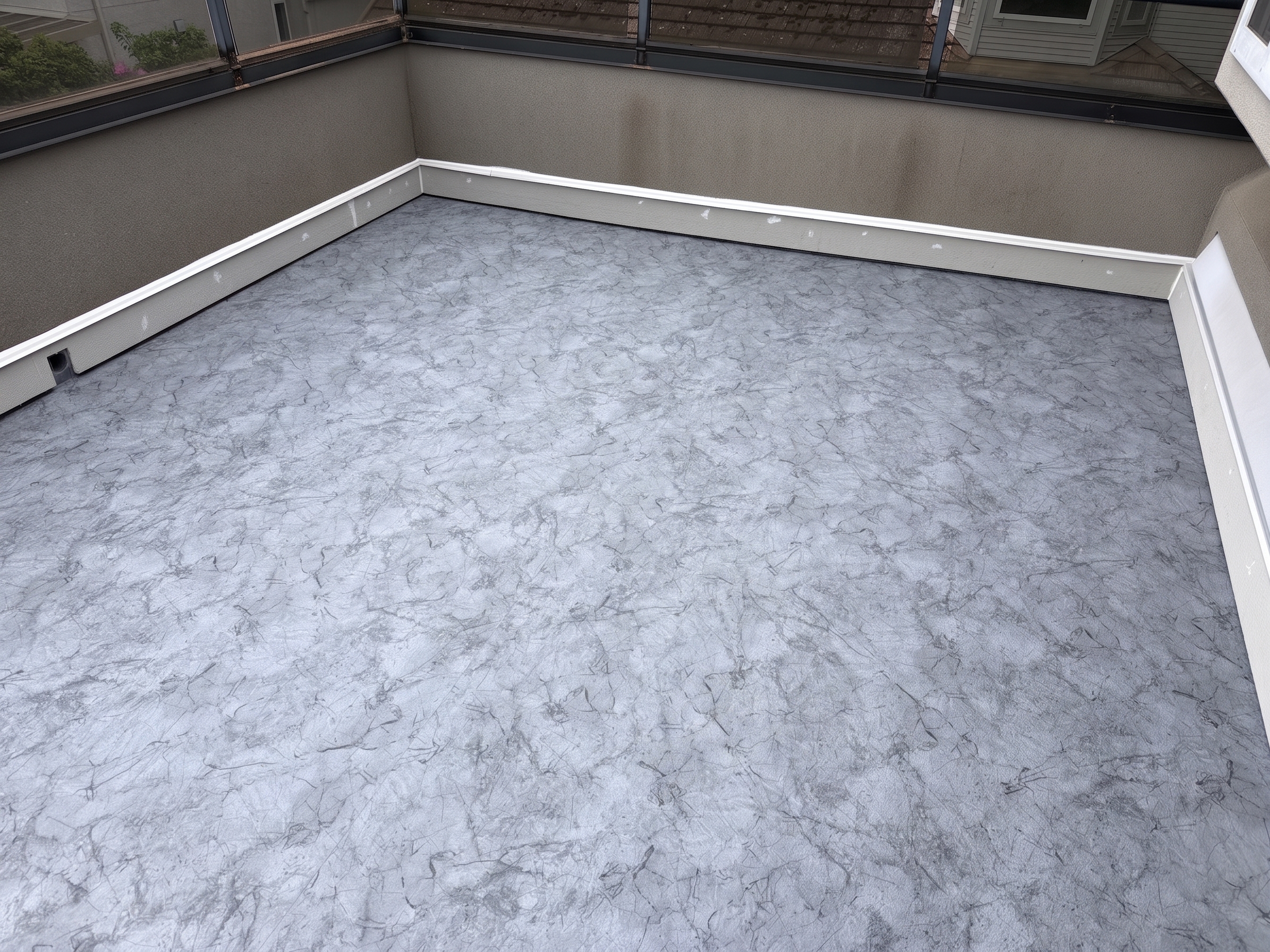
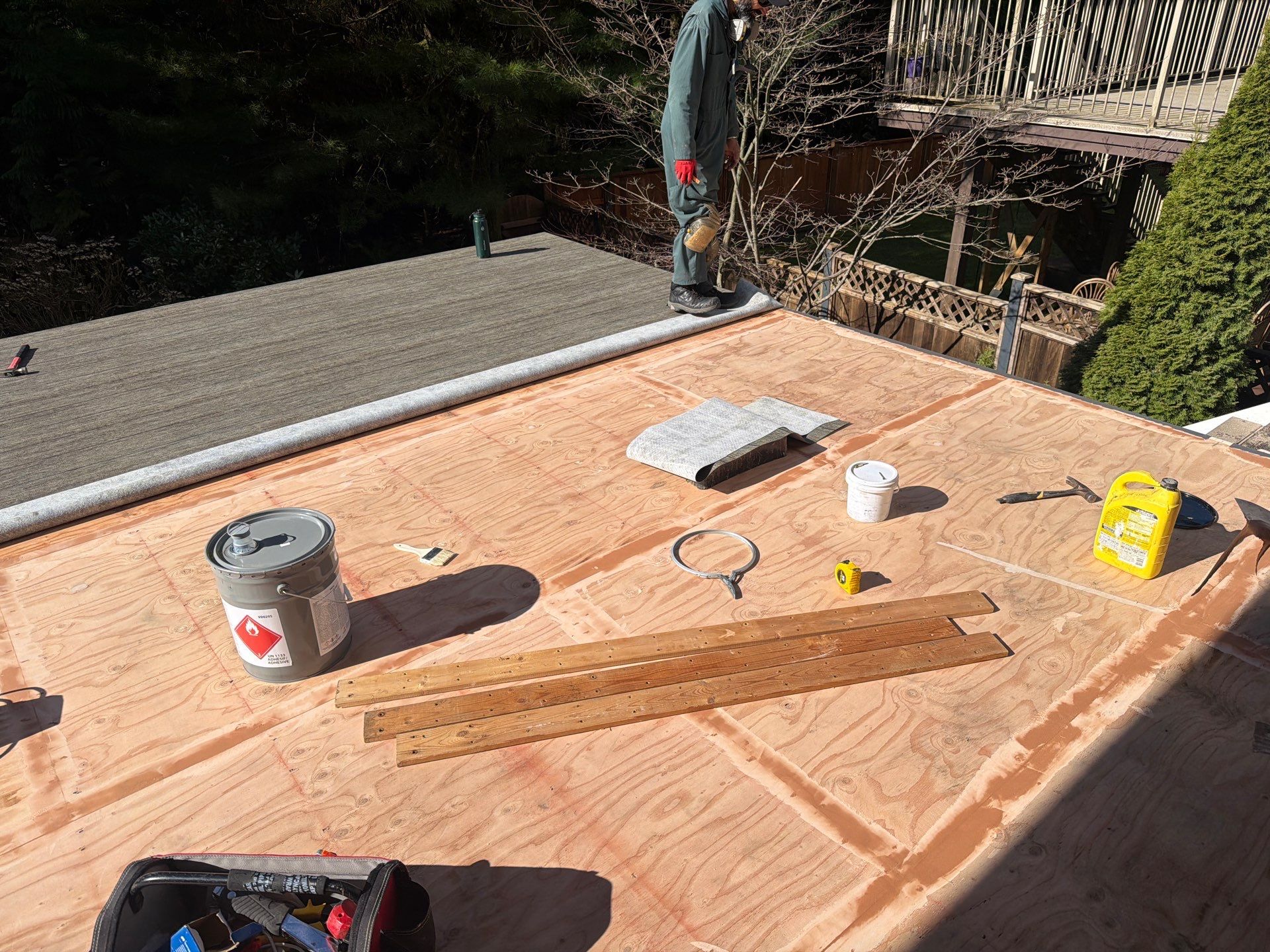
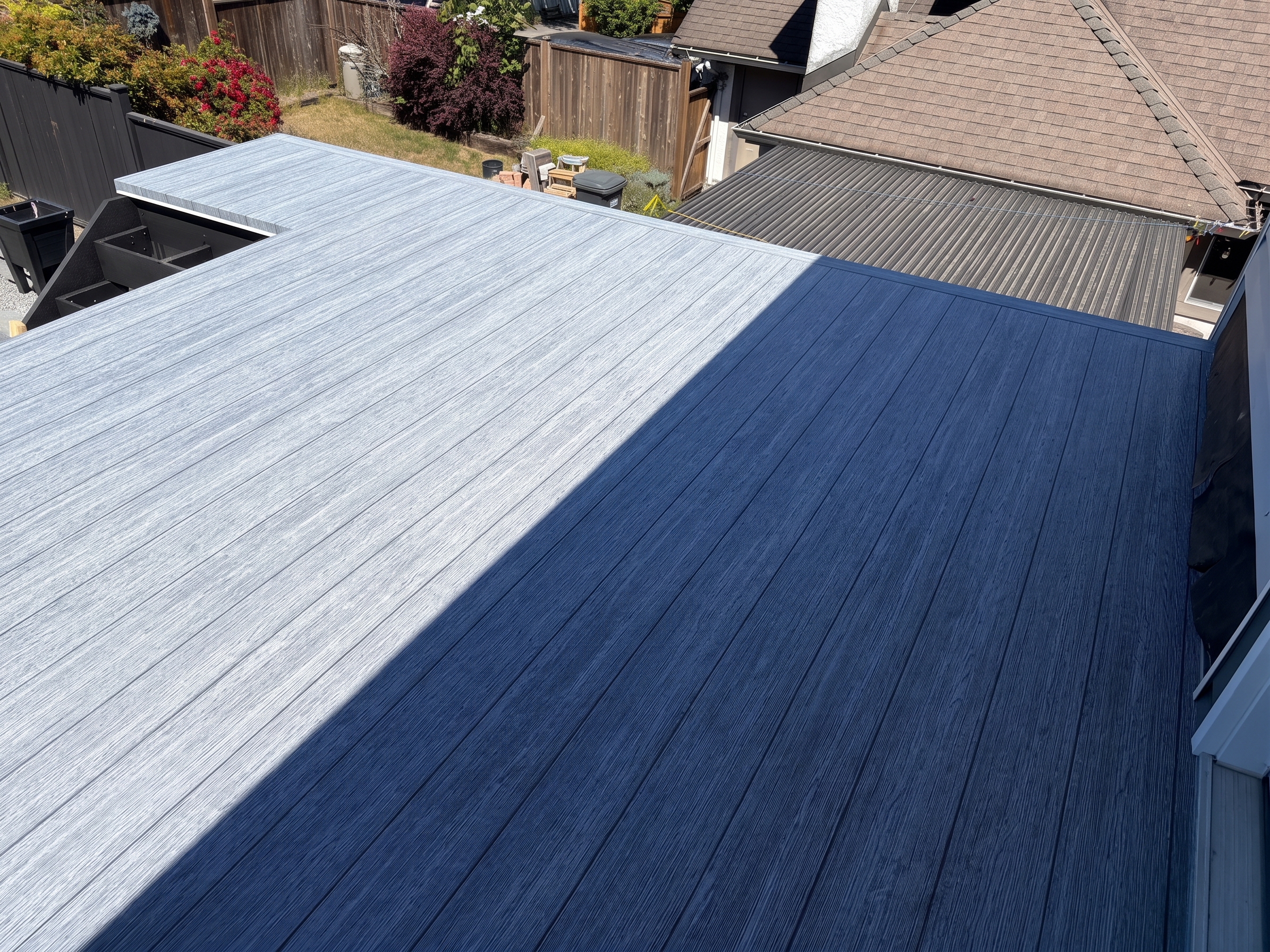
Vinyl deck membrane and fiberglass decking are both waterproof surfaces, but they are fundamentally different products with different strengths. Vinyl membrane is a PVC sheet system that rolls onto plywood and bonds with adhesive or heat welding, starting at $3.74 per square foot. Fiberglass decking is a resin-and-cloth coating applied in layers that cures into a rigid shell. Both waterproof, but they differ significantly in installation complexity, maintenance requirements, repair options, and long-term cost.
This is one of the more confusing comparisons in the deck waterproofing space because "fiberglass decking" actually refers to two completely different products. Some manufacturers sell pultruded fiberglass deck boards (solid structural boards used in marine and industrial settings). Others sell fiberglass coating systems (resin applied over plywood, similar in application to how vinyl decking is installed). This comparison focuses on fiberglass coating systems versus vinyl membrane, since both serve the same purpose: waterproofing balconies, rooftop patios, and elevated decks.
How Do Vinyl and Fiberglass Deck Membranes Work?
Both vinyl and fiberglass create a continuous waterproof surface over plywood or concrete substrates. But the materials and installation methods are different.
Vinyl deck membrane is a factory-manufactured PVC sheet, typically 60 to 68mil thick, produced with UV stabilizers and embossed surface textures. It arrives as a finished product on rolls (Valordek rolls are 72 inches wide, up to 480 lineal feet). The membrane is bonded to the substrate using contact cement adhesive (for Fuzzy-Back products) or heat welding (for Smooth-Back products). Seams between sheets are overlapped and sealed. The result is a flexible, continuous waterproof surface with a consistent factory-controlled thickness.
Fiberglass deck coating is a multi-layer system applied on-site. The installer lays fibreglass cloth (chopped strand mat or woven roving) over the substrate, then saturates it with polyester or epoxy resin. Once the resin cures, a gel coat is applied on top for UV protection and aesthetics. The quality and thickness of the finished surface depends entirely on the installer's technique, resin mixing ratios, and application conditions.
Vinyl vs Fiberglass Decking: Complete Comparison
This table compares the two waterproofing approaches across every factor that matters for balcony and rooftop deck applications.
| Factor | Vinyl Membrane | Fiberglass Coating |
|---|---|---|
| Waterproofing | Fully waterproof. Factory-manufactured PVC membrane with sealed seams. | Fully waterproof when properly applied. Quality depends on installer skill. |
| Thickness consistency | Factory-controlled. Valordek Fuzzy-Back is 68mil, Smooth-Back is 60mil, consistent across every square foot. | Variable. Depends on resin application, cloth overlap, and installer technique. Thin spots are a common failure point. |
| Material cost | Valordek membrane starts at $3.74/sqft. | Materials typically $2-5/sqft depending on resin type and number of layers. |
| Installation | Roll-and-bond. Fuzzy-Back uses contact cement (DIY-friendly). Smooth-Back uses heat welding (professional). | Multi-step wet layup. Resin must be mixed in small batches (15-20 minute working window). Professional only. Weather-sensitive (no rain, specific temperature range). |
| Installation time | Typically 1 day for a standard balcony. | 2-3 days minimum (layup, cure time between coats, gel coat application). |
| Maintenance | Soap and water, 2-4x per year. No recoating ever required. | Soap and water for routine cleaning. Gel coat requires re-application every 8-12 years to maintain UV protection. |
| Repair | Damaged areas can be patched with matching membrane. Heat-welded patches maintain waterproof integrity. | Cracks must be ground out and re-glassed. Repairs are visible and require skill. Colour matching is difficult. |
| Flexibility | PVC membrane flexes with substrate movement. Rated -40°C to 80°C. | Rigid once cured. Can crack along building lines, expansion joints, and areas of substrate movement. |
| UV resistance | UV stabilizers built into PVC during manufacturing. No recoating needed. | UV protection comes from gel coat layer only. Gel coat degrades over time and needs periodic re-application. |
| Aesthetics | Multiple patterns: wood look, stone look, classic solid colours. Embossed textures. | Smooth, glossy finish (gel coat). Limited colour options. Can add non-slip aggregate to gel coat. |
| Warranty | Valordek: 15-year waterproofing (both Fuzzy-Back and Smooth-Back), plus 5-year appearance. | Varies by installer. Typically 5-10 years. No industry-wide manufacturer warranty standard. |
| Cold climate performance | Rated to -40°C. Flexible in extreme cold. Proven across Canadian winters. | Can become brittle in extreme cold. Freeze-thaw cycles stress rigid fiberglass, especially at joints and transitions. |
| Fire rating | Valordek Smooth-Back: Class A & C fire rated (Intertek tested). | Polyester resin is combustible. Some formulations achieve fire ratings with additives, but not standard. |
Why Does Fiberglass Decking Crack?
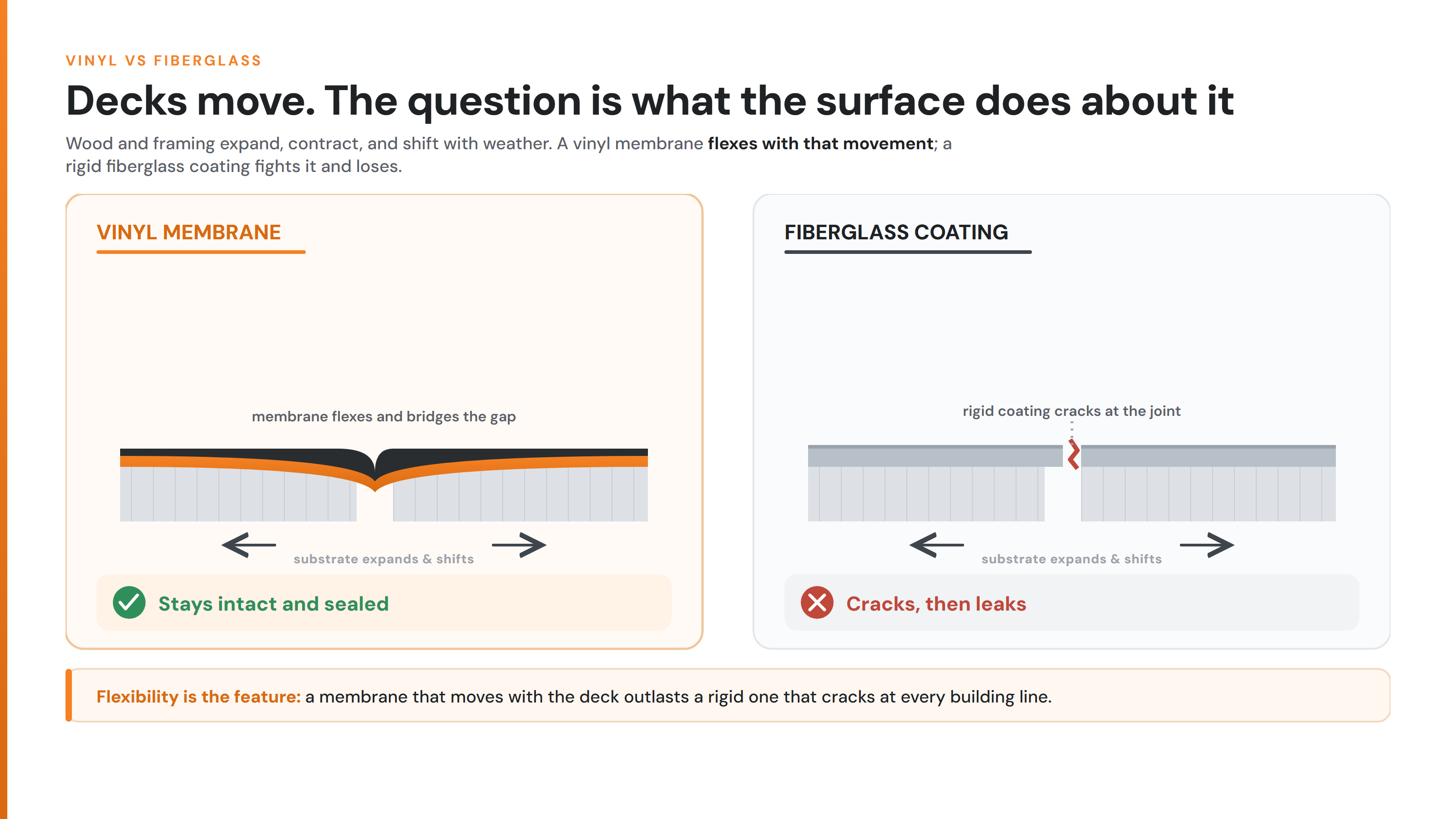
The most common fiberglass deck failure is cracking, and it happens because fiberglass is rigid while buildings move. Every structure experiences thermal expansion, settling, and vibration. A flexible membrane (like PVC vinyl) moves with the substrate. A rigid fiberglass shell resists that movement until stress concentrates along weak points, and then it cracks.
Fiberglass cracks most commonly appear:
- Along building lines where the deck meets the wall (differential movement between deck structure and building frame)
- At plywood joints where substrate panels meet (even with fibreglass tape reinforcement, these are stress concentration points)
- Around drain penetrations and post mounts (rigid material cannot flex around fittings)
- After freeze-thaw cycles in Canadian climates (water enters micro-cracks, freezes, expands, and widens them)
Once a fiberglass surface cracks, the repair is not simple. The cracked area must be ground out, re-glassed with new resin and cloth, and re-gel-coated. The repair is usually visible, and colour matching the existing gel coat is difficult. Valordek's PVC vinyl membrane avoids this failure mode entirely because PVC is inherently flexible. It moves with the substrate rather than fighting it.
What About Long-Term Maintenance Costs?
The upfront material cost of vinyl and fiberglass can be similar, but the 10-year total cost of ownership tells a different story. You can estimate your own project with the cost calculator.
| Cost Factor | Vinyl Membrane (10 years) | Fiberglass Coating (10 years) |
|---|---|---|
| Material (200 sqft balcony) | ~$748 (at $3.74/sqft) | ~$400-1,000 (resin + cloth + gel coat) |
| Installation labour | $300-800 (or DIY with Fuzzy-Back) | $800-1,500 (professional only, 2-3 days) |
| Routine maintenance | Under $500 total (soap, water, brush) | Under $500 total (soap, water) |
| Gel coat re-application | $0 (not applicable) | $500-1,500 (at year 8-12) |
| Crack repairs | $0 (flexible, does not crack) | $200-800 per repair (varies by severity) |
| Estimated 10-year total | $1,500-2,100 | $2,000-5,300 |
The cost difference comes down to two things: fiberglass requires professional installation (no DIY option), and it requires periodic gel coat maintenance that vinyl does not. In Canadian climates where freeze-thaw cracking is a real risk, fiberglass repair costs can add up significantly over a decade.
When Should You Choose Vinyl Over Fiberglass?
Vinyl membrane is the stronger choice for most balcony and rooftop deck applications, particularly in these situations:
- Cold climates. Valordek vinyl is rated to -40°C and remains flexible through freeze-thaw cycles. Fiberglass becomes brittle and prone to cracking in extreme cold.
- DIY installation. Valordek's Fuzzy-Back (68mil) membrane installs with contact cement, making it accessible for homeowners. Fiberglass requires professional application with resin mixing, cloth layup, and gel coating.
- Aesthetic variety. Vinyl membrane is available in wood look, stone look, and classic patterns. Fiberglass offers smooth, glossy finishes with limited colour options.
- Lowest long-term maintenance. No recoating, no gel coat re-application, no resin work. Just soap and water. See the full vinyl deck maintenance guide.
- Manufacturer warranty. Valordek provides a manufacturer-backed warranty (15 years waterproofing). Fiberglass warranties depend on the installer, not a manufacturer standard.
When Might Fiberglass Be Appropriate?
Fiberglass coating has its place in specific applications:
- Marine environments. Fiberglass has a long history in boat building and marine applications where its rigidity and resin chemistry are advantages.
- Custom shapes and transitions. Fiberglass can conform to unusual shapes (curved surfaces, complex transitions) because it is applied wet and molds to the substrate as it cures.
- High-gloss commercial aesthetics. The smooth, glossy gel coat finish is preferred in some commercial or institutional settings where a polished look is desired over textured patterns.
- Mild climates. In areas without freeze-thaw cycles, the cracking risk is reduced, making fiberglass more viable long-term.
For standard balconies and rooftop patios in Canadian climates, vinyl membrane remains the more practical and cost-effective waterproofing solution. The combination of flexibility, manufacturer warranty, aesthetic options, and maintenance simplicity makes it the preferred choice for residential and commercial deck waterproofing.
Frequently Asked Questions
Is fiberglass decking better than vinyl?
For most balcony and rooftop deck applications, vinyl membrane is the better choice. Vinyl is flexible (does not crack with substrate movement), requires no gel coat re-application, offers more aesthetic options, and carries manufacturer warranties up to 15 years. Fiberglass is better suited to marine environments and custom shapes where its rigid, moldable properties are advantages.
How long does fiberglass decking last?
Fiberglass deck coatings typically last 15 to 25 years with proper maintenance, including gel coat re-application every 8 to 12 years. In cold climates with freeze-thaw cycles, lifespan can be shorter due to cracking. Valordek vinyl membrane carries a 15-year waterproofing warranty and typically performs well beyond the warranty period without recoating.
Does fiberglass decking crack?
Yes, cracking is the most common fiberglass deck failure. Fiberglass is rigid and cannot flex with substrate movement, thermal expansion, or settling. Cracks typically appear at building lines, plywood joints, and drain penetrations. Vinyl membrane avoids this because PVC is flexible and moves with the structure.
Can you put vinyl decking over fiberglass?
Not directly. Vinyl membrane requires a clean, smooth substrate (5/8-inch T&G plywood or untreated concrete) for proper adhesion. If an existing fiberglass coating is sound and smooth, it may serve as a substrate after professional assessment, but the standard recommendation is to install on approved plywood.
What is the best waterproof membrane for a deck?
For balconies and rooftop patios, vinyl PVC membrane provides the best combination of waterproofing performance, flexibility, aesthetics, and long-term value. Valordek manufactures two vinyl membrane systems: Fuzzy-Back (68mil, 15-year warranty, adhesive install) for balconies and Smooth-Back (60mil, 15-year warranty, heat-welded, Class A and C fire rated) for rooftop decks. Both are CCMC and Intertek tested, exceeding code 37.54.95.