Vinyl decking is a continuous waterproof membrane applied directly to your deck surface. Composite decking is individual boards fastened to a frame. The key difference: vinyl creates a fully sealed waterproof barrier starting at $3.74/sqft, while composite boards leave gaps that allow water through. If your deck is over a living space, that distinction determines whether your structure stays dry or suffers water damage.
Both materials are marketed as low-maintenance alternatives to wood, but they solve fundamentally different problems. Vinyl membrane waterproofs the structure below it. Composite boards provide a walking surface that looks like wood. According to CCMC building code testing, Valordek vinyl membrane exceeds code standard 37.54.95 for waterproofing performance, a certification that composite boards do not carry because they are not waterproofing products.
This guide breaks down every factor that matters: waterproofing, cost, durability, maintenance, installation, warranty, and aesthetics. By the end, you will know exactly which material fits your project. If waterproofing is critical, start with Valordek's vinyl decking systems.
What Is Vinyl Decking?
Vinyl decking is a PVC membrane manufactured in rolls (72 inches wide, up to 480 lineal feet per master roll) and bonded directly to a plywood or concrete substrate. The membrane covers the entire deck surface, edges, and transitions, creating a continuous waterproof envelope with no gaps or exposed seams.
The material is engineered for outdoor use: UV-stabilized PVC rated from -40C to 80C, Intertek-tested, and backed by waterproofing warranties up to 15 years. According to Intertek testing data, Valordek vinyl membrane meets Class A and C fire ratings in its heat-welded product line, making it suitable for projects that require fire code compliance.
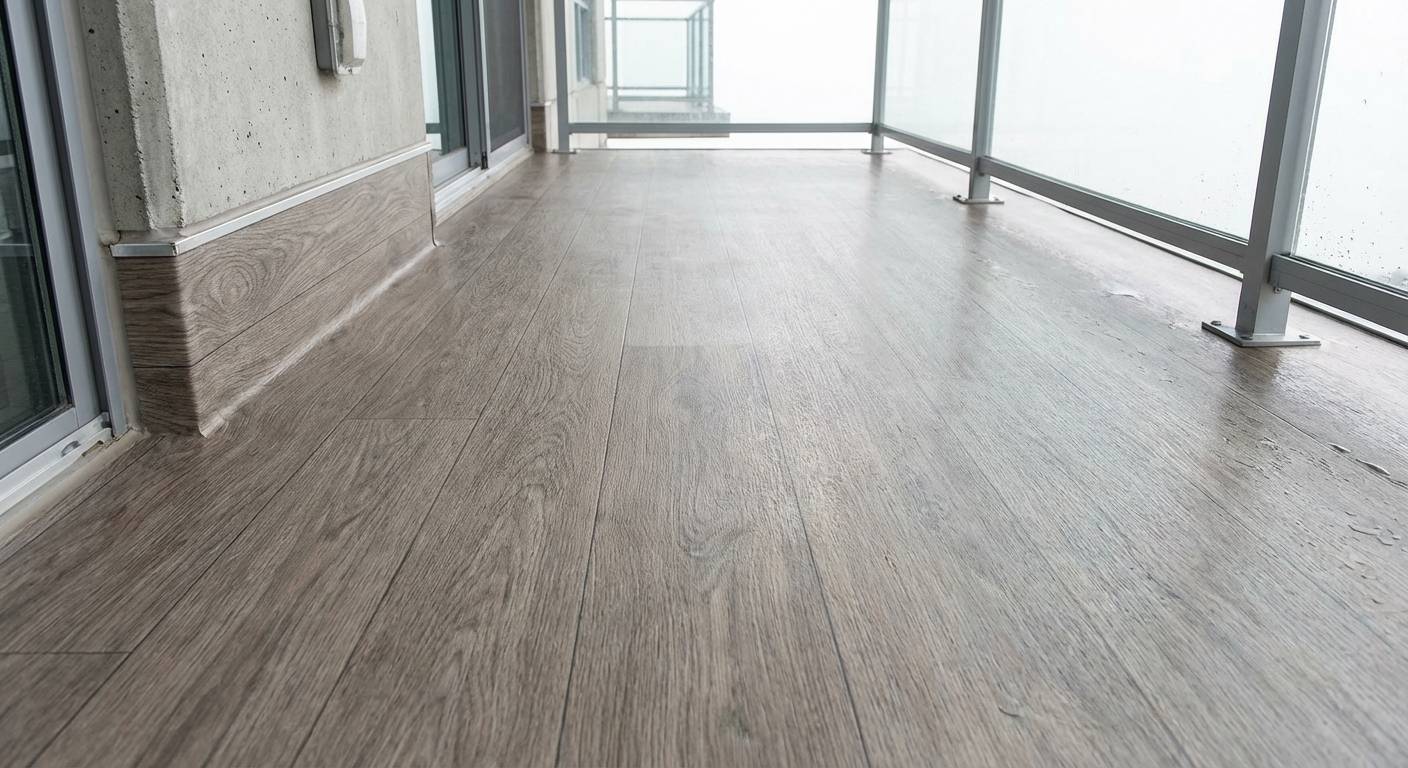
Vinyl decking is available in multiple style lines. Valordek offers Wood Look (3 colours), Stone Look (2 colours), and Classic Look (6 colours), giving homeowners and contractors 11 design options across both product lines. From a normal viewing distance, wood-look vinyl decking is visually similar to real wood planking, but it delivers full waterproofing that boards cannot provide.
Primary applications: Balconies and rooftop patios where the deck surface sits above a living space, carport, or walkway.
What Is Composite Decking?
Composite decking is made from a mixture of wood fibres and plastic (typically polyethylene or polypropylene). It comes as individual boards that are screwed or clipped to a frame structure, similar to how traditional wood decking is built. Major brands include Trex, TimberTech, and Fiberon.
Composite boards are marketed as low-maintenance because they do not require the annual staining and sealing that wood demands. They come in a wide range of colours and textures, and many mimic the look and feel of natural wood convincingly.
What composite does not do: Composite decking is not waterproof. Water passes freely through the gaps between boards. If your deck sits above a room, garage, or walkway, composite boards will not protect that space from rain or snowmelt. You would need to install a separate drainage or waterproofing system underneath the boards, adding significant cost and complexity to the project.
Primary applications: Ground-level decks, backyard patios, and outdoor living areas where waterproofing the space below is not a concern.
Head-to-Head Comparison Table
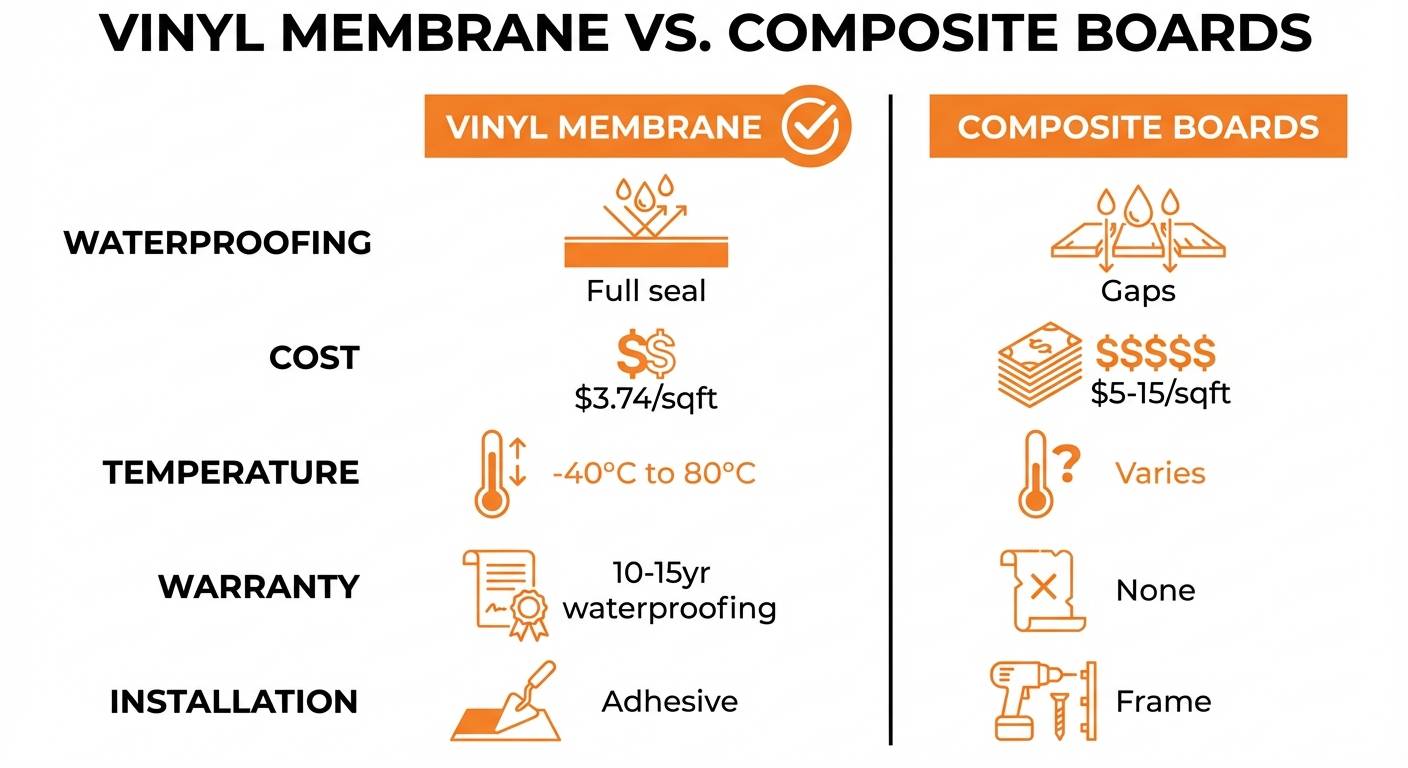
| Feature | Vinyl Decking (Membrane) | Composite Decking (Boards) |
|---|---|---|
| Waterproofing | Fully waterproof continuous membrane | Not waterproof. Gaps between boards allow water through |
| Best Application | Balconies, rooftop patios (over living space) | Ground-level decks (no space below to protect) |
| Maintenance | Soap and water. Annual sealant inspection | Occasional cleaning. No staining needed |
| Material Cost | Starting at $3.74/sqft (membrane only) | $5 to $15/sqft (boards only, varies by brand and tier) |
| Installation | Adhesive-bonded to substrate (Fuzzy-Back is DIY-friendly). Heat-welded for commercial (Smooth-Back, professional only) | Screwed or clipped to frame. Requires framing structure |
| Durability | -40C to 80C rated. UV-stabilized PVC with reinforced scrim | Varies by brand. Some fade, stain, or scratch over time |
| Warranty | 10 to 15 years waterproofing + 5 years appearance (Valordek) | 25 to 50 years structural (varies by brand). No waterproofing warranty |
| Aesthetics | Wood look, stone look, and classic patterns. 11 colours (Valordek) | Wood-grain textures. Wider colour range across brands |
| Structural Protection | Protects the structure below from water infiltration | Does not protect the structure below |
Is Vinyl Decking Better Than Composite?
Neither material is universally "better." They are designed for different applications. The right choice depends on one question: is there a living space, room, or walkway below your deck?
Vinyl decking is engineered to waterproof. According to CCMC code testing, Valordek vinyl exceeds standard 37.54.95 for waterproofing integrity. Every square foot of the membrane is sealed to the substrate, and seams are bonded with adhesive or heat-welded shut. Water has no path through the surface.
Composite decking is engineered to look and feel like wood without the maintenance burden. It excels in that role. The boards themselves resist rot and insects better than natural wood, and many brands offer 25+ year structural warranties. But those warranties cover the boards, not the space beneath them.
If your project requires waterproofing (any elevated deck over a living space), vinyl membrane is the correct product. If waterproofing is irrelevant (ground-level outdoor living), composite gives you a wider selection of textures and the feel of individual planks underfoot.
How Do Costs Compare Between Vinyl and Composite Decking?
Vinyl decking membrane starts at $3.74/sqft for the material. That is the base cost for Valordek vinyl before adhesive, trim, and installation labour. For a typical 100 sqft balcony, the membrane cost is approximately $374.
Composite decking boards range from $5 to $15/sqft for material, depending on the brand and product tier. Entry-level composite (Trex Enhance, for example) sits around $5 to $7/sqft, while premium lines (Trex Transcend, TimberTech Pro) run $10 to $15/sqft. Composite also requires a frame structure, which adds lumber and hardware costs that vinyl does not.
Total cost of ownership over 10 years further favours vinyl for waterproof applications. Vinyl membrane requires minimal maintenance (soap and water cleaning, annual sealant check) and carries a 10 to 15 year waterproofing warranty. Composite decking does not eliminate the need for a separate waterproofing system on elevated decks. When you factor in the cost of adding under-deck drainage or a waterproofing membrane beneath composite boards, the total project cost for composite on a balcony often exceeds vinyl by 40% to 60%.
For ground-level decks where waterproofing is not needed, composite may be the more practical investment despite the higher material cost, because it provides the plank-style surface that many homeowners prefer for outdoor living spaces.
Is Composite Decking Waterproof?
No. Composite decking boards are water-resistant, not waterproof. The boards themselves will not absorb water the way untreated wood does, but composite decking is installed with gaps between boards for drainage and thermal expansion. Water passes through those gaps freely.
This is the most common and most expensive misunderstanding in the decking industry. Homeowners install composite boards on a balcony over a living space, assume the boards keep water out, and discover water damage months or years later. The repair costs for water-damaged substructure, mould remediation, and interior ceiling/wall repair typically run into thousands of dollars.
According to building science principles, any deck over an occupied space requires a continuous waterproof membrane, not a board system with gaps. Vinyl decking membrane provides that continuous barrier. Composite boards do not.
How Long Does Each Material Last?
Valordek vinyl decking carries a 10-year waterproofing warranty (Fuzzy-Back, 68mil) or 15-year waterproofing warranty (Smooth-Back, 60mil), plus 5 years of appearance coverage on both lines. The PVC material is UV-stabilized and rated for temperature extremes from -40C to 80C, which covers even the harshest Canadian winters and summer heat.
Composite decking warranties vary widely by brand. Premium composite lines offer 25 to 50 year structural warranties, which is longer than vinyl's waterproofing warranty on paper. However, these warranties typically cover warping, cracking, and structural failure of the boards themselves. They do not cover fading (which is common), staining, mould growth on the surface, or any damage to the structure below the boards.
The practical lifespan comparison depends on application. On an elevated balcony, vinyl membrane protects the substructure for 10 to 15 warranted years. Composite boards on the same balcony without a separate waterproofing system can allow substructure damage within 2 to 5 years of installation, even while the boards themselves remain structurally sound.
What Are the Downsides of Vinyl Decking?
Transparency builds trust, so here is where composite has advantages.
Aesthetics and feel: Vinyl membrane is a smooth, continuous surface. You do not get the feel of individual wood planks underfoot. For homeowners who prioritize the tactile experience of walking on boards, composite delivers that better. Composite also offers a wider overall colour range across brands (dozens of options) compared to vinyl membrane (Valordek offers 11 colours across three style lines).
Perception: Vinyl decking membrane is less well-known to general consumers than composite brands like Trex, which spend heavily on national advertising. Many homeowners have never heard of vinyl membrane as a decking option, which means more education is required during the sales process.
Ground-level applications: Vinyl membrane is purpose-built for waterproofing. If you have a ground-level deck where water draining through gaps is acceptable, you are paying for waterproofing capability you do not need. Composite is a more natural fit for ground-level projects.
Installation surface: Vinyl membrane requires a smooth, solid substrate (5/8 tongue-and-groove plywood or untreated concrete). Composite installs on a frame structure with open air beneath the boards. If your existing deck has a frame but no solid substrate, adding plywood for vinyl membrane is an extra step.
When to Choose Vinyl Decking
Choose vinyl membrane when waterproofing determines the success or failure of your project.
- Balconies over living space: This is the primary application. Rain, snowmelt, and standing water stay on the membrane surface and drain to scuppers or drains. The room below stays dry. Valordek vinyl is installed on balconies across Western Canada through a network of 19 authorized dealers.
- Rooftop patios requiring fire ratings: Valordek Smooth-Back membrane is Class A and C fire rated per Intertek testing, meeting building code requirements for commercial rooftop installations.
- Replacing failed waterproofing: Cracked coatings, peeling deck paint, and failed older membranes are common on aging balconies. Vinyl membrane applied over a properly prepared substrate is a long-term solution backed by a 10 to 15 year warranty.
- Budget-sensitive projects: At $3.74/sqft for the membrane material, Valordek vinyl costs less per square foot than most composite board options, and it includes waterproofing that composite does not provide.
The Expensive Mistake: Composite Boards on Elevated Decks
This section exists because this mistake happens constantly. A homeowner or even a contractor installs composite boards on an elevated balcony without a waterproofing membrane, assuming the boards will keep water out.
They will not. Composite boards are designed with gaps for drainage and thermal expansion. Water passes through those gaps on every rainstorm. Over 12 to 24 months on an unprotected elevated deck, the plywood substructure begins to rot, mould develops in the ceiling cavity below, and water stains appear on the interior ceiling.
According to restoration industry data, water damage remediation for a single balcony leak averages $3,000 to $10,000 depending on the extent of substructure damage and mould growth. A Valordek vinyl membrane installed correctly on that same balcony costs a fraction of that and prevents the damage entirely with a 10 to 15 year warranty.
The rule is simple: if your deck is above a living space, you need a waterproof membrane. Not boards.
Frequently Asked Questions
Is vinyl decking more expensive than composite?
No. Valordek vinyl membrane starts at $3.74/sqft for the material. Most composite boards cost $5 to $15/sqft. For elevated decks that require waterproofing, vinyl is typically the less expensive option because composite would need a separate waterproofing system underneath, adding significant cost to the project.
Can I install vinyl decking myself?
Yes, for adhesive-applied systems. Valordek Fuzzy-Back (68mil) is installed with contact adhesive on a plywood substrate and is DIY-friendly for homeowners. Heat-welded systems like Valordek Smooth-Back (60mil) require professional installation with specialized equipment. Both products are available through 19 Valordek dealers across Western Canada.
Does vinyl decking look like real wood?
Valordek offers a Wood Look style line in three colours that closely replicates wood-grain patterns. From a normal viewing distance, the difference is minimal. However, vinyl membrane is a smooth continuous surface rather than individual planks, so the tactile experience is different from composite or real wood boards.
How long does vinyl decking last compared to composite?
Valordek vinyl decking carries a 10 to 15 year waterproofing warranty depending on the product line. Composite boards offer 25 to 50 year structural warranties. However, the warranty comparison is misleading because they cover different things. Vinyl warranties cover waterproofing performance. Composite warranties cover the boards themselves and do not cover water damage to the structure below.
Is vinyl decking slippery?
Vinyl decking membrane provides a textured walking surface designed for outdoor use. Valordek vinyl is rated for temperatures from -40C to 80C, and the surface texture is engineered for safe foot traffic in wet conditions. Like any outdoor surface, standing water should drain properly through the deck's drainage system.