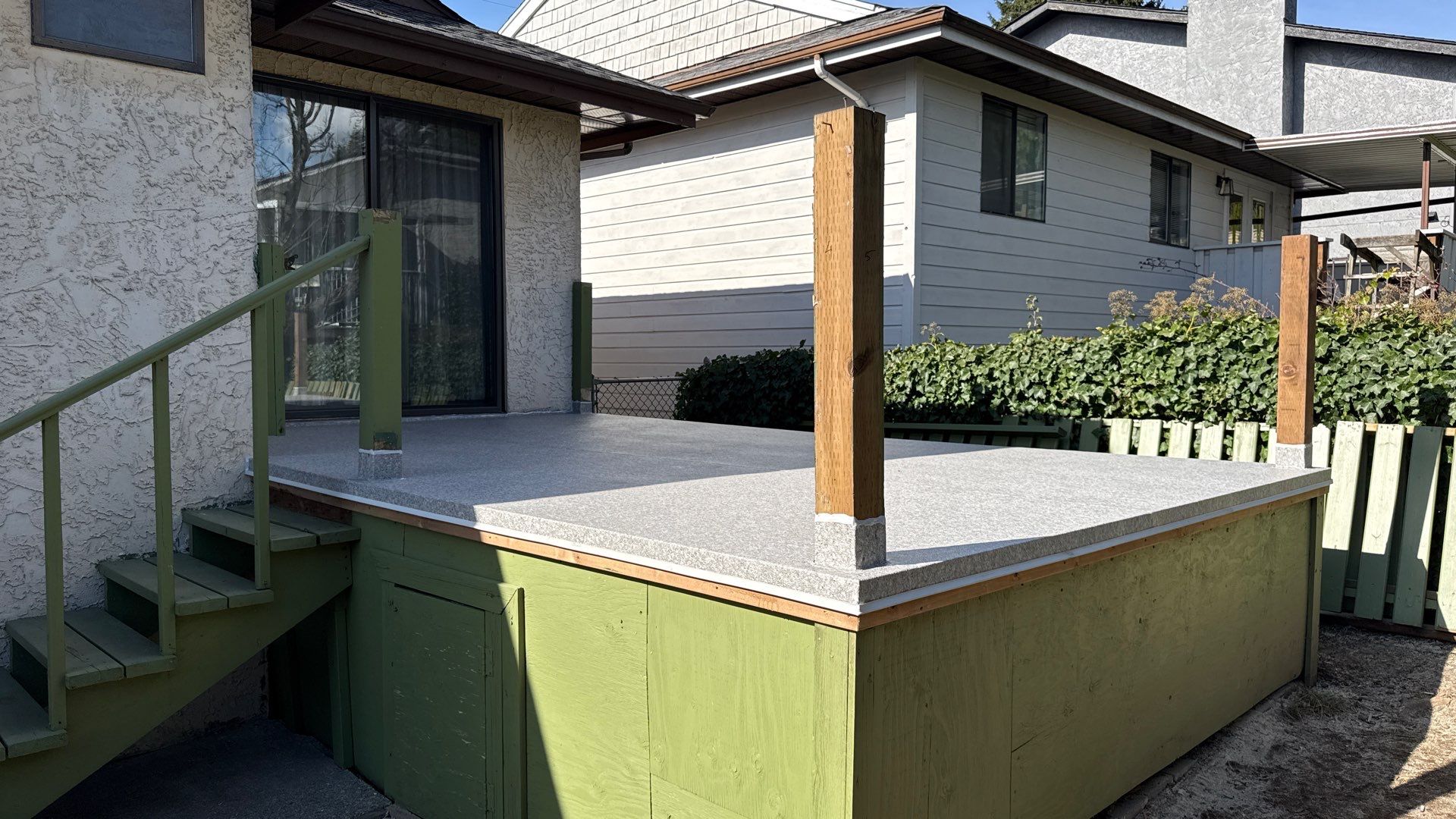
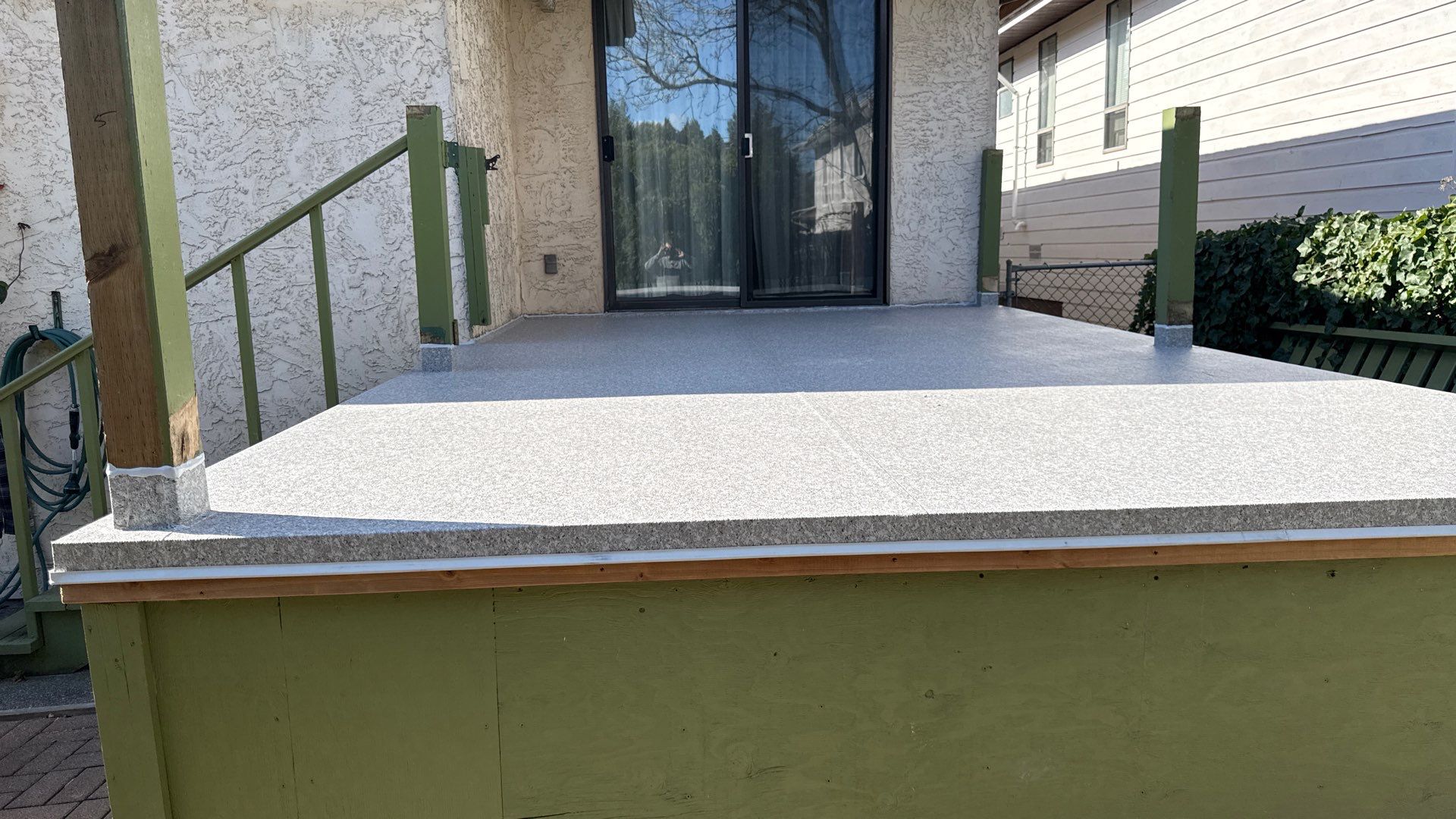
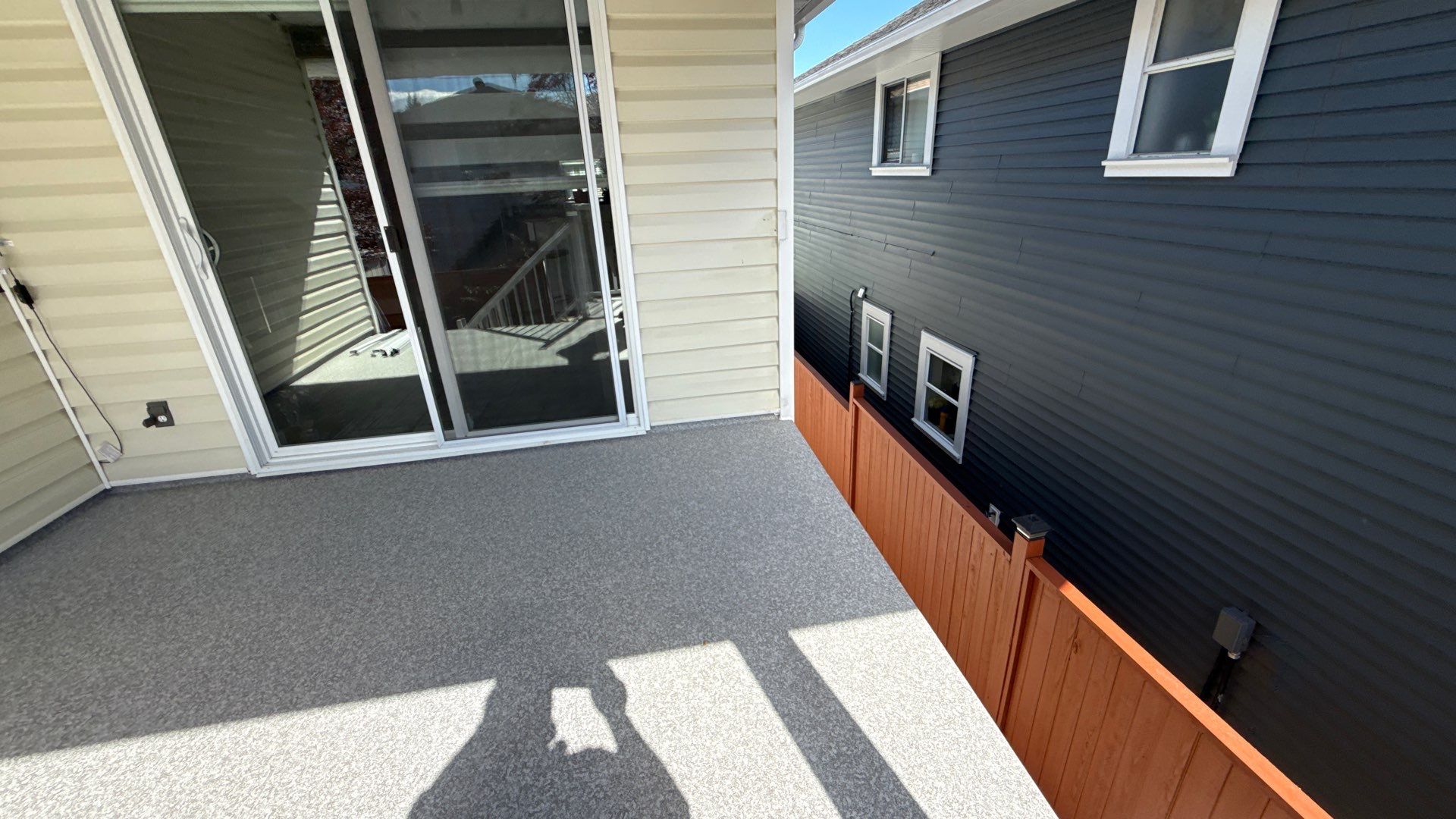
Vinyl and rubber (EPDM) membranes both waterproof outdoor decks, but they serve very different purposes. Vinyl deck membrane is engineered as a finished walking surface with built-in aesthetics, UV stability, and colour options. EPDM rubber membrane is a utilitarian waterproofing layer designed primarily for roofing, not as a surface people walk on daily. Valordek manufactures PVC vinyl deck membranes starting at $3.74 per square foot, with waterproofing warranties up to 15 years.
The distinction matters because choosing the wrong membrane type can mean either covering it with pavers at additional cost or living with a plain black surface that was never designed for foot traffic. For balcony waterproofing and rooftop patios where the membrane IS the finished floor, vinyl is purpose-built for the job. For hidden waterproofing layers underneath other surfaces, rubber has its place. This guide breaks down the real differences so you can choose the right membrane for your project.
What Is Vinyl Deck Membrane?
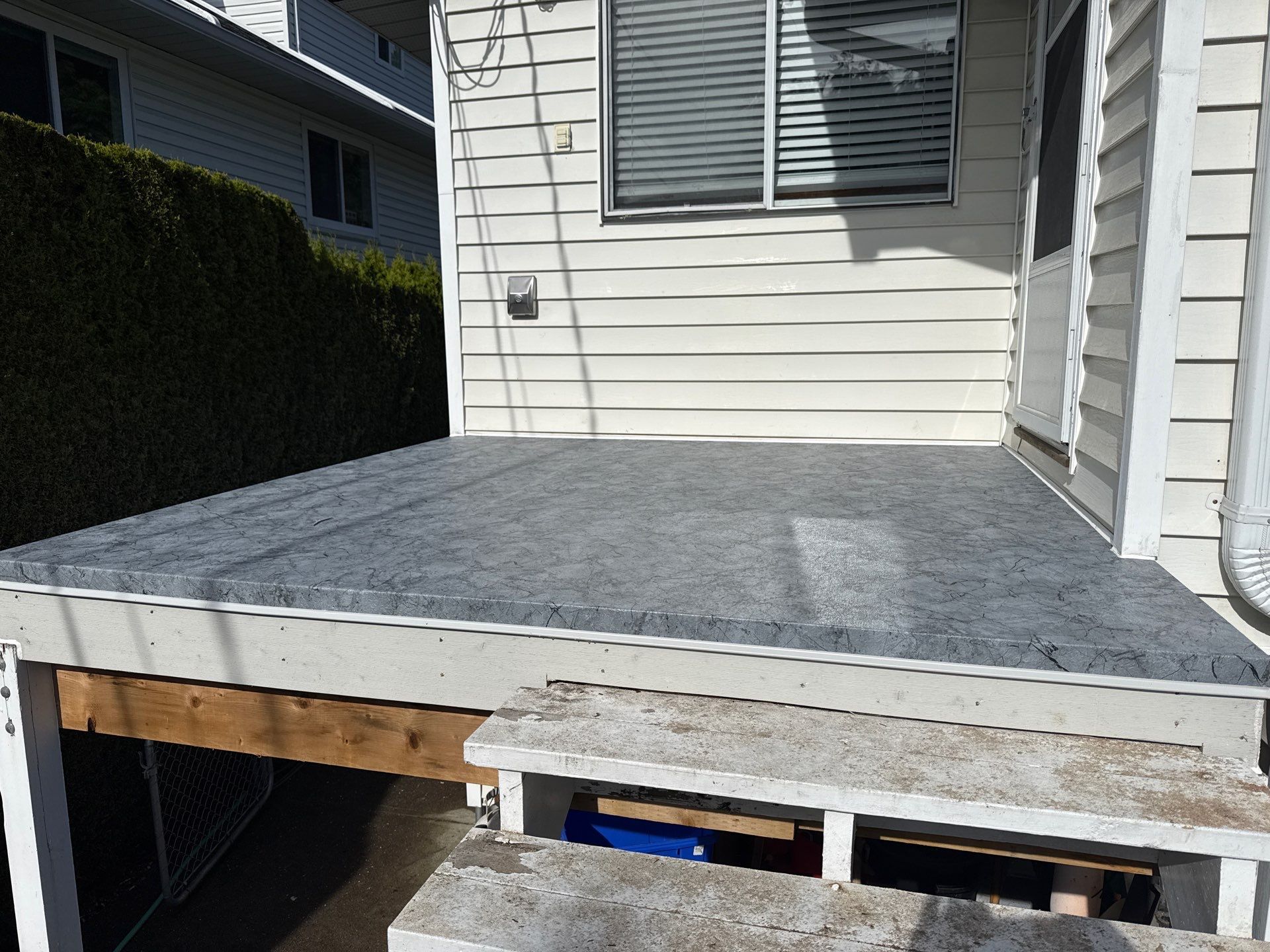
Vinyl deck membrane is a PVC sheet material manufactured in rolls, typically 72 inches wide, that bonds directly to plywood or concrete substrates using adhesive or heat welding. The membrane itself IS the finished deck surface. It comes in wood-look, stone-look, and classic patterns with multiple colour options. Valordek's vinyl membranes range from 60mil to 68mil thick, with PVC formulations that include UV screens and stabilizers rated for temperatures from -40°C to 80°C.
Installation depends on the product line. Adhesive-applied vinyl membrane uses contact cement to bond the fleece backing to the substrate, making it accessible for experienced DIY homeowners. Heat-welded vinyl membrane creates fully sealed PVC seams for commercial-grade waterproofing on rooftop applications. Both methods produce a continuous waterproof surface that sheds water to integrated drainage systems. For full product details, see Valordek's vinyl deck membrane page.
What Is Rubber (EPDM) Deck Membrane?
EPDM (ethylene propylene diene monomer) is a synthetic rubber membrane used primarily in flat roofing and commercial waterproofing. It typically comes in black sheets ranging from 45mil to 90mil thick. EPDM is glued or mechanically fastened to the substrate, with seams sealed using adhesive tape or liquid sealant rather than heat welding.
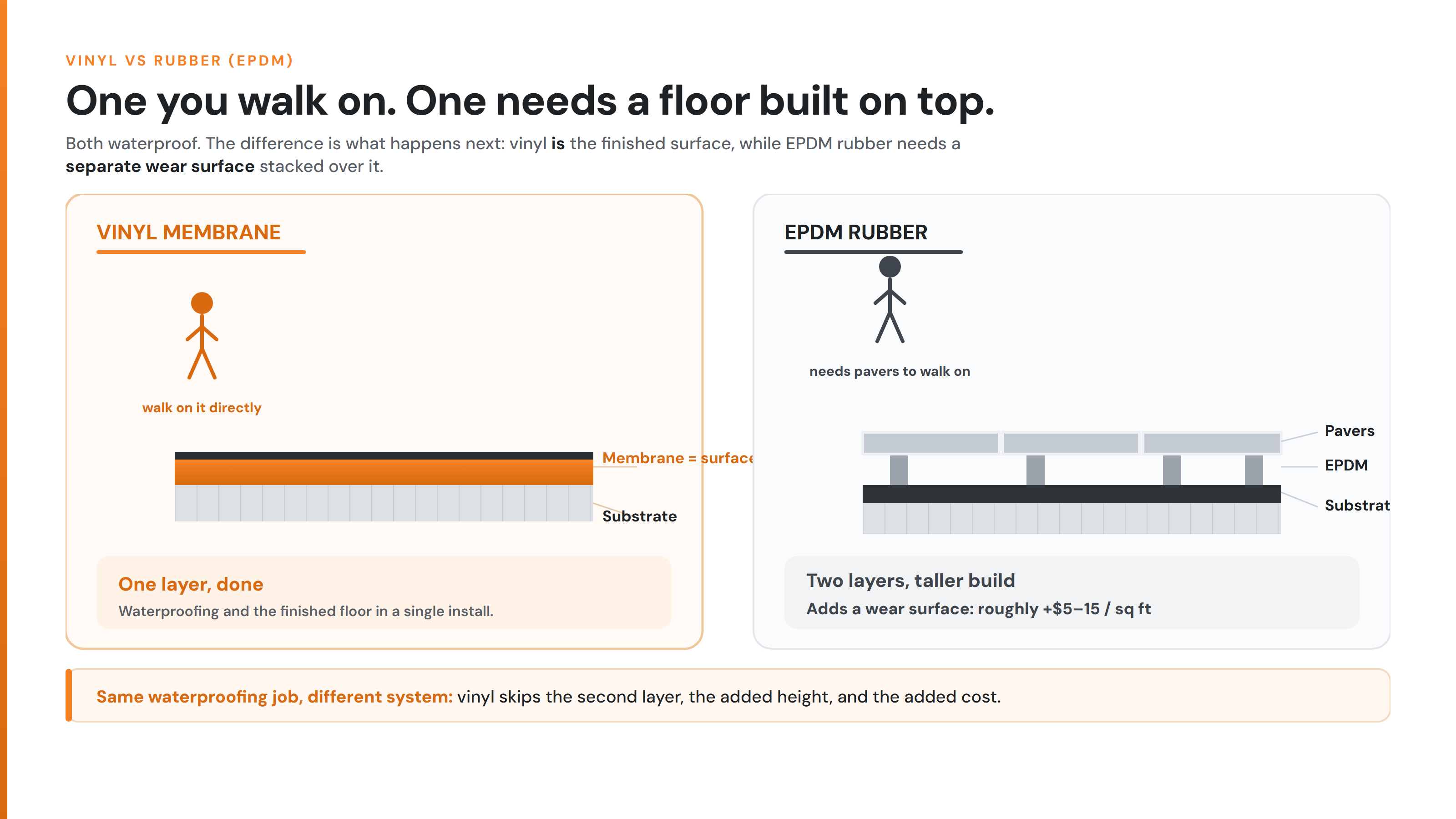
The critical distinction: EPDM was engineered as a roofing material, not a finished walking surface. When used on walkable decks, EPDM requires a protective covering on top, such as pavers, concrete tiles, or pedestals with decking boards. Walking directly on EPDM wears down the surface, compromises waterproofing performance, and creates a slip hazard. The membrane is also limited to plain black (or occasionally white), with no aesthetic patterns or colour choices.
Head-to-Head Comparison: Vinyl vs Rubber Deck Membrane
The following comparison covers the factors that matter most when choosing a waterproof decking membrane for balconies and rooftop patios. Each category highlights a clear difference between the two membrane types.
| Factor | Vinyl (PVC) Membrane | Rubber (EPDM) Membrane |
|---|---|---|
| Walkability | Designed as a finished walking surface | Not designed for foot traffic. Requires protective covering. |
| Waterproofing | Fully waterproof. Heat-welded or overlapped seams. | Fully waterproof. Adhesive-taped seams (weaker than heat-welded). |
| Aesthetics | Wood-look, stone-look, and classic patterns. 12 colour options. | Black or white only. No patterns or textures. |
| UV Resistance | PVC with UV screens and stabilizers. Colour-stable. | UV-resistant but degrades faster when exposed. No colour to fade. |
| Temperature Range | -40°C to 80°C (Valordek rated) | -45°C to 120°C (varies by manufacturer) |
| Slip Resistance | Textured surface designed for foot traffic | Smooth and slippery when wet |
| Membrane Cost | $3.74/sq ft (Valordek vinyl membrane) | $0.80 to $2.50/sq ft (EPDM material only) |
| Total Installed Cost | Membrane + adhesive + trim. Surface is complete. | Membrane + adhesive + protective covering (pavers, tiles, or decking). Add $5 to $15/sq ft for covering. |
| Seam Method | Heat-welded PVC (strongest) or adhesive overlap | Adhesive tape or liquid sealant (weaker bond) |
| Warranty | Up to 15-year waterproofing (Valordek) | 10 to 20 years (varies widely by manufacturer) |
| Maintenance | Soap and water. No resealing needed. | Periodic seam inspection. Resealing adhesive joints. |
| DIY Installation | Yes (adhesive-applied products) | Possible but not recommended for decks |
| Fire Rating | Class A and C available (Valordek Smooth-Back) | Varies. Not all EPDM products are fire rated. |
| Best For | Balconies, rooftop patios, walkable surfaces | Flat roofs, hidden waterproofing under other surfaces |
Why Walkability Changes Everything
The single biggest difference between vinyl and rubber deck membranes is whether the membrane itself is the finished surface. This one factor determines total project cost, aesthetic options, maintenance requirements, and long-term performance.
Vinyl deck membrane is manufactured as a walkable surface from the start. The PVC formulation includes texture for slip resistance, UV stabilizers for colour retention, and wear layers designed for daily foot traffic. When installation is complete, the deck is ready to use. No additional covering is needed.
EPDM rubber membrane requires a secondary surface on top for any deck that receives foot traffic. According to industry guidelines, walking directly on EPDM wears down the material, shortens its lifespan, and creates a slippery surface. The standard approach is to install pavers, concrete tiles, or a pedestal system with decking boards over the EPDM layer. This adds $5 to $15 per square foot in additional materials and labour, plus it raises the finished deck height, which can complicate door thresholds and railing connections.
For a 100-square-foot balcony, that means the "cheaper" EPDM membrane at $0.80 to $2.50 per square foot could end up costing more than vinyl once you add the required walking surface on top.
Seam Integrity: Heat-Welded vs Adhesive-Taped
Seams are where waterproofing membranes fail. The method used to join membrane sheets directly affects how long the waterproofing lasts. Heat-welded PVC seams create a molecular bond between vinyl sheets that is stronger than the membrane itself. According to CCMC and Intertek testing, properly welded PVC seams maintain waterproof integrity for the full warranty period.
EPDM seams rely on adhesive tape or liquid sealant to join sheets together. These adhesive bonds degrade over time, especially in climates with wide temperature swings. Adhesive-taped seams are the most common failure point in rubber membrane installations. When a seam lets go on a balcony or rooftop patio, water penetrates to the substrate below, causing structural damage, mould growth, and expensive repairs.
Valordek's heat-welded Smooth-Back membrane carries a 15-year waterproofing warranty backed by the manufacturer. The adhesive-applied Fuzzy-Back membrane uses overlapped seams with contact cement bonding, backed by a 15-year waterproofing warranty. Both methods outperform adhesive-taped EPDM seams for long-term reliability on walkable surfaces.
Aesthetic Options: Finished Surface vs Hidden Layer
Vinyl deck membrane offers 12 colour and pattern options across three style lines: wood-look patterns that replicate natural timber grain, stone-look patterns with marble textures, and classic solid tones. Homeowners choose a vinyl membrane that complements their building's exterior without needing any additional surface treatment.
EPDM rubber membrane comes in black. Some manufacturers offer white EPDM for reflective roofing, but neither option is designed to be seen. For a deck or balcony where the surface is visible and contributes to the living space, EPDM offers no aesthetic value on its own. Any visual appeal must come from the covering installed on top, adding cost and complexity.
This difference is especially significant for balconies. A balcony is an extension of the living space, visible through patio doors and used as an outdoor room. The deck surface matters to homeowners the same way flooring matters inside. Valordek's wood-look and stone-look vinyl membranes are specifically manufactured to serve as attractive, finished surfaces, and you can preview any colour on your own deck.
When to Choose Vinyl Deck Membrane
Vinyl deck membrane is the right choice when the membrane itself will be the finished walking surface. This applies to most residential and many commercial deck waterproofing projects.
- Balconies: The primary application. Vinyl provides waterproofing and a finished floor in one product. No need for tiles or pavers on top.
- Rooftop patios: Heat-welded vinyl membrane with Class A and C fire ratings meets commercial building codes while providing an attractive, walkable surface.
- Projects where aesthetics matter: If the deck surface is visible and part of the living space, vinyl's colour and pattern options deliver value that rubber cannot.
- DIY installations: Adhesive-applied vinyl membrane (like Valordek's Fuzzy-Back line) can be installed by experienced homeowners on balconies, saving labour costs.
Explore Valordek's complete vinyl decking system to see product lines, specifications, and style options for your project.
When to Choose Rubber (EPDM) Membrane
Rubber membrane makes sense for specific waterproofing applications where the membrane will be hidden, not walked on directly, or covered by another surface.
- Flat roof waterproofing: EPDM's primary application. Hidden under insulation or ballast, it provides reliable waterproofing without needing aesthetics or walkability.
- Under pedestal deck systems: When pavers or deck tiles will be installed on adjustable pedestals, EPDM works as the waterproofing layer underneath.
- Budget-constrained hidden applications: At $0.80 to $2.50 per square foot for material, EPDM costs less than vinyl when aesthetics and walkability are not required.
- Extreme heat environments: EPDM handles temperatures up to 120°C, higher than vinyl. For industrial rooftop applications with extreme heat exposure, rubber may be more appropriate.
Cost Comparison: The Full Picture
EPDM appears cheaper on a per-square-foot basis, but the total installed cost tells a different story for walkable deck applications. Here is what a typical 100-square-foot balcony project looks like with each membrane type.
| Cost Component | Vinyl Membrane (Valordek) | EPDM Rubber + Pavers |
|---|---|---|
| Membrane material | $374 ($3.74/sq ft) | $80 to $250 ($0.80 to $2.50/sq ft) |
| Adhesive and trim | $50 to $100 | $30 to $60 |
| Walking surface | Included (membrane IS the surface) | $500 to $1,500 (pavers, pedestals, or tiles) |
| Installation labour | DIY possible, or $200 to $400 professional | $300 to $600 (membrane + covering) |
| Total estimate | $424 to $874 | $910 to $2,410 |
For a walkable balcony, vinyl membrane is typically the more economical choice when you account for the full system cost. The "savings" on EPDM material disappear once you add the required walking surface. For a deeper breakdown of vinyl decking costs, see our complete cost guide or estimate your project with the cost calculator.
Durability and Lifespan
Both vinyl and EPDM membranes can last over a decade when properly installed and maintained, but their durability profiles differ in important ways.
Vinyl membrane is engineered with UV screens and stabilizers that protect against sun degradation. Valordek's PVC formulation is rated for -40°C to 80°C, covering the full range of Canadian climate conditions. The membrane requires minimal maintenance: soap and water cleaning a few times per year. No resealing, recoating, or refinishing is needed. Valordek backs its vinyl membranes with a 15-year waterproofing warranty on both product lines (see also how long vinyl decking lasts).
EPDM rubber can last 20 to 30 years on a flat roof where it is protected from foot traffic and covered by insulation or ballast. However, exposed EPDM on a walkable deck degrades faster. Foot traffic abrades the surface, UV exposure accelerates aging when the membrane is uncovered, and adhesive-taped seams weaken over time. The effective lifespan of EPDM on a walkable deck is significantly shorter than on a protected roof, often requiring seam repairs within 5 to 10 years.
Frequently Asked Questions
Is rubber or vinyl better for waterproofing a balcony?
Vinyl deck membrane is better for balcony waterproofing because it serves as both the waterproof layer and the finished walking surface. EPDM rubber requires a separate covering for foot traffic, adding $5 to $15 per square foot. Valordek vinyl membrane starts at $3.74 per square foot and includes a 15-year waterproofing warranty for balcony applications.
Can you walk directly on EPDM rubber membrane?
EPDM rubber membrane is not designed for regular foot traffic. Walking on it wears down the surface, shortens its lifespan, and creates a slip hazard when wet. Industry guidelines recommend covering EPDM with pavers, tiles, or a pedestal deck system for any walkable application. Vinyl deck membrane, by contrast, is engineered specifically as a walkable surface.
How much does rubber deck membrane cost compared to vinyl?
EPDM rubber membrane costs $0.80 to $2.50 per square foot for material alone. Valordek vinyl membrane is $3.74 per square foot. However, EPDM requires a walking surface on top ($5 to $15/sq ft additional), making vinyl the more economical choice for walkable decks. A 100-square-foot balcony typically costs $424 to $874 with vinyl versus $910 to $2,410 with EPDM plus pavers.
Which membrane has stronger seams?
Heat-welded PVC vinyl seams are stronger than adhesive-taped EPDM seams. Heat welding creates a molecular bond between vinyl sheets that exceeds the strength of the membrane itself. EPDM seams use adhesive tape that can degrade over time, especially in climates with wide temperature fluctuations. Valordek's heat-welded Smooth-Back membrane carries a 15-year waterproofing warranty.
Does EPDM come in colours or patterns?
No. EPDM rubber membrane is available in black or white only, with no decorative patterns or textures. Vinyl deck membrane from Valordek comes in 12 colours across wood-look, stone-look, and classic pattern options, all designed as attractive finished surfaces for outdoor living spaces.