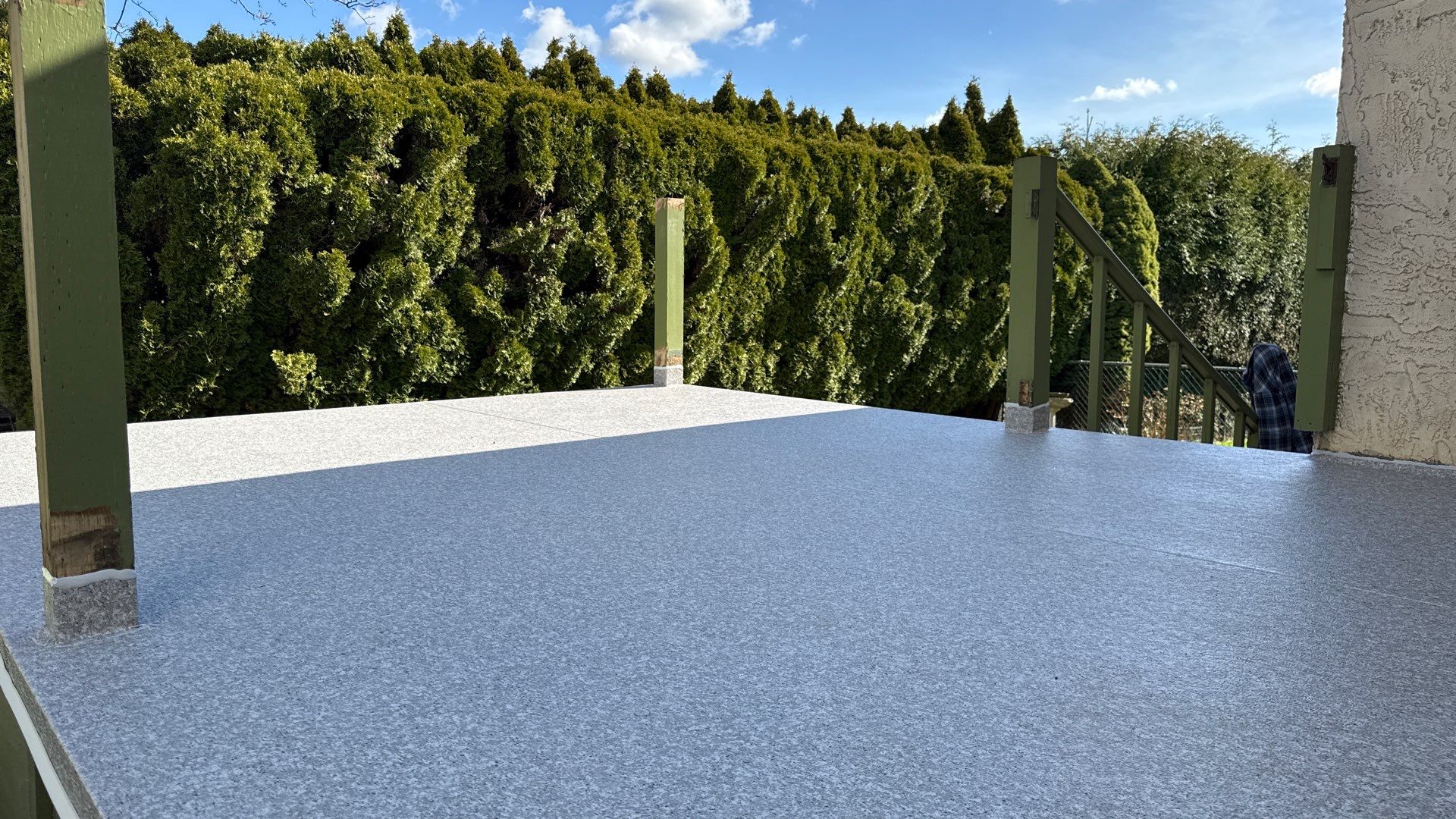
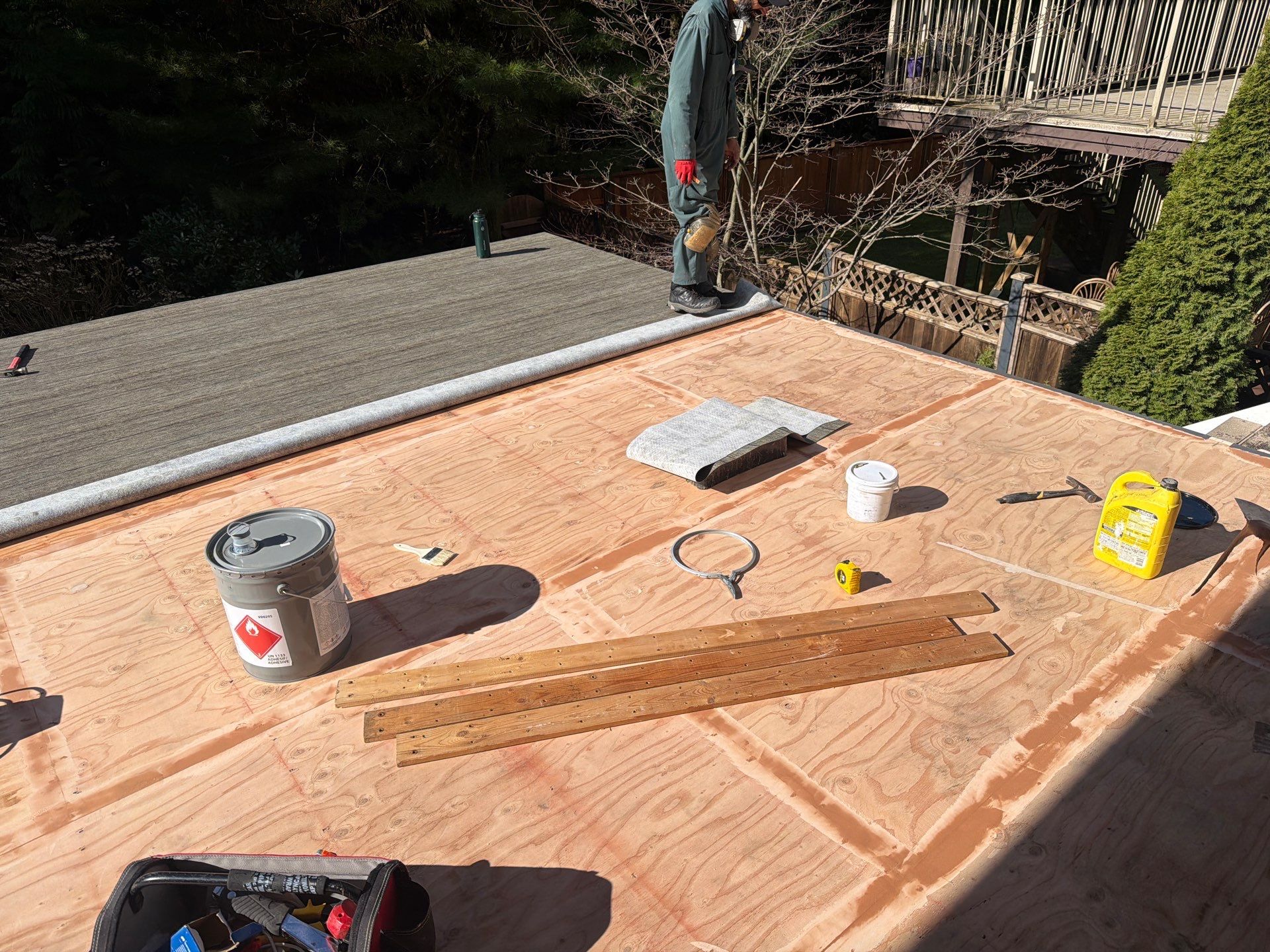
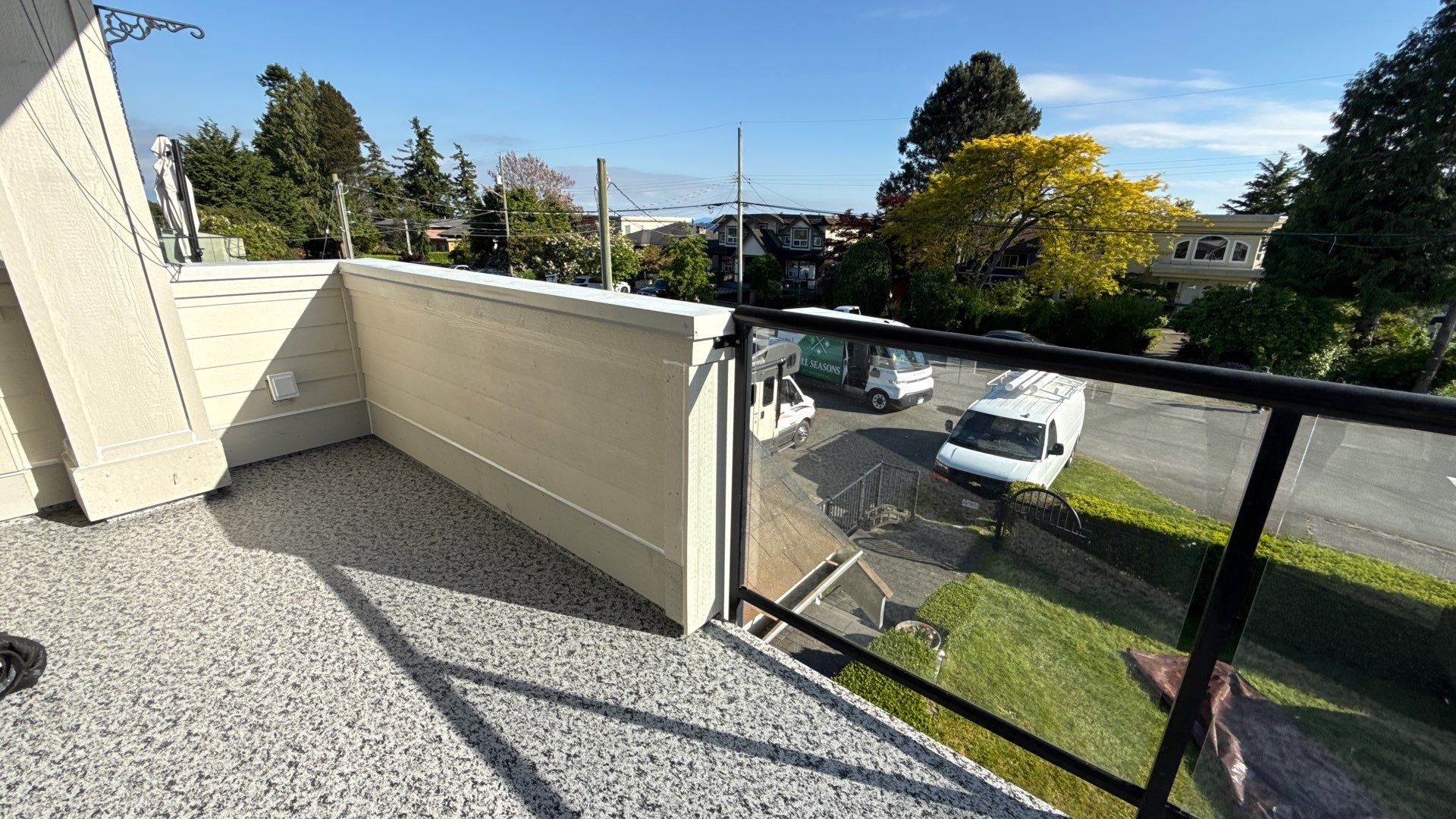
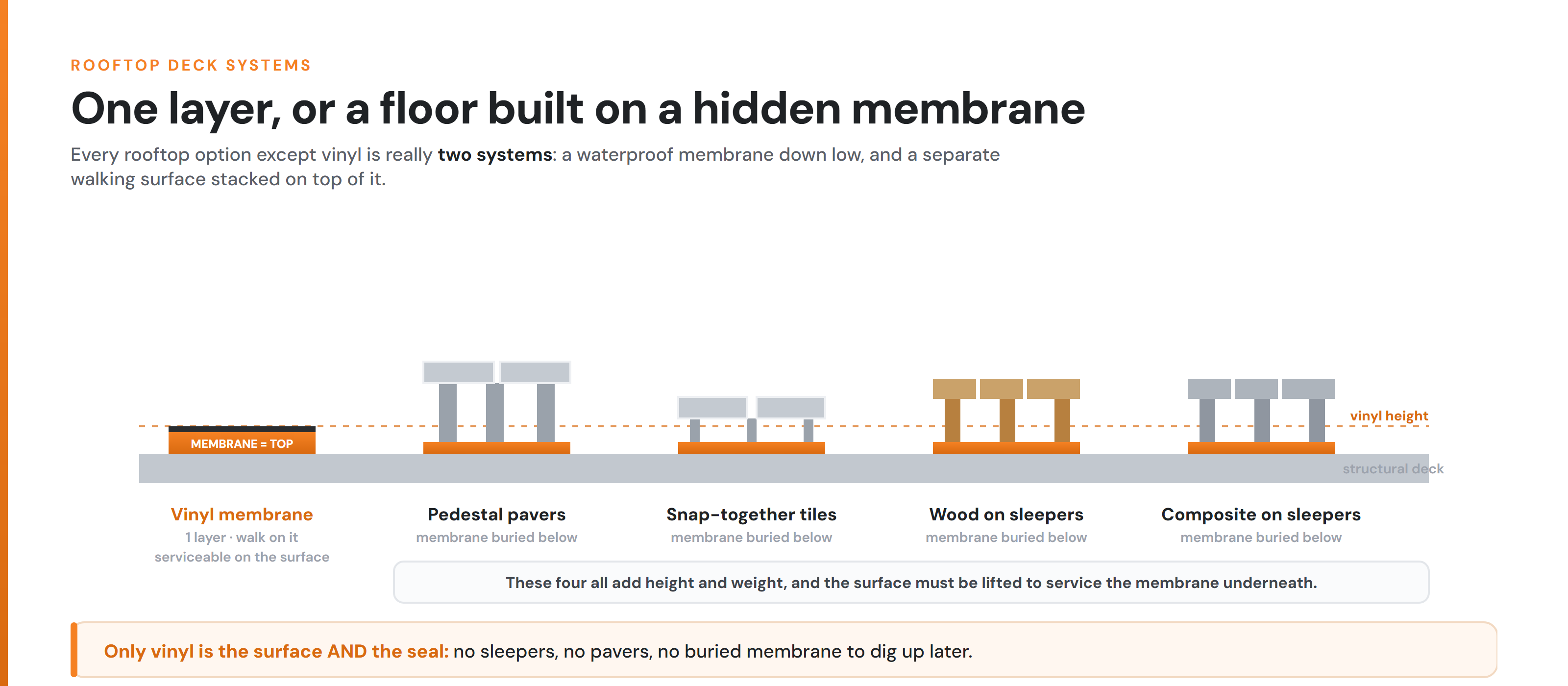
The best rooftop deck materials combine a waterproof membrane underneath with a fire-rated walking surface above. Vinyl deck membrane is the most cost-effective single-layer option because it serves as both the waterproofing AND the walking surface, eliminating the need for separate systems. Pavers, deck tiles, and wood are walking surfaces that require a separate waterproof membrane underneath. Building codes can set fire-rating requirements for roofs and decks over occupied space, so check what your local code requires.
If you are planning a rooftop deck, the material choice is more complicated than picking a colour. A rooftop deck has to do three things at once: waterproof the structure below, support foot traffic safely, and meet building code for fire and structural load. The wrong material choice causes leaks into the living space below, code compliance failures, or expensive replacements within 5-10 years. This guide explains the real options, their tradeoffs, and which one fits which type of rooftop deck. For Valordek's vinyl deck membrane lineup, see our vinyl decking hub.
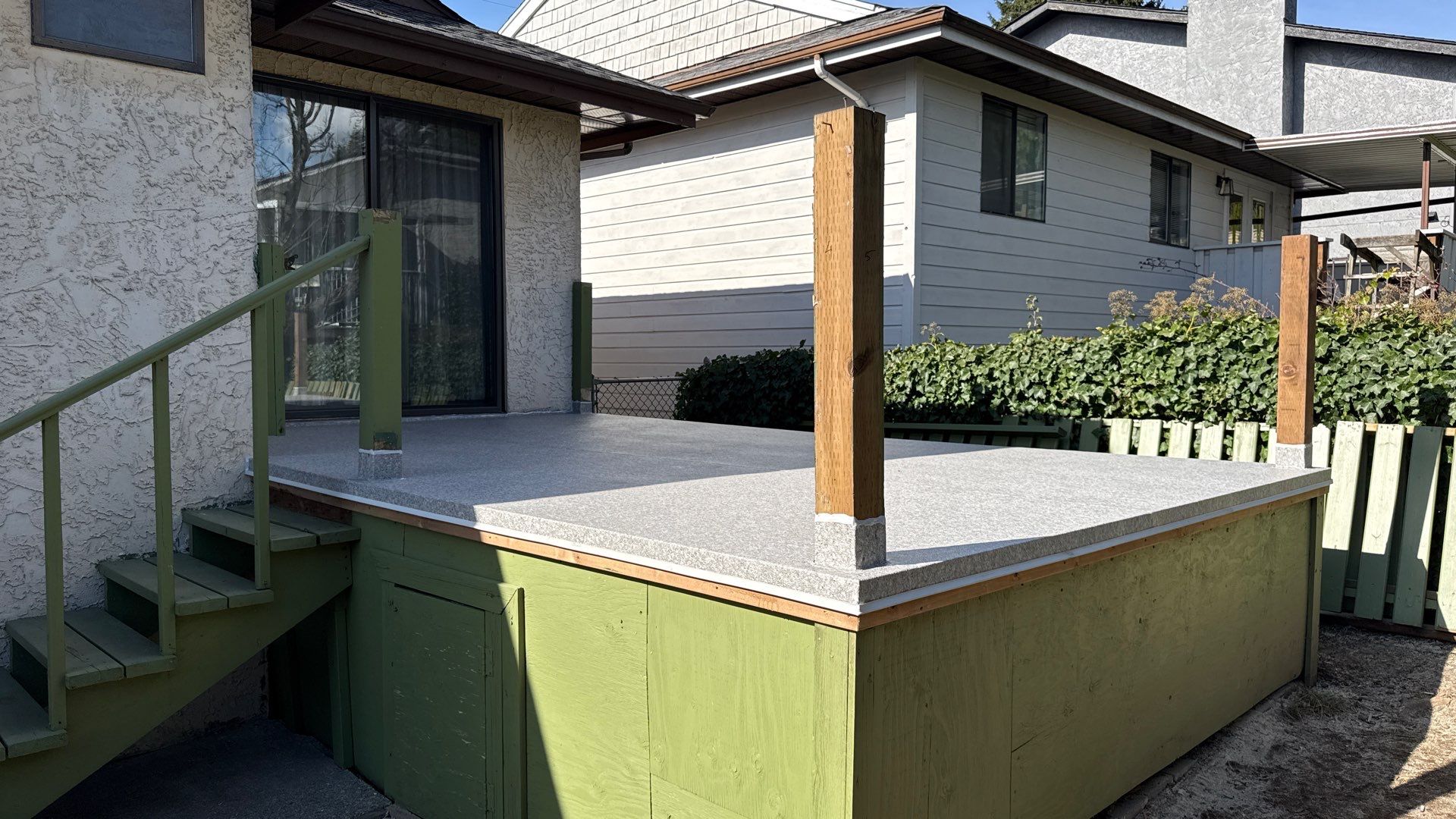
What makes a rooftop deck different from a ground-level deck
Rooftop decks have requirements that ground-level decks don't. The deck surface IS the roof. There is no second chance for waterproofing. A failure on a ground-level deck means standing on dirt. A failure on a rooftop deck means water in the room below, drywall damage, mould, and potentially structural repairs costing tens of thousands of dollars.
The four critical differences:
- Waterproofing is non-negotiable. A rooftop deck has to be 100% waterproof, not water-resistant. Composite boards with gaps don't waterproof. Wood decking doesn't waterproof. The deck surface OR a layer underneath has to fully shed water away from the structure.
- Fire ratings are usually required by code. Most municipal building codes require Class A or Class C fire-rated walking surfaces on rooftop decks above occupied space. This excludes a lot of common materials.
- Wind exposure is higher. Rooftop decks see more wind than ground-level decks. Loose-laid systems (deck tiles, pedestal pavers) need to be designed for the wind loads at the deck height.
- Drainage has to actively move water off. Ground decks let water drain into the dirt. Rooftop decks have to channel water to scuppers or drains. Slope, drainage location, and surface design all matter.
These four constraints eliminate most decking materials from the conversation immediately. Wood, untreated composite, indoor LVP, and solid concrete pavers without a waterproof membrane underneath are not viable rooftop deck materials on their own. They have to be combined with a separate waterproofing layer.
Vinyl deck membrane (single-layer system)
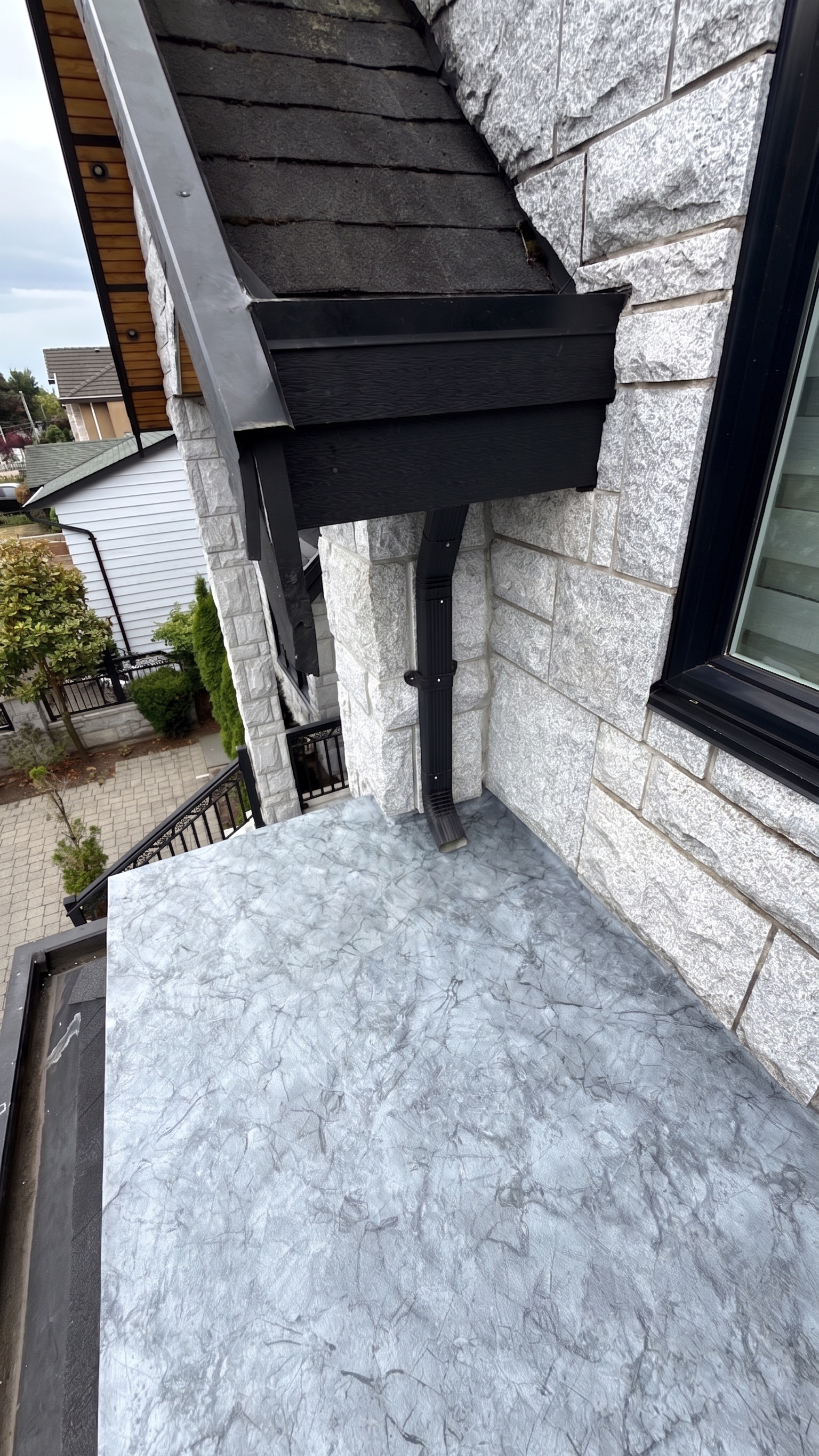
Vinyl deck membrane is a continuous PVC sheet that bonds to the rooftop substrate and serves as both the waterproofing layer and the walking surface in one product. It is the most cost-effective rooftop deck material because there is only one layer to install and one product to warrant. Valordek Smooth-Back (60mil) is engineered specifically for rooftop deck applications over living space, with Class A and Class C fire ratings, a 15-year waterproofing warranty, and Intertek testing.
How it works: a single sheet of PVC membrane is rolled out across the rooftop substrate (usually plywood), bonded with contact adhesive, and the seams between rolls are heat-welded into one continuous waterproof surface. PVC flashing details are added at walls, drains, posts, and edges. The result is a fully waterproof rooftop with a finished walking surface in one installation.
Why it works for rooftops:
- Waterproof and walking surface combined, no separate layers
- Class A and Class C fire ratings (Smooth-Back)
- 15-year waterproofing warranty
- Heat-welded seams cannot leak when installed correctly
- UV-stable PVC formulated for continuous sun exposure
- Tested -40°C to 80°C, full Canadian climate range
- Available in 12 colours across Wood Look, Stone Look, and Classic style lines
- Lower total cost than two-layer systems (membrane + walking surface)
Trade-offs to be honest about: vinyl deck membrane has a manufactured look that some homeowners find too uniform compared to natural wood. The installation requires professional heat-welding (not DIY-friendly for the Smooth-Back rooftop product). Once installed, individual sections cannot be removed and replaced without reweld work.
Best for: rooftop decks over occupied living space where fire rating, waterproofing warranty, and total cost matter most. This is the Valordek specialty. For more on rooftop applications specifically, see our rooftop deck application page.
Pedestal pavers over a separate waterproof membrane
Pedestal pavers are concrete or porcelain tiles that sit on adjustable pedestals above a waterproof membrane. Water drains between the pavers and runs off the membrane underneath. This is a two-layer system: a separate waterproofing layer (vinyl, EPDM, TPO, or hot-applied) goes down first, and the pavers sit on top.
How it works: a waterproof membrane is installed across the rooftop substrate. Pedestals (small adjustable plastic supports) are placed on the membrane in a grid pattern. Concrete or porcelain pavers (typically 24"x24") sit on the pedestals, creating a flat walking surface above. Water drains between the pavers, hits the membrane, and flows to drains.
Why some rooftops use pedestal pavers:
- Looks like a finished hardscape patio (more architectural appeal than vinyl)
- Class A fire-rated (concrete and porcelain are non-combustible)
- Pavers can be lifted individually for inspection or membrane repair access
- Adjustable pedestals create a perfectly level surface even on a sloped roof
- Premium aesthetic for high-end residential and commercial projects
The trade-offs:
- Cost. Two-layer systems pay for the membrane and then for the pedestals, pavers and their installation on top of it, so they cost more than a membrane alone.
- Weight. Concrete pavers are heavy. The roof structure has to be designed (or verified) to support 25-40 lbs per square foot of dead load. Many residential rooftops cannot.
- Drainage debris. Leaves and debris accumulate between pavers and on the membrane underneath. Periodic cleaning requires lifting pavers.
- Failure access. If the membrane underneath fails, all pavers above the failure have to come up to repair it.
Best for: high-end residential rooftops and commercial projects where the architectural look justifies the cost and the structure supports the weight.
Snap-together deck tiles over a waterproof membrane
Snap-together deck tiles are interlocking 12"x12" or 24"x24" panels (wood, composite, or PVC) that lock into a grid above a waterproof membrane. They are easier and cheaper to install than pavers but share the same two-layer requirement: a real waterproof membrane goes underneath, and the tiles provide the walking surface.
How they work: a waterproof membrane is installed across the rooftop substrate. Interlocking tiles are placed on top of the membrane, snapping together at the edges. Water drains through the gaps between tiles and onto the membrane underneath, then runs to drains.
Why some rooftops use snap-together tiles:
- Easy DIY installation, no special tools needed for the tiles themselves
- Tiles can be removed and rearranged or replaced individually
- Lighter than pavers (5-10 lbs per square foot)
- Available in wood, composite, and PVC options for different aesthetics
- Lower upfront cost than pedestal paver systems
The trade-offs:
- Tiles are NOT waterproof. They are a walking surface only. The membrane underneath does the waterproofing. People who think the tiles alone waterproof the rooftop end up with leaks within months.
- Wind uplift. Loose-laid tiles can shift or lift in high winds. They need to be ballasted or installed with wind clips above certain heights.
- Debris collection. Same problem as pavers: leaves and dirt collect between tiles and on the membrane underneath. Regular cleaning required.
- Wood and composite tiles can rot or fade. Tile material lifespan is shorter than the membrane underneath (5-10 years vs 15+).
- Two-layer cost. The "cheap" tiles still require a real waterproof membrane underneath, so total system cost is comparable to vinyl deck membrane installed alone.
Best for: rooftops where the homeowner wants a wood-look surface and is willing to maintain a two-layer system. Honest answer: if a vinyl deck membrane in Wood Look pattern would meet the aesthetic requirement, the single-layer vinyl approach is simpler and costs less.
Wood decking on sleepers above a waterproof membrane
Wood decking on a rooftop is a traditional approach: a waterproof membrane is installed across the substrate, then 2x4 or 2x6 sleepers are laid across the membrane, and wood deck boards are installed on the sleepers. Water drains through the gaps between boards onto the membrane and flows to drains. This is the highest-aesthetic and highest-maintenance option.
Why some rooftops use wood:
- Most natural-looking option, real wood feel
- Familiar construction methods for any deck builder
- Wood species choice (cedar, IPE, pressure-treated)
The trade-offs:
- Highest maintenance. Wood needs annual or biannual staining, sealing, and repair. Even premium woods like IPE need attention every few years.
- Fire rating problems. Untreated wood is NOT Class A or Class C fire-rated. Many building codes prohibit untreated wood on rooftop decks above occupied space. Pressure-treated and fire-rated wood products exist but cost significantly more.
- Sleepers create water pockets. Where the sleepers contact the membrane, water can pool and accelerate membrane wear.
- Membrane access is hard. If the membrane underneath fails, the entire wood deck has to come up to repair it.
- Lifespan mismatch. Wood lasts 5-15 years before significant maintenance is needed. The membrane underneath might last 20+. The system fails together at the shorter timeline.
Best for: rooftop decks where natural wood aesthetics are the highest priority and the owner is committed to ongoing maintenance. Code compliance has to be verified before choosing wood on a rooftop above occupied space.
Composite decking on sleepers above a waterproof membrane
Composite decking on a rooftop uses the same construction approach as wood (sleepers above a membrane, deck boards on top) but with composite boards (Trex, TimberTech, etc.) instead of wood. It addresses the maintenance problem of wood while sharing the same two-layer cost structure.
Why some rooftops use composite:
- Lower maintenance than wood: no staining, sealing, or replacement
- Strong brand recognition (Trex, TimberTech)
- Wood-look options without the wood maintenance
- 15-25 year structural lifespan on the boards themselves
The trade-offs:
- Composite boards are NOT waterproof. Water passes through the gaps between boards. The membrane underneath does the actual waterproofing. Same two-layer structure as wood and tiles.
- Fire rating depends on the brand. Some composite products are Class A or Class C fire-rated; many are not. Check the specific product's fire rating before using on a rooftop above occupied space.
- Higher cost than wood. Composite costs more than pressure-treated wood, and a rooftop system adds the membrane underneath, the sleepers and the installation.
- Same membrane access problem. If the membrane underneath fails, the composite has to come up to repair it.
Best for: rooftops where the owner wants a low-maintenance wood-look without choosing real wood, and where the budget supports the two-layer system cost. Honest comparison: a vinyl deck membrane in Wood Look pattern delivers similar aesthetics at lower total cost with a single-layer install.
Rooftop deck materials side by side
Direct comparison across the five main rooftop deck material approaches, focused on the factors that matter most for rooftops above occupied living space.
| Material | Layers | Waterproofing | Fire Rating | What you pay for | Maintenance |
|---|---|---|---|---|---|
| Valordek vinyl deck membrane | Single (membrane = walking surface) | Fully waterproof, 15-year warranty | Class A & C (Smooth-Back) | One layer: membrane from $3.74/sq ft, plus installation | Hose off twice a year |
| Pedestal pavers + membrane | Two (membrane + pavers) | Membrane underneath waterproofs | Class A (concrete/porcelain) | Membrane, plus pedestals, pavers and their installation | Lift pavers periodically to clean debris |
| Snap-together deck tiles + membrane | Two (membrane + tiles) | Membrane underneath waterproofs | Varies by tile material | Membrane, plus tiles and their installation | Clean between tiles, replace tiles 5-10 yrs |
| Wood on sleepers + membrane | Two (membrane + sleepers + wood) | Membrane underneath waterproofs | Usually NOT Class A (depends on wood) | Membrane, plus sleepers, boards and their installation | Annual stain/seal, replace 10-20 yrs |
| Composite on sleepers + membrane | Two (membrane + sleepers + composite) | Membrane underneath waterproofs | Varies by brand | Membrane, plus sleepers, boards and their installation | Periodic cleaning, replace boards 15-25 yrs |
The honest summary: if your rooftop deck has to be waterproof, fire-rated, low-maintenance, and cost-effective, vinyl deck membrane is the simplest path. If aesthetic preferences override cost (you specifically want pavers, real wood, or a multi-material look), the two-layer systems work but require higher budgets and ongoing maintenance access to the membrane underneath.
Frequently asked questions about rooftop deck materials
What is the best material for a rooftop deck?
The best material for a rooftop deck depends on whether the deck is over occupied living space and what your budget supports. Vinyl deck membrane is the most cost-effective option because it combines waterproofing and walking surface in one layer with Class A fire rating and a 15-year warranty. Pedestal pavers, deck tiles, wood, and composite all require a separate waterproof membrane underneath.
Can you build a deck on a rooftop?
Yes, you can build a deck on a rooftop if the structure supports the load and you use materials that waterproof the surface beneath. Most residential rooftop decks use either a vinyl deck membrane as a single layer or a paver system over a separate membrane. Check your local building code for fire-rating and drainage requirements on rooftops above occupied space.
How do you waterproof a rooftop deck?
A rooftop deck is waterproofed with a continuous membrane bonded to the substrate beneath the walking surface. Vinyl deck membrane (like Valordek Smooth-Back 60mil) waterproofs and provides the walking surface in one layer. Two-layer systems use a separate membrane (vinyl, TPO, EPDM, or hot-applied) underneath pavers, tiles, wood, or composite walking surfaces.
How much does a rooftop deck cost?
Rooftop deck costs depend mostly on the structure, access, guards and drainage, then on the surface. Valordek vinyl deck membrane is $3.74 per square foot for the membrane as a single layer, while two-layer systems add pavers, wood or composite over a separate membrane. Get an engineer's assessment, then an itemized quote.
What materials are NOT good for rooftop decks?
Avoid these materials on rooftop decks above occupied space: untreated wood (no fire rating), indoor vinyl plank flooring (not UV-stable, fails in one season), generic outdoor tile without a waterproof underlayment, and any decking system that does not fully waterproof the substrate. Standalone composite or wood decking does not waterproof a rooftop on its own.
Do rooftop decks need to be fire-rated?
Many building codes set fire-rating requirements for roofs and rooftop decks above occupied living space, so check what yours requires. Valordek Smooth-Back vinyl deck membrane is Class A and C fire-rated. Pavers and concrete are non-combustible. Untreated wood, many composite products and unrated PVC products may not meet those requirements. Verify with your local building authority before choosing materials.