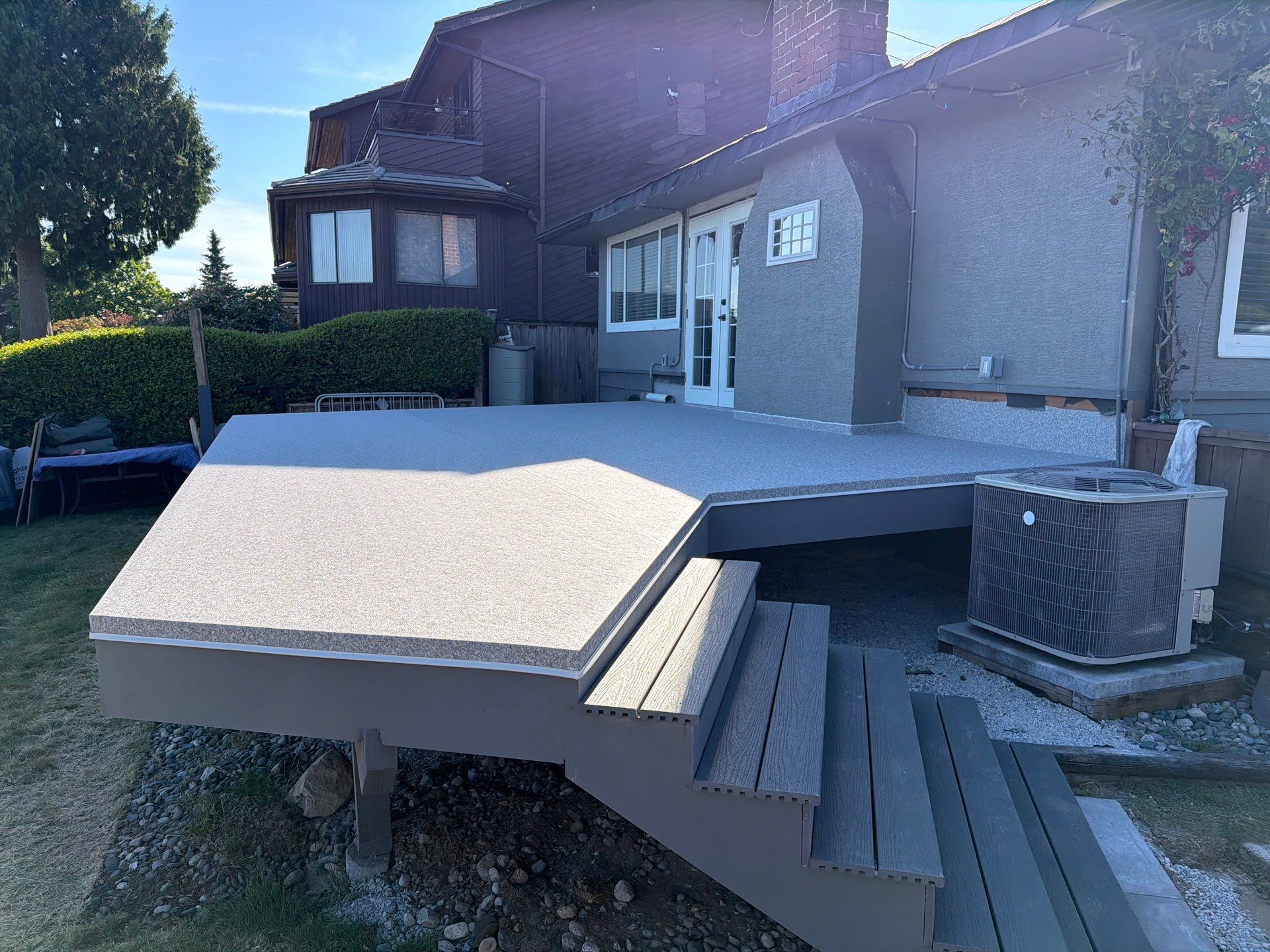
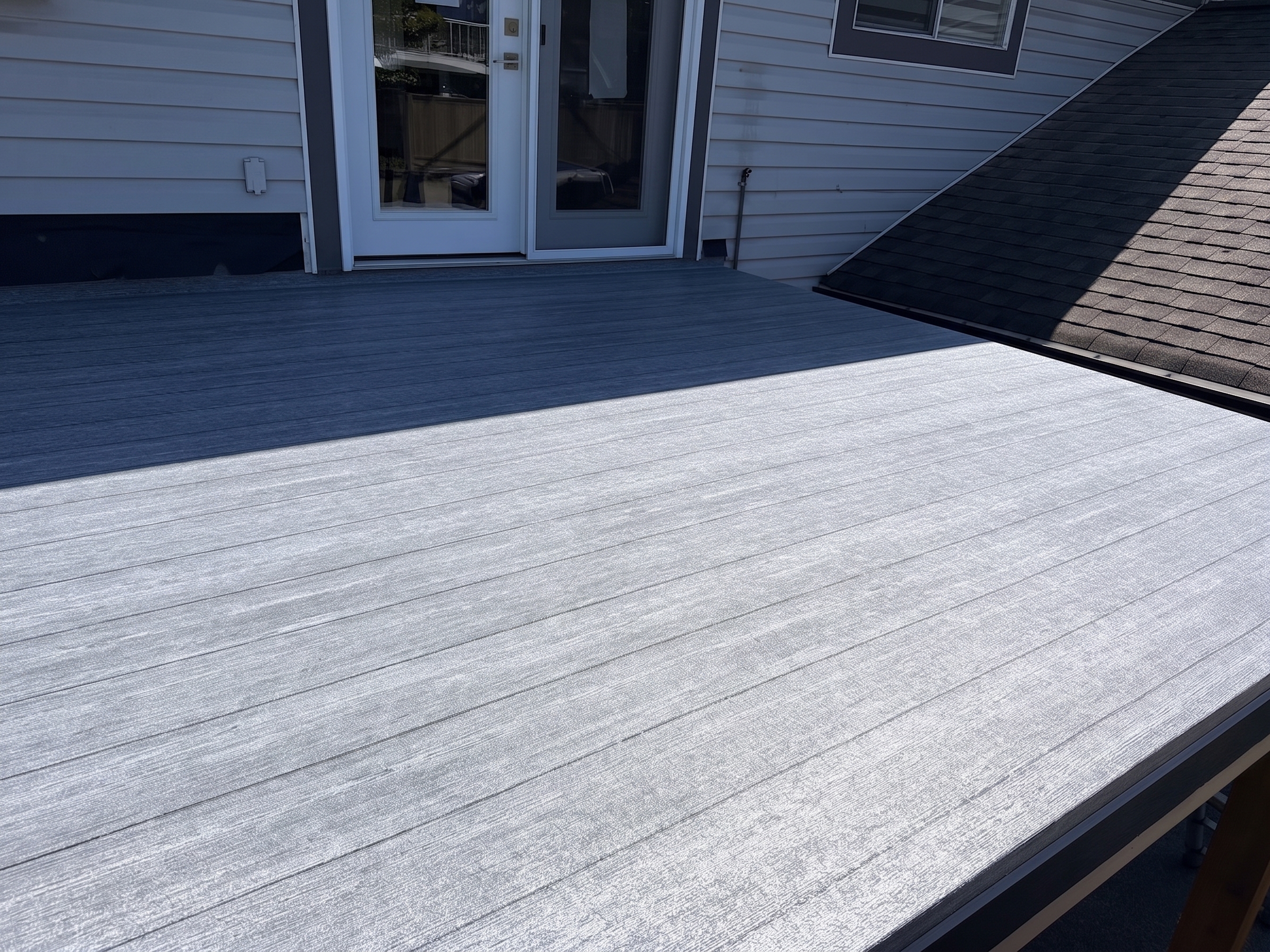
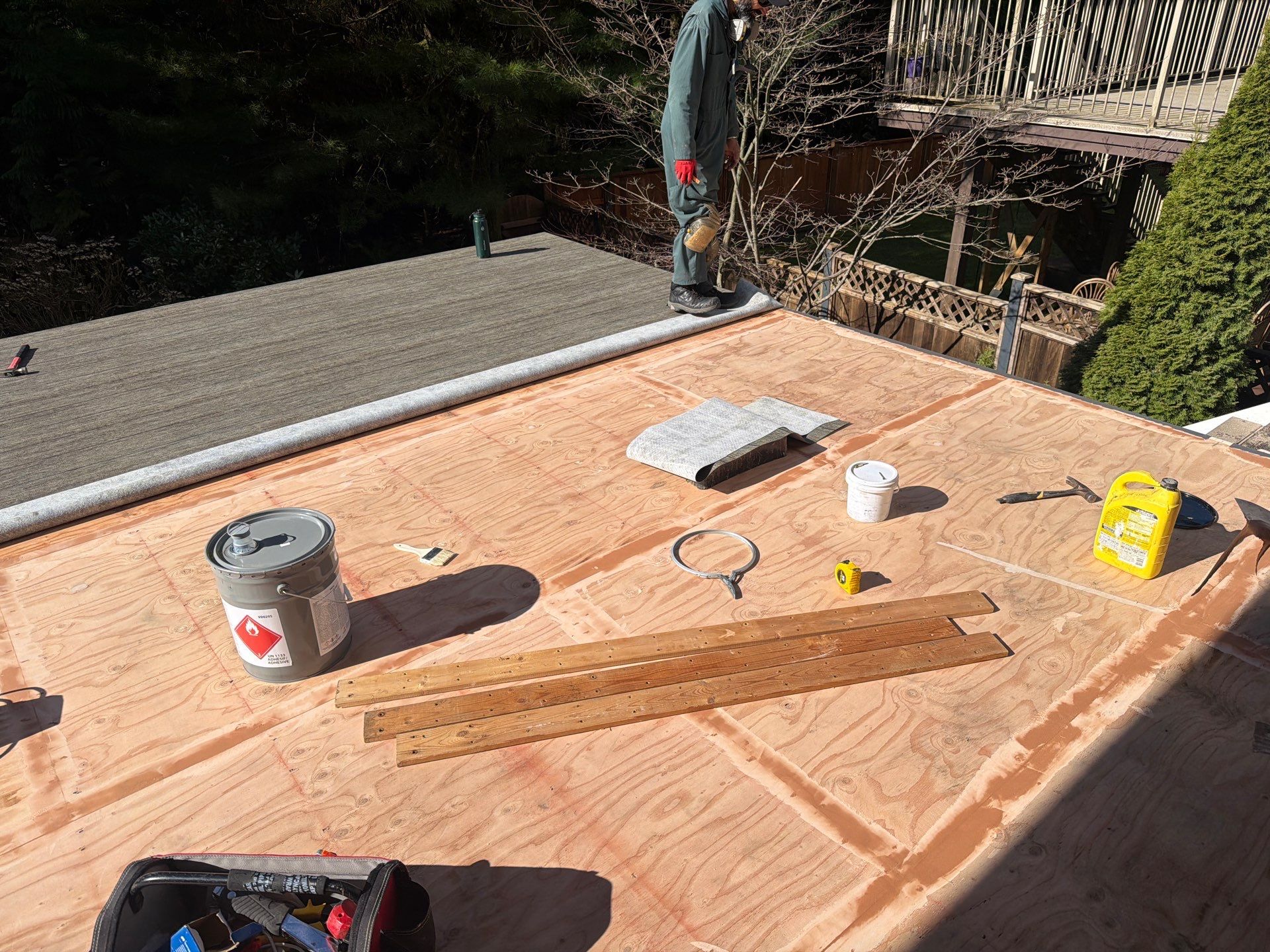
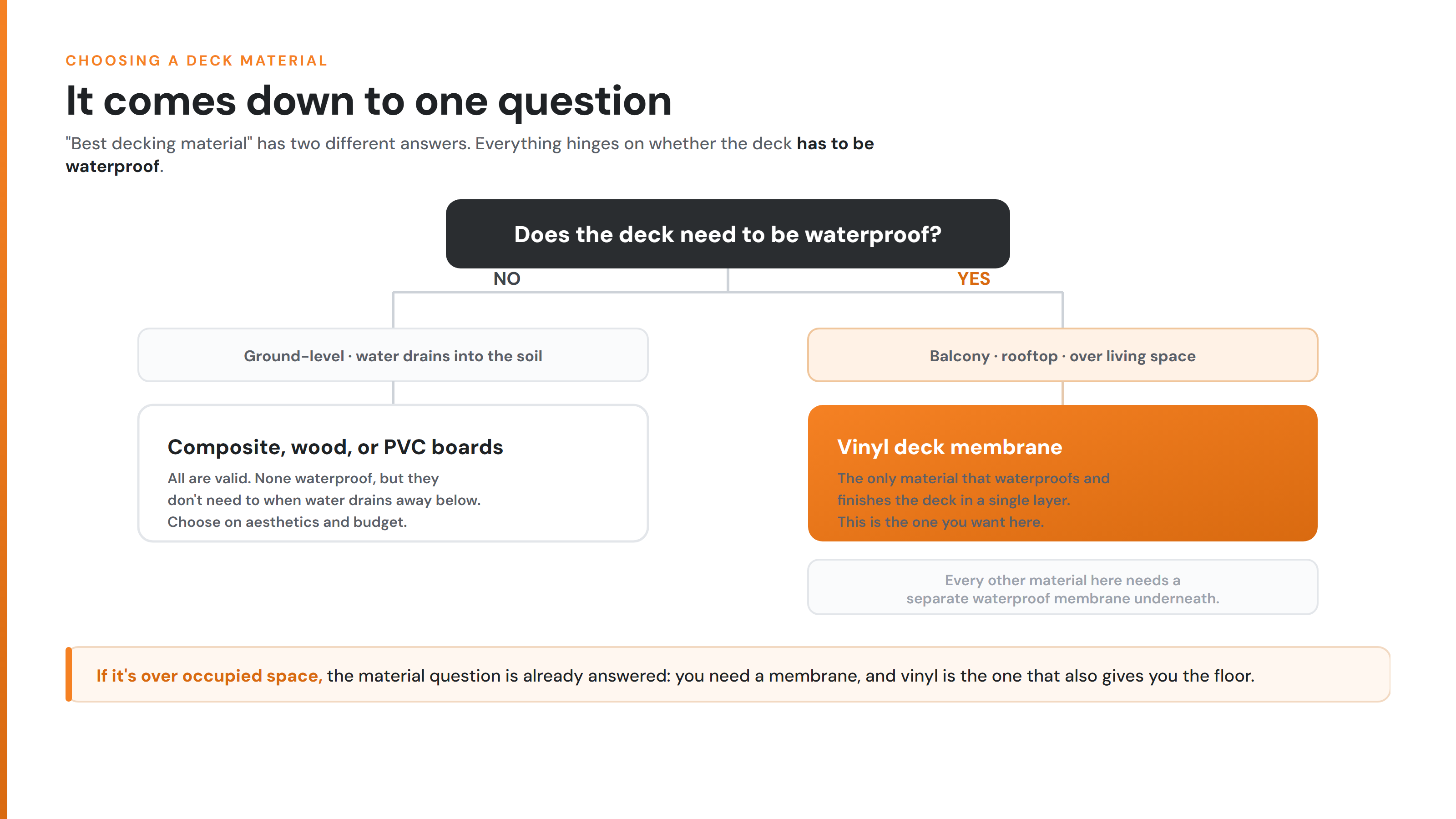
For decks and balconies that need to be waterproof, vinyl deck membrane is the best decking material. It is the only single-layer system that combines a fully waterproof surface with a finished walking layer in one product. Composite, wood, and standard deck boards are water-resistant at best and require a separate waterproof membrane underneath when used over living space. Vinyl deck membrane starts at $3.74 per square foot and carries 15-year waterproofing warranties.
"Best decking material" is a question with two different answers depending on whether your deck has to be waterproof. For ground-level decks where water can drain into the soil below, composite, wood, and PVC boards are all valid options and the choice comes down to aesthetics and budget. For balconies, rooftop patios, and any deck over occupied living space, the answer narrows fast: only one material category actually waterproofs the surface in a single layer. This guide explains why, compares the real options, and helps you choose the right material for your specific deck. For Valordek's full vinyl decking lineup, see our vinyl decking hub. For a closer look at the membrane option, see the benefits and limitations of vinyl decking.
Why "best decking material" depends on whether the deck is waterproof
The most common mistake in choosing decking material is treating "best for ground decks" and "best for waterproof decks" as the same question. They are not. A ground-level deck only needs a walking surface. Water just drains into the dirt below. A waterproof deck has to do two jobs at once: support foot traffic AND prevent water from reaching the structure underneath.
The deck materials that win "best for ground decks" rankings (Trex composite, IPE wood, pressure-treated lumber) usually fail "best for waterproof decks" rankings because none of them are actually waterproof. Composite boards have gaps. Wood absorbs water. PVC boards have gaps. They all need a separate waterproof layer underneath if used over a living space.
Two questions to answer first:
- Is there occupied living space directly below the deck? If yes, the deck has to be waterproof. If no, you have more material options.
- Is the deck at ground level, on a balcony, or on a rooftop? Ground level = wide material choice. Balcony or rooftop = waterproof requirement.
If the answer means you need a waterproof deck, the rest of this guide applies. If you have a ground-level deck where water drainage is not an issue, see our vinyl vs composite comparison for a broader material discussion.
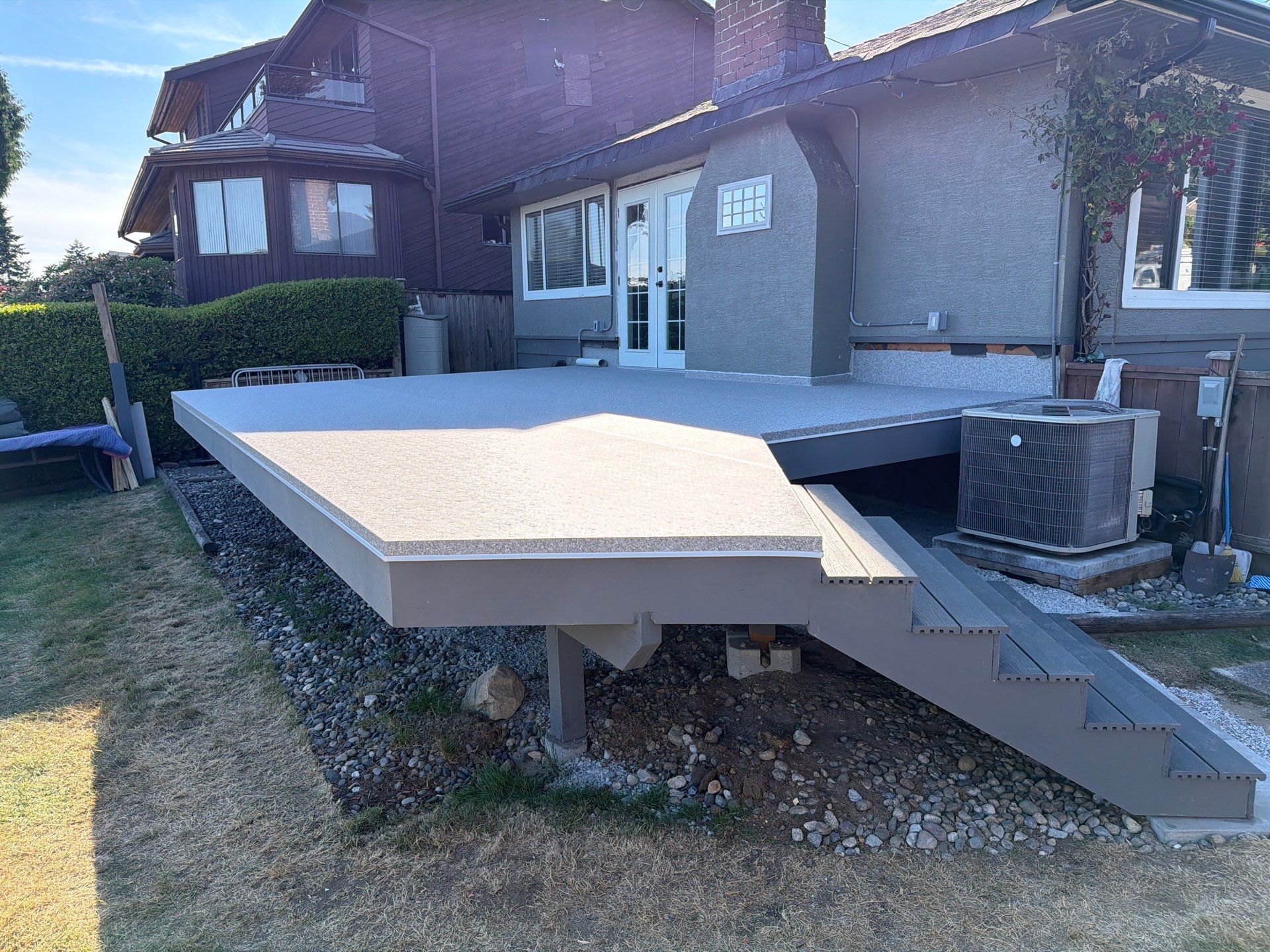
Vinyl deck membrane (the single-layer waterproof option)
Vinyl deck membrane is the only decking material category that is both fully waterproof and a finished walking surface in one layer. A single sheet of PVC membrane bonds to the deck substrate and the seams between rolls are heat-welded into a continuous waterproof surface. Valordek manufactures vinyl deck membrane starting at $3.74 per square foot, with 15-year waterproofing warranties depending on the product line.
Why it wins for waterproof applications:
- Fully waterproof. Heat-welded seams. Bonded to substrate. No gaps. No joints. CCMC-tested and exceeds code 37.54.95.
- Single layer. No separate membrane required underneath. The product IS the waterproofing AND the walking surface.
- Lowest installed cost for waterproof applications. One product, one install, one warranty. Two-layer systems cost 2-3x more.
- Class A and C fire ratings (Smooth-Back). Meets building code for rooftop decks above occupied space.
- 15-year warranty. Industry-leading for waterproof deck materials.
- Tested -40°C to 80°C. Full Canadian temperature range.
- 12 colours across three style lines. Wood Look, Stone Look, and Classic patterns.
The honest tradeoffs: vinyl deck membrane has a manufactured look that some homeowners find too uniform compared to natural wood. Smooth-Back rooftop installations require professional heat-welding (not DIY-friendly). Once installed, the surface cannot be easily replaced in sections without rewelding.
Best for: balconies (Valordek Fuzzy-Back), rooftop patios (Valordek Smooth-Back), and any deck where waterproofing is the primary requirement.
One option this list does not cover is a liquid-applied coating, which is a finish rather than a decking material but competes for the same job. If that is on your shortlist, read our waterproof deck coating comparison before deciding.
Composite decking (water-resistant, not waterproof)
Composite decking like Trex, TimberTech, and Fiberon is a popular choice for ground-level decks but is NOT waterproof on its own. The boards are water-resistant (they don't absorb water like wood does) but water still passes through the gaps between boards and reaches whatever is underneath. For waterproof applications, composite has to be installed on sleepers above a separate waterproof membrane.
What composite is good at:
- Strong brand recognition (Trex spends millions on advertising)
- Low maintenance, no annual staining or sealing
- 15-25 year structural lifespan on the boards themselves
- Wood-look options without the wood maintenance
- Familiar installation methods for deck builders
Why it falls short for waterproof applications:
- Boards have gaps. Water passes between boards, falls through to whatever is underneath
- Requires a waterproof membrane underneath when used over living space, doubling material costs
- Sleepers create maintenance access problems. If the membrane underneath fails, the entire composite deck has to come up to repair it
- Higher cost than vinyl. Material alone is $5-15/sq ft, plus the membrane underneath, plus sleepers, plus installation. Total installed cost for a waterproof composite system runs $20-$40/sq ft
- Fire rating varies by brand. Some composite products are Class A or C; many are not. Check the specific product before using on a rooftop above occupied space
Best for: ground-level decks where waterproofing is not required. For waterproof decks, composite is a more expensive way to achieve what vinyl deck membrane does in one layer.
Wood decking (water-absorbent, requires constant maintenance)
Wood is the traditional decking choice and the worst option for waterproof applications. Wood absorbs water, expands and contracts with humidity, and degrades from continuous moisture exposure. Even premium woods like IPE and cedar require annual maintenance and have shorter lifespans than vinyl or composite.
What wood is good at:
- Natural look, real wood feel underfoot
- Wide variety of species and finishes
- Familiar to every deck builder
- Initial cost can be lower than composite or vinyl (pressure-treated)
Why it fails for waterproof applications:
- Water absorbent. Wood actively absorbs moisture, swells, contracts, and rots
- Annual sealing required. Stain or sealer must be reapplied every 1-2 years to slow water damage. Skipping maintenance accelerates failure.
- Not fire-rated. Untreated wood is not Class A or Class C. Many building codes prohibit untreated wood on rooftop decks above occupied space.
- Same waterproof membrane requirement. Like composite, wood needs a separate waterproof membrane underneath when used over living space
- Highest total maintenance cost. Stain, sealer, repair labour, and eventual replacement add up over time
- Shortest lifespan. 5-15 years before significant maintenance or replacement, depending on species and climate
Best for: ground-level decks where natural wood aesthetics override every other consideration and the owner is committed to ongoing maintenance.
Pavers and tile (waterproof IF installed correctly with a membrane)
Pedestal pavers and outdoor tile create a high-end finished look on rooftop decks, but they are NOT waterproof on their own. Water drains between pavers down to a separate waterproof membrane underneath. Pavers solve aesthetic problems and add architectural value, but they require a two-layer system with the same maintenance access challenges as composite or wood.
What pavers are good at:
- Architectural look, finished hardscape patio aesthetic
- Class A fire-rated (concrete and porcelain are non-combustible)
- Individual pavers can be lifted for membrane access (better than wood/composite on sleepers)
- Adjustable pedestals can level a sloped substrate
Why they have limits:
- Heavy. Concrete pavers are 25-40 lbs/sq ft of dead load. Many residential rooftops cannot support the weight without structural reinforcement
- Two-layer cost. Membrane + pedestals + pavers + installation runs $15-$40/sq ft. 2-4x more expensive than vinyl deck membrane alone
- Debris between pavers. Leaves and dirt collect between pavers and on the membrane underneath. Periodic cleaning by lifting pavers required
- Membrane lifespan still rules. The system fails when the membrane underneath fails, regardless of paver lifespan
Best for: high-end residential and commercial rooftop decks where the architectural look justifies the cost and the structure supports the weight.
Best decking material side by side (waterproof applications)
Direct comparison of the four main waterproof deck material approaches, focused on the factors that matter for balconies and rooftop patios above occupied living space.
| Material | Waterproof | Layers Required | Total Cost (Installed) | Lifespan | Maintenance |
|---|---|---|---|---|---|
| Valordek vinyl deck membrane | Yes: single layer | One | $8-$15/sq ft | 15-year warranty | Hose off twice a year |
| Composite + waterproof membrane | Membrane underneath only | Two (membrane + composite) | $20-$40/sq ft | 15-25 years (boards), shorter for membrane | Periodic cleaning, board replacement at 15-25 yrs |
| Wood + waterproof membrane | Membrane underneath only | Two (membrane + wood) | $15-$30/sq ft | 5-15 years (wood) | Annual stain/seal, replace at 10-15 yrs |
| Pedestal pavers + waterproof membrane | Membrane underneath only | Two (membrane + pavers) | $15-$40/sq ft | 25+ years (pavers), shorter for membrane | Lift pavers periodically to clean debris |
The honest summary: for waterproof applications, vinyl deck membrane wins on cost, simplicity, and warranty. Two-layer systems (composite, wood, or pavers over a membrane) cost more, take longer to install, and create maintenance access problems where the membrane is hidden under the walking surface. The other materials are not BAD. They each have a use case. The use case is just rarely "waterproof deck on a budget."
What is the best decking material for full sun?
For decks in full sun, the best decking material is one with UV-stable pigments and a temperature range that handles direct sun exposure. Vinyl deck membrane with UV screens and stabilizers (like Valordek) handles full sun without fading or degrading. Composite boards rated for UV exposure also work. Wood requires annual UV-protective sealer and fades regardless of treatment.
The full-sun ranking:
- Vinyl deck membrane: UV-stabilized PVC, no fading within warranty period, no maintenance for sun protection
- UV-rated composite: most modern composites are UV-stable but the cap layer can fade in extreme exposure
- Concrete pavers: non-combustible and UV-stable but absorb heat, can be uncomfortably hot underfoot
- Pressure-treated wood with annual UV sealer: requires constant maintenance to keep colour
- Untreated cedar or IPE: fades to grey in 6-12 months without sealer
For Pacific Northwest, Western Canada, and other cool-but-sunny climates, all of these materials can work. For the prairies, southern US, or any high-UV environment, vinyl deck membrane has the strongest UV resistance with the lowest maintenance.
What decking material lasts the longest?
Concrete pavers and high-end pressure-treated wood last the longest in raw years (25+ years), but they are not the longest-lasting waterproof deck systems. The waterproof membrane underneath any system is the limiting factor. The system fails when the membrane fails, regardless of how long the walking surface lasts. For waterproof decks, the system that lasts longest is the one where the waterproof layer has the longest warranty.
Lifespan ranking for waterproof deck systems:
- Valordek Smooth-Back vinyl deck membrane: 15-year waterproofing warranty, real-world installs documented at 18-20 years
- Valordek Fuzzy-Back vinyl deck membrane: 15-year waterproofing warranty
- Two-layer pedestal paver systems: limited by the membrane warranty underneath (typically 10-20 years depending on membrane brand)
- Two-layer composite + membrane systems: limited by the membrane underneath
- Two-layer wood + membrane systems: limited by either the membrane OR the wood, whichever fails first (usually the wood)
The pattern is clear: for waterproof deck applications, the membrane is the constraint. Picking a system with a longer-warranty membrane is more important than picking a long-lasting walking surface. Valordek's 15-year Smooth-Back warranty outlasts most two-layer systems' practical lifespans.
Frequently asked questions about waterproof deck materials
What is the best decking material?
The best decking material depends on whether the deck has to be waterproof. For waterproof decks (balconies, rooftop patios over living space), vinyl deck membrane is the best choice: single-layer waterproofing with a finished walking surface, $8-$15 per square foot installed, 15-year warranty. For ground-level decks, composite or wood may be better if waterproofing is not required.
What is the best material for a waterproof deck?
The best material for a waterproof deck is vinyl deck membrane (continuous PVC). It is the only material category that combines waterproofing and a finished walking surface in one layer. Valordek vinyl deck membrane starts at $3.74 per square foot, carries 15-year waterproofing warranties, and is CCMC-tested for code compliance. All other materials require a separate waterproof membrane underneath.
What decking material lasts the longest?
Concrete pavers last longest in raw years (25+) but for waterproof deck systems, the limiting factor is the membrane underneath. Valordek Smooth-Back vinyl deck membrane carries a 15-year waterproofing warranty and real-world installs are documented at 18-20 years. For waterproof applications, the membrane warranty is the meaningful lifespan number.
What is the best decking material for full sun?
For full sun, vinyl deck membrane with UV screens and stabilizers performs best. Valordek vinyl is tested -40°C to 80°C with UV-stabilized PVC formulation, no fading within the appearance warranty period. Composite is the second-best option for sun exposure. Wood requires constant UV sealer reapplication and still fades.
What is the best decking material for a balcony?
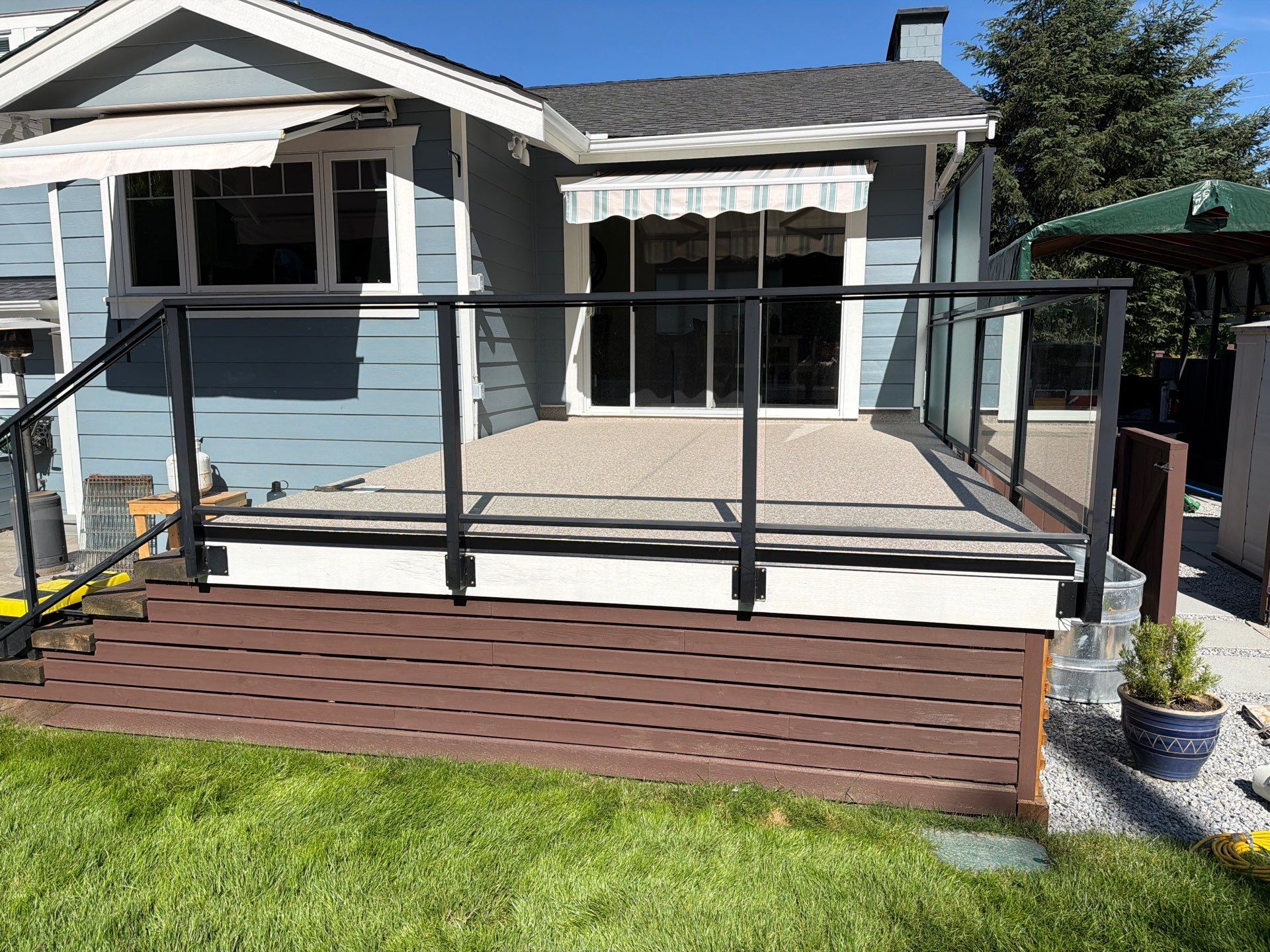
For a balcony, vinyl deck membrane is the best decking material because balconies require waterproofing to protect the structure and any unit below. Valordek Fuzzy-Back (68mil) is engineered specifically for residential balcony applications, with a 15-year waterproofing warranty, contact adhesive installation, and 12 colour options. Most other materials require a separate membrane underneath when used on a balcony.
How much does waterproof decking cost?
Waterproof decking costs $8-$15 per square foot installed for vinyl deck membrane (single-layer, the most cost-effective option), $15-$40 per square foot for two-layer systems using pavers, composite, or wood over a separate waterproof membrane. A typical 100 square foot balcony with Valordek vinyl deck membrane runs $700-$1,200 in DIY materials or $2,000-$4,000 professionally installed.